
Anna Hess
Author of The Weekend Homesteader: A Twelve-Month Guide to Self-Sufficiency
About the Author
Anna Hess is a homesteader, writer, and blogger whose first book, The Weekend Homesteader, helped thousands of homesteaders-to-be find ways to fit their dreams into the hours left over from a full-time job.
Series
Works by Anna Hess
The Naturally Bug-Free Garden: Controlling Pest Insects without Chemicals (2015) 22 copies, 2 reviews
Farmstead Feast: Winter: Delicious, in-season recipes by the author of The Weekend Homesteader (2015) 19 copies, 1 review
$10 Root Cellar: And Other Low-Cost Methods of Growing, Storing, and Using Root Vegetables (Modern Simplicity) (2013) 19 copies, 1 review
The Ultimate Guide to Soil: The Real Dirt on Cultivating Crops, Compost, and a Healthier Home (2016) 18 copies
The Working Chicken: Learn everything you need to know to become a backyard egg and meat producer in 30 minutes or less! (2013) 12 copies
Farmstead Feast: Spring: Delicious, in-season recipes by the author of The Weekend Homesteader (Volume 2) (2015) 6 copies, 1 review
Pasture Basics: How to Keep the Grass Green and Your Chickens Happy (Permaculture Chicken Book 2) 3 copies
Naturally Bug-Free: Controlling Pest Insects Without Chemicals (Permaculture Gardener) (Volume 2) (2014) 3 copies
Tagged
Common Knowledge
- Birthdate
- unknown
- Gender
- female
- Education
- Swarthmore College
- Places of residence
- Ohio, USA
- Associated Place (for map)
- Ohio, USA
Members
Reviews
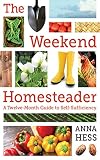
The author's aim in this book is to gradually, over the course of a year, ease newbies into "homesteading", which she defines humorously: "To folks over the age of fifty, I [describe it] this way: 'Remember the back-to-the-land movement of the sixties and seventies? Homesteading is the same thing ... without the drugs and the free love.'"
The title sounds dilettantish, but this book is anything but. Within the framework of four "weekend" projects per month, Hess is actually quite in-depth and show more knowledgeable. Some of the projects are, of course, extremely basic. "Hanging your clothes out to dry" is probably the most obvious example. But within the others, there's something to learn in many chapters. Hugelkultur is already a rather specialized topic, but her two-page sidebar actually has new-to-me information on a modified form she uses in her orchard, providing each tree with a hugelkultur ring. "Compost" includes a brief introduction to permaculture; "Drying Food" has the recipe I've been searching the web for since summer before last -- how to take our home-dried tomatoes, hard as seabiscuits, and marinate them in garlic, oil and basil to get a sun-dried tomato garnish. The grow-your-own-mulch sidebar in the "Mulch" chapter has the most succinct and informative explanation of why to use cover crops and which ones are best for which purpose (compost, mulch, or both).
I'm glad our local library had this very useful book, which I hope to add to our home reference bookshelf soon. show less
The title sounds dilettantish, but this book is anything but. Within the framework of four "weekend" projects per month, Hess is actually quite in-depth and show more knowledgeable. Some of the projects are, of course, extremely basic. "Hanging your clothes out to dry" is probably the most obvious example. But within the others, there's something to learn in many chapters. Hugelkultur is already a rather specialized topic, but her two-page sidebar actually has new-to-me information on a modified form she uses in her orchard, providing each tree with a hugelkultur ring. "Compost" includes a brief introduction to permaculture; "Drying Food" has the recipe I've been searching the web for since summer before last -- how to take our home-dried tomatoes, hard as seabiscuits, and marinate them in garlic, oil and basil to get a sun-dried tomato garnish. The grow-your-own-mulch sidebar in the "Mulch" chapter has the most succinct and informative explanation of why to use cover crops and which ones are best for which purpose (compost, mulch, or both).
I'm glad our local library had this very useful book, which I hope to add to our home reference bookshelf soon. show less
I found this to be an excellent and thought provoking book even though I'm deeply unlikely to make practical use of any of the interesting advice. I am an urban dweller with a small amount of space to work with and an HOA that bans everything from garden sheds and dog houses to clothes lines. My gardening is mostly of the container variety and even if I could sneak a chicken coop or bee hive past my HOA my houseful of rescued PET rabbits is evidence enough that yes, I would be that person show more running a retirement home for old hens. Still, this book pleasantly combines the author's personal journey into homesteading with practical projects that I can appreciate and enjoy learning about, such as seeding mushroom logs, even when those projects exceed my bandwidth. And hey, I'm inspired to finally put in those rain barrels I've wanted for the last decade! More than anything else I appreciated the thoughtful exercises on being present in your world, knowing yourself (don't grow lettuce if what you really love are beets, even if beets are "harder") and making decisions from that place. That's good advice no matter how small or urban your homestead! show less
Farmstead Feast: Spring: Delicious, in-season recipes by the author of The Weekend Homesteader by Anna Hess
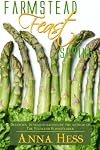
Enjoyable on its own
I devour cookbooks like good food. This one was simply enjoyable to read. If you are a regular carnivorous eater, there are plenty of great recipes and one or two adventurous ones. I am a vegetarian/almost vegan so this wasn't the cookbook for me. However, I found the section on making maple and birch syrup incredibly helpful in my decision to tap trees or not. My only wish is that the author had some veg recipes because I'm really curious how she'd cook them. I bet she show more could come up with something great. show less
I devour cookbooks like good food. This one was simply enjoyable to read. If you are a regular carnivorous eater, there are plenty of great recipes and one or two adventurous ones. I am a vegetarian/almost vegan so this wasn't the cookbook for me. However, I found the section on making maple and birch syrup incredibly helpful in my decision to tap trees or not. My only wish is that the author had some veg recipes because I'm really curious how she'd cook them. I bet she show more could come up with something great. show less

The book is nominally set up to cover seasonal tasks, with 12 chapters named for the months of the year. But I found the topics idiosyncratic, reminding me of the old Foxfire books. With four topics per month sometimes only one was seasonally applicable. The rest are any-time subjects, and sometimes philosophical rather than practical. That’s okay. The information presented is fairly thorough. I learned more about raising bramble berries here than I have elsewhere. Worth a read.
You May Also Like


Statistics
- Works
- 42
- Members
- 679
- Popularity
- #37,220
- Rating
- 3.7
- Reviews
- 12
- ISBNs
- 22


