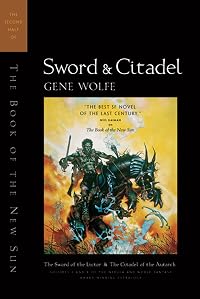
Sword & Citadel: The Second Half of The Book of the New Sun
by Gene Wolfe
Solar Cycle (Collections and Selections — Omnibus 03,04), The Book of the New Sun (Collections and Selections — Omnibus 3-4)
On This Page
Description
The Sword of the Lictor is the third volume in Wolfe's remarkable epic, chronicling the odyssey of the wandering pilgrim called Severian, driven by a powerful and unfathomable destiny as he carries out a dark mission far from his home. The Citadel of Autarch brings The Book of the New Sun to its harrowing conclusion, as Severian clashes in a final reckoning with the dread Autarch, fulfilling an ancient prophecy that will alter forever the realm known as Urth.Tags
Recommendations
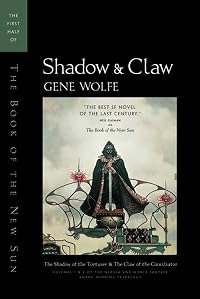
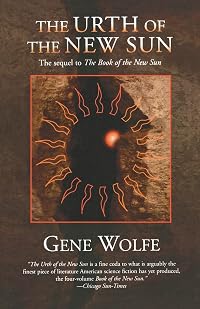
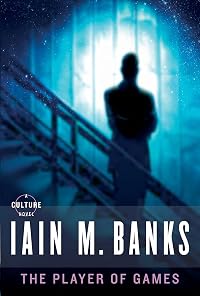
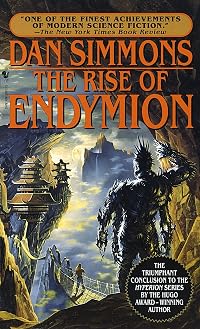
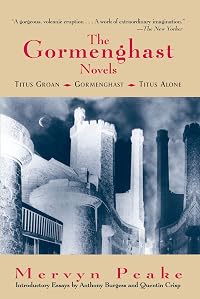
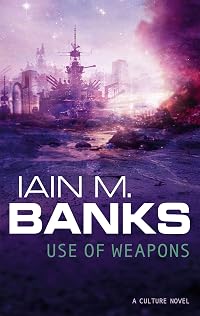
Member Recommendations
AmySR There are maps, charts, time lines, and a few pictures. Best of all there are definitions for all those archaic words! I didn't regret purchasing this book one bit.
40
LamontCranston "The composition of a novel in the first person, whose narrator would omit or disfigure the facts and indulge in various contradictions which would permit a few readers - very few readers - to perceive an atrocious or banal reality."
Member Reviews
Holy. Crap. I don’t think I’ve ever read a science fiction or fantasy novel that came so close to the complexity of other great works of fiction. It reminds me of Candide, Moby-Dick, many others. I don’t say that type of thing often – I promise I’m not being hyperbolic. This is super-literary bildungsroman stuff, that just happens to occur in the the far, far future on an Earth whose sun is going out.After finishing this series of books, I immediately thought “Well, I’m going to have to reread these”. There’s no way I got it all the first time around. I really wish I had studied it in the context of a book group or class – I could’ve used some discussion, surely.Anyway, I’m pretty damn impressed, and will be show more reading some other stuff by Wolfe in the near future. show less
(Review for both volumes)
A masterpiece of an anachronistic future, Wolfe's seminal work combines so many elements of philosophical musings, epic storytelling styles, unfocused wanderings of prose, literary and mythological references and high concept science fiction, that I doubt I could do justice to it - nor could perhaps anyone.
I can't say 'Severian' was a character I enjoyed following at all times (his many love arcs along with other things that happen, are not for modern sensibilities) and his conflicting musings and conversations often gave a contradictory layer to the story which served (deliberately I am sure) only to obfuscate things it had already seemed to clear up. His development was interesting though, with a unique twist show more I wont spoil here and who he is at the end versus how he started is such steady and subtle development you rarely see in literature. His supporting cast - whether human, sword (damn I loved Terminus Est as a weapon) or "other" - are the ones that provide the true emotion and tragedy to the story and there are some I admit attachments to and sadness at their own story's terminus.
I loved the style of breaking it into informal Acts and set pieces and he keeps the same structure through all four books. I loved the references to other literary works (H G Wells' Morlocks in volume one for example). I loved the anachronisms of the antique fantasy settings and the archaic nomenclature against the backdrop of a farflung future - especially given the information we are provided with by the end, some of which is mind blowing. I especially enjoyed his stories within stories - of which there are many throughout both volumes. Whilst some have analogous links to the narrative, others feel like a cheeky wink to critics of his style - especially after what happens after a particular sequence of three.
Not everything is concluded or explained acceptably for my mind, but I feel the true takeaway from the book is going to be individual for the reader, especially given so much imagery is open to interpretation and the formation of my own theories I have attributed to certain things seem to differ with others (I have yet to order all my thoughts fully on it and probably wont at least until I read it again someday). There will be people who will break down and analyse every chapter and sentence or hang on the beautiful prose that occasions some sections of the story. Fine I guess, but I'm not really a big proponent of that, although I acknowledge the craftmanship in the writing is exemplary. There is also a lot made of Severian as unreliable and a liar. I acknowledge the former, but the latter should be regarded as less clear cut. He doesn't always give the full truth at each point, but he controls it until it's time to reveal details that were missing.
Is it the greatest literary epic since Lord of the Rings? Maybe, I'm not sure. But there are breathtaking bits that as are noteworthy for the surreal mundanity in which they are conveyed as much as their concept. It will reward the patient reader, but there's a lot to take in and points seemingly meaningless and forgotten early on are referred to later - so it is wise to read the entire 1200 odd pages without too much of a gap.
It deserves its masterpiece status, but it's not always a good book. Make of that what you will. show less
A masterpiece of an anachronistic future, Wolfe's seminal work combines so many elements of philosophical musings, epic storytelling styles, unfocused wanderings of prose, literary and mythological references and high concept science fiction, that I doubt I could do justice to it - nor could perhaps anyone.
I can't say 'Severian' was a character I enjoyed following at all times (his many love arcs along with other things that happen, are not for modern sensibilities) and his conflicting musings and conversations often gave a contradictory layer to the story which served (deliberately I am sure) only to obfuscate things it had already seemed to clear up. His development was interesting though, with a unique twist show more I wont spoil here and who he is at the end versus how he started is such steady and subtle development you rarely see in literature. His supporting cast - whether human, sword (damn I loved Terminus Est as a weapon) or "other" - are the ones that provide the true emotion and tragedy to the story and there are some I admit attachments to and sadness at their own story's terminus.
I loved the style of breaking it into informal Acts and set pieces and he keeps the same structure through all four books. I loved the references to other literary works (H G Wells' Morlocks in volume one for example). I loved the anachronisms of the antique fantasy settings and the archaic nomenclature against the backdrop of a farflung future - especially given the information we are provided with by the end, some of which is mind blowing. I especially enjoyed his stories within stories - of which there are many throughout both volumes. Whilst some have analogous links to the narrative, others feel like a cheeky wink to critics of his style - especially after what happens after a particular sequence of three.
Not everything is concluded or explained acceptably for my mind, but I feel the true takeaway from the book is going to be individual for the reader, especially given so much imagery is open to interpretation and the formation of my own theories I have attributed to certain things seem to differ with others (I have yet to order all my thoughts fully on it and probably wont at least until I read it again someday). There will be people who will break down and analyse every chapter and sentence or hang on the beautiful prose that occasions some sections of the story. Fine I guess, but I'm not really a big proponent of that, although I acknowledge the craftmanship in the writing is exemplary. There is also a lot made of Severian as unreliable and a liar. I acknowledge the former, but the latter should be regarded as less clear cut. He doesn't always give the full truth at each point, but he controls it until it's time to reveal details that were missing.
Is it the greatest literary epic since Lord of the Rings? Maybe, I'm not sure. But there are breathtaking bits that as are noteworthy for the surreal mundanity in which they are conveyed as much as their concept. It will reward the patient reader, but there's a lot to take in and points seemingly meaningless and forgotten early on are referred to later - so it is wise to read the entire 1200 odd pages without too much of a gap.
It deserves its masterpiece status, but it's not always a good book. Make of that what you will. show less
As with book 2 in the first volume, I found book 3 very episodic. Wolfe seems to have more control in book 3, though, so that the episodes do seem to drive the overall story forward. Interesting revelations at the end of book 3. I do wonder if setting this on a future Earth might have been a mistake though. I can't help but try and relate the back story to Earth as we know it -- and find it frustrating when I can't see the connections.
I have now finished this volume. I feel decidedly ambivalent about the whole novel. Part of me wants to go back and read the whole thing again in light of the various revelations towards the end of book 4, but part of me just can't face it. Some episodes are fascinating but too many are a real slog to get show more through. show less
I have now finished this volume. I feel decidedly ambivalent about the whole novel. Part of me wants to go back and read the whole thing again in light of the various revelations towards the end of book 4, but part of me just can't face it. Some episodes are fascinating but too many are a real slog to get show more through. show less
The final two volumes in Wolfe's masterwork where we continue to follow Severian on his travels across the Urth under the baleful glare of the dying sun. Finally reaching the northern city of Thrax, he finds himself uncomfortable in the role of Lictor and once again shows mercy to a prisoner and goes on the run from the authorities, heading ever north towards the distant war zone.
Wolfe's depiction of this strange, ailing planet is one of the great achievements of fantastic fiction. Science and superstition mingle with edged weaponry and energy weapons. Society is held in stasis, barely above the level of barbarism, as the world awaits the arrival of the 'New Sun', although no one is ever quite clear exactly what or who that might be. show more For Severian it is the return of the Conciliator, a mythical figure who carried a jewel called The Claw. That jewel is still in Severian's possession and he struggles to understand its powers. Can it heal the sick and raise the dead, as it seems to have done so in the past, or is it a power already within Severian himself?
Things are never straightforward in this world, and again a cast of characters appear, disappear and reappear as Severian moves inexorably towards his destiny. Wolfe's prose might seem funereally paced to some, but you really have to let yourself be immersed in it. His depiction of the war is truly horrifying, as the enemy, brainwashed and seemingly vast in number, battle the forces of The Autarch.
Wolfe, within this story, comments on everything from the nature of power, memory and war, to love, duty and religion.
Taken as a whole, the four Volumes of the Book of the New Sun are one of the crowning achievements of Fantasy fiction and I would recommend them to anyone who loves fantasy. They may not be to everyone's taste, but persevere and they will stay with you. show less
Speaking strictly from a story perspective, this proved to be a bit more interesting than the previous volume - but that's not really the point of it. I finished this feeling like I'd missed most of what it was really about, and had to surf the net and read various reviews and essays on it to begin understanding the layers. I'm still not entirely clear on some of it.
I knew these books would be weird and disjointed going in, but I had no idea how weird and disjointed. I'm writing this up about two months after finishing this volume, which was honestly too long to leave it because at this point I have no idea what I actually read, just vague memories of fragments: Severian at a party, Severian meeting a boy named Severian, Severian at war, Severian climbing a tower where different levels are in different times. What was this whole series about? I've no idea.
Was it my fault or what it the books'? Well, it's definitely at least partly the books' fault, I know that, but how much? I think it's at least partly mine; I read these in a pretty fragmented, jumpy way, and I don't think I got as much out of it show more as I could have with more sustained focus. As I said last time, they say you don't read Book of the New Sun, only reread it, so at some point in the future, I will give these books a second go and see if they click for me. But I think that will be awhile yet. show less
Was it my fault or what it the books'? Well, it's definitely at least partly the books' fault, I know that, but how much? I think it's at least partly mine; I read these in a pretty fragmented, jumpy way, and I don't think I got as much out of it show more as I could have with more sustained focus. As I said last time, they say you don't read Book of the New Sun, only reread it, so at some point in the future, I will give these books a second go and see if they click for me. But I think that will be awhile yet. show less
It's a step UP from Shadow & Claw in complexity, but if you've gotten over the large barrier to entry by reaching this point, you're rewarded for it. Fantastic book... I need to read The Urth of the New Sun for sure, but I also somehow need to re-read up to this point to get... not everything, but a proper understanding of what was going on. One of the all-time greats of the genre for sure. Five stars.
Members
- Recently Added By
Lists

Best Fantasy Novels
821 works; 361 members

S.F. Masterworks (Complete)
229 works; 15 members

Fantasy Masterworks
66 works; 5 members
Speculative Fiction to Read
706 works; 31 members

Unreliable Narrators
170 works; 43 members

SF Masterworks
193 works; 8 members

Books Read in 2025
4,128 works; 98 members
Author Information

316+ Works 43,729 Members
Gene Wolfe was born in New York City on May 7, 1931. He dropped out of Texas A&M University during his junior year and was drafted into the Army to fight in the Korean War. After the war, he received a degree in mechanical engineering from the University of Houston. He worked as an industrial engineer for Procter and Gamble, where he developed the show more machine that cooks the dough used to make Pringles potato chips. He was an editor of the trade journal Plant Engineering from 1972 to 1984 before retiring to become a full-time writer. He wrote more than 30 books during his lifetime including The Fifth Head of Cerberus, Peace, The Book of the New Sun, and The Land Across. He received the Campbell Memorial Award, the Edward E. Smith Memorial Award, the Locus Award four times, and the Nebula Award and the World Fantasy Award two times each. In 1996, he was given the World Fantasy Award for Lifetime Achievement. He was inducted into the Science Fiction Hall of Fame in 2007 and was named a Grand Master by the Science Fiction and Fantasy Writers of America in 2012. He died after a long battle with heart disease on April 14, 2019 at the age of 87. (Bowker Author Biography) show less
Some Editions
Series

Solar Cycle
12 works (Collections and Selections — Omnibus 03,04)

The Book of the New Sun
4 works (Collections and Selections — Omnibus 3-4)
Belongs to Publisher Series
Work Relationships
Is contained in
Common Knowledge
- Canonical title
- Sword & Citadel: The Second Half of The Book of the New Sun
- Original title
- Sword and Citadel
- Alternate titles
- The Book of the New Sun Volume 2: Sword and Citadel
- Original publication date
- 1994 (omnibus) (omnibus); 1982-01 (The Sword of the Lictor) (The Sword of the Lictor); 1983-01 (The Citadel of the Autarch) (The Citadel of the Autarch)
- People/Characters
- Severian; Thecla; Agia; Dorcas; Dr. Talos; Baldanders (show all 12); Vodalus; The Autarch; Typhon; Little Severian; Abdiesus; Cyriaca
- Important places
- Urth; Nessus; Citadel; Thrax
- Epigraph
- Into the distance disappear the mounds of human heads.
I dwindle-go unnoticed now.
But in affectionate books, in children's games,
I will rise from the dead to say: the sun! - Osip Mandelstam - First words
- "It was in my hair, Severian," Dorcas said.
- Last words
- (Click to show. Warning: May contain spoilers.)To this account, I, Severian the Lame, Autarch, do set my hand in what shall be called the last year of the old sun.
- Publisher's editor
- Hartwell, David G.
- Original language
- English
Classifications
Statistics
- Members
- 2,989
- Popularity
- 6,008
- Reviews
- 36
- Rating
- (4.32)
- Languages
- English, French, German, Polish
- Media
- Paper, Ebook
- ISBNs
- 11
- ASINs
- 8