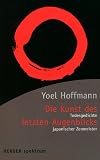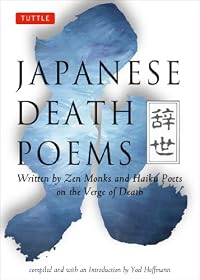
Japanese Death Poems: Written by Zen Monks and Haiku Poets on the Verge of Death
by Yoel Hoffmann (Editor)
On This Page
Description
Although the consciousness of death is, in most cultures, very much a part of life, this is perhaps nowhere more true than in Japan, where the approach of death has given rise to a centuries-old tradition of writing jisei, or the "death poem." Such a poem is often written in the very last moments of the poet's life. Hundreds of Japanese death poems, many with a commentary describing the circumstances of the poet's death, have been translated into English here, the great majority of them for show more the first time. Yoel Hoffmann explores the attitudes and customs surrounding death in historical and present-day Japan, and gives examples of how these have been reflected in the nation's literature in general. The development of writing jisei is then examined-from the poems of longing of the early nobility and the more "masculine" verses of the samurai to the satirical death poems of later centuries. Zen Buddhist ideas about death are also described as a preface to the collection of Chinese death poems by Zen monks that are also included. Finally, the last section contains three hundred twenty haiku, some of which have never been assembled before, in English translation and romanized in Japanese. show lessTags
Recommendations









Member Reviews
"Japanese Death Poems" is a collection of just what the title suggests: death poems (jisei) written by Japanese throughout the centuries. Hoffman's discussion of the genre along with basic cultural background (some aspects of which are more solid than others) occupies the first third of the book; the second is composed of translations of jisei originally written in Classical Chinese; and the third and largest section contains haiku-style jisei along with romanizations of their original Japanese. It was this last aspect that convinced me to purchase the book, as Japanese poetry anthologies fail to include anything save the translation more often than not. The romanizations do help quite a bit, as they both allowed me to understand how show more the author arrived at her choices in translating and to formulate my own alternate translations when I disagreed with her choices. Another strength of Japanese Death Poems is to be found in the author's inclusion of biographical notes and death dates for the poems' authors, as well as explanations concerning the formalized symbolic imagery in the poems. The book's weaknesses are Hoffman's choice not to include the original characters for any of the poems; to not indicate vowel duration outside of the transliterations; her breakdown of the poems into "stanzas"; and her choice to organize the poems alphabetically by author instead of chronologically, thus destroying any opportunity to observe developments in language, expression, and symbolism within the form. Still, I recommend this book both for the uniqueness of its content and for the fact that it is more informative to the Japanese-speaker than other similar collections. show less
GoodReads Review:
Yakuo Tokuken wrote, "The words of a man before he dies are no small matter. This is a barrier that all must pass through." Ryuho also said that Only a man's years can teach him the art of detachment and ultimate departure.
Apt words. Apt words indeed. I think that's the main idea of this book, detachment and the enlightenment of 'ultimate departure.' So much dread and despair and uncertainty hangs around the notion of death that it's paralyzing. This book demystifies death, it's a journey. Are these Zen Buddhists certain of where they're going? Probably not, but they don't make a fuss about it. They embrace it, as death surely should be. I think everyone should give this book a read. It'll change your life.
Yakuo Tokuken wrote, "The words of a man before he dies are no small matter. This is a barrier that all must pass through." Ryuho also said that Only a man's years can teach him the art of detachment and ultimate departure.
Apt words. Apt words indeed. I think that's the main idea of this book, detachment and the enlightenment of 'ultimate departure.' So much dread and despair and uncertainty hangs around the notion of death that it's paralyzing. This book demystifies death, it's a journey. Are these Zen Buddhists certain of where they're going? Probably not, but they don't make a fuss about it. They embrace it, as death surely should be. I think everyone should give this book a read. It'll change your life.
I've been on Goodreads for under three weeks and am already finding and dipping into books I'd never heard of. What fun I'm having.
This one acquaints me with the ancient (since 7th c.) Japanese tradition of leaving poems as parting statements at the time of death. That many of the deaths in the first section are the self-inflicted outcomes of seppuku lends a grisly cast. A second section contains the less grisly goodbyes of monks, while the third offers a haiku miscellany, including legendary Basho's last, from Nov. 24, 1694, the day he left this world at age fifty-one.
I must confess to being initially underwhelmed by some of these farewell tankas and haikus as given here. It's hard to know whether the fault lies with translation that show more often doesn't even bother to count the syllables, or perhaps {who knows?) the tradition itself may not always have demanded or inspired the highest artistry in words and image. The little histories given with each poem suggest that many may have been composed on the spot, perhaps during the author's final minutes. It may be that in many cases simply performing the last-poem action in one's death's ceremony may have sufficed. For many, nothing strikingly novel in the use of traditional images like plum blossoms, cicadas, and the Pure Land journey was called for. But who am I, a westerner, to judge and try to balance novelty vs. convention in an ancient culture I can't hope ever to understand?
On a second reading, though, my inner critic is silenced and I am moved by each and every of these cries and sighs.
Basho's own last haiku does not disappoint, though this book's translator doesn't do it justice:
On a journey, ill:
My dream goes wandering
over withered fields.
Here's a better version, by David Bowles:
Ill on a journey,
Through desolate fields my dreams
Aimlessy wander.
And here's my own, somewhat licentious version:
Now journeying, ill;
My dream burns on, fluttering
Over stubbled fields. show less
This one acquaints me with the ancient (since 7th c.) Japanese tradition of leaving poems as parting statements at the time of death. That many of the deaths in the first section are the self-inflicted outcomes of seppuku lends a grisly cast. A second section contains the less grisly goodbyes of monks, while the third offers a haiku miscellany, including legendary Basho's last, from Nov. 24, 1694, the day he left this world at age fifty-one.
I must confess to being initially underwhelmed by some of these farewell tankas and haikus as given here. It's hard to know whether the fault lies with translation that show more often doesn't even bother to count the syllables, or perhaps {who knows?) the tradition itself may not always have demanded or inspired the highest artistry in words and image. The little histories given with each poem suggest that many may have been composed on the spot, perhaps during the author's final minutes. It may be that in many cases simply performing the last-poem action in one's death's ceremony may have sufficed. For many, nothing strikingly novel in the use of traditional images like plum blossoms, cicadas, and the Pure Land journey was called for. But who am I, a westerner, to judge and try to balance novelty vs. convention in an ancient culture I can't hope ever to understand?
On a second reading, though, my inner critic is silenced and I am moved by each and every of these cries and sighs.
Basho's own last haiku does not disappoint, though this book's translator doesn't do it justice:
On a journey, ill:
My dream goes wandering
over withered fields.
Here's a better version, by David Bowles:
Ill on a journey,
Through desolate fields my dreams
Aimlessy wander.
And here's my own, somewhat licentious version:
Now journeying, ill;
My dream burns on, fluttering
Over stubbled fields. show less
This book is a great introduction to Japanese poetry in general, Japanese ideas about death, and the culture that gave rise to the custom of a death poem. While not all of the poems were equally "good" (though it's hard to judge from my vantage point as someone who does not speak Japanese, knowing that a lot is probably lost in translation), some of them I liked a lot. It really got me thinking more about Zen and death, and I gained a more nuanced understanding of haiku and tanka poetry after reading this book. The notes from the author were very enjoyable and helpful.
Yes, the title is accurate: this is an anthology of jisei: poems written by poets whose deaths were imminent. The book has three sections: an introduction to Japanese poetry and the tradition of writing death poems, Chinese death poems written by Zen monks, and Japanese death poems written by haiku poets. I thought the introduction was useful. I've read several haiku anthologies, but none of them had covered death poems, much less Japanese views on death, so the introduction helped orient me to this genre. The poetry sections are arranged alphabetically by the poets' names, and the collection ranges from the 13th century to the early 20th century. Hoffmann often includes notes about a poet, which helped me see them as people, and not show more just as a random name attached to a poem. (Also helpful for identifying which poets were women.) The book also has an index of poetic terms, which helps with remembering what the Japanese words mean and in locating which poems they were in.
This is a well-organized anthology. I wish that I'd liked more of the poems themselves, but many of them simply didn't appeal to me. A poem written shortly before dying isn't necessarily the poet's best work, although I'm mightily impressed that so many people over so many centuries managed it at all. Still, I liked this book and think this was a great idea for an anthology. show less
This is a well-organized anthology. I wish that I'd liked more of the poems themselves, but many of them simply didn't appeal to me. A poem written shortly before dying isn't necessarily the poet's best work, although I'm mightily impressed that so many people over so many centuries managed it at all. Still, I liked this book and think this was a great idea for an anthology. show less
I confess I was intrigued by the title - “Japanese Death Poems”, subtitled “Written by Zen Monks and Haiku Poets on the Verge of Death”. It may seem morbid but there is something profound in reading these “last words” from enlightened men who lived centuries ago. The book treats their poems well; there is a lengthy introduction that covers the forms of the poetry as well as death in Japanese culture. The commentary interspersed throughout the book is also insightful.
There are a several “non-death” poems in the book that I liked; here are a few:
On friendship:
Within your life and mine
there lives
a cherry blossom.
- Basho (1643-1694)
On marriage:
Autumn evening:
“Isn’t it time,” she comes and asks,
“to light the show more lantern?”
- Ochi Etsujin (b. 1656)
On transience:
This world –
to what may I liken it?
To autumn fields
lit dimly in the dusk
by lightning flashes.
- Minamoto-no-Shitago (911-983),
Of course the main focus are the death poems; I start with my favorite:
On a journey, ill:
my dream goes wandering
over withered fields.
- Basho (d. 1694 at the age of 51)
Stumble,
fall,
slide down the snow slope.
- Getsurei (d. 1919 at the age of 40)
Within the vast and empty
autumn night
dawn breaks.
- Kinko (d. 1860 at the age of 60)
Swear to me, pine,
for many years
to keep on young and green.
- Koseki (d. 1788 at an unknown age)
Fall, plum petals,
fall – and leave behind the memory
of scent.
- Minteisengan (d. 1844 at the age of 67)
One leaf lets go, and
then another takes
the wind.
- Ransetsu (d. 1707 at the age of 54)
A short night
wakes me from a dream
that seemed so long.
- Yayu (d. 1783 at the age of 82)
Life is like a cloud of mist
Emerging from a mountain cave
And death
A floating moon
In its celestial course.
If you think too much
About the meaning they may have
You’ll be bound forever
Like an ass to a stake.
- Mumon Gensen (d. 1390 at the age of 68)
Lastly, the one by Shisui, who died in 1769 at the age of 44 after writing his death “poem”, a simple circle, indicating both the void and enlightenment. show less
There are a several “non-death” poems in the book that I liked; here are a few:
On friendship:
Within your life and mine
there lives
a cherry blossom.
- Basho (1643-1694)
On marriage:
Autumn evening:
“Isn’t it time,” she comes and asks,
“to light the show more lantern?”
- Ochi Etsujin (b. 1656)
On transience:
This world –
to what may I liken it?
To autumn fields
lit dimly in the dusk
by lightning flashes.
- Minamoto-no-Shitago (911-983),
Of course the main focus are the death poems; I start with my favorite:
On a journey, ill:
my dream goes wandering
over withered fields.
- Basho (d. 1694 at the age of 51)
Stumble,
fall,
slide down the snow slope.
- Getsurei (d. 1919 at the age of 40)
Within the vast and empty
autumn night
dawn breaks.
- Kinko (d. 1860 at the age of 60)
Swear to me, pine,
for many years
to keep on young and green.
- Koseki (d. 1788 at an unknown age)
Fall, plum petals,
fall – and leave behind the memory
of scent.
- Minteisengan (d. 1844 at the age of 67)
One leaf lets go, and
then another takes
the wind.
- Ransetsu (d. 1707 at the age of 54)
A short night
wakes me from a dream
that seemed so long.
- Yayu (d. 1783 at the age of 82)
Life is like a cloud of mist
Emerging from a mountain cave
And death
A floating moon
In its celestial course.
If you think too much
About the meaning they may have
You’ll be bound forever
Like an ass to a stake.
- Mumon Gensen (d. 1390 at the age of 68)
Lastly, the one by Shisui, who died in 1769 at the age of 44 after writing his death “poem”, a simple circle, indicating both the void and enlightenment. show less
Great... but I really thought the addition of Kanji where appropriate would have put it over the top.
Members
- Recently Added By
Lists

Authors from Israel
2 works; 1 member
Author Information

Common Knowledge
- Canonical title
- Japanese Death Poems: Written by Zen Monks and Haiku Poets on the Verge of Death
- Alternate titles
- Japanese Death Poems
- Original publication date
- 1998
- Important places
- Japan
- Epigraph
- Wakaishu ya
shinu ga iya nara
ima shiniyare
hito-tabi shineba
mō shinanu zo ya
O young folk--
if you fear death,
die now!
Having died once,
you won't die again. - First words
- (Preface) Death may indeed be nothing in itself, yet the consciousness of death is in most cultures very much a part of life.
(Introduction) The earliest know examples of Japanese lyric poetry are verses found in the first records of Japanese history, the Kojiki (Record of anciet matters), completed in 712 A.D. - Last words
- (Click to show. Warning: May contain spoilers.)Frost on grass:
a fleeting form, that is, and is not! - Original language
- Japanese
Classifications
- Genres
- Poetry, Fiction and Literature
- DDC/MDS
- 895.6 — Literature & rhetoric Asian Literature Literatures of East and Southeast Asia Japanese
- LCC
- PL759 .J37 — Language and Literature Languages and literatures of Eastern Asia, Africa, Oceania Languages of Eastern Asia, Africa, Oceania Japanese language and literature Japanese literature Collections
- BISAC
Statistics
- Members
- 866
- Popularity
- 31,235
- Reviews
- 8
- Rating
- (4.04)
- Languages
- English, German, Spanish
- Media
- Paper, Ebook
- ISBNs
- 8
- UPCs
- 1
- ASINs
- 2