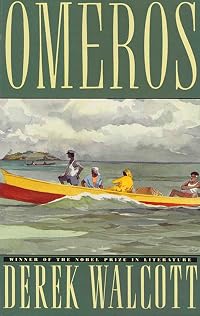
Omeros
by Derek Walcott
On This Page
Description
A poem in five books, of circular narrative design, titled with the Greek name for Homer, which simultaneously charts two currents of history: the visible history charted in events -- the tribal losses of the American Indian, the tragedy of African enslavement -- and the interior, unwritten epic fashioned from the suffering of the individual in exile.Tags
Recommendations



























Member Recommendations
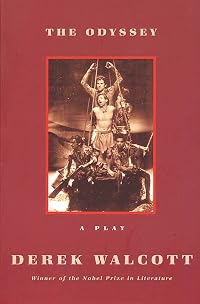
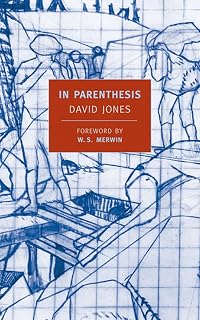
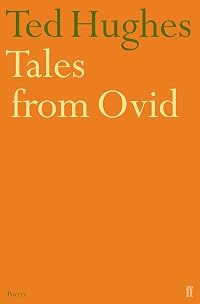
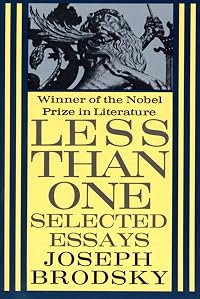
thorold Raban does in prose what Walcott does in verse for the diagonally-opposite corner of the continent.
Member Reviews
The Nobel Prize was awarded for this Homeric poem -- and the announcement was the discovery of gold in the Caribbean archipelago! "Omeros" is the title of this long and interconnected poem -- broken out in easily-read Danteian terza rima (for the most part). The title is from the way a beautiful woman pronounced the protagonist fisherman's name -- "Homer". And the "Om" invokes the revenant spirit of the conch, "mer" is a word for mother, and "os" is a word for bone. Just sayin'....
There are many--and I am one--who avoid long poems, or "poetry" of pointless tale-telling and irritating similes that avoid telling a good tale. Walcott provides a robust tale--this is an Odessian romp through the tree-falls and archipelago of the Caribbean. show more And it is filled with jewels, and joys and pains. Irony is the salvation in the struggle with colonials and slaves, all of whom are struggling with consciousness. Homer himself takes a turn in narrating this semi-autobiographical unveiling of a wounded Achilles. There are many allusions to historical events--the islands passed from one colonial power to another after various battles. There are many echoes and nods to mythology--the role of a beauty among tribes haunted by sex. But this is not knotted obscurity like trying to read a Pound-ed cant Canto. This poetry is vivid and accessible -- filled with moist surprises, just like a jungle. You don't have to read, or long for, footnotes to "explain" the meaning.
I laughed and wept, and felt enriched. And relieved that I was able to sail off with treasure and without the burden of having had to pillage the smoking village and slaughter any stinking pirates and naval pretenders. show less
There are many--and I am one--who avoid long poems, or "poetry" of pointless tale-telling and irritating similes that avoid telling a good tale. Walcott provides a robust tale--this is an Odessian romp through the tree-falls and archipelago of the Caribbean. show more And it is filled with jewels, and joys and pains. Irony is the salvation in the struggle with colonials and slaves, all of whom are struggling with consciousness. Homer himself takes a turn in narrating this semi-autobiographical unveiling of a wounded Achilles. There are many allusions to historical events--the islands passed from one colonial power to another after various battles. There are many echoes and nods to mythology--the role of a beauty among tribes haunted by sex. But this is not knotted obscurity like trying to read a Pound-ed cant Canto. This poetry is vivid and accessible -- filled with moist surprises, just like a jungle. You don't have to read, or long for, footnotes to "explain" the meaning.
I laughed and wept, and felt enriched. And relieved that I was able to sail off with treasure and without the burden of having had to pillage the smoking village and slaughter any stinking pirates and naval pretenders. show less
5. Omeros by Derek Walcott
published: 1990
format: 325 page Paperback
acquired: December
read: Jan 1-5, restarted Jan 8-18
rating: 5
From about 1667 to 1814, as the British and French fought for supremacy in the Caribbean and elsewhere, the strategically important island of St. Lucia was fought over numerous times and changed hands fourteen times. It became know as the "Helen of the West Indies". This is Walcott's pick-up point for his masterpiece.
It is, in its simplest sense, a story of the island of St. Lucia, one that brings in its history of conquest, extermination and slavery, and apparently the author's personal history, along with some selected context from around the world, and that focuses on the economic classes on the island, show more especially on the poverty. Walcott, in a magical touch, Homerizes everything. The poor islanders are given Homeric names, Achille, Hector, Philoctete, Helen and, of course, Omeros, who is blind. (Omeros is the phonetically correct spelling of the ancient Greek Author, Όμηρος.) Virgil's Sybil becomes Ma Kilman. The Englishman is named Denis Plunkett, and his Irish wife is Maud. The narrator never tells us his name, or that of his lost girlfriend he seeks to find or overcome, while neglecting his wife and children. Dante and Joyce leave their own traces, although I haven't read them couldn't appreciate this much.
Achille (pronounced A-sheel) and Hector do come to battle over Helen, Philoctete struggles with an infected and unhealing wound on his leg, and blind Omeros sees a great deal. And there is a vast finicky ocean to get lost in.
I've been shy to review this because I am not able to capture the impact of its language. The story is originally just context, an excuse for the expression Walcott makes of it. And it's astounding, even more so if you can apply Walcott's own voice, with its St. Lucian/Caribbean lilt. It's something to live in for a bit.
I found that I was ok following, and then about halfway through I was completely lost. (Achille is passed out on a boat, and winds his way to a river and then he's walking back across the ocean floor. I couldn't quite workout that he had gone backwards in time, to an African village along the banks of a large African river, even if I could get the generally hallucinatory feel.) So, I started using Shmoop, and then, as Walcott the narrator travels through the western major cities, bumping into James Joyce and whatnot, unnamed of course, I became completely dependent. I would read the Shmoop summary of a chapter first to get the story, then read the chapter itself for the language. Certainly a hackneyed way to read this. But it got me through with a degree of appreciation. If I was left with a sense it evolved for a time into something a little plot heavy, that probably says more about my reading style than the contents.
The overall impact for me was the sense of presence Walcott creates. Everything has a spiritual impact, or lives, in this language, in direct counter to that. Poverty, accidents, tourism, development all live as tragic counters to weakening divine spirits of these decedents of slavery. Parallels are brought in, heavily, with the extermination of the North American Indians, especially the well documented massacre at Wounded Knee, in 1890, in the midst of the ghost dance. Walcott, in interviews, says that he is angry. But his poem is not exactly, or not simply that. It's both more circumspect and, on the surface at least, pledging some variation of hope.
2018
https://www.librarything.com/topic/279863#6353501 show less
published: 1990
format: 325 page Paperback
acquired: December
read: Jan 1-5, restarted Jan 8-18
rating: 5
From about 1667 to 1814, as the British and French fought for supremacy in the Caribbean and elsewhere, the strategically important island of St. Lucia was fought over numerous times and changed hands fourteen times. It became know as the "Helen of the West Indies". This is Walcott's pick-up point for his masterpiece.
It is, in its simplest sense, a story of the island of St. Lucia, one that brings in its history of conquest, extermination and slavery, and apparently the author's personal history, along with some selected context from around the world, and that focuses on the economic classes on the island, show more especially on the poverty. Walcott, in a magical touch, Homerizes everything. The poor islanders are given Homeric names, Achille, Hector, Philoctete, Helen and, of course, Omeros, who is blind. (Omeros is the phonetically correct spelling of the ancient Greek Author, Όμηρος.) Virgil's Sybil becomes Ma Kilman. The Englishman is named Denis Plunkett, and his Irish wife is Maud. The narrator never tells us his name, or that of his lost girlfriend he seeks to find or overcome, while neglecting his wife and children. Dante and Joyce leave their own traces, although I haven't read them couldn't appreciate this much.
Achille (pronounced A-sheel) and Hector do come to battle over Helen, Philoctete struggles with an infected and unhealing wound on his leg, and blind Omeros sees a great deal. And there is a vast finicky ocean to get lost in.
I've been shy to review this because I am not able to capture the impact of its language. The story is originally just context, an excuse for the expression Walcott makes of it. And it's astounding, even more so if you can apply Walcott's own voice, with its St. Lucian/Caribbean lilt. It's something to live in for a bit.
I found that I was ok following, and then about halfway through I was completely lost. (Achille is passed out on a boat, and winds his way to a river and then he's walking back across the ocean floor. I couldn't quite workout that he had gone backwards in time, to an African village along the banks of a large African river, even if I could get the generally hallucinatory feel.) So, I started using Shmoop, and then, as Walcott the narrator travels through the western major cities, bumping into James Joyce and whatnot, unnamed of course, I became completely dependent. I would read the Shmoop summary of a chapter first to get the story, then read the chapter itself for the language. Certainly a hackneyed way to read this. But it got me through with a degree of appreciation. If I was left with a sense it evolved for a time into something a little plot heavy, that probably says more about my reading style than the contents.
The overall impact for me was the sense of presence Walcott creates. Everything has a spiritual impact, or lives, in this language, in direct counter to that. Poverty, accidents, tourism, development all live as tragic counters to weakening divine spirits of these decedents of slavery. Parallels are brought in, heavily, with the extermination of the North American Indians, especially the well documented massacre at Wounded Knee, in 1890, in the midst of the ghost dance. Walcott, in interviews, says that he is angry. But his poem is not exactly, or not simply that. It's both more circumspect and, on the surface at least, pledging some variation of hope.
2018
https://www.librarything.com/topic/279863#6353501 show less
An epic poem centering on the Caribbean island of St Lucia, which riffs on the Homeric epics. Ambitious and expansive, but for me it whiplashed wildly between engaging passages of beautiful, vivid description and being a total slog.
Omeros is an epic poem, loosely modeled on The Odyssey. Set in the Caribbean, its main characters are a collection of fishermen, a mysteriously beautiful woman named Helen, and a retired English major and his wife. The book jacket described a scene where one of the fishermen is transported to his ancestral African village. The led me to believe his journey was a central element of the story, but this was just one of many vignettes in this book.
Having enjoyed The Odyssey, I really wanted to like Omeros, too. However, the story didn't "flow"; it seemed to dart all over the place, with some sections set in the Caribbean, and others in London and America. I couldn't find the "glue" that made it all hang together. Significant events, like show more the death of an important character, were told in such a way that I had to re-read the passage to "get it." However, the story of the major and his wife, living out their final years on the island, was most poignant. Some passages in this work were quite lyrical, and I enjoyed the rhythmic language. However, my overall impression was less than positive. show less
Having enjoyed The Odyssey, I really wanted to like Omeros, too. However, the story didn't "flow"; it seemed to dart all over the place, with some sections set in the Caribbean, and others in London and America. I couldn't find the "glue" that made it all hang together. Significant events, like show more the death of an important character, were told in such a way that I had to re-read the passage to "get it." However, the story of the major and his wife, living out their final years on the island, was most poignant. Some passages in this work were quite lyrical, and I enjoyed the rhythmic language. However, my overall impression was less than positive. show less
Derek Walcott was born in 1930 in Castries, Santa Lucia. With the publication of Omeros in 1990, Derek Walcott produced a poem in the tradition of the Iliad and the Aeneid. An epic spanning many years of history, both personal and international, and encompassing the sea and land of his many home lands, it is a tour de force that inspires the reader. He blends references to time past and present, to places in which he lived when young and old, with a subtle touch that limns the beauty of a dream. I was gripped and intrigued by the complex turns and the evocative tapestry of this lengthy poem. A difficult but immensely enjoyable read for the poetry lovers of the new world.
I read this when it came out, and was startled by its ductile grandeur and directness. I aloudread it to various students, in classes, and in large gatherings, for several years. It is simply the best re-working of the Odyssey since Joyce's Ulysses. And of course, Walcott has the daring of poetry; Joyce collapsed into prose.
A decade ago I had maybe fifty lines by heart, in short passages, simply because I had aloudread it enough to remember them. The only one that stays with me in my decline is the one a tried--and failed--to say to the author when he was signing books at a community college convention in Portsmouth, NH (I think). Waiting in a long line, I brought my copy from home to him, and tried to say the very last line, "The moon show more shone like a slice of raw onion." But my voice failed me, only the second time in my life: the first was in third grade, in a Christmas pageant, where I had trouble reading the Luke story in front of an audience.
By the way, Walcott's multi-linguality does not really come through in the poem, and maybe it shouldn't; but here is a man for whom English may be the second or third language he learned as a child, after Creole and perhaps French. I think he may have read some Homer in Greek as well. show less
A decade ago I had maybe fifty lines by heart, in short passages, simply because I had aloudread it enough to remember them. The only one that stays with me in my decline is the one a tried--and failed--to say to the author when he was signing books at a community college convention in Portsmouth, NH (I think). Waiting in a long line, I brought my copy from home to him, and tried to say the very last line, "The moon show more shone like a slice of raw onion." But my voice failed me, only the second time in my life: the first was in third grade, in a Christmas pageant, where I had trouble reading the Luke story in front of an audience.
By the way, Walcott's multi-linguality does not really come through in the poem, and maybe it shouldn't; but here is a man for whom English may be the second or third language he learned as a child, after Creole and perhaps French. I think he may have read some Homer in Greek as well. show less
It would be welcome if OMEROS was accompanied by a tour guide.
"...when the sunrise brightens the river's memory."
Parallels with Homer's Iliad can be hard to find in St. Lucia and Africa.
So good that Ma of the No Pain Cafe finally searches out The Cure that we all might like to find!
Helen and Achille, Helen and Hector, Helen and Major Plunket...? And Hector's baby...?
We understand the characters and travels of Achille, Seven Seas, and Philoctete, yet so little about Helen or Hector.
The author as a main character delivered an unusual turn to the plot of rescues and hallucination.
I felt a connection with St. Lucia, yet little with Achille, Hector, or Helen.
And why did Maud bend to Helen's whims?
OMEROS = mysterious, mystical, inscrutable, show more cyclical, "con-fu-sion," and yes, inspiring. show less
"...when the sunrise brightens the river's memory."
Parallels with Homer's Iliad can be hard to find in St. Lucia and Africa.
So good that Ma of the No Pain Cafe finally searches out The Cure that we all might like to find!
Helen and Achille, Helen and Hector, Helen and Major Plunket...? And Hector's baby...?
We understand the characters and travels of Achille, Seven Seas, and Philoctete, yet so little about Helen or Hector.
The author as a main character delivered an unusual turn to the plot of rescues and hallucination.
I felt a connection with St. Lucia, yet little with Achille, Hector, or Helen.
And why did Maud bend to Helen's whims?
OMEROS = mysterious, mystical, inscrutable, show more cyclical, "con-fu-sion," and yes, inspiring. show less
Members
- Recently Added By
Lists

The wanderings of Odysseus
61 works; 6 members

Black Authors
384 works; 32 members

Schomburg Centennial Reading List
100 works; 4 members

BBC World Book Club
265 works; 5 members

Big Jubilee List
70 works; 3 members

Books Set on Islands
190 works; 24 members

Favorite Caribbean Books
60 works; 28 members

My TBR Poetry List
3 works; 1 member

water on the brain: maritime fiction
74 works; 18 members

Myth (Reuse and Retelling)
188 works; 24 members

Nobel Price Winners
222 works; 20 members

1990s
309 works; 17 members
Books Set in the Caribbean
18 works; 5 members

Best African and African diaspora books
111 works; 4 members
Best of World Literature
435 works; 52 members

Best Contemporary Literary Fiction (Around the Last 30 Years)
388 works; 124 members

Narrative verse for pleasure
75 works; 8 members

World Book Club (BBC World Service)
206 works; 1 member
Author Information

75+ Works 4,330 Members
Derek Alton Walcott was born in Castries, St. Lucia on January 23, 1930. He received a bachelor's degree in French, Latin, and Spanish at the University of the West Indies in 1953. He also began writing plays. His first play, about the revolutionary Haitian leader Henri Christophe, was produced in St. Lucia in 1950. He taught at schools in St. show more Lucia, Grenada and Jamaica while continuing to write and stage plays. His plays included Lone, Sea at Dauphin, Ti-Jean and His Brothers, Malcochon, and Dream on Monkey Mountain. He later wrote the book and collaborated with the singer and songwriter Paul Simon on the lyrics for The Capeman, a musical about a Puerto Rican gang member who murdered three people in Manhattan in 1959. He was a professor at Boston University from 1981 until retiring in 2007. His metaphorical poetry captured the physical beauty of the Caribbean, the harsh legacy of colonialism, and the complexities of living and writing in two cultural worlds His collections of poetry included In a Green Night, Selected Poems, The Castaway, The Gulf, Sea Grapes, Another Life, Omeros, Tiepolo's Hound, and The Prodigal. He received the Queens Medal for Poetry, the Nobel Prize for Literature in 1992, and the T. S. Eliot Prize for his poetry collection, White Egrets, in 2011. He died on March 17, 2017 at the age of 87. (Bowker Author Biography) show less
Awards and Honors
Awards
Distinctions
Notable Lists
Work Relationships
Is a retelling of
The Odyssey by Homer
Has as a student's study guide
Common Knowledge
- Canonical title*
- Omeros
- Original title
- Omeros
- Original publication date
- 1990
- Important places*
- Saint Lucia
- Dedication
- For my shipmates in this craft,
for my brother, Roderick,
& for Roger Straus - First words
- "This is how, one sunrise, we cut down them canoes."
- Last words
- (Click to show. Warning: May contain spoilers.)When he left the beach the sea was still going on.
- Original language
- English
*Some information comes from Common Knowledge in other languages. Click "Edit" for more information.
Classifications
Statistics
- Members
- 1,309
- Popularity
- 18,470
- Reviews
- 22
- Rating
- (3.93)
- Languages
- 7 — Danish, Dutch, English, German, Italian, Spanish, Portuguese (Portugal)
- Media
- Paper, Ebook
- ISBNs
- 18
- ASINs
- 8