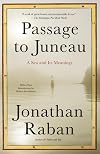
Passage to Juneau
by Jonathan Raban
On This Page
Description
Acclaimed travel writer Jonathan Raban invites us aboard his boat, a floating cottage cluttered with books, curling manuscripts, and dead ballpoint pens. He's about to sail alone from Seattle to the Alaskan Panhandle, following an ancient sea route rich in history, riddles, and whirlpools. It's the perfect setting for Raban's prodigious intellect, eloquence, and eye for detail.Tags
Recommendations










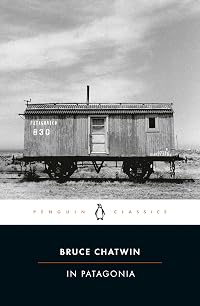
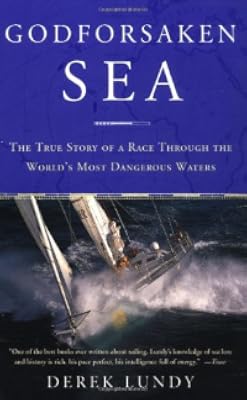

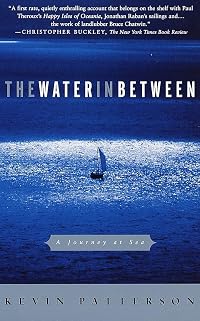


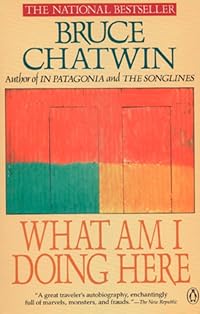


Member Recommendations

John_Vaughan It is difficult to choose between these marvellous travel narratives but Coasting (an earlier work) is full of the humanity of Raban's writing. Passage is more scholarly, containing deep history, but has a theme of loss. Coasting celebrates both the travel and the country.

John_Vaughan Raban encompasses the spirit of the Smeetons and pays a respectful visit to their memory during his passage.

John_Vaughan The author's own passage to 'home' in the NW.

thorold Raban does in prose what Walcott does in verse for the diagonally-opposite corner of the continent.
Member Reviews
Rather as he does in Coasting, Raban takes the conventional framework of the travel narrative and shakes it up to give structure to a complex, multifaceted meditation on the ways people engage with places and struggle to find sense in them. The result is more like a narrative poem than a prose travel book — ideas and trains of thought are linked by being juxtaposed and intermingled in the text, rather than by the author drawing explicit connections between them. The closest parallel I could think of to the effect is Derek Walcott's Omeros, but Raban manages to do it without the safety-net of poetic meter. Daring, elegant, and extremely rewarding for the reader, even if Raban's bleak mood is sometimes a bit hard to take.
Loved this book. Sailing with Mr. Raban is an adventure in history, natural history, philosophy and it is amusing as well. Even though his adventure had a rather bitter ending, it was good to be along on the cruise. His humor is threaded throughout the story. Not obtrusive, but quiet and natural. He shared some very interesting perspectives on the native arts and ways of looking at the world around them. Whether he is right or not, I don't know, but the musings were eye-opening to me. I always enjoy when I am presented with a new perspective on the world.
It may be a gimmick to other readers, but for me his digressions on the contents of his ship's library (why he keeps what he does in an extremely limited space) is the most fascinating aspect of the book. He muses on how the water, despite its real dangers, would have been the most familiar and comfortable part of the "landscape" to the Northwest Coast Indians, and elaborates on their religion and their stories. He highlights aspects of the diaries of Vancouver and other European explorers as he passes important landmarks they named for the West.
Hashing through his family troubles was far less interesting to me (why wouldn't his wife leave him, given the amount of consideration he seems to afford to her and their kid?). I just loved show more learning what was important and relevant in his library. Maybe that's why we're all here, after all? No wonder I'm a librarian... show less
Hashing through his family troubles was far less interesting to me (why wouldn't his wife leave him, given the amount of consideration he seems to afford to her and their kid?). I just loved show more learning what was important and relevant in his library. Maybe that's why we're all here, after all? No wonder I'm a librarian... show less
I was alomst a bit annoyed when the intimate, personal accounts popped up - as I knew they inevitably would - because concerning landscape and its meaning for the Natives of the Northwest, this is one of the finest of Raban's descriptive pieces. But only until I understood to what extent the several levels were interwoven. And yet - I'm not sure if the people concerned in the autobiographic sections would have approved to be inlcuded so explicitly...
How could I not like this book? Much of it takes place in my home waters I read it while far from home. The musings on west coast natives and captain Vancouver are great, some very insightful. All of this woven through a sad personal story. Well worth the time.
Passage to Juneau: A Sea and Its Meanings by Jonathan Raban (Author) Pantheon (1999), Edition: 1st, 448 pages Jonathan Raban solo sails his sloop from Seattle to Juneau, mirroring the explorations of George Vancouver and others at the end of the eighteenth century. While coupling the past to the present with transformative insight, Raban takes us along on his own inside passage - the interior journey of self-discovery that encompassed the voyage – coming to terms with the death of a father, with whom he had a difficult relationship; and the end of a marriage, which took him almost by surprise. Anthropology, history, oceanography, geography, geology, seamanship, folklore, literary and art history,spiritual and religious beliefs – all show more are woven thoughtfully and beautifully through a story that is notable for the perfect pitch of its prose. Passage to Juneau brings the complex hydrology of the Inside passage to life in ways that will amaze those who take the passage only as passengers, and makes a profound and convincing argument for the influence of sea over land in shaping the lives, cultures, art, and spiritual beliefs of the peoples of the Inside Passage. show less
Whatever it was or is that readers love about this book, unfortunately I think I missed it. It didn't feel like Raban had his heart in the trip at all, and he rarely has a positive thing to say about anything. In fact, in most cases he belittles the people he meets. I would hate to make an appearance in one of his books through fear of what he might say. Don't get me wrong, at times his writing is fantastic - especially in the second half of the book when events mean that the story becomes more personal. However, for a lot of the book he retells Captain Vancouver's search for the north passage as a parallel story. One which I found frustrating.
Members
- Recently Added By
Published Reviews
''Passage to Juneau'' shows that the sea isn't only the antonym of land, that wilderness is something other than civilization's absence. For like beauty -- or like the sublime, to which Raban devotes some of his best pages -- the wilderness has its being in the beholder's eye.
added by John_Vaughan
Lists

Best of Travel Narratives
142 works; 28 members

Set in the Pacific Northwest
136 works; 7 members
Author Information

26+ Works 5,341 Members
Jonathan Raban, author of Passage to Juneau, brings eloquent intellect and wry wit to his exploration of the American scene. Written over the past two decades, roughly the span of Raban's residence in his adopted city of Seattle, these essays delve into what it means, as immigrant, to feel rooted in America. Driving Home charts a course through show more the Pacific Northwest, American history, and current events as witnessed by a keenly observant visitor who is able to glean meanings and patterns that have become invisible to the natives. Raban spends much time on, near, and in water, and his ruminations on sailing and the sea are a welcome thread. Whether the topic is other writers or various painters and explorers, or the patrons of a Montana bar, who have engaged with our mythical and actual landscape, Raban has a visitor s eye for the absurd, and his tone is intimate, never nostalgic, and always fresh. show less
Awards and Honors
Distinctions
Notable Lists
Work Relationships
Inspired
Common Knowledge
- Canonical title
- Passage to Juneau
- Original title
- Passage to Juneau
- Original publication date
- 1999
- People/Characters
- Jonathan Raban
- Important places
- Seattle, Washington, USA; Alaska, USA; Inside Passage, Alaska, USA; USA; Washington, USA; Juneau, Alaska, USA
- Epigraph
- Je sens vibrer en moi toutes les passions
D'un vaisseau qui souffre:
Le bon vent, la tempete et ses convulsions
Sur l'immense gouffre
Me bercent. D'autres fois, calme plat, grand miroir
De mon desespoir!
- Charles Baudelaire, Les Fleurs du Mal
'That's a funny piece of water,' said Captain Hamilton
- Joseph Conrad, The Shadow Line - Dedication
- For Julia
- First words
- He was walking the dock; a big lummox, yellow hair tied back in a ponytail with a red bandanna, bedroll strapped to his shoulders.
- Last words
- (Click to show. Warning: May contain spoilers.)Crossing the tracks of the disused railroad, I took a deep breath before I climbed the last suburban quarter-mile and faced the rougher sea.
- Blurbers
- Kennedy, Douglas; Cartwright, Justin; Marriott, Edward; Sattin, Anthony
- Original language
- English
Classifications
- Genres
- Travel, Nonfiction, General Nonfiction, Biography & Memoir
- DDC/MDS
- 917.982 — History & geography Geography & travel Geography of and travel in North America West Coast U.S. Alaska
- LCC
- F851 .R33 — Local History of the United States, Canada and Latin America United States local history Cascade Range
- BISAC
Statistics
- Members
- 914
- Popularity
- 29,308
- Reviews
- 20
- Rating
- (4.01)
- Languages
- 5 — Dutch, English, German, Italian, Spanish
- Media
- Paper, Audiobook, Ebook
- ISBNs
- 17
- ASINs
- 7