Ostrich Boys
by Keith Gray
On This Page
Description
After their best friend Ross dies, English teenagers Blake, Kenny, and Sim plan a proper memorial by taking his ashes to Ross, Scotland, an adventure-filled journey that tests their loyalty to each other and forces them to question what friendship means.Tags
Recommendations






















Member Recommendations

Member Reviews
After reading this book in less than 24 hours, I have to agree with The Herald when they say that "if there were more writers like Keith Gray, more teenagers would read". Mr. Gray certainly knows the way a teenage mind works and he writes with such force that you can't help get sucked in the story.
This is the tale of Sim, Burke and Kenny; three 15 year old boys who have just lost his friend Ross in a terrible accident. All of them agree that no one really understood Ross, and feel the need to give him a proper funeral. A while back, Ross told them he wanted to go to a small town in Scotland called Ross -fitting indeed!-. So, the boys decide to steal his friends' ashes and set out on a journey to give Ross' death some sort of meaning. show more What they discover about themselves and their soon departed friend will affect their lives deeply. The journey gets more and more complicated as they travel along and you can't help rooting for them to reach that Scottish town before their parents or the police catch up to them.
I really loved this book: it is just like taking a peek inside your typical, moody teenager boy. You get to experience the fearlessness, the hilarious irreverent thoughts and that warm, comforting feeling that having good friends gives you. Funny, sad, lovely, eye opening and shocking all rolled into one book called Ostrich Boys. Brilliant! show less
This is the tale of Sim, Burke and Kenny; three 15 year old boys who have just lost his friend Ross in a terrible accident. All of them agree that no one really understood Ross, and feel the need to give him a proper funeral. A while back, Ross told them he wanted to go to a small town in Scotland called Ross -fitting indeed!-. So, the boys decide to steal his friends' ashes and set out on a journey to give Ross' death some sort of meaning. show more What they discover about themselves and their soon departed friend will affect their lives deeply. The journey gets more and more complicated as they travel along and you can't help rooting for them to reach that Scottish town before their parents or the police catch up to them.
I really loved this book: it is just like taking a peek inside your typical, moody teenager boy. You get to experience the fearlessness, the hilarious irreverent thoughts and that warm, comforting feeling that having good friends gives you. Funny, sad, lovely, eye opening and shocking all rolled into one book called Ostrich Boys. Brilliant! show less
A great road trip saga: 3 best friends set off with the ashes of the newly-deceased member of the foursome and trouble ensues. Author Gray has instinctive pacing and introduces enough twists and turns to make the trip both believable and suspenseful. He also packs a lot in between the adventures: musing on the difference between girls' and boys' friendships, how little we sometimes know our "best" friends and why, sometimes, friendships end. Selfishly, I wish the book and characters were set in the USA ... would make it a top contender for a classroom read. Can't blame me for wishin'... and it's a great book, regardless.
‘It’s not really kidnapping, is it? He’d have to be alive for it to be proper kidnapping.’
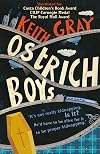
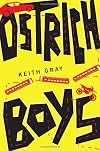
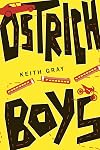
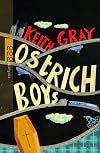
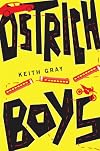
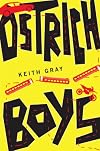
The cover of ‘Ostrich Boys’ encourages readers to anticipate a slightly surreal and humorous journey. This is certainly what Gray delivers, but he also produces something much more nuanced and ultimately meaningful than simply an unusual outing.
The basic plot
Kenny, Sim and Blake feel that their friend Ross’ funeral was a sea of hypocrisy and the opposite of a fitting tribute to him. In a flash of inspiration, they decide to take Ross’ ashes to Ross, a barely-village in Scotland. Nothing is allowed to be an obstacle: not the distance to Ross from Cleethorpes (261 miles); not the fact that Ross’ grieving sister is watching the urn; show more nor the growing tensions between the boys themselves. The fact that this seemingly impulsive, almost jolly trip is centred on the ashes of a dead friend is the first hint towards the underlying pathos in the story. Gradually, despite the humour, you are drawn into a more complex and subtle evaluation of friendships, loyalty and responsibility. By the end, although there are many humorous aspects still present, a much darker story has been laced together under the apparent froth.
Opening/style
The story opens on the three remaining friends hiding in their history teacher’s garden. It doesn’t take many pages to realise that Sim is out to avenge those he holds responsible for making Ross’ last days on earth miserable. Kenny and Blake are reluctant but Sim’s anger and determination are implacable as he almost drags the other two in his wake. The opening made me quite uncomfortable as I began to wonder what kinds of characters these were, and who they might hurt, but it soon becomes clear that they are mixed up young boys rather than dangerous teens, and I found myself hoping they would be able to find some solace.
Gray presents the action in a very physical way. As they shuffle awkwardly in front of this house, Blake finds that ‘the problem was Kenny, who kept squirming, shoving bits of me and Sim out into the glare of the streetlights.’ I enjoyed this kind of style which meant that the action was easy to follow, understand and imagine without a great deal of effort. Dialogue is also convincing in its simplicity, helping to create a believable set of characters and, again, creating an easy to understand and follow plot.
The only elements of Gray’s style that I personally did not appreciate were some occasional awkward expositions from Blake, the first person narrator, such as when he explains about his weight. To me, a few small sections like this came across as awkward and contrived and took me out of the flow of the story, but this didn’t happen very often. Usually, Gray has a very deft touch, even when speaking as Blake. Without melodrama, Blake’s response to Ross’ ‘accident’ is perfectly encapsulated.
‘At the funeral the vicar had called it an ‘accident’. But somehow the word wasn’t enough. It wasn’t big enough, powerful enough – didn’t mean enough. He hadn’t spilled a cup of tea, he hadn’t tripped over his own feet. He’d had his life smashed out of him. It felt like there should be a whole new word invented just to describe it.’
Characters/atmosphere
The boys are well drawn, each developing a distinct personality. Sim is angry and impatient; Kenny insecure and nervy; Blake introspective and a planner. As the storyline develops, the cracks in their relationship begin to emerge and their journey becomes increasingly difficult to fulfil. The distractions along the route seemed naturally slotted into the story, and the characters reacted to events in a way that was appropriate to their nature. Sometimes, the mood is elegiac, sometimes hopeful and sometimes it positively crackles with anger.
I didn’t enjoy the story as much as I might have done because I did feel that I had no interest in the other characters the boys met along the route. Instead, I wanted to find out about what was happening to those people left at home, worrying about the boys and the ashes. Interestingly, what felt to me like irritating diversions is described by Blake at the end as central to the message of the novel. I could see this once I reached the end, but obviously it didn’t prevent me from being rather frustrated in the middle section of the story!
Summary and final thoughts
Initially the boys are adamant that they knew Ross better than anyone else and they are not simply proud of their friendship, but startling dismissive of anyone else’s claims to Ross. They are horrified by the suggestion that Ross’ death might not have been an accident and are convinced that this proves they are the only people who really knew Ross at all. Gradually, a more complex picture emerges in which it seems that guilt may be a key factor in their trip. Are they simply hiding their heads in the sand?
The most interesting character for me was Blake, who hides his most recent role in Ross’ life for most of the novel. I felt that he should have been more affected by his own involvement, but this could simply have been part of the novel’s overall theme: boys do not share, boys do not talk, boys do not really look out for each other. Sim and Kenny are clearly affected, although they deny this as far as possible, but I expected something more from Blake as our storyteller. However, I think that if he had experienced a crisis of conscience it would have ruined the light flow of the story, and not really added anything to our understanding.
I didn’t enjoy this novel as much as I’d hoped, but that is quite possibly because I am not a young boy! It is consistently entertaining, albeit in quite a mild way, and successfully explores the mesh of relationships in teenagers’ lives. The central message is clear by the end of the story but was so subtly integrated that I never felt I was being preached at.
Finally, it is worth mentioning the controversial age banding. The book was labelled a ‘teen’ read by the publishers, but the author has objected strenuously and this will apparently not appear on subsequent editions. I feel that although there are some serious topics involved – primarily death, suicide and bullying – they are handled with such a light touch that it is would potentially be a suitable read for pre-teens too. So, unusually for me, I would disagree with the advice given that it is ‘unsuitable for younger readers’. show less
The cover of ‘Ostrich Boys’ encourages readers to anticipate a slightly surreal and humorous journey. This is certainly what Gray delivers, but he also produces something much more nuanced and ultimately meaningful than simply an unusual outing.
The basic plot
Kenny, Sim and Blake feel that their friend Ross’ funeral was a sea of hypocrisy and the opposite of a fitting tribute to him. In a flash of inspiration, they decide to take Ross’ ashes to Ross, a barely-village in Scotland. Nothing is allowed to be an obstacle: not the distance to Ross from Cleethorpes (261 miles); not the fact that Ross’ grieving sister is watching the urn; show more nor the growing tensions between the boys themselves. The fact that this seemingly impulsive, almost jolly trip is centred on the ashes of a dead friend is the first hint towards the underlying pathos in the story. Gradually, despite the humour, you are drawn into a more complex and subtle evaluation of friendships, loyalty and responsibility. By the end, although there are many humorous aspects still present, a much darker story has been laced together under the apparent froth.
Opening/style
The story opens on the three remaining friends hiding in their history teacher’s garden. It doesn’t take many pages to realise that Sim is out to avenge those he holds responsible for making Ross’ last days on earth miserable. Kenny and Blake are reluctant but Sim’s anger and determination are implacable as he almost drags the other two in his wake. The opening made me quite uncomfortable as I began to wonder what kinds of characters these were, and who they might hurt, but it soon becomes clear that they are mixed up young boys rather than dangerous teens, and I found myself hoping they would be able to find some solace.
Gray presents the action in a very physical way. As they shuffle awkwardly in front of this house, Blake finds that ‘the problem was Kenny, who kept squirming, shoving bits of me and Sim out into the glare of the streetlights.’ I enjoyed this kind of style which meant that the action was easy to follow, understand and imagine without a great deal of effort. Dialogue is also convincing in its simplicity, helping to create a believable set of characters and, again, creating an easy to understand and follow plot.
The only elements of Gray’s style that I personally did not appreciate were some occasional awkward expositions from Blake, the first person narrator, such as when he explains about his weight. To me, a few small sections like this came across as awkward and contrived and took me out of the flow of the story, but this didn’t happen very often. Usually, Gray has a very deft touch, even when speaking as Blake. Without melodrama, Blake’s response to Ross’ ‘accident’ is perfectly encapsulated.
‘At the funeral the vicar had called it an ‘accident’. But somehow the word wasn’t enough. It wasn’t big enough, powerful enough – didn’t mean enough. He hadn’t spilled a cup of tea, he hadn’t tripped over his own feet. He’d had his life smashed out of him. It felt like there should be a whole new word invented just to describe it.’
Characters/atmosphere
The boys are well drawn, each developing a distinct personality. Sim is angry and impatient; Kenny insecure and nervy; Blake introspective and a planner. As the storyline develops, the cracks in their relationship begin to emerge and their journey becomes increasingly difficult to fulfil. The distractions along the route seemed naturally slotted into the story, and the characters reacted to events in a way that was appropriate to their nature. Sometimes, the mood is elegiac, sometimes hopeful and sometimes it positively crackles with anger.
I didn’t enjoy the story as much as I might have done because I did feel that I had no interest in the other characters the boys met along the route. Instead, I wanted to find out about what was happening to those people left at home, worrying about the boys and the ashes. Interestingly, what felt to me like irritating diversions is described by Blake at the end as central to the message of the novel. I could see this once I reached the end, but obviously it didn’t prevent me from being rather frustrated in the middle section of the story!
Summary and final thoughts
Initially the boys are adamant that they knew Ross better than anyone else and they are not simply proud of their friendship, but startling dismissive of anyone else’s claims to Ross. They are horrified by the suggestion that Ross’ death might not have been an accident and are convinced that this proves they are the only people who really knew Ross at all. Gradually, a more complex picture emerges in which it seems that guilt may be a key factor in their trip. Are they simply hiding their heads in the sand?
The most interesting character for me was Blake, who hides his most recent role in Ross’ life for most of the novel. I felt that he should have been more affected by his own involvement, but this could simply have been part of the novel’s overall theme: boys do not share, boys do not talk, boys do not really look out for each other. Sim and Kenny are clearly affected, although they deny this as far as possible, but I expected something more from Blake as our storyteller. However, I think that if he had experienced a crisis of conscience it would have ruined the light flow of the story, and not really added anything to our understanding.
I didn’t enjoy this novel as much as I’d hoped, but that is quite possibly because I am not a young boy! It is consistently entertaining, albeit in quite a mild way, and successfully explores the mesh of relationships in teenagers’ lives. The central message is clear by the end of the story but was so subtly integrated that I never felt I was being preached at.
Finally, it is worth mentioning the controversial age banding. The book was labelled a ‘teen’ read by the publishers, but the author has objected strenuously and this will apparently not appear on subsequent editions. I feel that although there are some serious topics involved – primarily death, suicide and bullying – they are handled with such a light touch that it is would potentially be a suitable read for pre-teens too. So, unusually for me, I would disagree with the advice given that it is ‘unsuitable for younger readers’. show less
Blake, Kenny and Sim have just lost their best mate, Ross, to a car accident. Having attended the funeral and coming out dissatisfied with the way Ross's life was celebrated, the three teenagers decide to make a pilgrimage to the town of Ross, in Scotland, a place Ross once tried to runaway to. Only one problem, they have to steal his ashes first.
With that mission accomplished - messily - they embark on a 2 day train journey to Ross and thus begins an adventure and a journey of self-discovery for them all. After Kenny leaves his backpack (containing most of their money for the trip and Kenny's ticket) on a train during a frantic interchange things take a wild turn.
Relying on each other, the boys talk about Ross and share recent show more memories of him that start to paint a picture they don't recognise as their friend who would "stand up to anyone". It is clear that Ross is still having a marked effect on their lives - even from his urn in Blake's backpack.
Keith Gray writes young men very well - he speaks their language and I found these boys believable, sad, hilarious and likeable. I look forward to reading more books by Keith Gray very soon.
Did they get Ross to Ross? That would be telling..... show less
With that mission accomplished - messily - they embark on a 2 day train journey to Ross and thus begins an adventure and a journey of self-discovery for them all. After Kenny leaves his backpack (containing most of their money for the trip and Kenny's ticket) on a train during a frantic interchange things take a wild turn.
Relying on each other, the boys talk about Ross and share recent show more memories of him that start to paint a picture they don't recognise as their friend who would "stand up to anyone". It is clear that Ross is still having a marked effect on their lives - even from his urn in Blake's backpack.
Keith Gray writes young men very well - he speaks their language and I found these boys believable, sad, hilarious and likeable. I look forward to reading more books by Keith Gray very soon.
Did they get Ross to Ross? That would be telling..... show less
Kenny, Sim, Blake and Ross are best friends, fifteen year old boys they live in Cleethorpes, or at least three of them do now, for Ross has just been killed in an accident. Disgusted with the lack of any genuine input at Ross' funeral and the hypocrisy shown by those who by all rights should not even have been there, they think on what they can do to put matters right. After wreaking havoc locally taking revenge on those who they consider deserve it, they ponder what Ross would really have wanted. Recalling that Ross always wanted to go to Ross, Dumfries and Galloway (simply for reasons of the name), they decide that that's what they will do, take him there - but first they must secure his ashes from his family.
Blake, the somewhat show more overweight member of the group, narrates events as they steal away Ross' ashes and make their escape from Cleethorpes. We follow them on their incident filled quest, where the clumsiness of one causes a detour of route, and subsequent difficulties in reaching their ultimate destination. Along they way think about Ross, they ponder their friendships, and worry about the consequences they must face on returning home; the increasingly difficult journey testing the friendship of the three boys to the limits.
Ostrich Boys is an appealing and touching story, Keith Gray has created four very different, likeable boys bound by their loyalties to each other. Blake's narrative is honest, full of insight and peppered with touches of humour, making for an entertaining yet moving read. show less
Blake, the somewhat show more overweight member of the group, narrates events as they steal away Ross' ashes and make their escape from Cleethorpes. We follow them on their incident filled quest, where the clumsiness of one causes a detour of route, and subsequent difficulties in reaching their ultimate destination. Along they way think about Ross, they ponder their friendships, and worry about the consequences they must face on returning home; the increasingly difficult journey testing the friendship of the three boys to the limits.
Ostrich Boys is an appealing and touching story, Keith Gray has created four very different, likeable boys bound by their loyalties to each other. Blake's narrative is honest, full of insight and peppered with touches of humour, making for an entertaining yet moving read. show less
"Ross was hit by a car, knocked off his bike. At the funeral the vicar had called it an accident. But somehow the word wasn't enough. It wasn't big enough, powerful enough--didn't mean enough. He hadn't spilled a cup of tea, he hadn't tripped over his own feet. He'd had his life smashed out of him. It felt like there should be a whole new word invented just to describe it."
Upset over the loss of their best friend, Ross, and displeased by his funeral, Blake, Sim, and Kenny all agree: their dead mate deserves a proper ceremony. The funeral "felt like genuine betrayal," says Blake, because Ross means more to them than hoaxed compassion expressed by people who didn't care about him--not like Blake, Sim, or Kenny did, anyway. Ross was show more their friend and worthy of something authentic. Born in a moment of grief, hurt, and eagerness to do one last thing for their friend, the boys plan to take Ross to Ross--Ross, Scotland, that is.
"It's not really kidnapping, is it?" Kenny said. "He'd have to be alive, wouldn't he? For it to be a proper kidnapping, I mean."
What is supposed to be a two-day scheme stretches out to be a longer adventure as lost money, forgotten train tickets, and evading police jeopardize the mission. The biggest threat, however, lies with each other. Together, Ross, Kenny, and Sim all see themselves as the only three people who never wronged or abandoned Ross--not like his sister Caroline (who'd publicly embarrassed him), his ex-girlfriend Nina, the bully Sean Munro, or even Ross' parents. They easily dismiss the idea that Ross intentionally biked into the oncoming vehicle, but their sureness and friendship are tested as they each question their loyalty. This trip will become a bookmarked chapter in their lives they can’t forget. Expected to fortify their friendship, their willingness (or lack thereof) to speak honestly–to listen and understand–quietly lingers in the background. Difficult to ignore yet subtle, it hovers between the text, and I could sense its claws intimidating to tear an already weakened bond.
Our friendship used to be a solid square, one of us to each other. Things were very different as a triangle.
Ross is what they all gravitated toward in the beginning, and it was Ross who bound the four of them together. Now that Ross is dead, the remaining three will either strengthen their connection or watch it unravel.
Coming-of-age stories, by their nature, are stories most people relate to. They often capture those moments when the simple ignorance of childhood or youthful innocence begins to fray. For me, personally, I enjoy the dynamics of male friendships much more than the bond girls share. Perhaps it's because I find societal gender roles versus natural male and female relationships interesting, but boys often have a hinted intimacy sitting underneath all that masculinity. It's an affection that is, naturally, very different from girls. Once these little moments in the story are pieced together and viewed as a whole, it can strike powerfully as touching and meaningful.
Oddly, however, I am apathetic toward [b:Ostrich Boys|3954368|Ostrich Boys (Definitions)|Keith Gray|http://d.gr-assets.com/books/1331965854s/3954368.jpg|4000051]. Some kind of emotion usually rouses the instant I finish reading a book's last sentence. Whether I feel happy, disappointed, sad, bored, in love, or relieved, I at least feel something, but I am entirely void. This books is about three friends doing whatever they can to reach their destination--throw in a bungee jump, a few girls, a little bickering, and car-chase... Well, I just summarized the book for you. Gray could not, no matter how badly I wished he could, hook me into Ostrich Boys. Once again, I'm somewhat to blame. When I read the summary I mentally went back to Stand By Me (the movie, of course, because I sadly haven't read [b:The Body|11574|The Body|Stephen King|http://d.gr-assets.com/books/1328182521s/11574.jpg|2334601]) and [b:Looking for Alaska|99561|Looking for Alaska|John Green|http://d.gr-assets.com/books/1360206429s/99561.jpg|919292]. Both are great coming-of-age stories dealing with adventure, friendship, life, and death. Ostrich Boys, on the other hand, also deals with those issues, but they are dealt with lightly. I'll explain:
What I felt Gray failed to add was the right amount emotion, which felt brushed over like a secondary element. The humor helps deliver a light-hearted, young atmosphere, but I missed the sincerity. Indeed, there are moments when one or all three of the boys are caught brooding; albeit, they are short-lived moments. But I mean: hey! Their best friend just died. I know it's part of our cultural norm for boys to blanket their emotions, but these boys are friends. I didn't expect the characters to mourn via a sob party, letting their emotions run loose like caged animals desperate to be let out. What I did expect was to witness the boys loosen the grip that's strangling their feelings, thoughts, and in consequence: their friendship. With that, I thought they would thicken emotional ties that already have, in some way, connected them for life.
Maybe I am wrong, but I'd think Blake, Kenny, and Sim would feel the foundation of their friendship is strong enough to speak to each other. Why do they hesitate? It feels like they don't completely trust each other enough to know the other two--or at least one of the two--has the third's back. In a way, Gray explores the friendship through Blake's conversation with Kayleigh:
"We phone each other every night, and send each other texts all the time too. It's not only when we see each other. Boys don't talk to each other about proper things. I know I can talk to my pals all the time anytime I want and tell them anything."
I knew there were one or two things I would never dream of telling Kenny or Sim. But maybe I would have talked to Ross about them. . . . "You're being a bit unfair, aren't you?" I said. "Okay, maybe we don't talk all the time, but maybe we don't need to. I know Kenny and Sim would be there for me if I need them. In fact, just today with that bungee jump? The guy who ran it was a total arsehole, but Kenny and Sim were right by my side all the time."
But will they always be there for Blake, and is Blake willing to always stand up for Kenny and Sim? There is an interesting moment where Blake comes clean and outs his betrayal to Ross. Sim's reaction sets the final landing on where they all stand with one another, and that reaction intrigued me. What I would have given for Sim to open up to his friends about his home life, how he felt about Ross' death, and what the trip meant to him. Regardless, Blake understands Sim better than I or even Kenny, explaining:
"I think Sim looked up to Ross more than any of us. And I bet if Sim could've swapped lives with someone, he would've jumped at the chance of being Ross for a while."
Hindered by its own restricted emotional range, I feel disappointed over the book’s shallow exploration and inability to move me. But, in the end, would I recommend Ostrich Boys? I give a tentative "yes."
This review and more can be read at Midnight Coffee Monster. show less
What happens when your best friend is hit by a car and dies? Do you steal his ashes and take him on a road trip to the one place he said he always wanted to visit?
That's what the boys do in this novel and it's at times funny and heartbreaking. The ended will stay with you for a long time.
That's what the boys do in this novel and it's at times funny and heartbreaking. The ended will stay with you for a long time.
Members
- Recently Added By
Published Reviews
(3) YA British teens Kenny, Sim, and Blake, grieving over the loss of their disturbed friend Ross, undertake a journey to give Ross a "real funeral" in Scotland. During their trip, the three young men come to terms with themselves and the realization that their friend's death was not accidental. Genuine characters and adventures that go from wacky to challenging make this a heartfelt, engaging show more read.
Older Fiction; Voyages and travels; Scotland; England; Emotions--Grief; Suicide; Death; Friendship show less
Older Fiction; Voyages and travels; Scotland; England; Emotions--Grief; Suicide; Death; Friendship show less
added by msfrizzle
Author Information

27 Works 669 Members
Awards and Honors
Awards
Distinctions
Common Knowledge
- Canonical title
- Ostrich Boys
- Original publication date
- 2008
- People/Characters
- Ross Fell; Blake; Kenny; Sim
- Dedication
- For Carolyn. For fourteen years of friendship and support.
- First words
- Our best friend was ash in a jar.
- Last words
- (Click to show. Warning: May contain spoilers.)"Well, you never really know what's going to happen, do you? At least, not until it actually does."
Classifications
- Genres
- Fiction and Literature, Teen, Young Adult
- DDC/MDS
- 823.914 — Literature & rhetoric English & Old English literatures English fiction 1900- 1901-1999 1945-1999
- LCC
- PZ7 .G77925 — Language and Literature Fiction and juvenile belles lettres Fiction and juvenile belles lettres Juvenile belles lettres
- BISAC
Statistics
- Members
- 272
- Popularity
- 118,671
- Reviews
- 21
- Rating
- (3.34)
- Languages
- English, German, Italian
- Media
- Paper, Audiobook, Ebook
- ISBNs
- 19
- ASINs
- 4