
Linzi Glass
Author of Finding Danny
About the Author
Works by Linzi Glass
Tagged
Common Knowledge
- Birthdate
- 196X
- Gender
- female
- Places of residence
- Santa Monica, California, USA
- Associated Place (for map)
- California, USA
Members
Reviews
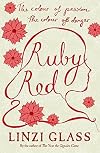
Glass’s novel for teenage girls takes place in 1976 Johannesburg in the time leading up to the Soweto uprising, in which black children came together to protest being instructed in Afrikaans, the language of their Dutch colonialist oppressors. It’s the story of 17-year-old Ruby Winters and her parents, progressive anti-apartheid activists who have hosted African National Congress meetings in their luxurious home. David, Ruby’s father, is a lawyer known to take on cases in which the show more human rights of blacks have been violated. Her mother, Annabel, owns an art gallery and is a champion of emerging black artists from the townships.
As the story opens, Julian, a particularly promising young visual artist from Soweto committed to representing the hardship and endurance of his people, moves in with the Winters. He’s been viciously attacked and slashed by thugs from his own community who are resentful of his success. Ruby forms a friendship with this young man and for a while the reader suspects that the novel will be their love story. No. In fact, Ruby is only a sort of muse to him.
Ultimately, however, this novel does turn into a teenage love story—not quite a 70s version of Romeo and Juliet, but with echoes of that drama. Ruby falls for Johannes, the handsome rugby captain at a rival private school where children of the wealthy Afrikaner minority are educated. The relationship is intense and challenging. When Ruby brings Johannes as her guest to the annual dance at her high school, violence breaks out. Glass shows that racial and ethnic tensions in Johannesberg run deep, not just between blacks and whites but also between those of Anglo and Boer ancestry. Ruby, to this point a popular straight-A student who has served as a school prefect, becomes a social pariah. Her life is turned upside down. Meanwhile her parents are under intensified police surveillance for consorting with blacks. The exhibition of Julian’s work at Annabel’s gallery may not be able to take place, and Ruby’s father’s life is threatened..
Glass has the bare bones of a good story here. It’s how she fleshes those bones out—her writing—that is problematic. The author appears never to have met an adjective or adverb that she didn’t like. She is particularly preoccupied with the colour and style of clothes and furniture. Some of the similes she provides are absurd. There’s a great deal of lofty language and many melodramatic moments in this novel. Ruby is an idealized protagonist whose heart bleeds for the suffering of others. She’s the only student at her school noble enough to acknowledge the humanity of the school’s hardworking Xhosa gardener, for example. Oh, and did I mention that she is also absolutely beautiful?
I wish editors had worked to curb the excesses in Glass’s overwrought prose. This book had potential, but I’m afraid the writing is often distractingly overblown. Having said this, I do believe some teenage girls would be engrossed by Ruby’s story, and Glass does manage to communicate a lot of valuable information about life in South Africa during the 1970s. show less
As the story opens, Julian, a particularly promising young visual artist from Soweto committed to representing the hardship and endurance of his people, moves in with the Winters. He’s been viciously attacked and slashed by thugs from his own community who are resentful of his success. Ruby forms a friendship with this young man and for a while the reader suspects that the novel will be their love story. No. In fact, Ruby is only a sort of muse to him.
Ultimately, however, this novel does turn into a teenage love story—not quite a 70s version of Romeo and Juliet, but with echoes of that drama. Ruby falls for Johannes, the handsome rugby captain at a rival private school where children of the wealthy Afrikaner minority are educated. The relationship is intense and challenging. When Ruby brings Johannes as her guest to the annual dance at her high school, violence breaks out. Glass shows that racial and ethnic tensions in Johannesberg run deep, not just between blacks and whites but also between those of Anglo and Boer ancestry. Ruby, to this point a popular straight-A student who has served as a school prefect, becomes a social pariah. Her life is turned upside down. Meanwhile her parents are under intensified police surveillance for consorting with blacks. The exhibition of Julian’s work at Annabel’s gallery may not be able to take place, and Ruby’s father’s life is threatened..
Glass has the bare bones of a good story here. It’s how she fleshes those bones out—her writing—that is problematic. The author appears never to have met an adjective or adverb that she didn’t like. She is particularly preoccupied with the colour and style of clothes and furniture. Some of the similes she provides are absurd. There’s a great deal of lofty language and many melodramatic moments in this novel. Ruby is an idealized protagonist whose heart bleeds for the suffering of others. She’s the only student at her school noble enough to acknowledge the humanity of the school’s hardworking Xhosa gardener, for example. Oh, and did I mention that she is also absolutely beautiful?
I wish editors had worked to curb the excesses in Glass’s overwrought prose. This book had potential, but I’m afraid the writing is often distractingly overblown. Having said this, I do believe some teenage girls would be engrossed by Ruby’s story, and Glass does manage to communicate a lot of valuable information about life in South Africa during the 1970s. show less
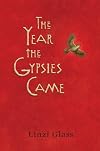
It is always a distinct pleasure to read an author’s first novel. When the first novel is lyrically written, powerful, and a possible Printz winner, I get goose bumps. Glass has written such a novel. Set in apartheid South Africa, this novel tells the story of Emily and her family. Unable to communicate with one another, Emily’s parents take in guests to avoid problems. When they take in a racist and abusive wildlife photographer and family, their problems mount exponentially. Their show more Zulu, night watchman, Buza, and his stories are the “honey-glue” that keeps Emily centered and sane. Glass’s novel is that rare book that provides an insider look into other cultures without losing the narrative voice of 12-year-old Emily. The mounting problems avoid any hint of contrivance and sweep the reader along. The characters are vivid, three dimensional creations that convince readers of their humanity. While readers must contend with much that is sad and horrifying (child abuse, a rape, apartheid horrors), the book is emotionally satisfying and surprisingly uplifting, without ever hitting a false note. The Year the Gypsies Came provides teachers with opportunities to discuss world history, politics, geography, folklore, cultural traditions, oral traditions, and so much more. Highly recommended for all high school libraries. show less
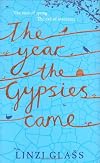
My family was in a way, not unlike the city in which we lived, Johannesburg; eGoli it is called in Zulu … The illusion of a family held together as ours was is not unlike a mine dump. It is just dust.
Prologue of 1966
Emily, thirteen is the narrator of the story of her oddly fragmented family. She seeks the love of her self-absorbed mother and distanced father but her stability lies in her fifteen-year-old sister Sarah and the two African servants; in particular the old astute Zulu show more gatekeeper, Buza. Her mother and father scratch at each other unless they have company and after one particularly bad afternoon Father goes for a walk returning with an Australian family who park their caravan in the garden. Jock and Peg and their two sons Otis and Streak are strange: Jock is large and overbearing, Peg ‘wears’ a python; the boys are unschooled, uncared for and obviously physically abused. Otis has a mental disability.
Buza is worried about their presence but the words of an old African have no influence except with Emily who has no power. Buza and Sarah are her guides; Sarah holding her in the night when her parents fight; Buza gently installing moral guidelines transmitted through tales from his own childhood.
There is an inevitability about the disaster the Australian caravan dwellers will bring upon the family. In the ensuing grief Emily becomes the blows of a knobkerrie against the body, the jaws of a lion on the neck of an impala as she finally finds the words to tell her parents what their lack of care for their children led to. And she uses her knowledge of her mother’s infidelity to gain a little justice for the one person who stood by them.
Played out against the early beginnings of the struggle to end apartheid it is a powerfully realised work.
Themes in this book:
Interview and biography of author:
http://www.embracingthechild.org/aglass.html show less
Prologue of 1966
Emily, thirteen is the narrator of the story of her oddly fragmented family. She seeks the love of her self-absorbed mother and distanced father but her stability lies in her fifteen-year-old sister Sarah and the two African servants; in particular the old astute Zulu show more gatekeeper, Buza. Her mother and father scratch at each other unless they have company and after one particularly bad afternoon Father goes for a walk returning with an Australian family who park their caravan in the garden. Jock and Peg and their two sons Otis and Streak are strange: Jock is large and overbearing, Peg ‘wears’ a python; the boys are unschooled, uncared for and obviously physically abused. Otis has a mental disability.
Buza is worried about their presence but the words of an old African have no influence except with Emily who has no power. Buza and Sarah are her guides; Sarah holding her in the night when her parents fight; Buza gently installing moral guidelines transmitted through tales from his own childhood.
There is an inevitability about the disaster the Australian caravan dwellers will bring upon the family. In the ensuing grief Emily becomes the blows of a knobkerrie against the body, the jaws of a lion on the neck of an impala as she finally finds the words to tell her parents what their lack of care for their children led to. And she uses her knowledge of her mother’s infidelity to gain a little justice for the one person who stood by them.
Played out against the early beginnings of the struggle to end apartheid it is a powerfully realised work.
Themes in this book:
Interview and biography of author:
http://www.embracingthechild.org/aglass.html show less
Set in apartheid South Africa, The Year the Gypsies Came centers around a 12-year old girl, Emily, whose family is splitting at the seams. Her parents often encourage house guests to stay, including the those of the title - not really gypsies, but a wandering wildlife photographer and his family. Sprinkled through the book are stories told to Emily by the family night watchman - some traditional Zulu, others more historical.
I don't know why I do this, but: elements of Of Mice and Men and the show more movie Ice Storm put in Jo'burg during apartheid. Beautifully written. show less
I don't know why I do this, but: elements of Of Mice and Men and the show more movie Ice Storm put in Jo'burg during apartheid. Beautifully written. show less
Lists
Awards


You May Also Like


Associated Authors
Statistics
- Works
- 3
- Members
- 535
- Popularity
- #46,548
- Rating
- 3.7
- Reviews
- 17
- ISBNs
- 27
- Languages
- 4