
Tanya Landman
Author of I Am Apache
About the Author
In the UK, Tanya Landman has won the Carnegie Medal for her title, Buffalo Soldier (Walker Books). She will receive £500 (A$1024) worth of books to donate to her local library. Her title was drawn from `real-life historical adventures¿; Buffalo Soldier was `inspired by the true story of former show more slave Cathy Williams, who was the only known African-American woman to enlist in the US army. (Bowker Author Biography) show less
Image credit: By Chin Yu Chu
Series
Works by Tanya Landman
Fiende 1 copy
Tagged
Common Knowledge
- Gender
- female
- Nationality
- UK
- Places of residence
- Gravesend, Kent, England
- Map Location
- UK
Members
Reviews

This historical fiction novel for young adults set in 1752 is surprisingly gripping; I got caught up immediately in the mysteries surrounding 15-year-old Caleb Chappell.
Caleb is mixed-race, and frequently misidentified as a slave while he accompanies his white father Joseph around the English countryside putting on Punch and Judy puppet shows. But as the book begins, his father is falsely accused of a crime and taken away, condemned to transportation to the colonies. Before they are show more separated, his father tells Caleb how to find his aunt, about whose existence he had been unaware.
Caleb finally locates Anne Avery, who faints dead away when she sees him; why? Just one more of the unexplained puzzles you will encounter in this appealing story. Caleb also gets to know Anne’s stepdaughter Letty, who eventually joins forces with Caleb in trying to figure out what is going on.
Racism prevents Caleb from finding work to help out Anne and her little family (she also has a baby named Dorcas) but he is able to assist Anne in mending clothes on contract. (Letty is stronger than Caleb and so the traditional gender roles get reversed with these two.) Meanwhile, Caleb finds a dead body, runs up against baffling barriers to finding out what happened to his father, and learns first-hand about the cruel injustices of not only race but class. The odds are so stacked against them, you will be hanging on your seat to see if they come out this tale with any success, or even survive at all, as Caleb and Letty face an accusation of murder.
Evaluation: There are many twists in this riveting story about the corruption of power and money, and the impotence of those without them. The pacing is excellent, and Caleb and Letty are strong characters, using their wits and courage to fight a system against seemingly insuperable odds. show less
Caleb is mixed-race, and frequently misidentified as a slave while he accompanies his white father Joseph around the English countryside putting on Punch and Judy puppet shows. But as the book begins, his father is falsely accused of a crime and taken away, condemned to transportation to the colonies. Before they are show more separated, his father tells Caleb how to find his aunt, about whose existence he had been unaware.
Caleb finally locates Anne Avery, who faints dead away when she sees him; why? Just one more of the unexplained puzzles you will encounter in this appealing story. Caleb also gets to know Anne’s stepdaughter Letty, who eventually joins forces with Caleb in trying to figure out what is going on.
Racism prevents Caleb from finding work to help out Anne and her little family (she also has a baby named Dorcas) but he is able to assist Anne in mending clothes on contract. (Letty is stronger than Caleb and so the traditional gender roles get reversed with these two.) Meanwhile, Caleb finds a dead body, runs up against baffling barriers to finding out what happened to his father, and learns first-hand about the cruel injustices of not only race but class. The odds are so stacked against them, you will be hanging on your seat to see if they come out this tale with any success, or even survive at all, as Caleb and Letty face an accusation of murder.
Evaluation: There are many twists in this riveting story about the corruption of power and money, and the impotence of those without them. The pacing is excellent, and Caleb and Letty are strong characters, using their wits and courage to fight a system against seemingly insuperable odds. show less
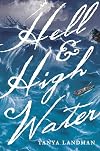
HELL AND HIGH WATER is a YA historical fiction about justice and integrity. Fifteen-year-old Caleb cannot believe how quickly his world shatters when is father is wrongfully convicted of stealing and sentenced to be transported to America. Caleb is further shocked when he discovers a corpse wearing his father’s signet ring. Can it possibly be his beloved father? As Caleb tries to unravel the puzzle, he learns important lessons about loyalty, secrets, and power.
I enjoyed this novel, show more although I’m typically wary of historical fiction. There’s enough detail to make mid-eighteenth-century England feel real for readers, but the author has pulled back from language and conventions that might keep readers out. The mystery surrounding Caleb’s father provides a strong narrative drive, and Caleb himself is an appealing, identifiable protagonist. As a city dweller, Caleb encounters rural England as a strange, hostile place, a narrative device that allows readers to meet the setting as Caleb does. This device is very effective. Caleb also encounters substantial racism, and the threat of slavery constantly hangs over his head, even though he is the free son of a noble. Several themes connect Caleb’s Enlightenment setting to today, and teens are likely to have numerous questions and strong opinions about the plot and its resolution.
Engaging and compelling, HELL AND HIGH WATER is a strong novel for introducing teens to historical fiction or to prepare them for more substantial historical titles. It would also make an excellent extension reading for social studies units on early modern England, poverty, or racism. show less
I enjoyed this novel, show more although I’m typically wary of historical fiction. There’s enough detail to make mid-eighteenth-century England feel real for readers, but the author has pulled back from language and conventions that might keep readers out. The mystery surrounding Caleb’s father provides a strong narrative drive, and Caleb himself is an appealing, identifiable protagonist. As a city dweller, Caleb encounters rural England as a strange, hostile place, a narrative device that allows readers to meet the setting as Caleb does. This device is very effective. Caleb also encounters substantial racism, and the threat of slavery constantly hangs over his head, even though he is the free son of a noble. Several themes connect Caleb’s Enlightenment setting to today, and teens are likely to have numerous questions and strong opinions about the plot and its resolution.
Engaging and compelling, HELL AND HIGH WATER is a strong novel for introducing teens to historical fiction or to prepare them for more substantial historical titles. It would also make an excellent extension reading for social studies units on early modern England, poverty, or racism. show less
 This review was written for LibraryThing Early Reviewers.
This is a bit confusing, because the database insists on listing the title here as "Aztec" (even when queried by ISBN), when the edition I have (and all the cover photos that come up) are clearly titled "The Goldsmith's Daughter".
At any rate ... this is an interesting, occasionally grim, YA novel set in the Aztec capital city of Tenochtitlán at the time of the arrival of the Conquistadores.
It's told from the viewpoint of the titular (?) goldsmith’s daughter, Itacate, born under show more unpropitious signs into a culture dominated by the complex and often bloodthirsty demands of its pantheon of gods, without whose aid the sun literally could not defeat the forces of darkness to rise in the dawn.
When Itacate shows early talent in designing and creating the gold idols and jewelry treasured by the city’s elite, her father accepts her as an unofficial apprentice, despite custom restricting this trade to males, and this ruse brings both of them to the attention of the Emperor Montezuma, giving Itacate a front-row seat to the arrival of the Spanish invaders.
It’s at this point that the book shifts gears, from the YA trope of a young woman defying custom to follow her dream, to an eye-witness account of one of the most horrifying incidents in the blood-soaked history of European incursion into the New World – the fall of Tenochtitlán and the essential destruction of the Aztec empire.
There’s a romance subplot which actually serves as more than window-dressing, and a complex heroine-narrator who simultaneously chafes at the restrictions imposed on young women in her culture while firmly believing in the reality and power of the deities who control her life.
Watching her work through this against the backdrop of a disintegrating society, raises this above the basic YA level and makes it a compelling story for all readers. show less
At any rate ... this is an interesting, occasionally grim, YA novel set in the Aztec capital city of Tenochtitlán at the time of the arrival of the Conquistadores.
It's told from the viewpoint of the titular (?) goldsmith’s daughter, Itacate, born under show more unpropitious signs into a culture dominated by the complex and often bloodthirsty demands of its pantheon of gods, without whose aid the sun literally could not defeat the forces of darkness to rise in the dawn.
When Itacate shows early talent in designing and creating the gold idols and jewelry treasured by the city’s elite, her father accepts her as an unofficial apprentice, despite custom restricting this trade to males, and this ruse brings both of them to the attention of the Emperor Montezuma, giving Itacate a front-row seat to the arrival of the Spanish invaders.
It’s at this point that the book shifts gears, from the YA trope of a young woman defying custom to follow her dream, to an eye-witness account of one of the most horrifying incidents in the blood-soaked history of European incursion into the New World – the fall of Tenochtitlán and the essential destruction of the Aztec empire.
There’s a romance subplot which actually serves as more than window-dressing, and a complex heroine-narrator who simultaneously chafes at the restrictions imposed on young women in her culture while firmly believing in the reality and power of the deities who control her life.
Watching her work through this against the backdrop of a disintegrating society, raises this above the basic YA level and makes it a compelling story for all readers. show less
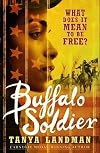
The Civil War technically ends slavery for the young Black woman who narrates this tale, but her search for true freedom takes her on a long and winding journey.
Told in crisp and unornamented style from the viewpoint of the main character, this story ranges from an antebellum Georgia plantation to the American west, as Charlotte -- who becomes Charley early on -- takes on a male identity for protection and survival, drifts into the U.S. Cavalry almost by chance, and ends up with one of the show more Black cavalry units that saw action during the Indian Wars.
Readers familiar with the general shape of the era will recognize some of the historical events, but Landman has wisely kept the telling strictly within the view of a cavalry trooper who has little or no awareness of the significance of individual battles and troop movements. As Charley O'Hara continues day-to-day survival within the troop, she slowly changes from viewing all Indians as just an amorphous enemy to seeing them as individuals fighting to maintain their traditional ways of life, and further begins to understand that "freedom" -- particularly freedom based on skin color -- can be a very elusive thing.
One might quibble at the coincidental meeting that leads Charley to the final action that shapes her future, but it's a small price to pay within a fresh and powerful story. show less
Told in crisp and unornamented style from the viewpoint of the main character, this story ranges from an antebellum Georgia plantation to the American west, as Charlotte -- who becomes Charley early on -- takes on a male identity for protection and survival, drifts into the U.S. Cavalry almost by chance, and ends up with one of the show more Black cavalry units that saw action during the Indian Wars.
Readers familiar with the general shape of the era will recognize some of the historical events, but Landman has wisely kept the telling strictly within the view of a cavalry trooper who has little or no awareness of the significance of individual battles and troop movements. As Charley O'Hara continues day-to-day survival within the troop, she slowly changes from viewing all Indians as just an amorphous enemy to seeing them as individuals fighting to maintain their traditional ways of life, and further begins to understand that "freedom" -- particularly freedom based on skin color -- can be a very elusive thing.
One might quibble at the coincidental meeting that leads Charley to the final action that shapes her future, but it's a small price to pay within a fresh and powerful story. show less
Lists
Awards


You May Also Like


Associated Authors
Statistics
- Works
- 56
- Members
- 1,016
- Popularity
- #25,358
- Rating
- 3.8
- Reviews
- 48
- ISBNs
- 141
- Languages
- 5
