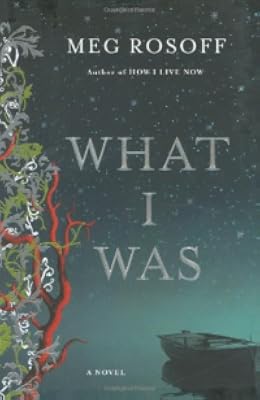
What I Was
by Meg Rosoff
On This Page
Description
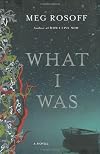
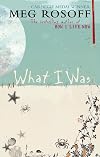
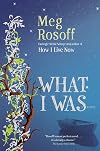
What I Was is a beautifully crafted and heart-achingly poignant coming-of-age tale that is set mainly in a hut on an isolated strip of land in East Anglia. The narrator is an older man who recounts the story of his most significant friendship-that with the nearly feral and completely parentless Finn, who lives alone in a hut by the sea. He idolizes Finn and spends as much time with him at the beachside hut as possible, hoping to become self-reliant and free instead of burdened by the show more boarding school dress code and curfew. But the contrast between their lives becomes evermore painful, until one day the tables turn and everything our hero believes to be true explodes-with dire consequences. show lessTags
Recommendations

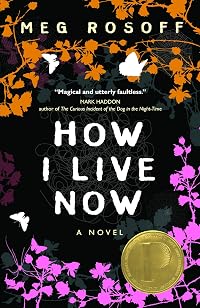
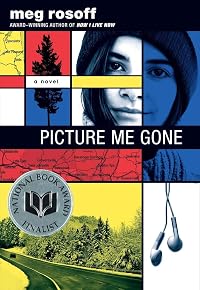




Member Recommendations


Member Reviews
What I've come to expect from Meg Rosoff is spare, utterly enthralling prose, that tells a story from a teen perspective without judgment. She also manages to capture the surreal in everyday life and a somewhat indefinable portrait of the thought patterns of teenagers. That sounds more generalized than I mean. She makes me remember how I thought at that time in my life, and what was important, and how the world was strange and I didn't have any idea how it would turn out. Perspective. She's a master at portraying her characters' perspective and staying out of the story. Brilliant.
What an intriguing little book.
I knew from experience that Meg Rosoff doesn’t pen your “average” young adult fiction; indeed, How I Live Now was one of the more offbeat, compelling and disturbing YA books I’ve ever read. I finished it almost four years ago, yet I can recall certain passages and turns of phrase all these books later.
In the vein of the colorful, unusual and incredibly well-written is this slim novel: What I Was. The tale of H, our relatively unnamed narrator, and his long-ago friendship with Finn, Rosoff’s story is an exploration of friendship. A confusing, focused, odd and all-encompassing friendship, perhaps, but still just a friendship at its core.
It’s hard to do this book justice — or discuss it without show more spoilers. So much happens, but there is little discernible “plot” in the traditional sense. H is a rapscallion (how often can one use that word?!) used to getting kicked out of prestigious boarding schools, and he expects he’ll face a similar departure from this one. Everything is a little boring, a little beneath him; he’s not interested in studying or readying himself for the future, or whatever it is young men of wealth and privilege should be doing. He simply doesn’t care.
And then, on a run with his classmates, he meets Finn. Moody, quiet and living a life of extreme independence in a small but well-cared-for hut on the water, Finn’s life is everything H wishes for himself — especially free from the prying eyes of professors and classmates. Though H doesn’t recognize his growing concern for Finn as what it truly is (until it’s too late, perhaps), we know that H has fallen in love.
It gets more complicated from there.
But not in the ways you’d expect.
Oh, the exquisite pain of wanting to discuss what happens in this book without spoiling it all for you. I will note that I had an awful spoiler-ish encounter with a review posted elsewhere, so I’m not going to do that to you. Even knowing what I knew going in (not everything, just some of it), I was still shocked by what transpired. In an impressive way. Rosoff is a master of revealing secrets slowly, then all at once . . . and you’re left gobsmacked that you could have missed something so obvious.
She’s just that good.
Though H is not a thoroughly admirable person, he’s a teenage boy. A teen boy with issues and problems and secrets weighing heavily on his shoulders, even if his natural defense is to laugh them off or lash out. I appreciated him as a narrator, enjoying his sarcasm and natural wit — and even when the chaos became too much to handle, I felt that this older-H telling us the story of this fateful year was an anchor. I held on to him.
The setting of What I Was — a crumbling British coastline — just added to the allure for me. Rosoff’s writing is rich in imagery, very atmospheric; we sense the damp and cold of Finn’s hut just as H does, and therefore appreciate the fledgling fire that much more.
Though this won’t go down in my personal literary history as a favorite, Rosoff’s story is fascinating and unique — something I’ve thought about often in the weeks since finishing. show less
I knew from experience that Meg Rosoff doesn’t pen your “average” young adult fiction; indeed, How I Live Now was one of the more offbeat, compelling and disturbing YA books I’ve ever read. I finished it almost four years ago, yet I can recall certain passages and turns of phrase all these books later.
In the vein of the colorful, unusual and incredibly well-written is this slim novel: What I Was. The tale of H, our relatively unnamed narrator, and his long-ago friendship with Finn, Rosoff’s story is an exploration of friendship. A confusing, focused, odd and all-encompassing friendship, perhaps, but still just a friendship at its core.
It’s hard to do this book justice — or discuss it without show more spoilers. So much happens, but there is little discernible “plot” in the traditional sense. H is a rapscallion (how often can one use that word?!) used to getting kicked out of prestigious boarding schools, and he expects he’ll face a similar departure from this one. Everything is a little boring, a little beneath him; he’s not interested in studying or readying himself for the future, or whatever it is young men of wealth and privilege should be doing. He simply doesn’t care.
And then, on a run with his classmates, he meets Finn. Moody, quiet and living a life of extreme independence in a small but well-cared-for hut on the water, Finn’s life is everything H wishes for himself — especially free from the prying eyes of professors and classmates. Though H doesn’t recognize his growing concern for Finn as what it truly is (until it’s too late, perhaps), we know that H has fallen in love.
It gets more complicated from there.
But not in the ways you’d expect.
Oh, the exquisite pain of wanting to discuss what happens in this book without spoiling it all for you. I will note that I had an awful spoiler-ish encounter with a review posted elsewhere, so I’m not going to do that to you. Even knowing what I knew going in (not everything, just some of it), I was still shocked by what transpired. In an impressive way. Rosoff is a master of revealing secrets slowly, then all at once . . . and you’re left gobsmacked that you could have missed something so obvious.
She’s just that good.
Though H is not a thoroughly admirable person, he’s a teenage boy. A teen boy with issues and problems and secrets weighing heavily on his shoulders, even if his natural defense is to laugh them off or lash out. I appreciated him as a narrator, enjoying his sarcasm and natural wit — and even when the chaos became too much to handle, I felt that this older-H telling us the story of this fateful year was an anchor. I held on to him.
The setting of What I Was — a crumbling British coastline — just added to the allure for me. Rosoff’s writing is rich in imagery, very atmospheric; we sense the damp and cold of Finn’s hut just as H does, and therefore appreciate the fledgling fire that much more.
Though this won’t go down in my personal literary history as a favorite, Rosoff’s story is fascinating and unique — something I’ve thought about often in the weeks since finishing. show less
I think Meg Rosoff is writing some of the most relevant YA fiction out there. She is literary, accessible, in charge of her own language, and most importantly, she is not afraid to pose and explore questions that don't really have any good answers just yet.
For instance, this book is, in part, about gender. It's about gender without being "about gender." And since it's not "about gender," it manages to get at the heart of some truly complicated issues surrounding gender variance and queer identity.
I've read so many books about queer kids coming of age - fantasy world books like boy meets boy; truly issue-driven books like parrotfish; sad, sad beaten down books like house of stairs...but here is Meg Rosoff, pulling the experience out of show more the hands of the hetero/homo, male/female binary, and offering something that feels revolutionary, novel.
So, hats off, Meg Rosoff. I don't see anyone else out there doing what you are doing. show less
For instance, this book is, in part, about gender. It's about gender without being "about gender." And since it's not "about gender," it manages to get at the heart of some truly complicated issues surrounding gender variance and queer identity.
I've read so many books about queer kids coming of age - fantasy world books like boy meets boy; truly issue-driven books like parrotfish; sad, sad beaten down books like house of stairs...but here is Meg Rosoff, pulling the experience out of show more the hands of the hetero/homo, male/female binary, and offering something that feels revolutionary, novel.
So, hats off, Meg Rosoff. I don't see anyone else out there doing what you are doing. show less
I think Meg Rosoff is writing some of the most relevant YA fiction out there. She is literary, accessible, in charge of her own language, and most importantly, she is not afraid to pose and explore questions that don't really have any good answers just yet.
For instance, this book is, in part, about gender. It's about gender without being "about gender." And since it's not "about gender," it manages to get at the heart of some truly complicated issues surrounding gender variance and queer identity.
I've read so many books about queer kids coming of age - fantasy world books like boy meets boy; truly issue-driven books like parrotfish; sad, sad beaten down books like house of stairs...but here is Meg Rosoff, pulling the experience out of show more the hands of the hetero/homo, male/female binary, and offering something that feels revolutionary, novel.
So, hats off, Meg Rosoff. I don't see anyone else out there doing what you are doing. show less
For instance, this book is, in part, about gender. It's about gender without being "about gender." And since it's not "about gender," it manages to get at the heart of some truly complicated issues surrounding gender variance and queer identity.
I've read so many books about queer kids coming of age - fantasy world books like boy meets boy; truly issue-driven books like parrotfish; sad, sad beaten down books like house of stairs...but here is Meg Rosoff, pulling the experience out of show more the hands of the hetero/homo, male/female binary, and offering something that feels revolutionary, novel.
So, hats off, Meg Rosoff. I don't see anyone else out there doing what you are doing. show less
Coming of age novel with a twist. Enjoyed its adolescently cynical humour which was a very strong element throughout, but not much else to recommend it to my adult palate. The events were too much of a stretch for me to get into the story. This kid from the school falls for another young kid from the village who lives on its own and isolated and kid one regularly visits kid two --with no one wising up from the school-- until one day there is a huge storm and a tragedy occurs...
Narrated by our protagonist as an old man, the story is predominantly set in the early 1960s, the year in which he "discovered love". Sent to a school for hopeless cases on the East Anglian coast, the narrator finds little of interest in his daily life, with boring school work, bunkmates and professors that he can't stand, yet no home that he wants to return to. It all changes one day, when on a cross country run, he meets Finn, the boy who lives by the sea, and everything changes. Finn, the mysterious boy who rarely speaks a word, who lives by himself in a small run down cottage on the beach. As far as books go, I loved this more than How I Live Now, even when I didn't think that would be possible. As a story though, this resonated show more perfectly with me. Child on the cusp of adulthood, searching for something he does not understand, something he does not yet have, nor does he know to want it. Until he meets a boy who has all those things.
And Finn, oh Finn. If it is possible to fall for a character in fiction, I fell for him. Such gentleness and hardness all at the same time. Mysterious, yet longing. Each time when I thought I had come to understand him and his friendship with the narrator, I realised I knew nothing of him. It is Finn that is the heart of this story, and Finn whom we are all searching for or longing to become. And that is the beauty of this story. I don't think I can describe it as well as Nymeth, except to say that there is that line, between wanting to love someone, and wanting to be them, that their life is somewhat superior to your own, and that is explored so delicately here.
How is it that as an adult now, I keep discovering these wonderful, insightful books aimed at teenagers? I am quite envious, having not read anything even remotely comparable at that age. Yes there is a twist in What I Was, and although I knew from other reviews that it was coming, I did not look for it and thus did not expect it. I was somewhat sideblinded, and yet not in the typical dramatic way. This twist is perfectly relevant to the story and ultimately how the reader sees the characters. I long to reread the book now that I am aware of this revelation, and I truly hope that it will add to my enjoyment of the book, rather than detract from it. show less
And Finn, oh Finn. If it is possible to fall for a character in fiction, I fell for him. Such gentleness and hardness all at the same time. Mysterious, yet longing. Each time when I thought I had come to understand him and his friendship with the narrator, I realised I knew nothing of him. It is Finn that is the heart of this story, and Finn whom we are all searching for or longing to become. And that is the beauty of this story. I don't think I can describe it as well as Nymeth, except to say that there is that line, between wanting to love someone, and wanting to be them, that their life is somewhat superior to your own, and that is explored so delicately here.
How is it that as an adult now, I keep discovering these wonderful, insightful books aimed at teenagers? I am quite envious, having not read anything even remotely comparable at that age. Yes there is a twist in What I Was, and although I knew from other reviews that it was coming, I did not look for it and thus did not expect it. I was somewhat sideblinded, and yet not in the typical dramatic way. This twist is perfectly relevant to the story and ultimately how the reader sees the characters. I long to reread the book now that I am aware of this revelation, and I truly hope that it will add to my enjoyment of the book, rather than detract from it. show less
My favorite Meg Rosoff book so far. How I Live Now was good, but I was stunned by this one. From the dust jacket annotation I wasn't sure if I was going to be able to buy the plot, but once I started the story I found it perfectly plausible. The twist ending is something I hadn't seen coming, which is unusual -- usually I guess surprise endings ahead of time, which is kind of a drag. Best of all is the atmosphere of the story. From Rosoff's descriptions I could practically see the North Sea fog and feel the cold of the icy waters and the unheated school.
This book won't appeal to people who need a lot of action in their stories -- it's more your typical English novel, moving sedately along. But if you go for that sort of thing -- and I show more do, sometimes -- I HIGHLY recommend this. show less
This book won't appeal to people who need a lot of action in their stories -- it's more your typical English novel, moving sedately along. But if you go for that sort of thing -- and I show more do, sometimes -- I HIGHLY recommend this. show less
Members
- Recently Added By
Published Reviews
ThingScore 75
'Mooi is Rosoffs dromerige beschrijving van hun bijna onwerkelijke ontmoeting. Net zo mooi als ook de beschrijving van de Britse oostkust. [...] Rosoff voelt die magie feilloos aan. Taal is haar kracht.'
added by private library
Lists

Adult Books for YA Readers
194 works; 6 members
Author Information

25+ Works 8,207 Members
Meg Rosoff was born in Boston, Massachusetts on October 16, 1956. She studied at Harvard University, but left for England in 1977 to take classes at Central St. Martin's College of Art and Design. She returned to finish her degree in English and fine arts at Harvard University. She worked in New York City for 10 years in publishing and show more advertising, before moving to England. Her first novel, How I Live Now, was published in 2004 and won the Guardian Children's Fiction Prize. Her other novels include What I Was, The Bride's Farewell, There Is No Dog, Moose Baby, and Picture Me Gone. Just in Case won the 2007 Carnegie Medal. She won the 2016 Astrid Lindgren Memorial Award. She is also the author of a picture book entitled Meet Wild Boars and co-author of a non-fiction book entitled London Guide: Your Passport to Great Travel. (Bowker Author Biography) show less
Awards and Honors
Awards
Notable Lists
Common Knowledge
- Canonical title
- What I Was
- Original title
- What I Was
- Original publication date
- 2007
- People/Characters
- H; Finn; Reese
- Important places
- East Anglia, England, UK
- Dedication*
- Voor mijn ouders, Lois Friedmanen Chester Rosoff, met veel liefs
- First words
- Rule number one: Trust no one.
- Quotations
- Nevertheless, I can tell you that you will awake someday to find that your life has rushed by at a speed at once impossible and cruel. The most intense moments will seem to have occurred only yesterday and nothing will have e... (show all)rased the pain and pleasure, the impossible intensity of love and its dog-leaping happiness, the bleak blackness of passions unrequited, or unexpressed, or unresolved.
- Last words
- (Click to show. Warning: May contain spoilers.)And in my prayer (which I pray silently, so as to embarrass neither of us) I give thanks for all that has passed, and all that is passing, and all that is yet to come.
*Some information comes from Common Knowledge in other languages. Click "Edit" for more information.
Classifications
Statistics
- Members
- 823
- Popularity
- 33,494
- Reviews
- 39
- Rating
- (3.57)
- Languages
- 6 — Dutch, English, French, German, Korean, Swedish
- Media
- Paper, Audiobook, Ebook
- ISBNs
- 37
- UPCs
- 1
- ASINs
- 8