On This Page
Description
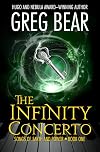
Music, myth, and magic mix in this tale of a melody not meant for human ears, from the New York Times-bestselling and award-winning author of Darwin's Radio. Michael Perrin is an aspiring poet, struggling to express the chaotic cadences of his thoughts on paper. He finds a kindred spirit in Arno Waltiri, the film score composer behind several of Michael's favorite classic movies. The maestro's greatest piece, however, was performed in front of a live audience only once. The concerto Opus show more 45, Infinity left its listeners entranced, altered to the very core of their souls. Waltiri's composition is a song of power. Never meant to be heard by human ears, its melody is as captivating as a siren's call; its notes ring out like a death knell; and its rhythms shake the very foundations of reality. The music's otherworldly tones have led Michael through the gate between Earth and the Realm of the Sidhedark, where faeries reign by rule of magic--and where Michael must find his muse if he's ever to return home. The Infinity Concerto is a fantasy masterpiece by the Hugo and Nebula Award-winning author of the Forerunner Saga, Eon, and other imaginative classics. show lessTags
Recommendations


















Member Reviews
review of
Greg Bear's The Infinity Concerto
by tENTATIVELY, a cONVENIENCE - June 3, 2017
This is the 18th bk I've read by Bear & I admit that I didn't particularly expect to be surprised by him but, Lo & Behold!, I was. This is not only a Fantasy bk instead of the usual Hard Science Fiction it's a dagnabbit-all-to-heck'n'tarnation excellent one!
Fantasy writers often write epics, usually in the form of trilogies. The Infinity Concerto is so epic it's practically a trilogy all by its lonesome. Instead, it's part of a diptych. The 2nd part's called The Serpent Mage, I haven't read that one yet.
I read on the back cover "and it is not good to be human in the Realm of the Sidhe" & that was exciting enuf b/c, thx to having done a piece show more inspired by Yeats (sortof) called "The Only Jealousy of Cascando McKenna" ( https://youtu.be/1YQI5IBEA0A?t=29m24s ), I knew that the Sidhe are part of Irish mythology & that it's pronounced "she" (or something close to that).
""The Shee sound like they—" Michael began, but Savarin interrupted.
""Pronounce it correctly. It's spelled S-I-D-H-E, from the ancient Gaelic—or rather, the ancient Gaels heard hem calling themselves by that name. They pronounce it as a cross between 'Shee' and 'Sthee.'" - p 35
THEN, on p 1: "He rolled out of bed, kicking a book of Yeats' poems across the floor with one bare foot.": a sort of foreshadowing that's only recognizable as such if you understand that Yeats referred to the aforesaid myths. This led to my feeling like a Mr. Smartypants b/c not only did I immediately get it, I'd already done a piece about it. n'at
The world must be full of children who thrill to secret adventures in alternate universes entered thru strange passages. I was certainly one of them. To this day, I love secret doorways behind bkshelves & the like.
"It was a silly decision. The world was sane; such opportunities didn't present themselves. he withdrew the paper and read it for the hundredth time:
""Use the key to enter the front door. Do not linger. Pass through the house, through the back door and through the side gate to the front door of the neighboring house on the left, as you face the houses. The door to that house will be open. Enter. Do not stop to look at anything. Surely, quickly, make your way to the back of the house, through the back door again, and across the rear yard to the wrought-iron gate. Go through the gate and turn to your left. The alley behind the house will take you past many gates on both sides. Enter the sixth gate on your left."" - p 3
I'm hooked. Those instructions had been given to him by an old man friend of his known as Arno Waltiri who had been a film music composer:
"Two months before, on a hot, airless August day, Waltiri had taken Michael up to the attic to look through papers and memorabilia. Michael had exulted over letters from Clark Gable, correspondence with Max Steiner and Erich Wolfgang Korngold, a manuscript copy of a Stravinsky oratorio." - p 7
I found the reference to Korngold particularly engaging - not b/c I like his music that much but just b/c I even know who he is & b/c he was one of the composers condemned by the Nazis as "degenerate" who was lucky enuf to escape to the US. To quote from the liner notes of a CD entitled "The Music Survives! Degenerate Music":
"Another pre-war progressive was Ernst Krenek. His opera Jonny spielt auf, more than any other, embodied the concept of 'Entartete Musik'. An offensive half-ape, half-Negro playing a saxophone and with the star of David on the lapel of his tuxedo, named Jonny, became the logo for music they didn't like. The opera was an enormous hit all over Europe and was the first to confront audiences with sights and sounds familiar through the modern world around them: cars, whistles, jazz bands, sirens, electric bells — with the final jubilant chorus suddenly interrupted by an air raid siren: a frightening premonition, making its place at the end of our sampler all too appropriate.
"Jonny spielt auf was used to launch the 'Entartete Musik' series alongside another, contrasting, opera — Erich Wolfgang Korngold's Das Wunder der Heliane. Both operas were premiered in 1927, though Korngold's father, Vienna's most important critic, tried to collaborate with the National Socialists to prevent Jonny detracting from Heliane's success. Korngold's opera took music to levels of expressiveness not even reached by Strauss or Puccini. The aria 'Ich ging zu ihm' is one of the more reflective moments in this work. During his exile in Hollywood, Korngold created a cinematic style which would shape the future of film music, as can be heard in the excerpt from his soundtrack Between Two Worlds.
"The irony of the Jonny vs Heliane 'fight' is that the progressive, subversive Jonny was written by the monarchist, Roman Catholic Krenek, whereas the author of Heliane — a whirlpool of noble Germanic sentiment — was the Jewish Korngold. Both composers were Viennese of Czech extraction, roughly the same age, established in Berlin and exiled in Southern California where they died, probably having never met one another."
As such, the reference to Korngold in The Infinity Concerto, while completely casual & one-time-only had a similar poignant foreshadowing resonance as did the reference to Yeats. Waltiri is a fictional composer but Bear adds the extra nice touch of providing an appendix of "The Film Scores of Arno Waltiri (Highlights)" on p 342 that includes Jane Austen's Northanger Abbey, James Agee's Let Us Now Praise Famous Men, Rudyard Kipling's The Man Who Would Be King, & Henry Roth's Call It Sleep.
I found this list to be tantalizing. Roth's story of a Jewish immigrant family in NYC has never been made into a film as far as I know. Perhaps Bear's hinting that he'd like to see it be. Austen's Northanger Abbey is Austen's parody of Gothic novels & has been made into TV versions by both the BBC & PBS but is that good enuf? Agee's Let Us Now Praise Famous Men was a bk made w/ photographer Walker Evans & documented the lives of impoverished tenant farmers during the Depression. As far as I know that hasn't been made into a movie either. Another hint from Bear? Kipling's The Man Who Would Be King was made into a movie by the great director John Huston in 1975 starring Sean Connery - that was 9 yrs before this bk was published so it seems reasonable to assume that Bear knew about it since the movie wd've been a high profile release. As such, it seems to be an anomaly in the 4 choices I picked as a sampling.
""I submit to you, perhaps Waltiri knew the answer to an age-old question, namely. 'What song did the sirens sing?"
"Michael closed the book. "It's not all nonsense," Waltiri said, returning it to the shelf. "That is roughly what happened. And then, months later, twenty people disappear. The only thing they have in common is, they were in the audience for our music."" - p 11
I'm hooked even more. Waltiri dies.
""Two days later, a tiny brown sparrow flew into Arno's study, where the library is now. It sat on the piano and plucked at pieces of sheet music. Arno had once made a joke about a bird being a spirit inside an animal body. I tried to shoo it out the window, but it wouldn't go. It perched on the music stand and stayed there for an hour, twisting its head to stare at me. Then it flew away." She began to cry. "I would dearly love for Arno to visit me now and then, even as a sparrow. He is such a fine man."" - p 13
So he goes.
"Walking straight in the darkness was difficult. He brushed against a wall with his shoulder. The touch set off an unexpected bong, as if he were inside a giant bell." - p 13
Into another world.
"He left Clarkham's house. A flagstone path curved around the outside of the side gate. When he had gone through the front door there had been no moon, but now a sullen green orb rose over the silhouettes of the houses on the opposite side of the street. It didn't cast much light. (And yet, the moonlight through the French doors had been bright. . . .) The streetlights were also strangely dim, and yellowish-green in color." - p 14
""Why the alarm?" Michael asked.
"Risky tossed her lank hair and spat in a corner. "The riding of the noble Sidhe against the race of man," she said, her voice thick with sarcasm. She appraised Michael with a cool eye. "You're new," she said." - p 26
As a fantasy writer, Bear distinguishes himself by referring to few or none of the standard template character types. Contrast that to James P. Blaylock's The Elfin Ship (& my review thereof):
"In addition to the afore-mentioned standard fare of elves n'at there're also trolls:
""The two trolls waiting on the riverside, however, were anything but laughable. As Jonathan stood watching the trolls which were watching him, the one atop the roots reached down in among them. came up with a tone, and began to gnaw at it." - p 44
"Apparently the secrets of strong teeth are known to trolls. They must not use US dentists. & then there's that "evil creeping over the land"" - https://www.goodreads.com/book/show/421036.The_Elfin_Ship
Instead we have things like animated mannikins:
"He assumed a stance before the mannikin, imitating Coom and feeling foolish—
"And it promptly swing up its stick and knocked his to the ground. The mannikin vibrated gleefully, twisted on its stake and became limp again." - p 73
As if all this weren't excellent enuf, Bear goes into another favorite territory of mine: language:
"["]I'd say the resemblances between Sidhe and human languages are strong, but the syntax and methods of understanding are quite different. For example, the Sidhe use a meta-language . . . a language of contexts. And Cascar is like a hundred languages thrown together. They never run out of words that mean the same thing, or very nearly. I can't speak it well. I can sometimes make myself understood, but . . ."
""I understood it for a time," Michael said. "During the Kaeli. One of the Crane Women touched my head, and I understood everything they said."
""And what was that like?"
"Michael thought back, "Like listening to music. Each word seemed to be the equivalent of a note. Notes are always the same in music, but place them next to each other and they sound different . . . or lengthen the notes, shorten them. Use the same word in a different context, and it means something else . . . sounds different."" - pp 141-142
"["]There is a section in 'Hudibras' by Samuel Butler—if I can remember . . ." He screwed up his face in concentration and peered at the ceiling, "'But when he pleased to shew't, his speech/ In loftiness of sound was rich;
"A Baylonish dialect
Which learned pedants much affect;
It was a party coloured dress
Of patch'd and py-ball'd languages;
'Twas (Irish) cut on Greek and Latin
Like fustian heretofore on sattin.
It had an odd promiscuous tone,
As if h' had talk'd three parts in one;['"]" - p 143
Wch is quite similar to language as I envision it.
Bear throws in another spinner:
""Human sex is dangerous here."
""Why?"
""Such things are closely regulated. We do not want children. The Sidhe and Breeds can have young—we cannot."
"Michael just looked at him.
""The people who have been here longest, and the Breeds, say it is because there are no seedling souls in the Realm. A human child is born empty. A Sidhe or Breed child is expected to be that way, and already has an internal . . . how would we say . . . compensation. But human children are vessels waiting to be filled. They are filled by creatures from the Blasted Plain—Adonna's own aborted children, some say." He set his lips and waved off further inquiry. "Talk about it is considered obscene. No more."" - p 144
A sample child:
""Ishmael," Helena said, kneeling on the walkway. The pit was as deep as it was wide, and the walls were made of slick, hard tile. The figure was naked and the pit was bare except for three bowls, receptacles for food, water and waste, all arranged neatly against one wall.
""Yes."
"Michael's eyes had adjusted well enough that he could make out the details of Ismael's face. It was small, round, disproportionate to such a tall body. The hands were large and hung from arms which began thin at the shoulders and widened to grotesque forearms and wrists.
""We have some questions to ask," Helena said.
""I'm not otherwise occupied."
""Has he been here since he was born?" Michael whispered.
""Almost," Helena said. "He was one of the first that we know of. He's been here since the War."
""Time passes," Ishmael said. "Questions." He sat down leaning against the tiles and stretching his pale legs out on the floor.
""Who are you?"
"A sideshow for the guilty. A product of lust. Something so evil it must be evilly confined through all its endless life. An abortion walking. Victim."" - p 177
Oi! That's rough.
"["]I can't love you, not like I should. Today you've seen why."
""I have?"
"The Yard. To love you properly, I'd want to give myself to you completely . . . and I can't." She searched his face and reached out to touch his cheek. "Don't you see? They've taken love away from us here. We might make a mistake, a slip. I couldn't stand the thought of having a Child."" - p 182
& I thought I had problems.
Michael finds himself in a world where a new god is revered.
""I'm an atheist," Michael said. "I don't believe there's a God on Earth."
""Do you believe Adonna exists?"
"That took him aback. He hadn't really questioned the idea. This was a fantasy world, however grim, so of course gods could exist here. Earth was real, practical; no gods there. "I've never met him." Michael said.
""It," Eleuth corrected. "Adonna boasts of no gender.["]" - pp 159-160
Interesting theological question, eh? If a god exists in an imaginary world is it imaginary? Or something like that. Then there's always love & confusion:
"["]Why are you confused?"
""I told you," he said.
""Not really. You don't love me? That confuses you?"
"He said nothing, but finally nodded. "I like you. I'm grateful . . ."
"Euleuth smiled. "Does it matter, your not loving me?"
""It doesn't feel right, making love and not reciprocating everything. Feeling everything."
""Yet for all time, Sidhe males have not loved their geen. And we have survived. It is the way."
"Her resignation didn't help at all. It twisted the perverse knot a little tighter, however, and the only way he could see to forestall the discussion was to kiss her. Soon they were making love and his confusion intensified everything, made everything worse . . . and better." - p 161
Michael gets his training:
"Spart schooled Michael on how to throw a shadow while asleep, and how to sleep like the dead, his heart barely beating, while at the same time his mind was alert. He controlled his breath until he seemed not to breathe at all. He explored his inner thoughts, paring them down to the ones most essential to his exercises." - p 184
That all seemed worthwhile so I decided to try doing the same. Every time I threw my shadow in my sleep I fell out of bed. Every time I slept like the dead I actually died (don't ask me how I came back). Every time I controlled my breath I farted too much. I guess I just don't have it in me.
Michael's life never has a dull moment.
"He half-ran, half-stumbled crab-wise, trying to find the center of impulse again. But he had no clear way to throw another shadow. The guardian, dress flapping and pressing back against her distorted frame, had risen a foot or so above the path and was accelerating toward him like a piece of fabric on a spinning clothesline. She pitched head-forward in her flight until the hat pointed directly at him and the dress fanned out, a deadly trailing blossom." - p 203
"For a moment, the dim lighting and the folds of her skin had concealed the fact that she was unclothed. She sat naked and still in the large chair. Michael was convinced she waited for him to come close enough to reach out and grab. But nothing moved. She didn't even appear to breath. Was she dead?
"He reached out to touch her shoulder. His finger curled back involuntarily into his palm and he forced it to straighten.
"The skin gave way beneath his finger, first an inch, then two. Repelled, unable to stop, he continued pressing. She hissed faintly and her head folded in like a collapsing souffle. Her arm and chest began to collapse and she fell into a pile of white translucent folds, sliding from the chair to the floor." - p 205
Have you ever had a day like that? It's horrible visiting yr old mom. About the best that you can hope for is that some Sidhe will smear some paste on yr forehead while you sleep.
"The paste had evaporated. The visions swirled and Michael opened his eyes slowly. He had never dreamed in the Realm, and he didn't believe what he had seen was actually a dream. It had a certain quality, a stamp, which indicated he had once again had a message from Death's Radio . . . this time, without the use of words." - p 226
Bear's vision of reaaaaalllllly Old School War is practically appealing after the nightmares of the 20th century.
""It was not entirely a bad thing, that war. Nobody died . . . not forever. We were like young gods then and injuries of combat, while distressing, were remediable. But gradually we learned the desperate arts of tact, and lying, and deceit, of gamesmanship and honour. Then we learned distrust and our magic grew stronger. The war became earnest. Enemies found it necessary to either be polite or to attempt to destroy each other. There was no middle ground." - 234
""No swords, no baubles. Those are all human misunderstandings of magic, human preoccupation with technology. Magic lies purely in the mind. The Sidhe are among the most dishonorable, unreliable creatures on all the faces of Creation, but they have one thing—concentration. What they want, they focus on completely."" - p 299
That cd be dangerous if you happen to be walking at the time in an earthquake zone or something. Then again, Sidhe are more or less immortal so why worry?
All in all, this was great. Bear's at least as good a fantasy writer as he is a hard science SF one & that's a pleasant surprise. Also, what the heck, he acknowledges doing linguistics research wch puts him in a category similar to Tolkein. Wdn't fault him for that!
"please refer to a marvelous book by Robert A. Stewart Macalister, The Secret Languages of Ireland, first published in 1937 by the Cambridge University Press. It's still in print from Armorica Book Company/Philo Press. A good university or public library should also have it. Lovers of languaes—or dabblers, such as myself—will find it fascinating." - p 341 show less
Greg Bear's The Infinity Concerto
by tENTATIVELY, a cONVENIENCE - June 3, 2017
This is the 18th bk I've read by Bear & I admit that I didn't particularly expect to be surprised by him but, Lo & Behold!, I was. This is not only a Fantasy bk instead of the usual Hard Science Fiction it's a dagnabbit-all-to-heck'n'tarnation excellent one!
Fantasy writers often write epics, usually in the form of trilogies. The Infinity Concerto is so epic it's practically a trilogy all by its lonesome. Instead, it's part of a diptych. The 2nd part's called The Serpent Mage, I haven't read that one yet.
I read on the back cover "and it is not good to be human in the Realm of the Sidhe" & that was exciting enuf b/c, thx to having done a piece show more inspired by Yeats (sortof) called "The Only Jealousy of Cascando McKenna" ( https://youtu.be/1YQI5IBEA0A?t=29m24s ), I knew that the Sidhe are part of Irish mythology & that it's pronounced "she" (or something close to that).
""The Shee sound like they—" Michael began, but Savarin interrupted.
""Pronounce it correctly. It's spelled S-I-D-H-E, from the ancient Gaelic—or rather, the ancient Gaels heard hem calling themselves by that name. They pronounce it as a cross between 'Shee' and 'Sthee.'" - p 35
THEN, on p 1: "He rolled out of bed, kicking a book of Yeats' poems across the floor with one bare foot.": a sort of foreshadowing that's only recognizable as such if you understand that Yeats referred to the aforesaid myths. This led to my feeling like a Mr. Smartypants b/c not only did I immediately get it, I'd already done a piece about it. n'at
The world must be full of children who thrill to secret adventures in alternate universes entered thru strange passages. I was certainly one of them. To this day, I love secret doorways behind bkshelves & the like.
"It was a silly decision. The world was sane; such opportunities didn't present themselves. he withdrew the paper and read it for the hundredth time:
""Use the key to enter the front door. Do not linger. Pass through the house, through the back door and through the side gate to the front door of the neighboring house on the left, as you face the houses. The door to that house will be open. Enter. Do not stop to look at anything. Surely, quickly, make your way to the back of the house, through the back door again, and across the rear yard to the wrought-iron gate. Go through the gate and turn to your left. The alley behind the house will take you past many gates on both sides. Enter the sixth gate on your left."" - p 3
I'm hooked. Those instructions had been given to him by an old man friend of his known as Arno Waltiri who had been a film music composer:
"Two months before, on a hot, airless August day, Waltiri had taken Michael up to the attic to look through papers and memorabilia. Michael had exulted over letters from Clark Gable, correspondence with Max Steiner and Erich Wolfgang Korngold, a manuscript copy of a Stravinsky oratorio." - p 7
I found the reference to Korngold particularly engaging - not b/c I like his music that much but just b/c I even know who he is & b/c he was one of the composers condemned by the Nazis as "degenerate" who was lucky enuf to escape to the US. To quote from the liner notes of a CD entitled "The Music Survives! Degenerate Music":
"Another pre-war progressive was Ernst Krenek. His opera Jonny spielt auf, more than any other, embodied the concept of 'Entartete Musik'. An offensive half-ape, half-Negro playing a saxophone and with the star of David on the lapel of his tuxedo, named Jonny, became the logo for music they didn't like. The opera was an enormous hit all over Europe and was the first to confront audiences with sights and sounds familiar through the modern world around them: cars, whistles, jazz bands, sirens, electric bells — with the final jubilant chorus suddenly interrupted by an air raid siren: a frightening premonition, making its place at the end of our sampler all too appropriate.
"Jonny spielt auf was used to launch the 'Entartete Musik' series alongside another, contrasting, opera — Erich Wolfgang Korngold's Das Wunder der Heliane. Both operas were premiered in 1927, though Korngold's father, Vienna's most important critic, tried to collaborate with the National Socialists to prevent Jonny detracting from Heliane's success. Korngold's opera took music to levels of expressiveness not even reached by Strauss or Puccini. The aria 'Ich ging zu ihm' is one of the more reflective moments in this work. During his exile in Hollywood, Korngold created a cinematic style which would shape the future of film music, as can be heard in the excerpt from his soundtrack Between Two Worlds.
"The irony of the Jonny vs Heliane 'fight' is that the progressive, subversive Jonny was written by the monarchist, Roman Catholic Krenek, whereas the author of Heliane — a whirlpool of noble Germanic sentiment — was the Jewish Korngold. Both composers were Viennese of Czech extraction, roughly the same age, established in Berlin and exiled in Southern California where they died, probably having never met one another."
As such, the reference to Korngold in The Infinity Concerto, while completely casual & one-time-only had a similar poignant foreshadowing resonance as did the reference to Yeats. Waltiri is a fictional composer but Bear adds the extra nice touch of providing an appendix of "The Film Scores of Arno Waltiri (Highlights)" on p 342 that includes Jane Austen's Northanger Abbey, James Agee's Let Us Now Praise Famous Men, Rudyard Kipling's The Man Who Would Be King, & Henry Roth's Call It Sleep.
I found this list to be tantalizing. Roth's story of a Jewish immigrant family in NYC has never been made into a film as far as I know. Perhaps Bear's hinting that he'd like to see it be. Austen's Northanger Abbey is Austen's parody of Gothic novels & has been made into TV versions by both the BBC & PBS but is that good enuf? Agee's Let Us Now Praise Famous Men was a bk made w/ photographer Walker Evans & documented the lives of impoverished tenant farmers during the Depression. As far as I know that hasn't been made into a movie either. Another hint from Bear? Kipling's The Man Who Would Be King was made into a movie by the great director John Huston in 1975 starring Sean Connery - that was 9 yrs before this bk was published so it seems reasonable to assume that Bear knew about it since the movie wd've been a high profile release. As such, it seems to be an anomaly in the 4 choices I picked as a sampling.
""I submit to you, perhaps Waltiri knew the answer to an age-old question, namely. 'What song did the sirens sing?"
"Michael closed the book. "It's not all nonsense," Waltiri said, returning it to the shelf. "That is roughly what happened. And then, months later, twenty people disappear. The only thing they have in common is, they were in the audience for our music."" - p 11
I'm hooked even more. Waltiri dies.
""Two days later, a tiny brown sparrow flew into Arno's study, where the library is now. It sat on the piano and plucked at pieces of sheet music. Arno had once made a joke about a bird being a spirit inside an animal body. I tried to shoo it out the window, but it wouldn't go. It perched on the music stand and stayed there for an hour, twisting its head to stare at me. Then it flew away." She began to cry. "I would dearly love for Arno to visit me now and then, even as a sparrow. He is such a fine man."" - p 13
So he goes.
"Walking straight in the darkness was difficult. He brushed against a wall with his shoulder. The touch set off an unexpected bong, as if he were inside a giant bell." - p 13
Into another world.
"He left Clarkham's house. A flagstone path curved around the outside of the side gate. When he had gone through the front door there had been no moon, but now a sullen green orb rose over the silhouettes of the houses on the opposite side of the street. It didn't cast much light. (And yet, the moonlight through the French doors had been bright. . . .) The streetlights were also strangely dim, and yellowish-green in color." - p 14
""Why the alarm?" Michael asked.
"Risky tossed her lank hair and spat in a corner. "The riding of the noble Sidhe against the race of man," she said, her voice thick with sarcasm. She appraised Michael with a cool eye. "You're new," she said." - p 26
As a fantasy writer, Bear distinguishes himself by referring to few or none of the standard template character types. Contrast that to James P. Blaylock's The Elfin Ship (& my review thereof):
"In addition to the afore-mentioned standard fare of elves n'at there're also trolls:
""The two trolls waiting on the riverside, however, were anything but laughable. As Jonathan stood watching the trolls which were watching him, the one atop the roots reached down in among them. came up with a tone, and began to gnaw at it." - p 44
"Apparently the secrets of strong teeth are known to trolls. They must not use US dentists. & then there's that "evil creeping over the land"" - https://www.goodreads.com/book/show/421036.The_Elfin_Ship
Instead we have things like animated mannikins:
"He assumed a stance before the mannikin, imitating Coom and feeling foolish—
"And it promptly swing up its stick and knocked his to the ground. The mannikin vibrated gleefully, twisted on its stake and became limp again." - p 73
As if all this weren't excellent enuf, Bear goes into another favorite territory of mine: language:
"["]I'd say the resemblances between Sidhe and human languages are strong, but the syntax and methods of understanding are quite different. For example, the Sidhe use a meta-language . . . a language of contexts. And Cascar is like a hundred languages thrown together. They never run out of words that mean the same thing, or very nearly. I can't speak it well. I can sometimes make myself understood, but . . ."
""I understood it for a time," Michael said. "During the Kaeli. One of the Crane Women touched my head, and I understood everything they said."
""And what was that like?"
"Michael thought back, "Like listening to music. Each word seemed to be the equivalent of a note. Notes are always the same in music, but place them next to each other and they sound different . . . or lengthen the notes, shorten them. Use the same word in a different context, and it means something else . . . sounds different."" - pp 141-142
"["]There is a section in 'Hudibras' by Samuel Butler—if I can remember . . ." He screwed up his face in concentration and peered at the ceiling, "'But when he pleased to shew't, his speech/ In loftiness of sound was rich;
"A Baylonish dialect
Which learned pedants much affect;
It was a party coloured dress
Of patch'd and py-ball'd languages;
'Twas (Irish) cut on Greek and Latin
Like fustian heretofore on sattin.
It had an odd promiscuous tone,
As if h' had talk'd three parts in one;['"]" - p 143
Wch is quite similar to language as I envision it.
Bear throws in another spinner:
""Human sex is dangerous here."
""Why?"
""Such things are closely regulated. We do not want children. The Sidhe and Breeds can have young—we cannot."
"Michael just looked at him.
""The people who have been here longest, and the Breeds, say it is because there are no seedling souls in the Realm. A human child is born empty. A Sidhe or Breed child is expected to be that way, and already has an internal . . . how would we say . . . compensation. But human children are vessels waiting to be filled. They are filled by creatures from the Blasted Plain—Adonna's own aborted children, some say." He set his lips and waved off further inquiry. "Talk about it is considered obscene. No more."" - p 144
A sample child:
""Ishmael," Helena said, kneeling on the walkway. The pit was as deep as it was wide, and the walls were made of slick, hard tile. The figure was naked and the pit was bare except for three bowls, receptacles for food, water and waste, all arranged neatly against one wall.
""Yes."
"Michael's eyes had adjusted well enough that he could make out the details of Ismael's face. It was small, round, disproportionate to such a tall body. The hands were large and hung from arms which began thin at the shoulders and widened to grotesque forearms and wrists.
""We have some questions to ask," Helena said.
""I'm not otherwise occupied."
""Has he been here since he was born?" Michael whispered.
""Almost," Helena said. "He was one of the first that we know of. He's been here since the War."
""Time passes," Ishmael said. "Questions." He sat down leaning against the tiles and stretching his pale legs out on the floor.
""Who are you?"
"A sideshow for the guilty. A product of lust. Something so evil it must be evilly confined through all its endless life. An abortion walking. Victim."" - p 177
Oi! That's rough.
"["]I can't love you, not like I should. Today you've seen why."
""I have?"
"The Yard. To love you properly, I'd want to give myself to you completely . . . and I can't." She searched his face and reached out to touch his cheek. "Don't you see? They've taken love away from us here. We might make a mistake, a slip. I couldn't stand the thought of having a Child."" - p 182
& I thought I had problems.
Michael finds himself in a world where a new god is revered.
""I'm an atheist," Michael said. "I don't believe there's a God on Earth."
""Do you believe Adonna exists?"
"That took him aback. He hadn't really questioned the idea. This was a fantasy world, however grim, so of course gods could exist here. Earth was real, practical; no gods there. "I've never met him." Michael said.
""It," Eleuth corrected. "Adonna boasts of no gender.["]" - pp 159-160
Interesting theological question, eh? If a god exists in an imaginary world is it imaginary? Or something like that. Then there's always love & confusion:
"["]Why are you confused?"
""I told you," he said.
""Not really. You don't love me? That confuses you?"
"He said nothing, but finally nodded. "I like you. I'm grateful . . ."
"Euleuth smiled. "Does it matter, your not loving me?"
""It doesn't feel right, making love and not reciprocating everything. Feeling everything."
""Yet for all time, Sidhe males have not loved their geen. And we have survived. It is the way."
"Her resignation didn't help at all. It twisted the perverse knot a little tighter, however, and the only way he could see to forestall the discussion was to kiss her. Soon they were making love and his confusion intensified everything, made everything worse . . . and better." - p 161
Michael gets his training:
"Spart schooled Michael on how to throw a shadow while asleep, and how to sleep like the dead, his heart barely beating, while at the same time his mind was alert. He controlled his breath until he seemed not to breathe at all. He explored his inner thoughts, paring them down to the ones most essential to his exercises." - p 184
That all seemed worthwhile so I decided to try doing the same. Every time I threw my shadow in my sleep I fell out of bed. Every time I slept like the dead I actually died (don't ask me how I came back). Every time I controlled my breath I farted too much. I guess I just don't have it in me.
Michael's life never has a dull moment.
"He half-ran, half-stumbled crab-wise, trying to find the center of impulse again. But he had no clear way to throw another shadow. The guardian, dress flapping and pressing back against her distorted frame, had risen a foot or so above the path and was accelerating toward him like a piece of fabric on a spinning clothesline. She pitched head-forward in her flight until the hat pointed directly at him and the dress fanned out, a deadly trailing blossom." - p 203
"For a moment, the dim lighting and the folds of her skin had concealed the fact that she was unclothed. She sat naked and still in the large chair. Michael was convinced she waited for him to come close enough to reach out and grab. But nothing moved. She didn't even appear to breath. Was she dead?
"He reached out to touch her shoulder. His finger curled back involuntarily into his palm and he forced it to straighten.
"The skin gave way beneath his finger, first an inch, then two. Repelled, unable to stop, he continued pressing. She hissed faintly and her head folded in like a collapsing souffle. Her arm and chest began to collapse and she fell into a pile of white translucent folds, sliding from the chair to the floor." - p 205
Have you ever had a day like that? It's horrible visiting yr old mom. About the best that you can hope for is that some Sidhe will smear some paste on yr forehead while you sleep.
"The paste had evaporated. The visions swirled and Michael opened his eyes slowly. He had never dreamed in the Realm, and he didn't believe what he had seen was actually a dream. It had a certain quality, a stamp, which indicated he had once again had a message from Death's Radio . . . this time, without the use of words." - p 226
Bear's vision of reaaaaalllllly Old School War is practically appealing after the nightmares of the 20th century.
""It was not entirely a bad thing, that war. Nobody died . . . not forever. We were like young gods then and injuries of combat, while distressing, were remediable. But gradually we learned the desperate arts of tact, and lying, and deceit, of gamesmanship and honour. Then we learned distrust and our magic grew stronger. The war became earnest. Enemies found it necessary to either be polite or to attempt to destroy each other. There was no middle ground." - 234
""No swords, no baubles. Those are all human misunderstandings of magic, human preoccupation with technology. Magic lies purely in the mind. The Sidhe are among the most dishonorable, unreliable creatures on all the faces of Creation, but they have one thing—concentration. What they want, they focus on completely."" - p 299
That cd be dangerous if you happen to be walking at the time in an earthquake zone or something. Then again, Sidhe are more or less immortal so why worry?
All in all, this was great. Bear's at least as good a fantasy writer as he is a hard science SF one & that's a pleasant surprise. Also, what the heck, he acknowledges doing linguistics research wch puts him in a category similar to Tolkein. Wdn't fault him for that!
"please refer to a marvelous book by Robert A. Stewart Macalister, The Secret Languages of Ireland, first published in 1937 by the Cambridge University Press. It's still in print from Armorica Book Company/Philo Press. A good university or public library should also have it. Lovers of languaes—or dabblers, such as myself—will find it fascinating." - p 341 show less
A slow but compelling start to a very complex fantasy series: This is the 1st book of a 2 book series. The last is The Serpent Mage. Both books have also been combined as another title, "Songs of Earth & Power." My detailed rating would be 4.1 for this book. The essential story of this book is very simple. The main character (Michael) is forcibly drafted by the Elves (Sidhe) to learn magic. It's a traumatic experience. But that's not the strength of the book. Bear generally writes fairly hard SF. The magic here has some interesting physics to it! But the best thing is the history. Bear provides a detailed history starting at the beginning of time. Not exactly with quarks either. This extremely complex history of the 5 sentient races on show more Earth drives the whole story, and you learn that history a piece at a time through the two books. Why is Michael drafted by the elves? You find out by the middle of the second book. This first book would not be satisfying all by itself. You need the second also. If you like friendly elves, this is not the series for you. Most of the elves here are cold, cruel, and callous. Why? That's part of the history! show less
A young boy with a love of music gets drawn into the world of faerie, losers of the ancient battle between the races. Humans don't have an easy time, but the arts are still revered and help may be at hand.
After re-read:
One of Bear's earliest works, maybe even his first, and an odd tour into an unusual fantasy from someone much better known for his SF writings - although the line between the genres is blurry at best.
Michael at 16 wants to be a poet, as many of those who grew up in the 70s and 80s did - I guess it's not such a common career desire these days. At his parent’s dinner party he meets and old couple Arno and Golda Waltiti, and learns about the mysterious David Clarkham, whose house is just down the road. A key and some show more complicated instructions suddenly finds Michael in the Realm of the Sidhe - the fae, the or faeries, who are not the sweetest of beings you've ever met, Nor do they have wings, and in fact they rather dislike humanity. The reasons are complex and Michale slowly learns about the old war ancient humanity had with the 33 different tribes of Sidhe (and lost) and how the Isomage fought back, and also lost - but lost sufficiently well to enforce a Pact. Humans have earth and the Sidhe have the Realm, and any humans in the Realm have to stay in an enclave surrounded by the Blasted lands. Various people train Michael in the skills he'll need to survive.
So far this is all fairly average, but the second half of the book is much better. The Pact collapses and Michael must travel across the lands - experiencing a few adventures along the way as you might expect. As he does so, he comes to realise that is just a pawn, in a much much larger game than he first thought.
What started out as a fairly average boy lost in the world of the fae becomes - as many of bear's works do - quite special in the later stages. Poetry has a strong influence and a familiarity with Keats and of course Coleridge would help. The writing is quite clear and readable focusing exclusively on Michael - bar two brief but sudden and disconcerting jumps in voice - and the pacing works quite well. Bear does commit one of the most heinous crimes in fantasy, inserting poetry presumably of his own devising, into the story line. Very few novelists are also skilled poets. I skipped them, even though some of the background of the world was supposedly explained in it. The rest of characters aren't exactly clunky, but they don't get a lot of page count either. Even the two women Michael becomes involved with, are pretty sparse. But then Bear's skill has always been in the vividly inventive worlds he can build.
Although the story features many of the more traditional features of faerie lore - 3 old women etc - Bear plays fast and loose with many others, such as being trapped by eating and drinking there, and invents some wondrously special themes of his own. I was very taken by the ages of the Sidhe human war - and the diverse manifestations of the various types of Sidhe. Which combine to make it a very alternative adventure through an unusual SIdhe Realm, worthy of reading. I hope the sequel is as good. show less
After re-read:
One of Bear's earliest works, maybe even his first, and an odd tour into an unusual fantasy from someone much better known for his SF writings - although the line between the genres is blurry at best.
Michael at 16 wants to be a poet, as many of those who grew up in the 70s and 80s did - I guess it's not such a common career desire these days. At his parent’s dinner party he meets and old couple Arno and Golda Waltiti, and learns about the mysterious David Clarkham, whose house is just down the road. A key and some show more complicated instructions suddenly finds Michael in the Realm of the Sidhe - the fae, the or faeries, who are not the sweetest of beings you've ever met, Nor do they have wings, and in fact they rather dislike humanity. The reasons are complex and Michale slowly learns about the old war ancient humanity had with the 33 different tribes of Sidhe (and lost) and how the Isomage fought back, and also lost - but lost sufficiently well to enforce a Pact. Humans have earth and the Sidhe have the Realm, and any humans in the Realm have to stay in an enclave surrounded by the Blasted lands. Various people train Michael in the skills he'll need to survive.
So far this is all fairly average, but the second half of the book is much better. The Pact collapses and Michael must travel across the lands - experiencing a few adventures along the way as you might expect. As he does so, he comes to realise that is just a pawn, in a much much larger game than he first thought.
What started out as a fairly average boy lost in the world of the fae becomes - as many of bear's works do - quite special in the later stages. Poetry has a strong influence and a familiarity with Keats and of course Coleridge would help. The writing is quite clear and readable focusing exclusively on Michael - bar two brief but sudden and disconcerting jumps in voice - and the pacing works quite well. Bear does commit one of the most heinous crimes in fantasy, inserting poetry presumably of his own devising, into the story line. Very few novelists are also skilled poets. I skipped them, even though some of the background of the world was supposedly explained in it. The rest of characters aren't exactly clunky, but they don't get a lot of page count either. Even the two women Michael becomes involved with, are pretty sparse. But then Bear's skill has always been in the vividly inventive worlds he can build.
Although the story features many of the more traditional features of faerie lore - 3 old women etc - Bear plays fast and loose with many others, such as being trapped by eating and drinking there, and invents some wondrously special themes of his own. I was very taken by the ages of the Sidhe human war - and the diverse manifestations of the various types of Sidhe. Which combine to make it a very alternative adventure through an unusual SIdhe Realm, worthy of reading. I hope the sequel is as good. show less
In this novel, composing a certain kind of rare song will transport you to another dimension, where the Sidhe rule harshly over the humans trapped there. A young man follows the directions let to him by an older gentleman he befriended (and who happened to help write one of those rare songs) and ends up in this other dimension too. He has no idea how to get home and doesn't seem to have much luck finding anyone able or willing to help him. Instead he gets assigned to three old witch-crones who train him for he doesn't know what, and meanwhile he tries to avoid getting killed by the Sidhe and by various other nasty things.
This goes on for far too long, and so when the plot finally did pick up again, I couldn't muster the energy to care show more much. It's too bad; the story idea is very cool, but the execution, not so much. show less
This goes on for far too long, and so when the plot finally did pick up again, I couldn't muster the energy to care show more much. It's too bad; the story idea is very cool, but the execution, not so much. show less
Bear branches out into fantasy and does it reasonably well, if not exactly enlighteningly. His portrayal of fairies ("Sidhe") and their conflicts with humans is different and certainly avoids any sentimentalism. The plot, after a fairly slow and rather bleak start, moves along well. There are some nice ideas of the world-building kind but few of the characters are developed much. A nice read, but not one which will add much to the sum of human understanding. January 2021.
It's hard to scare me. It's really, REALLY, hard. This book did it. It may be that there's just enough real science in it to make me believe, and it's been a lot of years since I read it. Still, I keep very few books, and I've kept both of these.
The hotel in the book (I'm pretty sure it was this one, and not the sequel/continuation) existed, and I often had to drive by it. It was towards the end of Sunset Boulevard, near the top of the hill, and just disreputable enough that it fit the description.
http://en.wikipedia.org/wiki/Sunset_Tower
The hotel was rescued just as the second book had been completed, and published.
These two books are an amazing work. I don't think they're for everyone (witness the reviews, and the ratings), but I show more found them (and find them) spell binding. show less
The hotel in the book (I'm pretty sure it was this one, and not the sequel/continuation) existed, and I often had to drive by it. It was towards the end of Sunset Boulevard, near the top of the hill, and just disreputable enough that it fit the description.
http://en.wikipedia.org/wiki/Sunset_Tower
The hotel was rescued just as the second book had been completed, and published.
These two books are an amazing work. I don't think they're for everyone (witness the reviews, and the ratings), but I show more found them (and find them) spell binding. show less
A version of the standard fantasy theme of what happens to a 'normal' Earth human when he discovers the ability to slip into a world where magic works, and where he is a wizard of sorts. Fairly interesting, with some unique ideas.
Members
- Recently Added By
Author Information

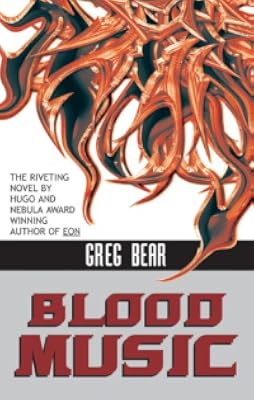
Greg Bear was born in San Diego, California, on August 20, 1951. He received a Bachelor of Arts degree from San Diego State University in 1973. At age 14, he began submitting pieces to magazines and at 15 he sold his first story to Robert Lowndes' Famous Science Fiction. It would be five years before he sold another piece, but by 23 he was selling show more stories regularly. He has written more than 30 science fiction and fantasy books and has won numerous awards for his work. In 1984, Hardfought and Blood Music won the Nebula Awards for best novella and novelette; Blood Music went on to win the Hugo Award. The novel version of that story, also called Blood Music, won the Prix Apollo in France. In 1987, Tangents won the Hugo and Nebula awards for best short story. He also won a Nebula in 1994 for Moving Mars and in 2001 for Darwin's Radio. Both Dinosaur Summer and Darwin's Radio have been awarded the Endeavour for best novel published by a Northwest science fiction author. He is also an illustrator and his work has appeared in Galaxy, Fantasy and Science Fiction, and Vertex, and in both hardcover and paperback books. He was a founding member of ASFA, the Association of Science Fiction Artists. His works include City at the End of Time, Hull Zero Three, The Mongoliad, Mariposa, Halo: Cryptum, Halo: Primordium and Halo: Silentium. (Bowker Author Biography) show less
Some Editions
Awards and Honors
Awards
Series

Belongs to Publisher Series
Heyne Science Fiction & Fantasy (06/4382)
Work Relationships
Is contained in
Common Knowledge
- Canonical title*
- Das Lied der Macht
- Original title
- The Infinity Concerto
- Original publication date
- 1984-10
- People/Characters
- Michael Perrin; Waltiti Arni; Golda Arni; Spart; Nare; Coom
- Epigraph
- If a man could pass through Paradise in a dream, and have a flower presented to him as a pledge that his soul had really been there, and if he found that flower in his hand when he awoke — Ay! — and what then?
—S... (show all)amuel Taylor Coleridge
What song did the sirens sing?
—Ancient Riddle - Dedication
- To Betty Chater: dear friend, teacher, colleague
- First words
- Are you ready?
- Last words
- (Click to show. Warning: May contain spoilers.)In the depths of the night, a bird began to sing.
- Original language*
- Englisch
*Some information comes from Common Knowledge in other languages. Click "Edit" for more information.
Classifications
Statistics
- Members
- 645
- Popularity
- 44,874
- Reviews
- 10
- Rating
- (3.78)
- Languages
- 5 — Dutch, English, German, Italian, Polish
- Media
- Paper, Ebook
- ISBNs
- 15
- ASINs
- 5