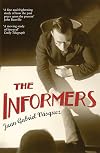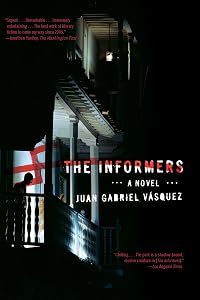
The Informers
by Juan Gabriel Vásquez
On This Page
Description
When Gabriel Santoro publishes his first book, a biography of a Jewish family friend who fled Germany for Colombia shortly before World War Two, it never occurs to him that his father will write a devastating review in a national newspaper. Why does he attack him so viciously? Do the pages of his book unwittingly hide some dangerous secret? As Gabriel sets out to discover what lies behind his father's anger, he finds himself undertaking an examination of the guilt and complicity at the heart show more of Colombian society, as one treacherous act perpetrated in those dark days returns with a vengeance half a century later.. show less
Tags
Recommendations















Member Reviews
I am usually a fan but this one never quite managed to keep my interest. The problem, I think, is structural because the voice, the writing, the story are all quite good. Son publishes an oral history/biography of a close family friend whose family fled Germany before World War II. Father, a famous figure, pans his son’s book viciously and with no explanation. That’s the frame story surrounding a series of interrelated stories connected with the son’s investigation into why his father acted as he did. Of course, the story is far more complex than first appears but the narrator is so self-absorbed that long stretches challenge the reader’s interest and willingness to continue. There is much—too much—on the wartime and postwar show more history of the German community in Colombia, redeemed only by Vásquez’s undeniable talent. A lot of effort for fairly small gain on subjects of personal and collective memory: what one (and one’s community) remembers and forgets…or chooses to remember and forget. (There is a much more concise, much more moving reminiscence of a very similar issue, “The Great Forgetting” in Spain, to be found in this blog essay.) show less
In 1988 the Colombian journalist Gabriel Santoro published his first book, a biography of Sara Guterman, a longtime family friend of Jewish descent who fled Nazi Germany along with her parents in the mid 1930s. He is surprised to read a scathing review of the book in a national newspaper, which demeans both the book and its author. However, the most shocking revelation is that the anonymous author of this review is his father, Gabriel Sr., a respected law professor in Bogotá, who refuses to reveal his motivations for writing this review.
Gabriel Jr. turns to Sara, and he discovers a forgotten and hidden history of the Colombian government's treatment of its citizens and visitors of German, Italian and Japanese descent during World War show more II. Sara's family owns a hotel that caters to Europeans, particularly Germans, who are divided between Nazi sympathizers, Jewish emigres, and opponents of National Socialism. Colombian citizens are encouraged to report Germans who are suspected of supporting their government, and hundreds were blacklisted and stripped of their livelihood and wealth, often based on hearsay and personal vendettas.
As Gabriel learns more about these blacklists and the effect a treacherous act had upon his father and Sara, we are treated to a rich history about mid-20th century Colombian society and the effect that World War II had upon its citizens, which continue to affect the country today.
The Informers is a well constructed novel, as Vásquez, through Gabriel Jr., methodically peels away layers of his family's and country's history to uncover harsh and unflattering truths. All of the major characters are memorable and well drawn, and the narration is deliberate but compelling. I definitely recommend this novel, and I look forward to his next one, The Secret History of Costaguana, which will be published in the UK next month. show less
Gabriel Jr. turns to Sara, and he discovers a forgotten and hidden history of the Colombian government's treatment of its citizens and visitors of German, Italian and Japanese descent during World War show more II. Sara's family owns a hotel that caters to Europeans, particularly Germans, who are divided between Nazi sympathizers, Jewish emigres, and opponents of National Socialism. Colombian citizens are encouraged to report Germans who are suspected of supporting their government, and hundreds were blacklisted and stripped of their livelihood and wealth, often based on hearsay and personal vendettas.
As Gabriel learns more about these blacklists and the effect a treacherous act had upon his father and Sara, we are treated to a rich history about mid-20th century Colombian society and the effect that World War II had upon its citizens, which continue to affect the country today.
The Informers is a well constructed novel, as Vásquez, through Gabriel Jr., methodically peels away layers of his family's and country's history to uncover harsh and unflattering truths. All of the major characters are memorable and well drawn, and the narration is deliberate but compelling. I definitely recommend this novel, and I look forward to his next one, The Secret History of Costaguana, which will be published in the UK next month. show less
Juan Gabriel Vásquez makes his title plural, because the informers are everywhere in this interesting and self-reflective novel. The author plays himself, so to speak, in writing this book, and the narrative taking up the first three quarters poses as a book which has been published. However, there is very nearly nothing we can consider meta-fictional here; Sr. Vásquez plays this very straight. The result is entertaining, thought-provoking, and full of cautionary lessons.
Sr. Vásquez uses the voice of a Colombian journalist who has written a book about the life of Sara, his immigrant friend. Sara moved to Bogotá in 1938 from Germany with her prosperous Jewish family, and has lived there ever since. She became friends with Gabriel show more Santoro, prominent attorney and language professor. Santoro’s son, also called Gabriel, is our narrator-journalist. Santoro senior reads his son’s book and writes a prompt and excoriating review. We very gradually learn the reasons for the hostility, and they stem from the elder man’s guilt about something he apparently said about an acquaintance, an immigrant man from Germany, during World War II. He informed. The result is a blacklisting of the acquaintance-victim, Konrad Deresser, who is detained, imprisoned, loses his family and his business, and at war’s end, commits suicide.
This bit of character assassination starts the dominoes falling, and it takes more than fifty years for all the effects to be felt.
The author takes up the immorality of calumny very effectively: the perpetrator destroys his victim, and lives with his guilt for decades. Even as he becomes a prominent professor and rhetorician, his words and his acquaintances betray him. Eventually we aren’t sure whether he’s killed himself or not. The moral territory is crystal clear and the language engaging and seamlessly translated. This book abounds in subtleties: the snitch becomes a jurist-rhetorician; the son becomes a truth-seeking journalist who inadvertently brings ruin to the father. Well-written and throught-provoking.
http://bassoprofundo1.blogspot.com/2013/01/the-informers-by-juan-gabriel-vasquez... show less
Sr. Vásquez uses the voice of a Colombian journalist who has written a book about the life of Sara, his immigrant friend. Sara moved to Bogotá in 1938 from Germany with her prosperous Jewish family, and has lived there ever since. She became friends with Gabriel show more Santoro, prominent attorney and language professor. Santoro’s son, also called Gabriel, is our narrator-journalist. Santoro senior reads his son’s book and writes a prompt and excoriating review. We very gradually learn the reasons for the hostility, and they stem from the elder man’s guilt about something he apparently said about an acquaintance, an immigrant man from Germany, during World War II. He informed. The result is a blacklisting of the acquaintance-victim, Konrad Deresser, who is detained, imprisoned, loses his family and his business, and at war’s end, commits suicide.
This bit of character assassination starts the dominoes falling, and it takes more than fifty years for all the effects to be felt.
The author takes up the immorality of calumny very effectively: the perpetrator destroys his victim, and lives with his guilt for decades. Even as he becomes a prominent professor and rhetorician, his words and his acquaintances betray him. Eventually we aren’t sure whether he’s killed himself or not. The moral territory is crystal clear and the language engaging and seamlessly translated. This book abounds in subtleties: the snitch becomes a jurist-rhetorician; the son becomes a truth-seeking journalist who inadvertently brings ruin to the father. Well-written and throught-provoking.
http://bassoprofundo1.blogspot.com/2013/01/the-informers-by-juan-gabriel-vasquez... show less
One of the many reasons for reading literature in translation is the window it can provide onto experiences other than our own, sometimes experiences we never knew existed. The Informers by Juan Gabriel Vasquez provides a window on life among German nationals living in Columbia during the second world war. Because of diplomatic pressure from the United States, the government of Columbia published a list of German nationals deemed security risks. Many of these men were arrested and confined for the duration of the war. After their release, they were not allowed to work in certain areas for several years. Many lost their livelihoods, their homes, the families; some lost their lives.
In the chaos of the early days of the war, many German show more nationals were added to the list whether or not they were fascists, supporters of fascists, even Jewish. In the hotel that served as a prison, it was not uncommon to find Jewish men and Nazi party members sitting poolside waiting for a friend or family member to arrange their freedom.
This event provides the background for Mr. Gabriel Vasquez's look at the nature of informing and its consequences. Mr. Gabriel Vasquez is not really interested in the ins and outs of these arrests but in those who informed and what happened to them. The novel's narrator, Gabriel Santoro, is a Columbian author of German descent. His own father was not imprisoned during the second world war but many of his peers were. After Gabriel Santoro published a book based on interviews with a family friend about her family's experience as German Jews living in Columbia during the war, his father refuses to speak with him for many years. His father sees this act as a betrayal, a revelation of family secrets best kept quiet. Why bring up the past? No one is interested anymore.
In a sense the younger Santoro has informed against his father, though he does not know it yet. Years later, the two reconcile after the father suffers a near fatal heart attack only to die six months later in an automobile accident. After his father's death, Gabriel finds out that he once informed against an innocent family friend. While Gabriel's father survived the war unarrested, the family friend was unable to find a way off of the government's list and consequently lost everything. In the end, he killed himself.
While there are several thriller like elements in The Informers, what makes it an interesting novel is this look at the nature of informing and its consequences. Gabriel's father informs on a friend to escape prison. Gabriel informs on a friend to publish a book. Later, a television crew will inform on them both for a sensational story. All three acts have complicated consequences, some generational. In the end, the reader must ask himself just how much should have been kept quiet. Are we really better off knowing? show less
In the chaos of the early days of the war, many German show more nationals were added to the list whether or not they were fascists, supporters of fascists, even Jewish. In the hotel that served as a prison, it was not uncommon to find Jewish men and Nazi party members sitting poolside waiting for a friend or family member to arrange their freedom.
This event provides the background for Mr. Gabriel Vasquez's look at the nature of informing and its consequences. Mr. Gabriel Vasquez is not really interested in the ins and outs of these arrests but in those who informed and what happened to them. The novel's narrator, Gabriel Santoro, is a Columbian author of German descent. His own father was not imprisoned during the second world war but many of his peers were. After Gabriel Santoro published a book based on interviews with a family friend about her family's experience as German Jews living in Columbia during the war, his father refuses to speak with him for many years. His father sees this act as a betrayal, a revelation of family secrets best kept quiet. Why bring up the past? No one is interested anymore.
In a sense the younger Santoro has informed against his father, though he does not know it yet. Years later, the two reconcile after the father suffers a near fatal heart attack only to die six months later in an automobile accident. After his father's death, Gabriel finds out that he once informed against an innocent family friend. While Gabriel's father survived the war unarrested, the family friend was unable to find a way off of the government's list and consequently lost everything. In the end, he killed himself.
While there are several thriller like elements in The Informers, what makes it an interesting novel is this look at the nature of informing and its consequences. Gabriel's father informs on a friend to escape prison. Gabriel informs on a friend to publish a book. Later, a television crew will inform on them both for a sensational story. All three acts have complicated consequences, some generational. In the end, the reader must ask himself just how much should have been kept quiet. Are we really better off knowing? show less
If someone mentions South America and Nazis, what comes to mind? For many, it's the seemingly ubiquitous idea of Nazis escaping there after the war. While the concept has at least a few kernels of truth, it ignores or pushes aside events that swept up Latin America during the war.
South American writers, though, recognize that even if their nations were not combatants, they were not immune from the effects of Nazism and World War II. Chilean author Roberto Bolaño, in fact, created a fictional encyclopedia of ultra right-wing writers in North, Central and South America with his Nazi Literature in the Americas. More directly addressing the topic is The Informers, the first novel of Colombian author Juan Gabriel Vásquez translated into show more English.
The Informers is inspired by a woman of German-Jewish origin Vásquez met in late 1999 who emigrated to Colombia with her family as a teenager in 1938. In Vásquez's hands, she becomes Sara Guterman, the subject of a book written by Gabriel Santoro, a young Bogotá writer whose father of the same name is a nationally recognized and honored professor of rhetoric. Like her real life counterpart, Guterman's family moves to Colombia in the 1930s as her German Jewish parents fled Nazism. She becomes a lifelong friend of the senior Santoro.
In telling Guterman's story, Santoro fils also examines the impact of the "Proclaimed List of Certain Blocked Nationals," a list announced by the U.S. Government of some 1,800 individuals and entities in Latin American "deemed to be acting for the benefit of Germany and Italy." That list became the basis of blacklists in Colombia, with people informing on others, usually with German or Jewish backgrounds, for real or unfounded suspicion or out of self-interest. Many end up in internment camps in Colombia and, in fact, a number of Latin Americans were sent to the United States for internment. The senior Santoro tells his students there were "thousands of people who accused, who denounced, who informed." He teaches that "the system of blacklists gave power to the weak, and the weak are a majority. That was life during those years: a dictatorship of weakness. The dictatorship of resentment[.]"
Despite those comments and the fact he also teaches lawyers and judges, Santoro père disparages his son's book in a published review. Not only does he downplay its discussion of the blacklist years, he calls the book a "failure" and says listing its shortcomings "would be as futile as it would be exhausting." Father and son do not speak for three years after that.
The senior Santoro breaks the silence when he contacts his son to tell him he is facing a life-threatening health condition. The two begin to reconcile and when father survives the health scare, he views it as a new chance at life. While he at some point apologizes for the review, he never truly explains his reasons for it. After several months, though, the senior Santoro dies in a car accident. Before and after his father's death, with information provided by Guterman and his father's girlfriend (his own informers), Santoro begins to peel away layers of silence, misdirection and falsity to reveal a secret his father hid for decades and that explain his hostility to the book.
Anne McLean translates Vásquez's generally artful prose, with the latter being an author who doesn't indulge in trite metaphor. To the contrary, Santoro senior's "breathing whistled like a paper kite" and "the notion of his past bothered him like a raspberry seed stuck in his teeth." While the younger Santoro narrates the book, Vásquez is not tied to a single traditional narrative style. One part of The Informers is the first chapter of Sanotoro's book about Guterman. Other parts are almost transcript-like versions of interviews and yet another is basically a recording of a conversation between the younger Santoro and Guterman, consisting of lengthy passages of Guterman's recollection of events before and during the blacklist era. Some readers may see the changing formats format extending a slowly unfolding structure that is already intricate but it does not become a major distraction. Perhaps more noticeable is that the younger Santoro seems strangely aloof, as if viewing himself as a journalist requires him to approach the events and revelations that impact his life in that role.
The Informers, first published in translation in the U.S. in 2009 and now in a trade paper edition, doesn't limit itself to Colombia's World War II history. Electoral politics, internal armed conflict and terrorism, and the power of the drug cartels also come into play as Vásquez takes his story through some half century of Colombian history. Those items play a role in the author's own life, as the violence and unrest caused by guerrilla movements and the drug lords led him to Europe, where he now lives and writes in Barcelona. (Interestingly, Bolaño lived on the Mediterranean coast in Spain less than 50 miles from Barcelona when he wrote most of his novels.)
With The Informers, Vásquez provides another example of how literary fiction and many of its most common themes can illuminate seemingly forgotten history and its consequences. Not only do these themes help animate the story, they help engage the reader. The fact the themes explored in The Informers, such as the relationship of father and son, family secrets and betrayal, are age-old doesn't keep it from helping unfold 20th Century history.
(Originally posted at A Progressive on the Prairie.) show less
South American writers, though, recognize that even if their nations were not combatants, they were not immune from the effects of Nazism and World War II. Chilean author Roberto Bolaño, in fact, created a fictional encyclopedia of ultra right-wing writers in North, Central and South America with his Nazi Literature in the Americas. More directly addressing the topic is The Informers, the first novel of Colombian author Juan Gabriel Vásquez translated into show more English.
The Informers is inspired by a woman of German-Jewish origin Vásquez met in late 1999 who emigrated to Colombia with her family as a teenager in 1938. In Vásquez's hands, she becomes Sara Guterman, the subject of a book written by Gabriel Santoro, a young Bogotá writer whose father of the same name is a nationally recognized and honored professor of rhetoric. Like her real life counterpart, Guterman's family moves to Colombia in the 1930s as her German Jewish parents fled Nazism. She becomes a lifelong friend of the senior Santoro.
In telling Guterman's story, Santoro fils also examines the impact of the "Proclaimed List of Certain Blocked Nationals," a list announced by the U.S. Government of some 1,800 individuals and entities in Latin American "deemed to be acting for the benefit of Germany and Italy." That list became the basis of blacklists in Colombia, with people informing on others, usually with German or Jewish backgrounds, for real or unfounded suspicion or out of self-interest. Many end up in internment camps in Colombia and, in fact, a number of Latin Americans were sent to the United States for internment. The senior Santoro tells his students there were "thousands of people who accused, who denounced, who informed." He teaches that "the system of blacklists gave power to the weak, and the weak are a majority. That was life during those years: a dictatorship of weakness. The dictatorship of resentment[.]"
Despite those comments and the fact he also teaches lawyers and judges, Santoro père disparages his son's book in a published review. Not only does he downplay its discussion of the blacklist years, he calls the book a "failure" and says listing its shortcomings "would be as futile as it would be exhausting." Father and son do not speak for three years after that.
The senior Santoro breaks the silence when he contacts his son to tell him he is facing a life-threatening health condition. The two begin to reconcile and when father survives the health scare, he views it as a new chance at life. While he at some point apologizes for the review, he never truly explains his reasons for it. After several months, though, the senior Santoro dies in a car accident. Before and after his father's death, with information provided by Guterman and his father's girlfriend (his own informers), Santoro begins to peel away layers of silence, misdirection and falsity to reveal a secret his father hid for decades and that explain his hostility to the book.
Anne McLean translates Vásquez's generally artful prose, with the latter being an author who doesn't indulge in trite metaphor. To the contrary, Santoro senior's "breathing whistled like a paper kite" and "the notion of his past bothered him like a raspberry seed stuck in his teeth." While the younger Santoro narrates the book, Vásquez is not tied to a single traditional narrative style. One part of The Informers is the first chapter of Sanotoro's book about Guterman. Other parts are almost transcript-like versions of interviews and yet another is basically a recording of a conversation between the younger Santoro and Guterman, consisting of lengthy passages of Guterman's recollection of events before and during the blacklist era. Some readers may see the changing formats format extending a slowly unfolding structure that is already intricate but it does not become a major distraction. Perhaps more noticeable is that the younger Santoro seems strangely aloof, as if viewing himself as a journalist requires him to approach the events and revelations that impact his life in that role.
The Informers, first published in translation in the U.S. in 2009 and now in a trade paper edition, doesn't limit itself to Colombia's World War II history. Electoral politics, internal armed conflict and terrorism, and the power of the drug cartels also come into play as Vásquez takes his story through some half century of Colombian history. Those items play a role in the author's own life, as the violence and unrest caused by guerrilla movements and the drug lords led him to Europe, where he now lives and writes in Barcelona. (Interestingly, Bolaño lived on the Mediterranean coast in Spain less than 50 miles from Barcelona when he wrote most of his novels.)
With The Informers, Vásquez provides another example of how literary fiction and many of its most common themes can illuminate seemingly forgotten history and its consequences. Not only do these themes help animate the story, they help engage the reader. The fact the themes explored in The Informers, such as the relationship of father and son, family secrets and betrayal, are age-old doesn't keep it from helping unfold 20th Century history.
(Originally posted at A Progressive on the Prairie.) show less
The Informers by Juan Gabriel Vasquez
A novel set in Columbia during the outbreak of WW II when a significant number of German immigrants were blacklisted, forced to give up their occupations, businesses and normal lifestyles. Many were forced inland, away from the coast where they might be of greater menace.
The book relates the story of Gabriel Santoro a University professor and commentator, highly respected by all. Years later his son, a journalist, writes a book about his family friend, Sara Guterman, herself the daughter of Jewish immigrants who successfully built an exclusive hotel. In retelling her life, the son Santoro, unwittingly reveals how his father informed on his German friends.
One particular family, close friends, the show more Deressers, find their lives destroyed. The father, Konrad, is sent away to a hotel prison, the mother leaves Bogota to start a new life never to be seen again, and likewise their son, Enrique, leaves for Medellin where he, too, starts a new life.
Years later Gabriel Santoro, Jr. and Enrigue Deresser meet up and together seek amends.
The truth though is brutal. An informer can never be forgiven and it is the elder Santoro’s self imposed guilt that eventually results in a fatal car accident ending his own life.
The writing is at times mysterious and one gets a real sense of Columbia at a given time; its peoples, its politics and its geography. A very well written engrossing novel. show less
A novel set in Columbia during the outbreak of WW II when a significant number of German immigrants were blacklisted, forced to give up their occupations, businesses and normal lifestyles. Many were forced inland, away from the coast where they might be of greater menace.
The book relates the story of Gabriel Santoro a University professor and commentator, highly respected by all. Years later his son, a journalist, writes a book about his family friend, Sara Guterman, herself the daughter of Jewish immigrants who successfully built an exclusive hotel. In retelling her life, the son Santoro, unwittingly reveals how his father informed on his German friends.
One particular family, close friends, the show more Deressers, find their lives destroyed. The father, Konrad, is sent away to a hotel prison, the mother leaves Bogota to start a new life never to be seen again, and likewise their son, Enrique, leaves for Medellin where he, too, starts a new life.
Years later Gabriel Santoro, Jr. and Enrigue Deresser meet up and together seek amends.
The truth though is brutal. An informer can never be forgiven and it is the elder Santoro’s self imposed guilt that eventually results in a fatal car accident ending his own life.
The writing is at times mysterious and one gets a real sense of Columbia at a given time; its peoples, its politics and its geography. A very well written engrossing novel. show less
Vasquez is a Colombian author and this novel tells the story of a very interesting historical period in Colombian history. During World War Two, the United States was very concerned about Nazi activity in South America. The U.S. State Department sent to each friendly South American government a list of suspected Nazi sympathizers among their German emigre communities and asked that the funds of these individuals be frozen. Columbia was one of these countries, and as one would imagine in such an endeavor, these lists became open to mistakes and abuse. In the end, many Germans who in fact had left Germany for South America for the express purpose of escaping Nazism found themselves on this list. Several years of having assets frozen of show more course meant that businesses went under and individuals went bankrupt.
OK, that's the backround. The Informers is told in retrospect from the point of view of an adult son trying to get a handle on his father, a prominent teacher and jurist. When the protagonist writes a book about the war years, his father publishes a savagely negative review of the book. This sets off a process through which the narrator seeks to learn the source of his father's anger, and slowly he learns new truths about his father's past.
Much of the novel is recounted through conversations, either those we are shown directly or those the narrator describes for us in retrospect. There is much of this: people sitting down and relating long, long stories about their experiences and memories. Between this aspect of the narrative and the early exposition of the narrator's history and relations with his father, the prose very quickly (and very frequently) reminded me of Phillip Roth (if Phillip Roth had been South American).
Vasquez comes off second best in this comparison, however, because he does not have Roth's powerful ability to create magical, captivating sentences. (Whatever one may think of Roth's subject matter and storytelling, his amazingly vivid and fluid sentences have always knocked my socks off.) In Vasquez's case, this might be a case of mediocre translation. I have no idea, there.
This is a book I'm glad to have read, and I learned a lot about a slice of history I was wholly ignorant about. But in the end the story told is not quite as compelling a one as the subject matter seems to cry out for. show less
OK, that's the backround. The Informers is told in retrospect from the point of view of an adult son trying to get a handle on his father, a prominent teacher and jurist. When the protagonist writes a book about the war years, his father publishes a savagely negative review of the book. This sets off a process through which the narrator seeks to learn the source of his father's anger, and slowly he learns new truths about his father's past.
Much of the novel is recounted through conversations, either those we are shown directly or those the narrator describes for us in retrospect. There is much of this: people sitting down and relating long, long stories about their experiences and memories. Between this aspect of the narrative and the early exposition of the narrator's history and relations with his father, the prose very quickly (and very frequently) reminded me of Phillip Roth (if Phillip Roth had been South American).
Vasquez comes off second best in this comparison, however, because he does not have Roth's powerful ability to create magical, captivating sentences. (Whatever one may think of Roth's subject matter and storytelling, his amazingly vivid and fluid sentences have always knocked my socks off.) In Vasquez's case, this might be a case of mediocre translation. I have no idea, there.
This is a book I'm glad to have read, and I learned a lot about a slice of history I was wholly ignorant about. But in the end the story told is not quite as compelling a one as the subject matter seems to cry out for. show less
Members
- Recently Added By
Published Reviews
ThingScore 92
Nothing works out quite the way anyone expects, which is just one of the many strengths of this remarkable novel. It deals with big universal themes -- betrayal, the war between fathers and sons, cowardice and valor -- and big particular ones: the mix of peoples and histories that is Latin America, the painful political and social history under which Colombia suffers, the poison that Nazism show more spread throughout the world. It is the best work of literary fiction to come my way since 2005, with the publication of Olga Grushin's "The Dream Life of Sukhanov" (also, interestingly enough, about betrayal), and into the bargain it is immensely entertaining, with twists and turns of plot that yield great satisfaction. show less
added by kidzdoc
The translator, Anne McLean, successfully re-creates the fluid and, at times, colloquial Latin American tone of the original Spanish text, dexterously ensuring our immediate familiarity with its rich cast of sharply observed characters. Yet at times The Informers makes for frustrating reading: its plot is enigmatic and the narrator seldom trustworthy, while the style is so indirect as to show more become unnecessarily confusing. The reward for perseverance is not complete clarity, but at least a degree of understanding. That may well be the real message of this strange, original book. As Sara explains to Gabriel, her unfortunate biographer: "I could tell you everything ... later you'll be sorry you knew." show less
added by kidzdoc
Vásquez shows a mastery of technique and language. The examination of the consequences that a single act can have not only for the person committing it but also, through the ripple effect, for many others brings us into the territory of Ian McEwan's Atonement. The novel may not have the fireworks of magical realism, but its sure construction of narrative and vivid portrayal of a wide array of show more characters build an extraordinary tale, one which reminds the reader that any novel can be a fascinating mixture of magic and realism. show less
added by kidzdoc
Lists

Books Read in 2023
5,638 works; 147 members
Author Information

29+ Works 3,070 Members
Juan Gabriel Vásquez was born in Bogotá, Colombia in 1973. He studied law at the University of Rosario and received a doctorate in Latin American literature at the Sorbonne. He is the author of The Informants (Los Informantes), The Secret History of Costaguana (Historia Secreta de Costaguana), and The Sound of Things Falling (El Ruido de las show more Cosas al Caer), which won International Dublin Literary Award in 2014. (Bowker Author Biography) show less
Some Editions
Awards and Honors
Series
Belongs to Publisher Series
Fischer Taschenbuch (19158)
Common Knowledge
- Canonical title
- The Informers
- Original title
- Los Informantes
- Original publication date
- 2004 (original Spanish) (original Spanish); 2008 (English: McLean) (English: McLean)
- People/Characters
- Gabriel Santoro sr; Gabriel Santoro jr; Sara Guterman; Konrad Deresser; Enrique Deresser
- Important places
- Bogotá, Colombia; Medéllin, Colombia
- Epigraph
- You will never wash out that stain;
you cannot talk long enough for that.
- Demosthenes, "On the Crown"
Who wishes to speak?
Who wishes to rake up old grievances?
Who wishes to be answerable to the future?<... (show all)br>- Demosthenes, "On the Crown" - Dedication
- For Francis Laurenty
(1924-2003) - First words
- On the morning of April 7, 1991, when my father telephoned to invite me to his apartment in Chapinero for the first time, there was such a downpour in Bogota that the streams of the Eastern Hills burst their banks, and the wa... (show all)ter came pouring down, dragging branches and mud, blocking the sewers, flooding the narrowest streets, lifting small cars with the force of the current, and even killing an unwary taxi driver who somehow ended up trapped under the chassis of his own vehicle.
- Last words
- (Click to show. Warning: May contain spoilers.)But it was the one that Gabriel Santoro would have taken if his car had not gone over the edge, and it would also be the one that Gabriel Santoro's son would take as soon as he confirmed that Enrique Deresser wasn't to blame: because in this trial Enrique Deresser also stood accused, and his summing up that the road was dangerous, that the night had been dark, that the bend was sharp and the visibility bad, that a mutilated hand doesn't react well in emergencies, that a recently repaired heart is fragile and cannot bear violent emotions, that a tired old man has bad reflexes, and more so when he'd lost in a single day a lover and a friend from his youth who perhaps, between the two of them, might have been able to bring him back to life.
- Original language
- Spanish
Classifications
- Genres
- General Fiction, Fiction and Literature
- DDC/MDS
- 863.6 — Literature & rhetoric Spanish Literature Spanish fiction 20th Century
- LCC
- PQ8180.32 .A797 .I5413 — Language and Literature French, Italian, Spanish and Portuguese literatures Spanish literature Provincial, local, colonial, etc. Spanish America
- BISAC
Statistics
- Members
- 493
- Popularity
- 61,416
- Reviews
- 19
- Rating
- (3.43)
- Languages
- 7 — Dutch, English, French, German, Italian, Portuguese, Spanish
- Media
- Paper, Ebook
- ISBNs
- 31
- ASINs
- 10