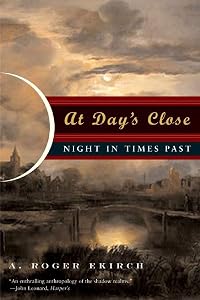
At Day's Close: Night in Times Past
by A. Roger Ekirch
On This Page
Description
A portrait of how people lived in the pre-industrial age describes how a lack of electric lighting separated daytime and evening into more contrasting worlds, explaining how superstition, work, fire, crime, religion, slavery, and other factors were different before the advent of electric lighting.Tags
Recommendations
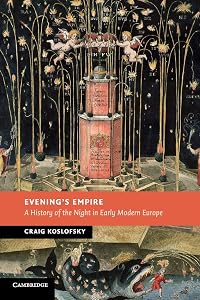
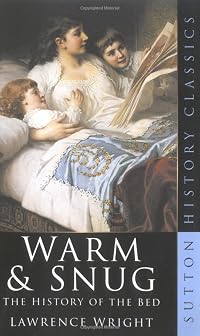



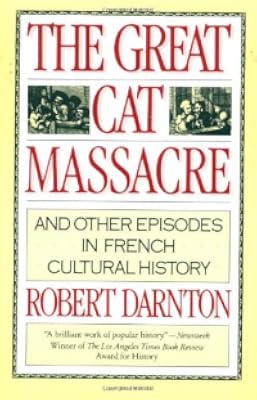

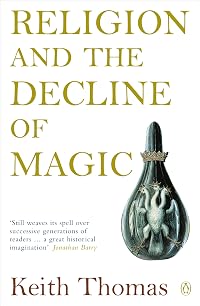














Member Recommendations

Member Reviews
I looked forward to reading this book with some anticipation for if “Wild Nights” by Benjamin Reis was very good then how better this book would be since Reis mentions it extensively. I wasn’t disappointed for this book is eminently readable, and so engaging a limit had to be put on the time spent reading it in bed elsewise I’d be up all night. The special focus of the book is night time from 1500-1750 in Western Europe from Scandinavia to the Mediterranean with four parts:
In the Shadow of Death
Laws of Nature
Benighted Realms
Shadow Worlds
There are voluminous references to what occurs at night and most of it is terrifying. It’s an excellent read if you are interested both in history and sociology.
In the Shadow of Death
Laws of Nature
Benighted Realms
Shadow Worlds
There are voluminous references to what occurs at night and most of it is terrifying. It’s an excellent read if you are interested both in history and sociology.
As someone who's always been a little freaked out by being out in the middle of nowhere at night, I've often wondered what it must have been like back a few centuries when it got really dark at night. That's what prompted me to pick up this book, which promises to tell you how people dealt with night when there were nothing more than candles to illuminate a couple of feet in front of you.
The book is divided up into different sections by topic - the first section, for example, is about the supernatural forces that people thought were afoot during darkness. A couple of the others talk about the very real dangers night brought, and the customs surrounding bedrooms and going to sleep.
Some of the types of things covered:
How people managed show more to visit friends or come home from the pub after dark - I can't imagine knowing fields and surroundings well enough to navigate them with nothing but moonlight to guide me. Of course, that's part of what he talks about: how many people suffered accidents brought on by being disoriented or drunk (or both) while trying to find their way home.
As for crime, it was amusing to me that even back then, people were advised to yell "Fire!" if they were being attacked instead of "Murder!" (And don't get me started on how melodramatic it is to yell "murder!" anyway.) Now I think the conventional wisdom is that people are more likely to help just because a fire probably doesn't involve a violent altercation, but back then it was because a fire was a serious business that was just as likely to burn down your entire village as one house.
Night was often a leveler; on the streets, few could tell whether someone approaching was a peasant or nobility. People who worked hard all day were able to relax away from the watchful eyes of their betters. Women could get together in spinning or knitting groups and talk more freely. Even slaves were often able to leave their quarters and visit each other, sacrificing sleep to cover the long distances between plantations.
It seems that people used to sleep on a more segmented schedule, sleeping for a few hours, waking up and staying awake for a while, and then going back to sleep until daybreak. I am pretty sure I just recently saw an article going by about exactly this sort of sleep schedule and how it might be more natural/better for us. The arrival of artificial light in common usage stretched our waking hours and probably compressed the sleeping ones into one block.
So basically, this book has a lot of interesting tidbits, and that's what kept me going although the writing was hit-or-miss for me. It was obviously well-researched, but the difficulty is that there wasn't a lot of source material. Not that many people in those times kept diaries, and the ones who did often didn't write about what they considered mundane, which leaves Ekirch talking about some habit, and then citing a lone diary entry by someone as if that meant whatever the event was happened all the time to all sorts of people. I don't really doubt that many of the examples he used were relatively frequent occurrences (as I said, the book seems well-researched), but it irked me as a reader because it broke up the flow of the writing. Recommended for people with a particular interest in what people really did and what they were really afraid of when the sun went down, who aren't easily bored.*
*There is a blurb on the back of the book which made me wonder if it was a backhanded compliment: "Perfect reading for insomniacs and star-gazers alike." show less
The book is divided up into different sections by topic - the first section, for example, is about the supernatural forces that people thought were afoot during darkness. A couple of the others talk about the very real dangers night brought, and the customs surrounding bedrooms and going to sleep.
Some of the types of things covered:
How people managed show more to visit friends or come home from the pub after dark - I can't imagine knowing fields and surroundings well enough to navigate them with nothing but moonlight to guide me. Of course, that's part of what he talks about: how many people suffered accidents brought on by being disoriented or drunk (or both) while trying to find their way home.
As for crime, it was amusing to me that even back then, people were advised to yell "Fire!" if they were being attacked instead of "Murder!" (And don't get me started on how melodramatic it is to yell "murder!" anyway.) Now I think the conventional wisdom is that people are more likely to help just because a fire probably doesn't involve a violent altercation, but back then it was because a fire was a serious business that was just as likely to burn down your entire village as one house.
Night was often a leveler; on the streets, few could tell whether someone approaching was a peasant or nobility. People who worked hard all day were able to relax away from the watchful eyes of their betters. Women could get together in spinning or knitting groups and talk more freely. Even slaves were often able to leave their quarters and visit each other, sacrificing sleep to cover the long distances between plantations.
It seems that people used to sleep on a more segmented schedule, sleeping for a few hours, waking up and staying awake for a while, and then going back to sleep until daybreak. I am pretty sure I just recently saw an article going by about exactly this sort of sleep schedule and how it might be more natural/better for us. The arrival of artificial light in common usage stretched our waking hours and probably compressed the sleeping ones into one block.
So basically, this book has a lot of interesting tidbits, and that's what kept me going although the writing was hit-or-miss for me. It was obviously well-researched, but the difficulty is that there wasn't a lot of source material. Not that many people in those times kept diaries, and the ones who did often didn't write about what they considered mundane, which leaves Ekirch talking about some habit, and then citing a lone diary entry by someone as if that meant whatever the event was happened all the time to all sorts of people. I don't really doubt that many of the examples he used were relatively frequent occurrences (as I said, the book seems well-researched), but it irked me as a reader because it broke up the flow of the writing. Recommended for people with a particular interest in what people really did and what they were really afraid of when the sun went down, who aren't easily bored.*
*There is a blurb on the back of the book which made me wonder if it was a backhanded compliment: "Perfect reading for insomniacs and star-gazers alike." show less
A fascinating and thoroughly researched account of night in preindustrial Europe and America, At Day's Close brings insights into the way lighting has changed society. Ekirch covers various themes using mainly primary documents. Each page is filled with numerous direct quotes by those from the time. Topics addressed include wild animals, fire, arson, theft, violence, fortified cities, vagrants, streetwalkers, prostitutes, locks and shutters, candles, lamps, hearths, torches, ghosts, spirits, walking home, carousing, working, socializing, sex, solitude, parties, alehouses, gangs, secret societies, subcultures, covens, bed chamber rituals, beds, sleep, dreams, and nightmares.
One topic that surprised and intrigued me concerned sleep. show more People used to go through two phases of sleep each night: first sleep (three or four hours), followed by a period of quiet reflection and meditation (about an hour), and then second sleep (another three or four hours). What is most disturbing about this phenomenon is that we no longer abide by this cycle. Experiments done in the modern age show that people who live without artificial lighting will go back to this natural two-part sleep cycle after a few weeks. This fact could have a pronounced impact on the well-being of our psyche.
The author's final remarks echoed my own thoughts. It appears that we have somehow lost touch with ourselves and the natural world through artificial light. We barely even remember our dreams, and the Milky Way has vanished. If we noticed these changes, it did not stop us. Perhaps we did not know how important these things might be for happiness and health - more important than making darkened streets as bright as day.
I quote Ekirch on the possible future of no darkness, "The residual beauty of the night sky, alternating cycles of darkness and light, and regular respites from the daily round of sights and sounds - all will be impaired by enhanced illumination. Ecological systems, with their own patterns of nocturnal life, will suffer immeasurably. With darkness diminished, opportunities for privacy, intimacy, and self-reflection will grow more scarce. Should that luminous day arrive, we stand to lose a vital element of our humanity - one as precious as it is timeless. That, in the depths of a dark night, should be a bracing prospect for any spent soul to contemplate." show less
One topic that surprised and intrigued me concerned sleep. show more People used to go through two phases of sleep each night: first sleep (three or four hours), followed by a period of quiet reflection and meditation (about an hour), and then second sleep (another three or four hours). What is most disturbing about this phenomenon is that we no longer abide by this cycle. Experiments done in the modern age show that people who live without artificial lighting will go back to this natural two-part sleep cycle after a few weeks. This fact could have a pronounced impact on the well-being of our psyche.
The author's final remarks echoed my own thoughts. It appears that we have somehow lost touch with ourselves and the natural world through artificial light. We barely even remember our dreams, and the Milky Way has vanished. If we noticed these changes, it did not stop us. Perhaps we did not know how important these things might be for happiness and health - more important than making darkened streets as bright as day.
I quote Ekirch on the possible future of no darkness, "The residual beauty of the night sky, alternating cycles of darkness and light, and regular respites from the daily round of sights and sounds - all will be impaired by enhanced illumination. Ecological systems, with their own patterns of nocturnal life, will suffer immeasurably. With darkness diminished, opportunities for privacy, intimacy, and self-reflection will grow more scarce. Should that luminous day arrive, we stand to lose a vital element of our humanity - one as precious as it is timeless. That, in the depths of a dark night, should be a bracing prospect for any spent soul to contemplate." show less
Ekirch, though he didn't set out to do so, has convinced me that modern light may be more of a scourge than a blessing. In a strange coincidence, we experienced a late afternoon/evening power outage while I was reading this book: what a way to really gain empathy with his subject!
The book examines the experience of nighttime in the late medieval and early modern eras. At a broad level, Ekirch discusses the fears and dangers associated with nighttime, the ways nighttime constrained daily activities, the things that people did do during the night, habits pertaining to the evening and sleep. His book is crammed full of evocative detail about all the specifics that fall under these general categories.
Though here and there I had quibbles show more with the organization, in truth I couldn't think how to do things much better. I think the subject material is just so layered and vast (the book is the product of almost 20 years of work) that it is bound to be difficult to separate into tidy categories.
Too, in places I thought "Well, these things are still true today"--e.g., about the rampaging of adolescents during the evening--and in response his concluding section, Cock-Crow (on the changes that came after the period of question, during the Industrial Revolution), does a wonderful job of reminding the reader of how vastly diluted and distant our experience of night is today by comparison. He also reminds us about the mysteries, subtleties, emotional states, and time for reflection and thought that have vanished as we more toward a 24-hour day. I wished this section was longer.
The rest of the book reminds us of what we've gained as well as lost since the times when night reigned: time that's no longer sunk into endless labor like midnight washing; fears and terrors, spiritual and material; time spent knitting together society; chances to escape or defy one's socially defined role; miserable, scratchy, bug-infested, noisy, and crowded sleeping conditions; and on and on.
As with all good histories of this sort, while Ekirch educates us about the myriad aspects of his chosen subject, he also illuminates the greater warp and weft of life during the medieval and early modern era.
Postscript: thanks to Ekirch, I'm now deeply interested in reading Samuel Pepys' diary. show less
The book examines the experience of nighttime in the late medieval and early modern eras. At a broad level, Ekirch discusses the fears and dangers associated with nighttime, the ways nighttime constrained daily activities, the things that people did do during the night, habits pertaining to the evening and sleep. His book is crammed full of evocative detail about all the specifics that fall under these general categories.
Though here and there I had quibbles show more with the organization, in truth I couldn't think how to do things much better. I think the subject material is just so layered and vast (the book is the product of almost 20 years of work) that it is bound to be difficult to separate into tidy categories.
Too, in places I thought "Well, these things are still true today"--e.g., about the rampaging of adolescents during the evening--and in response his concluding section, Cock-Crow (on the changes that came after the period of question, during the Industrial Revolution), does a wonderful job of reminding the reader of how vastly diluted and distant our experience of night is today by comparison. He also reminds us about the mysteries, subtleties, emotional states, and time for reflection and thought that have vanished as we more toward a 24-hour day. I wished this section was longer.
The rest of the book reminds us of what we've gained as well as lost since the times when night reigned: time that's no longer sunk into endless labor like midnight washing; fears and terrors, spiritual and material; time spent knitting together society; chances to escape or defy one's socially defined role; miserable, scratchy, bug-infested, noisy, and crowded sleeping conditions; and on and on.
As with all good histories of this sort, while Ekirch educates us about the myriad aspects of his chosen subject, he also illuminates the greater warp and weft of life during the medieval and early modern era.
Postscript: thanks to Ekirch, I'm now deeply interested in reading Samuel Pepys' diary. show less
This was a very original and readable investigation of the experiences of people with night in the early modern era. The night was feared for its demons, but was also a time when the usual daytime rules were set aside. Night was a “separate season” with rampant crime in some areas, fires, witches, work parties to spin wool and gossip, masked balls and night-cellars for midnight liaisons, the practice of bundling, are all discussed. Most interesting was the idea of the first and second sleep, the first beginning in exhaustion at sunset, followed by waking at midnight, for reflection, intimacy, and sometimes reading, followed by the second dreaming and deep sleep. This was an unusually readable and detailed social history, very show more recommendable. show less
This is a non-fiction book about nighttime in the period 1500 - 1750. Impeccably researched, Ekirch regularly quotes from poems, diaries, court transcripts, news articles and other records to illustrate his point. Covering Europe and early colonial America, the book is divided into 'themes,' which makes it easy to read about the topics that interest the reader (but of course I read it all).
It would be obvious to most that danger increased after the sun went down as did the number and the nature of crimes which are described in the book. A common term of 'shutting in' described how people in towns and rural areas would shut themselves in their homes at the same time each day, closing shutters, barring doors etc. Superstitions and fears show more were rife and included witches, demons, faeries, monsters and satan amongst fear of burglary. People even feared the damp night air, which gave birth to the night cap, to keep the damp night air from settling on the head.
Most households would light a rush light, tallow candle, (made from animal fat) or a lantern for light, at least an hour after shut in to save on costs (candles and other methods of producing light were expensive). In fact, it was very common to move furniture back against the wall at night so as to remove obstacles while moving around in the dark.
These fears kept many shut in at night, but social activities and gatherings did occur at night, especially during a full moon or a clear night, where the light from the night sky was at it's brightest. Ekirch informs the reader about many of the activities men and women of all backgrounds indulged in at night time.
It is believed that most people went to bed between 9pm and 10pm when all forms of light were extinguished and the fire was raked over. The most interesting revelation in this book is that during this period, sleep patterns were drastically different to today. This fact is relatively unknown today, but hundreds of years ago, people enjoyed two sleeps in one night! Ekirch provided many quotes from plays, diaries etc to support his research and I was quite astonished to say the least. After the 'first sleep', a person would wake up for anywhere up to 2 hours or more. This time was generally used to ponder their dreams and 'visions' and for quiet contemplation and prayer. This is the time most lovemaking took place given that most laborers were too tired when they went to bed. It was also considered to be the best time for conception!
The second sleep then took place, followed by the 'cock crow' (roosters crowing) and dawn. These marked the time of night for most people living during this time. In London and Paris, it was interesting to learn about the 'night watch' whose job it was to patrol the streets, apprehending criminals or thieves, watching for signs of fire (a serious danger in any city or town) as well as calling out the time. They usually called out the time accompanied by a rhyme or catch cry. Ironically, many residents often complained that they were continually woken up by the nightwatch who were on duty primarily to keep people safe from fire and burglary.
With the introduction of artificial light, this sleep pattern slowly dissolved and Ekirch claims that our connection to our dreams (an extremely important practice during these times) has been lost as has our time for peaceful inner reflection.
It was interesting to learn that the Churches across Europe were not in favour of the introduction of artificial light, as they viewed night time the time for prayer and worship.
Did you know that when walking at night in a town or city, it was best to walk as close as you could to the wall, so as not to be showered with the contents of chamber pots being emptied from above? In fact, if two men were walking towards each other, the poorer man would always give the 'gentleman' the wall and walk on the side closest to the street. Walking close to the wall wasn't without it's own perils though, and falling down into cellars and coal shutes was common.
Anyway, I could go on and on about this book, because it was so fascinating and such a great read! Did you know that men used to urinate into the fireplace at night time, if they didn't have a chamber pot? Gross!
I thoroughly recommend this book to anyone with an interest in history and especially an interest in 'night in times past'. show less
It would be obvious to most that danger increased after the sun went down as did the number and the nature of crimes which are described in the book. A common term of 'shutting in' described how people in towns and rural areas would shut themselves in their homes at the same time each day, closing shutters, barring doors etc. Superstitions and fears show more were rife and included witches, demons, faeries, monsters and satan amongst fear of burglary. People even feared the damp night air, which gave birth to the night cap, to keep the damp night air from settling on the head.
Most households would light a rush light, tallow candle, (made from animal fat) or a lantern for light, at least an hour after shut in to save on costs (candles and other methods of producing light were expensive). In fact, it was very common to move furniture back against the wall at night so as to remove obstacles while moving around in the dark.
These fears kept many shut in at night, but social activities and gatherings did occur at night, especially during a full moon or a clear night, where the light from the night sky was at it's brightest. Ekirch informs the reader about many of the activities men and women of all backgrounds indulged in at night time.
It is believed that most people went to bed between 9pm and 10pm when all forms of light were extinguished and the fire was raked over. The most interesting revelation in this book is that during this period, sleep patterns were drastically different to today. This fact is relatively unknown today, but hundreds of years ago, people enjoyed two sleeps in one night! Ekirch provided many quotes from plays, diaries etc to support his research and I was quite astonished to say the least. After the 'first sleep', a person would wake up for anywhere up to 2 hours or more. This time was generally used to ponder their dreams and 'visions' and for quiet contemplation and prayer. This is the time most lovemaking took place given that most laborers were too tired when they went to bed. It was also considered to be the best time for conception!
The second sleep then took place, followed by the 'cock crow' (roosters crowing) and dawn. These marked the time of night for most people living during this time. In London and Paris, it was interesting to learn about the 'night watch' whose job it was to patrol the streets, apprehending criminals or thieves, watching for signs of fire (a serious danger in any city or town) as well as calling out the time. They usually called out the time accompanied by a rhyme or catch cry. Ironically, many residents often complained that they were continually woken up by the nightwatch who were on duty primarily to keep people safe from fire and burglary.
With the introduction of artificial light, this sleep pattern slowly dissolved and Ekirch claims that our connection to our dreams (an extremely important practice during these times) has been lost as has our time for peaceful inner reflection.
It was interesting to learn that the Churches across Europe were not in favour of the introduction of artificial light, as they viewed night time the time for prayer and worship.
Did you know that when walking at night in a town or city, it was best to walk as close as you could to the wall, so as not to be showered with the contents of chamber pots being emptied from above? In fact, if two men were walking towards each other, the poorer man would always give the 'gentleman' the wall and walk on the side closest to the street. Walking close to the wall wasn't without it's own perils though, and falling down into cellars and coal shutes was common.
Anyway, I could go on and on about this book, because it was so fascinating and such a great read! Did you know that men used to urinate into the fireplace at night time, if they didn't have a chamber pot? Gross!
I thoroughly recommend this book to anyone with an interest in history and especially an interest in 'night in times past'. show less
A history of night-time in the early modern period was both appropriate and frustrating as an insomnia book. I read parts of it after waking up in the middle of the night on several occasions. As well as being thematically appropriate it was also rather stolid, which may have helped me drift back to sleep. Ekirch’s themes are the activities, cultural perceptions, and material details of nighttime in the West before the transformation of electric light. He draws upon sources including diaries, books, plays, poetry, and court records, as well as including a pleasingly large number of illustrations. The most compelling parts for me were accounts of how darkness provided a measure of freedom to the oppressed:
Less thought-provoking was the material on crimes that took place in the dark, which became rather repetitive. I enjoyed the discussion of sleeping habits and dreams, which managed to avoid romanticising pre-electricity sleeping habits until the very end of the book. As Ekirch points out, just because the pre-industrial population weren’t kept awake by light, it does not follow that they all slept well. Illness, cold, bed sharing, bugs, marauders, fire, and concerns about all of the above prevented sleep very effectively. He is nonetheless rather fascinated by the first and second sleep structure that apparently resulted when people went to bed earlier. Those who habitually stayed up later, which is now all of us, instead tended not to have a two hour gap between blocks of sleep. [b:Why We Sleep: The New Science of Sleep and Dreams|36234689|Why We Sleep The New Science of Sleep and Dreams|Matthew Walker|https://images.gr-assets.com/books/1505329976s/36234689.jpg|55587034] has further details of the debate on how ‘natural’ this habit of sleep might be.
Although the whole did not make much of an impact on me, parts of ‘At Day’s Close’ were striking and thought-provoking. I think it could perhaps have been edited down to shorter length. Also, Ekirch is American and this is sometimes evident in word choices that grated on me. Specifically, he repeatedly uses ‘besotted’ as a synonym for drunk, whereas I think of it as a synonym for infatuated. The former is not wrong as such, but the latter is much more common. show less
Night, by contrast, wasshow more
neither a set piece of ritual license nor a temporary escape from reality. Instead, it represented an alternate reality for a substantial set of the preindustrial population, a realm of its own that, at a minimum, implicitly challenged the institutions of the workaday world. As a resident of Maryland said of slaves, “Though you have them slaves all the day, they are not so in the night.”
Less thought-provoking was the material on crimes that took place in the dark, which became rather repetitive. I enjoyed the discussion of sleeping habits and dreams, which managed to avoid romanticising pre-electricity sleeping habits until the very end of the book. As Ekirch points out, just because the pre-industrial population weren’t kept awake by light, it does not follow that they all slept well. Illness, cold, bed sharing, bugs, marauders, fire, and concerns about all of the above prevented sleep very effectively. He is nonetheless rather fascinated by the first and second sleep structure that apparently resulted when people went to bed earlier. Those who habitually stayed up later, which is now all of us, instead tended not to have a two hour gap between blocks of sleep. [b:Why We Sleep: The New Science of Sleep and Dreams|36234689|Why We Sleep The New Science of Sleep and Dreams|Matthew Walker|https://images.gr-assets.com/books/1505329976s/36234689.jpg|55587034] has further details of the debate on how ‘natural’ this habit of sleep might be.
Although the whole did not make much of an impact on me, parts of ‘At Day’s Close’ were striking and thought-provoking. I think it could perhaps have been edited down to shorter length. Also, Ekirch is American and this is sometimes evident in word choices that grated on me. Specifically, he repeatedly uses ‘besotted’ as a synonym for drunk, whereas I think of it as a synonym for infatuated. The former is not wrong as such, but the latter is much more common. show less
Members
- Recently Added By
Lists

Top Five Books of 2014
1,064 works; 398 members

Books in the Bibliography of The Alchemy of Us by Ainissa Ramirez
181 works; 1 member
Author Information

All Editions
Some Editions
Awards and Honors
Awards
Notable Lists
Common Knowledge
- Original title
- At Day's Close: Night in Times Past
- Alternate titles
- At Day's Close: A History of Nighttime; Nacht en ontij : de geschiedenis van de nacht in de voorindustriële tijd; Ob zatonu dneva
- Original publication date
- 2005
- Epigraph
- In the beginning God created the heavens and the earth. The earth was without form and void, and darkness was upon the face of the deep; and the spirit of God was moving over the face of the waters. And God said: "Let there b... (show all)e light" ; and there was light. And God saw that the light was good; and God separated the light from the darkness. God called the light Day. and the Darkness he called Night. -Genesis 1:1-5
- First words
- This book sets out to explore the history of nighttime in Western society before the advent of the Industrial Revolution. -Preface
Rather than falling, night, to the watch full eye, rises. -Shutting In - Canonical DDC/MDS
- 306.4
- Canonical LCC
- HN8
- Disambiguation notice
- 'La grande transformation du sommeil' is a different book.
Classifications
- Genres
- History, Nonfiction, General Nonfiction
- DDC/MDS
- 306.4 — Society, government, & culture Social sciences, sociology & anthropology Social Behavior - Dating, Marriage, Divorce Specific aspects of culture
- LCC
- HN8 — Social sciences Social history and conditions. Social problems. Social reform Social history and conditions. Social problems.
- BISAC
Statistics
- Members
- 846
- Popularity
- 32,271
- Reviews
- 23
- Rating
- (3.81)
- Languages
- Dutch, English, German, Slovenian
- Media
- Paper, Ebook
- ISBNs
- 9
- ASINs
- 7