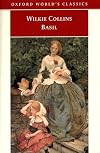
Basil
by Wilkie Collins
On This Page
Description
This classic novel from British author Wilkie Collins is a domestic drama packed with enough twists and turns to satisfy even the most jaded reader. After falling head-over-heels in love with a mysterious young woman, Basil decides he must have her at all costs, despite the fact that the decision may bring ruin to his high-society family. After courting the girl and convincing her father to agree to a marriage, things begin to veer off-track. Is the marriage doomed to failure?.
Tags
Recommendations































Member Recommendations

Member Reviews
An enjoyable couple of evenings can be spent watching a young Wilkie Collins pick up steam in this early novel. A naive young hero, an absurdly overpowering romance with a girl met on an omnibus, that new-fangled mode of transport where persons of differing social strata share (gasp!) the same space; a greedy and domineering father (actually, two of them), a mysterious and forbidding stranger, the usual angelic and self-sacrificing sister. What's fun is watching Collins build his story through the eyes of his callow eponymous hero, who reveals as much about his great love and the peculiar marital arrangement he agrees to by what he doesn't say as what he does. Even though we can only know what Basil knows in this first-person narrative, show more the reader cottons on much more quickly than he does, and the red flags loom large when we start to think: "Oh. Wait a minute. This... this is not going to turn out well." It does not, of course. It's a Victorian Gothic romance, after all. Greed, betrayal, violence, estrangement, floods of tears and swoonings, and several juicy deathbeds... Pour a glass of sherry, prod up the fire in the grate, draw close the dark curtains, and savor with a smile. For people who like this sort of thing (and I am happily one of them), this is sort of thing they like. show less
4.5
There is something I love about a Wilkie Collins novel. I think it is the way he builds the mystery and suspense without any overtly horrible occurrences. I thought Basil rather soft-headed and unsympathetic in the beginning, but as the story progressed, I began to feel real concern for this young man pretty much trapped in a mess of his own making. I decided early on that the father was not going to be as unforgiving as the son believed, but Wilkie Collins’ characters seldom do what we think they will do (which is part of the enjoyment of reading him), and I found the father as exasperating as the sister was kind.
The story depends very heavily on chance and fate to draw these tragedy-bound characters into one another’s spheres. show more When you have accepted that element, you must concede that anyone would be as foolish and headstrong as Basil over a woman he can’t even say he barely knows (as he does not know her in the least when he decides he is completely in love and must have her and no other). But, Collins handles this deftly and I totally believed the circumstances that ensued after the chance encounter of Basil and Margaret on an omnibus. The lesson here must surely be “never take public transportation if you can afford a private cab.”
I’m sorry it took me so long to get to this, but I am very pleased I put it on my challenge this year. I loved Woman in White and the Moonstone, so Basil is proof for me, if needed, that I should attempt to read everything in Collins’ canon. Next up: No Name. show less
There is something I love about a Wilkie Collins novel. I think it is the way he builds the mystery and suspense without any overtly horrible occurrences. I thought Basil rather soft-headed and unsympathetic in the beginning, but as the story progressed, I began to feel real concern for this young man pretty much trapped in a mess of his own making. I decided early on that the father was not going to be as unforgiving as the son believed, but Wilkie Collins’ characters seldom do what we think they will do (which is part of the enjoyment of reading him), and I found the father as exasperating as the sister was kind.
The story depends very heavily on chance and fate to draw these tragedy-bound characters into one another’s spheres. show more When you have accepted that element, you must concede that anyone would be as foolish and headstrong as Basil over a woman he can’t even say he barely knows (as he does not know her in the least when he decides he is completely in love and must have her and no other). But, Collins handles this deftly and I totally believed the circumstances that ensued after the chance encounter of Basil and Margaret on an omnibus. The lesson here must surely be “never take public transportation if you can afford a private cab.”
I’m sorry it took me so long to get to this, but I am very pleased I put it on my challenge this year. I loved Woman in White and the Moonstone, so Basil is proof for me, if needed, that I should attempt to read everything in Collins’ canon. Next up: No Name. show less
Summary: The account of a secret marriage between an aristocrat's son and the daughter of a shopkeeper and all the ways things went terribly wrong.
You are the second, and favored son of a wealthy aristocrat. Your older brother, Ralph, is alienated from your stern father because of his indiscretions. Your sister, Clara, adores you, and delights in your company and wants only the best for you in all things.
And then one day you are smitten with a young girl you see on an omnibus--so smitten you discretely follow her home. Subsequently you see her in her window, talking to her parrot. You know this is love. You learn she is Margaret Sherwin, the daughter of a linen draper, a shop keeper well below your social class. You know your father show more would never countenance such a relationship. Keeping your intentions secret from him and your sister, you manage an interview with Margaret's father, speaking of your love, and seeking her hand in marriage. Mr. Sherwin agrees on one condition--that they marry in a week but not consummate the relationship for a year. He also has to take an insurance policy on his life. Without consulting anyone, he accepts. And so begins a strange relationship that eventuates in a betrayal, insanity, exile, death and mortal danger to the title character.
Basil goes through with the wedding, and is permitted to see her regularly, chaperoned by Mrs. Sherwin, who seems disturbed in some way about all this. Basil keeps all of this secret from his family. They know he has a secret, which estranges him, even as they respect the secret in their rectitude, and in Clara's case, her affection and concern. At first, things seem wonderful between Margaret and Basil, with evenings spent reading and talking together. Then Mr. Sherwin's assistant Robert Mannion returns, with whom Mrs. Sherwin is decidedly uneasy. Margaret's mood seems to change at this time, even as Mannion acts with unfailing courtesy toward Basil, even welcoming him to his apartment on a stormy night. As they part, a bolt of lightening illuminates Mannion's face, giving it a sinister appearance. Only on the evening before the year is up does Basil discover the evil when he spots Mannion escorting Margaret, not to her home, but a hotel room!
I won't spoil the rest of the story except that this is where the tale of insanity, betrayal, mortal danger, and death comes in--along with an element of family revenge. The buildup to all these things occupies roughly the first half of the book, and, at least this reader found himself wanting to shake Basil and alert him to how he is being taken advantage of by this conspiracy of father and daughter, and of the sinister Mannion. Ah, love is blind! It is the second half that is riveting as all of this blows up in Basil's face, and his secret is exposed to his family. These pages seemed to read much more quickly, particularly as we discover the mania of Mannion (interesting name for a character!).
This is early Wilkie Collins, his second novel (the first was destroyed) and second publication, the first being a memoir on his father's life. The plot seems a bit to obvious, and the characters are caricatures to a certain degree. It is obvious that Collins can tell a story, in this case through a first person narrative of the title character, and the story redeems some of the other flaws.
There are at least two aspects of Victorian society that Collins exposes. One is the rigid class structures that prevent marrying below one's class and engender both the harsh rectitude of Basil's father, and the resentments of Mr. Sherwin and the vengeance of Mannion.
The inferior place of women in this social structure also is in evidence. Basil and Mr. Sherwin really decide Margaret's fate. Mrs. Sherwin is silenced (at least until the climactic events of the story). Clara is the loving but ineffectual sister. Ralph, the outlaw brother, is the one who gets things done. Margaret can only assert her wishes through manipulation, or an adulterous affair.
It seems here that Collins evolves in his later fiction. Consider the contrast between these characters and Valeria in The Law and the Lady (review). The Victorian structures still exist, but Collins has begun to envision stronger women characters and more creative plot possibilities for them.
If you are a Wilkie Collins fan and have read works like The Moonstone, or The Woman in White, or the above-mentioned The Law and the Lady, you will find this work of interest not only for the themes, but to see the development of Collins's skill. If you are just discovering Collins, one of the first to write in the genre of crime fiction, I would go with either The Moonstone or The Woman in White first, and if you find you like him, then delve into other works, including this, the earliest published of his novels. show less
You are the second, and favored son of a wealthy aristocrat. Your older brother, Ralph, is alienated from your stern father because of his indiscretions. Your sister, Clara, adores you, and delights in your company and wants only the best for you in all things.
And then one day you are smitten with a young girl you see on an omnibus--so smitten you discretely follow her home. Subsequently you see her in her window, talking to her parrot. You know this is love. You learn she is Margaret Sherwin, the daughter of a linen draper, a shop keeper well below your social class. You know your father show more would never countenance such a relationship. Keeping your intentions secret from him and your sister, you manage an interview with Margaret's father, speaking of your love, and seeking her hand in marriage. Mr. Sherwin agrees on one condition--that they marry in a week but not consummate the relationship for a year. He also has to take an insurance policy on his life. Without consulting anyone, he accepts. And so begins a strange relationship that eventuates in a betrayal, insanity, exile, death and mortal danger to the title character.
Basil goes through with the wedding, and is permitted to see her regularly, chaperoned by Mrs. Sherwin, who seems disturbed in some way about all this. Basil keeps all of this secret from his family. They know he has a secret, which estranges him, even as they respect the secret in their rectitude, and in Clara's case, her affection and concern. At first, things seem wonderful between Margaret and Basil, with evenings spent reading and talking together. Then Mr. Sherwin's assistant Robert Mannion returns, with whom Mrs. Sherwin is decidedly uneasy. Margaret's mood seems to change at this time, even as Mannion acts with unfailing courtesy toward Basil, even welcoming him to his apartment on a stormy night. As they part, a bolt of lightening illuminates Mannion's face, giving it a sinister appearance. Only on the evening before the year is up does Basil discover the evil when he spots Mannion escorting Margaret, not to her home, but a hotel room!
I won't spoil the rest of the story except that this is where the tale of insanity, betrayal, mortal danger, and death comes in--along with an element of family revenge. The buildup to all these things occupies roughly the first half of the book, and, at least this reader found himself wanting to shake Basil and alert him to how he is being taken advantage of by this conspiracy of father and daughter, and of the sinister Mannion. Ah, love is blind! It is the second half that is riveting as all of this blows up in Basil's face, and his secret is exposed to his family. These pages seemed to read much more quickly, particularly as we discover the mania of Mannion (interesting name for a character!).
This is early Wilkie Collins, his second novel (the first was destroyed) and second publication, the first being a memoir on his father's life. The plot seems a bit to obvious, and the characters are caricatures to a certain degree. It is obvious that Collins can tell a story, in this case through a first person narrative of the title character, and the story redeems some of the other flaws.
There are at least two aspects of Victorian society that Collins exposes. One is the rigid class structures that prevent marrying below one's class and engender both the harsh rectitude of Basil's father, and the resentments of Mr. Sherwin and the vengeance of Mannion.
The inferior place of women in this social structure also is in evidence. Basil and Mr. Sherwin really decide Margaret's fate. Mrs. Sherwin is silenced (at least until the climactic events of the story). Clara is the loving but ineffectual sister. Ralph, the outlaw brother, is the one who gets things done. Margaret can only assert her wishes through manipulation, or an adulterous affair.
It seems here that Collins evolves in his later fiction. Consider the contrast between these characters and Valeria in The Law and the Lady (review). The Victorian structures still exist, but Collins has begun to envision stronger women characters and more creative plot possibilities for them.
If you are a Wilkie Collins fan and have read works like The Moonstone, or The Woman in White, or the above-mentioned The Law and the Lady, you will find this work of interest not only for the themes, but to see the development of Collins's skill. If you are just discovering Collins, one of the first to write in the genre of crime fiction, I would go with either The Moonstone or The Woman in White first, and if you find you like him, then delve into other works, including this, the earliest published of his novels. show less
Although Basil is far from being one of Collins' best novels, I enjoyed it a lot; partly because I enjoyed thinking about this as an early example of Collins' writing and an early example of a Victorian sensation novel and partly because I really enjoyed the over-the-top melodrama of this story.
Basil is the youngest son of an English gentlemen of large fortune, one of the most ancient families in the country. We are told how proud Basil's father is of his pedigree and his family name; it's no surprise then that when Basil falls in love at first sight with Margaret Sherwin, the daughter of a linen-draper, he feels unable to tell his father of his plans to marry her. Basil decides that it will be best to present his father with a fait show more accompli, to marry Margaret, then somehow get her introduced to his father and wait for his father to get accustomed to her before informing his father that they are married. Margaret's father agrees, as long as Basil marries Margaret straight away, and promises for the first year of their marriage, never to see her except in the presence of a third person: they will be married but will not live together as man and wife.
The outcomes of this marriage are betrayal, insanity and death. Technically, I suppose those are spoilers but if a secret marriage wasn't enough to tell you that things aren't going to end well, there is a lot of rather heavy-handed foreshadowing in the first half of the novel. Basil was considered to be very shocking when it was first released and for a early Victorian novel there are a lot of sexual undercurrents in this work. To a modern reader, it's unlikely to be anywhere near as shocking, so it's a testimony to Collins' skill as a writer (albeit that his skill shows unevenly throughout this early work) that the central and pivotal scene in the book is still disturbing. show less
Basil is the youngest son of an English gentlemen of large fortune, one of the most ancient families in the country. We are told how proud Basil's father is of his pedigree and his family name; it's no surprise then that when Basil falls in love at first sight with Margaret Sherwin, the daughter of a linen-draper, he feels unable to tell his father of his plans to marry her. Basil decides that it will be best to present his father with a fait show more accompli, to marry Margaret, then somehow get her introduced to his father and wait for his father to get accustomed to her before informing his father that they are married. Margaret's father agrees, as long as Basil marries Margaret straight away, and promises for the first year of their marriage, never to see her except in the presence of a third person: they will be married but will not live together as man and wife.
The outcomes of this marriage are betrayal, insanity and death. Technically, I suppose those are spoilers but if a secret marriage wasn't enough to tell you that things aren't going to end well, there is a lot of rather heavy-handed foreshadowing in the first half of the novel. Basil was considered to be very shocking when it was first released and for a early Victorian novel there are a lot of sexual undercurrents in this work. To a modern reader, it's unlikely to be anywhere near as shocking, so it's a testimony to Collins' skill as a writer (albeit that his skill shows unevenly throughout this early work) that the central and pivotal scene in the book is still disturbing. show less
Basil
This was an interesting story. Collins was a contemporary of Charles Dickens and there are some similarities in their style. This is a fictionalized autobiography of a young man from a very wealthy family who becomes infatuated and eventually secretly marries a woman, Margaret Sherwin.
Her family is from the mercantile class and therefore below him in status. Nevertheless he courts her and they agree to marry but not live together for one year. The author knows that his father will disown him, hence the secrecy. He does not inform his beloved sister Clara, nor his brother Ralph of his marriage. Margaret's family, seeking to benefit financially maintain the charade while the author seems blind to what is going on behind the scenes.
As show more the year end approaches, he has reason to suspect that all is not as it seems and that Margaret has been less than chaste with her father's assistant, Mannion. He tracks them to a hotel and beats Mannion to the point that he ends up in hospital with severe disfiguring injuries. Margaret contracts typhoid during a hospital visit and dies. You would think that this would release the author from his vows but Mannion seeks revenge.
Good descriptions of psychology and society of the times. show less
This was an interesting story. Collins was a contemporary of Charles Dickens and there are some similarities in their style. This is a fictionalized autobiography of a young man from a very wealthy family who becomes infatuated and eventually secretly marries a woman, Margaret Sherwin.
Her family is from the mercantile class and therefore below him in status. Nevertheless he courts her and they agree to marry but not live together for one year. The author knows that his father will disown him, hence the secrecy. He does not inform his beloved sister Clara, nor his brother Ralph of his marriage. Margaret's family, seeking to benefit financially maintain the charade while the author seems blind to what is going on behind the scenes.
As show more the year end approaches, he has reason to suspect that all is not as it seems and that Margaret has been less than chaste with her father's assistant, Mannion. He tracks them to a hotel and beats Mannion to the point that he ends up in hospital with severe disfiguring injuries. Margaret contracts typhoid during a hospital visit and dies. You would think that this would release the author from his vows but Mannion seeks revenge.
Good descriptions of psychology and society of the times. show less
This is essentially yet another story of marry in haste; repent in leisure. Every reader had their period when they were ruled by their hormones; a few of us went so far as to think we "fell in love at first sight." Wilkie's character Basil does this with a young woman he sees riding the bus from London to the suburbs, one day. This 20-something, fresh-out-of-law-school, rich, aristocratic, spoiled young man thinks he knows all he needs to know about"Margaret" by looking at her beautiful face and gorgeous figure. Much woe is to come to him before sexually-mature Margaret is finished ruining Basil's life.
Our narrator, the Basil of the title, is the son of a rich gentleman who is proud of his family's ancient background and despises anyone of a lower social standing. When Basil meets Margaret Sherwin on a London omnibus he falls in love at first sight and becomes determined to marry her. Unfortunately Margaret is the daughter of a linen-draper, the class of person Basil's father disapproves of most of all, so he decides not to tell his family about her just yet.
Mr Sherwin agrees to Basil marrying Margaret - but he insists that the wedding must take place immediately and that Basil must then keep the marriage secret for a whole year, not even seeing his wife unless Mr or Mrs Sherwin are present. This unusual suggestion should have told show more Basil that something suspicious was going on but he's so blinded by love that he doesn't care - until it's too late...
Basil was one of Collins' earliest novels and it shows, as it's just not as good as his more famous books such as The Woman in White. The story took such a long time to really get started, with Basil introducing us to the members of his family, giving us every tiny detail of their appearance, personality and background. The second half of the book was much more enjoyable, filled with action, suspense and all the elements of a typical sensation novel including death, betrayal and adultery (Victorian readers apparently found the adultery scenes particularly shocking). There are lots of thunderstorms, people fainting and swooning, fights in the street, and everything you would expect from a Victorian melodrama.
All of Collins' books are filled with strong, memorable characters and this was no exception. There's Basil's lively, carefree brother Ralph, his gentle, kind hearted sister Clara, the poor, frail Mrs Sherwin and the sinister Mr Mannion. However, I thought the overall writing style of this book was slightly different to what I've been used to in his later books – although I can't put my finger on exactly what the difference was. This is not a must-read book but if you like the sensation novel genre, you'll probably enjoy this one. show less
Mr Sherwin agrees to Basil marrying Margaret - but he insists that the wedding must take place immediately and that Basil must then keep the marriage secret for a whole year, not even seeing his wife unless Mr or Mrs Sherwin are present. This unusual suggestion should have told show more Basil that something suspicious was going on but he's so blinded by love that he doesn't care - until it's too late...
Basil was one of Collins' earliest novels and it shows, as it's just not as good as his more famous books such as The Woman in White. The story took such a long time to really get started, with Basil introducing us to the members of his family, giving us every tiny detail of their appearance, personality and background. The second half of the book was much more enjoyable, filled with action, suspense and all the elements of a typical sensation novel including death, betrayal and adultery (Victorian readers apparently found the adultery scenes particularly shocking). There are lots of thunderstorms, people fainting and swooning, fights in the street, and everything you would expect from a Victorian melodrama.
All of Collins' books are filled with strong, memorable characters and this was no exception. There's Basil's lively, carefree brother Ralph, his gentle, kind hearted sister Clara, the poor, frail Mrs Sherwin and the sinister Mr Mannion. However, I thought the overall writing style of this book was slightly different to what I've been used to in his later books – although I can't put my finger on exactly what the difference was. This is not a must-read book but if you like the sensation novel genre, you'll probably enjoy this one. show less
Members
- Recently Added By
Lists

Fiction with Men's Given Names in the Title
302 works; 10 members

Books mentioned in Julian Symons’ Bloody Murder
438 works; 6 members
Author Information

396+ Works 40,179 Members
Wilkie Collins was born in London, England on January 8, 1824. He worked first in business and then law, but eventually turned to literature. During his lifetime, he wrote 30 novels, more than 60 short stories, at least 14 plays, and more than 100 non-fiction pieces. His works include Antonia, The Woman in White, The Moonstone, The Haunted Hotel, show more and Heart and Science. He was a close friend of Charles Dickens and collaborated with him. He died on September 23, 1889. (Bowker Author Biography) show less
Some Editions
Series
Belongs to Publisher Series
Work Relationships
Has the adaptation
Has as a commentary on the text
Common Knowledge
- Canonical title
- Basil
- Original publication date
- 1852
- People/Characters
- Margaret Sherwin; Basil; Robert Mannion; Clara
- Important places
- London, England, UK
- Related movies
- Basil (1998 | IMDb)
- First words
- What am I now about to write?
- Last words
- (Click to show. Warning: May contain spoilers.)Once more--farewell!
Classifications
Statistics
- Members
- 530
- Popularity
- 56,659
- Reviews
- 14
- Rating
- (3.47)
- Languages
- 5 — Czech, English, French, Italian, Spanish
- Media
- Paper, Audiobook, Ebook
- ISBNs
- 87
- ASINs
- 18