
Beyond Black
by Hilary Mantel
On This Page
Description
Trouble spirals out of control for a psychic and her personal assistant when they take up with a spirit guide and his drowned therapist after moving to a suburban wasteland.Tags
Recommendations





























Member Recommendations

Member Reviews
This novel opens in the “dark oily days after Christmas.” This is appropriate; I’ve read that in folklore, the dead visit during the twelve days between Christmas and Epiphany. Alison, the protagonist, is a medium—or, as she and her colleagues call themselves, “a sensitive.”
We’ve all heard of the willful suspension of disbelief necessary to enjoy a story. That’s definitely applicable here. It’s the first book centered on a medium I recall reading. In the course of the story, Alison is both genuine (she really has contact with the spirit world) and a charlatan in that she never lets on “the true nature of the place beyond black.” She has no qualms, for instance, assuring clients their loved ones were reunited when show more she knows the chances of winning the lottery are much higher. So, her deceit reveals her as a kind-hearted person.
The story arc covers seven years, beginning soon before Princess Diana’s death, and centered on the beginning of the new millennium. During this time, Alison gains and loses an assistant, Colette (who prefers to call herself Alison’s manager). Their relationship, a complex interplay of trust, doubt, and shared experience, is a central thread in the narrative. They’re an odd couple; Colette becomes increasingly ashamed of Alison and uncomfortable with the spirit world, which she half believes in.
A surface reading that accepts both the premises on which the story is based and the reliability of the narrative yields a well-written tale of a world far from my experience. But as well-meaning Alison wrestles with the conviction that she must be a bad person and tries to discover what she did that was so wrong, I wondered whether an alternate reading was possible, with an unreliable narrator recounting the manufactured memories of one who had been badly abused as a child.
The first reading is more likely, but even this is not without a deeper meaning. A medium who gives voice to the dead has more than a little in common with the writer of historical novels. show less
We’ve all heard of the willful suspension of disbelief necessary to enjoy a story. That’s definitely applicable here. It’s the first book centered on a medium I recall reading. In the course of the story, Alison is both genuine (she really has contact with the spirit world) and a charlatan in that she never lets on “the true nature of the place beyond black.” She has no qualms, for instance, assuring clients their loved ones were reunited when show more she knows the chances of winning the lottery are much higher. So, her deceit reveals her as a kind-hearted person.
The story arc covers seven years, beginning soon before Princess Diana’s death, and centered on the beginning of the new millennium. During this time, Alison gains and loses an assistant, Colette (who prefers to call herself Alison’s manager). Their relationship, a complex interplay of trust, doubt, and shared experience, is a central thread in the narrative. They’re an odd couple; Colette becomes increasingly ashamed of Alison and uncomfortable with the spirit world, which she half believes in.
A surface reading that accepts both the premises on which the story is based and the reliability of the narrative yields a well-written tale of a world far from my experience. But as well-meaning Alison wrestles with the conviction that she must be a bad person and tries to discover what she did that was so wrong, I wondered whether an alternate reading was possible, with an unreliable narrator recounting the manufactured memories of one who had been badly abused as a child.
The first reading is more likely, but even this is not without a deeper meaning. A medium who gives voice to the dead has more than a little in common with the writer of historical novels. show less
12. Beyond Black by Hilary Mantel
published: 2005
format: 367 page kindle ebook
acquired: February
read: Feb 28 - Mar 9
rating: 4
A little preface: I read this based on a Backlisted podcast (which I checked out because of wandering_star). Backlisted is great fun. The main guys have a good time talking loudly about the books they are reading and discussing. They invite a few guests for each episode, and in the few episodes I've listened to those guests struggle to match the hosts charisma. In this episode they were all gushing about [Beyond Black], when a female guest piped up with how she tried this book when it was new, and found it so painful to read, she gave up. Now that's brave. But, here's the thing, she was spot on.
Mantel got very show more personal with this book (and followed it up with a memoir). She was looking into modern soulless life in suburbia. Alison Hart is a psychic medium, as in like the real thing. She constantly speaks to the spirits of the dead and she makes her living travelling around and holding shows where she tells the audience about what the dead are saying. This is a modern audience, living in artificial neighborhoods removed from nature and short on history. They live meaningless lives, and are so removed from their cultural heritage, some don't even know the names of the grandparents. Although they don't really understand it, they are here, with Alison, to find some meaning.
Except Alison's skill doesn't provide this. She is an experienced performer. She knows that her audience actually doesn't actually care what the dead are saying, and probably would be pretty crushed to find out how pedestrian these dead. People don't get any better or wiser just because they've passed. So, she has to give them something else, a tangle of lies and truth, and common sense presented as personally meaningful.
I found the first 100 pages, where Alison takes on a manager who she tries to depend on, but who she doesn't really get along with, both brilliant and horribly painful. Colette is practical, but soulless, interested in how Alison works, but unable to understand her. And Mantel drags us through this relationship, relentlessly emphasizing what isn't there, without ever saying so. This is a major work, this novel, maybe a master work, and jagged little pill for sure. I pushed so hard through these pages and found them exhausting. But I kept thinking about these women and so I kept returning to the book. The book either lets up after a bit, or I got used to it, but I was able to cruise through the last three quarters and enjoy the complex characterizations and interactions. Alison Hart has a lot of past to struggle with. And her ghosts don't just lie in the background of her mind, they come up to her and talk to her, and harass her constantly night and day. There isn't really a way to hide from a ghost, or a whole collection of them.
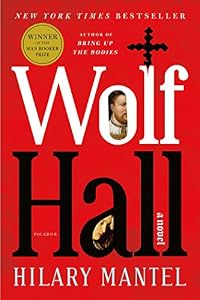
I have to say I agree with the Backlisted crew who gushed about this work. It is ingenious and memorable and effective. It's a book a lot of readers chuck early on (and I can understand why). It's also a book that really hits deep into modern life. I think there is a reason Mantel's next novel took place in a very different time and place, it was [Wolf Hall].
2018
https://www.librarything.com/topic/288371#6412254 show less
published: 2005
format: 367 page kindle ebook
acquired: February
read: Feb 28 - Mar 9
rating: 4
A little preface: I read this based on a Backlisted podcast (which I checked out because of wandering_star). Backlisted is great fun. The main guys have a good time talking loudly about the books they are reading and discussing. They invite a few guests for each episode, and in the few episodes I've listened to those guests struggle to match the hosts charisma. In this episode they were all gushing about [Beyond Black], when a female guest piped up with how she tried this book when it was new, and found it so painful to read, she gave up. Now that's brave. But, here's the thing, she was spot on.
Mantel got very show more personal with this book (and followed it up with a memoir). She was looking into modern soulless life in suburbia. Alison Hart is a psychic medium, as in like the real thing. She constantly speaks to the spirits of the dead and she makes her living travelling around and holding shows where she tells the audience about what the dead are saying. This is a modern audience, living in artificial neighborhoods removed from nature and short on history. They live meaningless lives, and are so removed from their cultural heritage, some don't even know the names of the grandparents. Although they don't really understand it, they are here, with Alison, to find some meaning.
Except Alison's skill doesn't provide this. She is an experienced performer. She knows that her audience actually doesn't actually care what the dead are saying, and probably would be pretty crushed to find out how pedestrian these dead. People don't get any better or wiser just because they've passed. So, she has to give them something else, a tangle of lies and truth, and common sense presented as personally meaningful.
I found the first 100 pages, where Alison takes on a manager who she tries to depend on, but who she doesn't really get along with, both brilliant and horribly painful. Colette is practical, but soulless, interested in how Alison works, but unable to understand her. And Mantel drags us through this relationship, relentlessly emphasizing what isn't there, without ever saying so. This is a major work, this novel, maybe a master work, and jagged little pill for sure. I pushed so hard through these pages and found them exhausting. But I kept thinking about these women and so I kept returning to the book. The book either lets up after a bit, or I got used to it, but I was able to cruise through the last three quarters and enjoy the complex characterizations and interactions. Alison Hart has a lot of past to struggle with. And her ghosts don't just lie in the background of her mind, they come up to her and talk to her, and harass her constantly night and day. There isn't really a way to hide from a ghost, or a whole collection of them.
I have to say I agree with the Backlisted crew who gushed about this work. It is ingenious and memorable and effective. It's a book a lot of readers chuck early on (and I can understand why). It's also a book that really hits deep into modern life. I think there is a reason Mantel's next novel took place in a very different time and place, it was [Wolf Hall].
2018
https://www.librarything.com/topic/288371#6412254 show less
Hilary Mantel has always scared me a little when I've seen her interviewed. I find her a bit like a Margaret Thatcher of writing; if I ever met her, I'm pretty sure she's one of those women who would make me feel like I'm 12 again, and I'd be waiting for her to inevitably tell me off for doing something naughty. This was my first foray into her writing, and I have to say she's pretty damn good at it.
Beyond Black is not so much a horror story as a bleak tale of exhaustive malign spirits from the afterlife mixed with the joyless reality of unpleasant people in soulless suburbia. I loved the main protagonist Alison, who is the overweight 'sensitive' (psychic medium) around whom the book is based. Alison had a harrowing childhood of abuse show more and neglect, living on a sink estate with a prostitute mother who unsuccessfully tried to abort her and a constant stream of violent criminals and soldiers from the nearby Aldershot barracks. Her past torments her on a daily basis as one of the men from her childhood has become her unwanted malevolent spirit guide, and Alison finds herself increasingly struggling to keep the past at bay as her childhood nemeses begin to congregate again in the afterlife.
Helping to keep Alison's life on track is her live-in manager Colette, who Mantel superbly portrays as a rude and cold android of a woman who is ruthlessly efficient at dealing with their business affairs and anyone who crosses their path, from sales people to nosy neighbours. Mantel plays out the relationship very well between these two, and we watch aghast from the sidelines as Colette increasingly takes control over Alison's every decision, gradually turning her emotional guns inward on the very person she's employed to protect.
Mantel takes her time developing the relationship between these two. At first the rope frays so gradually it's imperceptible, but as the years go by it unravels at an ever increasing speed. We start out not so much liking Colette as respecting her straight talking and effective management where Alison's concerned; she's Alison's bodyguard to life's day-to-day nuisances and unpleasantries, leaving Alison free to fight her mental battles with the afterlife. Whilst Alison is strong in her dealings with the spirit world, she's completely passive to Colette's dominance of every aspect of her life, and while we increasingly warm to her inherent good heart, Colette's directness becomes exposed as the cloak of a classic bully.
I really enjoyed this novel. It was highly inventive, unpleasant and disturbing at times, but the fantastic characters hook you in despite the raw and brittle backdrop.
4.5 stars - highly original and thought provoking. show less
Beyond Black is not so much a horror story as a bleak tale of exhaustive malign spirits from the afterlife mixed with the joyless reality of unpleasant people in soulless suburbia. I loved the main protagonist Alison, who is the overweight 'sensitive' (psychic medium) around whom the book is based. Alison had a harrowing childhood of abuse show more and neglect, living on a sink estate with a prostitute mother who unsuccessfully tried to abort her and a constant stream of violent criminals and soldiers from the nearby Aldershot barracks. Her past torments her on a daily basis as one of the men from her childhood has become her unwanted malevolent spirit guide, and Alison finds herself increasingly struggling to keep the past at bay as her childhood nemeses begin to congregate again in the afterlife.
Helping to keep Alison's life on track is her live-in manager Colette, who Mantel superbly portrays as a rude and cold android of a woman who is ruthlessly efficient at dealing with their business affairs and anyone who crosses their path, from sales people to nosy neighbours. Mantel plays out the relationship very well between these two, and we watch aghast from the sidelines as Colette increasingly takes control over Alison's every decision, gradually turning her emotional guns inward on the very person she's employed to protect.
Mantel takes her time developing the relationship between these two. At first the rope frays so gradually it's imperceptible, but as the years go by it unravels at an ever increasing speed. We start out not so much liking Colette as respecting her straight talking and effective management where Alison's concerned; she's Alison's bodyguard to life's day-to-day nuisances and unpleasantries, leaving Alison free to fight her mental battles with the afterlife. Whilst Alison is strong in her dealings with the spirit world, she's completely passive to Colette's dominance of every aspect of her life, and while we increasingly warm to her inherent good heart, Colette's directness becomes exposed as the cloak of a classic bully.
I really enjoyed this novel. It was highly inventive, unpleasant and disturbing at times, but the fantastic characters hook you in despite the raw and brittle backdrop.
4.5 stars - highly original and thought provoking. show less
This book is most definitely not for everyone, and not even for everyone who loves Hilary Mantel otherwise. It's necessary to let yourself slip into another world, much as you must do with the Harry Potter novels, where the natural laws we all take for granted are superseded by another set of rules that are not at all congenial to those bound by them. Alison Hart is a professional psychic beset by a mangled cadre of "fiends" from the other side; a heartless, thoroughly unlikable assistant; and a paranoid lot of neighbors who see terrorists and prowlers in every shifting shadow, poisoned soil and noxious plants in every patch of untended garden. We gradually come to understand that much of what torments her from the spirit world has a show more basis in her own violent and abused childhood, but (and here's where the suspension of disbelief is essential) we are not meant to attribute the earthly presence of her demons entirely to mental imbalance or psychological damage. Along with sharp satire and humor that is, well, beyond black, the book is full of precisely drawn characters both living and passed, who are uncomfortably true to life. I found it quite good, if not nearly the equal of other Mantel novels I have read. Not what I would call an enjoyable read, but one I've completed with great admiration for the author's skill.
Review composed in January, 2012 show less
Review composed in January, 2012 show less
This completely bizarre book about a spiritualist and clairvoyant who is trying to recover repressed memories of her very abusive childhood while she gets a stick-up-her-a## assistant out of her shell and earns her living communing with the dead is like LSD in print. It's one hallucinatory scene after another with an ending that is just right. Poor fat Alison, the reader is unsure of what to think of her but ends up rooting for her, wishing there were some way she could overcome her literal and figurative ghosts. And poor beige Colette, the only exotic thing about her is her name. Recommended to anyone who wants a new look at how women can make it through life.
It was better than "okay" and I finished it, and I admire Mantel's imaginative powers and her writing enormously, so it gets 3 stars. But it was a bit of a slog. Mostly, it was just too... damn... long. This from someone who devoured Wolf Hall, Bring Up the Bodies, and A Place of Greater Safety, barely coming up for air. (Mirror and the Light is next as soon as I can wrench it away from my husband.)
It's a dark, sly, often funny ghost story. It's a clear-eyed, satiric look at the modern "occult" industry, yet with sympathy for the voids and pain of those who practice it and those who consume it. It's a wonderful riff on the afterlife and the souls who exist there, chaotically intruding "earthside" and haunting (literally and show more figuratively) the mortals trying to get on with their lives. In Alison's case, a good-hearted, earnest, obese psychic is floundering in the wake of an appalling childhood (revealed in fits and starts, and only gets worse as the story proceeds). She is anxious, not very practical, and the cutthroat competition among her peers is killing her. She hires Colette, a skinny, cold-minded, domineering, ambitious young divorcee, to manage her business affairs. It is a predictably stormy relationship, fraught by a team of dead souls who taunt and torment poor Alison - and whom Colette must unwillingly learn to cope with. Business picks up as the partnership crumbles. The ghosts cavort - here Mantel is wonderful in imagining and describing how annoying it is when they slither in through the car's a/c vents, giggle under the living room carpet, and expose themselves in corners. But it all just goes on a bit too long, too often, and finally you begin to skim because you've seen this scene play out already, 20 pages earlier.
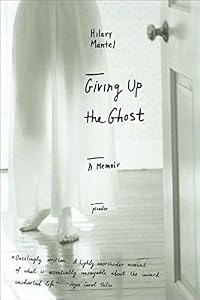
Some readers have been troubled by the repeated description of Alison's obesity, as a sort of ongoing joke in poor taste. In her memoir, Giving Up the Ghost, Mantel describes her own harrowing experience with her health - unconscionably ignored, minimized, and dismissed by doctors for years while she suffered. She was subjected to psychiatric treatments, and finally powerful drugs that caused her to go from a stick-thin young woman to an obesity that made her barely able to recognize herself. And let's face it, fat people know they're fat - they are reminded of it every single day, by the mirror, by the media, by the shops, by the world at large. I think Mantel was working to convey something about this issue in a personal and unflinching way, though it may seem cruel in the telling.
I'm a Mantel fan, and will try pretty much anything she has written. But while this has her trademark fizzing imagination, brilliant imagery, biting characters and dialog... it may be too much, too rampant, too unedited to be one to start with. show less
It's a dark, sly, often funny ghost story. It's a clear-eyed, satiric look at the modern "occult" industry, yet with sympathy for the voids and pain of those who practice it and those who consume it. It's a wonderful riff on the afterlife and the souls who exist there, chaotically intruding "earthside" and haunting (literally and show more figuratively) the mortals trying to get on with their lives. In Alison's case, a good-hearted, earnest, obese psychic is floundering in the wake of an appalling childhood (revealed in fits and starts, and only gets worse as the story proceeds). She is anxious, not very practical, and the cutthroat competition among her peers is killing her. She hires Colette, a skinny, cold-minded, domineering, ambitious young divorcee, to manage her business affairs. It is a predictably stormy relationship, fraught by a team of dead souls who taunt and torment poor Alison - and whom Colette must unwillingly learn to cope with. Business picks up as the partnership crumbles. The ghosts cavort - here Mantel is wonderful in imagining and describing how annoying it is when they slither in through the car's a/c vents, giggle under the living room carpet, and expose themselves in corners. But it all just goes on a bit too long, too often, and finally you begin to skim because you've seen this scene play out already, 20 pages earlier.
Some readers have been troubled by the repeated description of Alison's obesity, as a sort of ongoing joke in poor taste. In her memoir, Giving Up the Ghost, Mantel describes her own harrowing experience with her health - unconscionably ignored, minimized, and dismissed by doctors for years while she suffered. She was subjected to psychiatric treatments, and finally powerful drugs that caused her to go from a stick-thin young woman to an obesity that made her barely able to recognize herself. And let's face it, fat people know they're fat - they are reminded of it every single day, by the mirror, by the media, by the shops, by the world at large. I think Mantel was working to convey something about this issue in a personal and unflinching way, though it may seem cruel in the telling.
I'm a Mantel fan, and will try pretty much anything she has written. But while this has her trademark fizzing imagination, brilliant imagery, biting characters and dialog... it may be too much, too rampant, too unedited to be one to start with. show less
This is a very hard book to review. I should really not have liked it. The premise is one I don't believe in or have much interest in and the characters and actions were dark and dirty and unlikable. But somehow the book works. Mantel is really good writer.
So what is this book about? Well, it's about an overweight medium, Alison, who meets Colette who has just left her husband. Colette becomes Alison's manager - a 24 hour manager, even moving in with Alison. She books her shows, sets them up just right, and keeps Alison company through long nights of interference from the spirit world. As their relationship progresses, Colette gets more an more controlling, monitoring Alison's eating habits and becoming an abusive partner in most ways. show more
Then there is Alison's personal story, which Colette never really understands. Alison seems to be the real deal as far as mediums go. She has a spirit guide named Morris who is a dirty, cruel, little man. As the book progresses, we see that Morris and Alison have a history in life as well. Morris was part of a group of men that were customers of her abusive prostitute mother. Alison has incomplete flashbacks of a horrifying childhood. She was terribly abused, but did she commit some atrocities as well? As Alison's abused childhood comes out I kept thinking, oh all these spirits are just in her imagination from her damaged past. It's some way for her to work it out. Maybe. But Mantel doesn't really go there. She doesn't seem to concern herself with whether or not all this is true; it's a vehicle for her to explore these characters she's created. And that's why it worked for me. She wasn't trying to convince me what the spirit world is like (or that it exists at all) or that mediums really have a knowledge of the spirit world, but the book is a creative way to explore some interesting characters.
So despite not liking the subject or the characters, I really liked this book. I've only read Mantel's historical fiction before (which I love) so I was hesitant to change my opinion of Mantel by reading something I thought I might not like. In the end, I'm so glad I did since this really increased my respect for Mantel. This was a very, very different book from the others I've read and it was still great. show less
So what is this book about? Well, it's about an overweight medium, Alison, who meets Colette who has just left her husband. Colette becomes Alison's manager - a 24 hour manager, even moving in with Alison. She books her shows, sets them up just right, and keeps Alison company through long nights of interference from the spirit world. As their relationship progresses, Colette gets more an more controlling, monitoring Alison's eating habits and becoming an abusive partner in most ways. show more
Then there is Alison's personal story, which Colette never really understands. Alison seems to be the real deal as far as mediums go. She has a spirit guide named Morris who is a dirty, cruel, little man. As the book progresses, we see that Morris and Alison have a history in life as well. Morris was part of a group of men that were customers of her abusive prostitute mother. Alison has incomplete flashbacks of a horrifying childhood. She was terribly abused, but did she commit some atrocities as well? As Alison's abused childhood comes out I kept thinking, oh all these spirits are just in her imagination from her damaged past. It's some way for her to work it out. Maybe. But Mantel doesn't really go there. She doesn't seem to concern herself with whether or not all this is true; it's a vehicle for her to explore these characters she's created. And that's why it worked for me. She wasn't trying to convince me what the spirit world is like (or that it exists at all) or that mediums really have a knowledge of the spirit world, but the book is a creative way to explore some interesting characters.
So despite not liking the subject or the characters, I really liked this book. I've only read Mantel's historical fiction before (which I love) so I was hesitant to change my opinion of Mantel by reading something I thought I might not like. In the end, I'm so glad I did since this really increased my respect for Mantel. This was a very, very different book from the others I've read and it was still great. show less
Members
- Recently Added By
Published Reviews
ThingScore 92
Beyond Black is a fine work, and from a lesser novelist would have seemed a masterpiece. It is too long—Muriel Spark would have managed the same effect in a hundred or so crisp pages—and despite the self-deprecating humor it shows too overtly its grand intentions.
added by jburlinson
This is, I think, a great comic novel. Hilary Mantel's humor, like Flannery O'Connor's, is so far beyond black it becomes a kind of light.
added by Nickelini
Mantel—a funny, scathing British novelist, too long ignored in the U.S.—is a master of dark subject matter, and in her latest, she’s created a protagonist who’s accustomed to darkness: Alison, a psychic, a woman trying to live a pleasant life, if it weren’t for the ghosts that keep tormenting her.
added by Nickelini
Lists

The Guardian's 1000 Novels Everyone Must Read
1,005 works; 549 members

1001 Books You Must Read Before You Die
1,448 works; 1,132 members

Recommend the 20 best books you've read in the last five years
2,168 works; 606 members

Booker Prize
491 works; 62 members

Dishonourable Mentions of 2013
189 works; 62 members

Backlisted
109 works; 9 members

Female Author
1,235 works; 67 members

50 Books by Women Authors
50 works; 10 members

A Novel Cure
742 works; 23 members

Man Booker Prize Longlist 2005
17 works; 3 members

Books Read in 2020
4,379 works; 123 members
Backlisted Podcast
65 works; 3 members
Talk Discussions
Past Discussions
Beyond Black (no spoilers) in Orange January/July (January 2012)
Author Information

64+ Works 38,657 Members
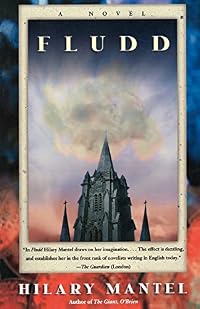
Hilary Mantel was born in Glossop, Derbyshire, England on July 6, 1952. She studied law at the London School of Economics and Sheffield University. She worked as a social worker in Botswana for five years, followed by four years in Saudi Arabia. She returned to Britain in the mid-1980s. In 1987 she was awarded the Shiva Naipaul Memorial Prize for show more an article about Jeddah. She worked as a film critic for The Spectator from 1987 to 1991. She has written numerous books including Eight Months on Ghazzah Street, A Place of Greater Safety, A Change of Climate, The Giant, O'Brien, Giving up the Ghost: A Memoir, and Beyond Black. She has won several awards for her work including the Winifred Holtby Memorial Prize, the Cheltenham Prize and the Southern Arts Literature Prize for Fludd; the 1996 Hawthornden Prize for An Experiment in Love, the 2009 Man Booker Prize for Wolf Hall, and the 2012 Man Booker Prize for Bring up the Bodies. She made The New York Times Best Seller List with her title The Assassination of Margaret Thatcher. (Bowker Author Biography) show less
Some Editions
Awards and Honors
Awards
Distinctions
Work Relationships
Common Knowledge
- Canonical title*
- Al di là del nero
- Original publication date
- 2005
- People/Characters
- Alison Hart
- Epigraph
- 'There are powers at work in this country about which we have no knowledge.'
H.M. the Queen (attributed) - Dedication
- To Jane Haynes
- First words
- Travelling: the dank oily days after Christmas.
- Last words
- (Click to show. Warning: May contain spoilers.)Maureen Harrison pipes up from the back: 'This cake we're having: could we have it iced?'
- Blurbers
- Weldon, Fay; Pullman, Philip; Dunmore, Helen; Gee, Maggie; Taylor, D.J.; Cooke, Rachel (show all 9); Harrison, M. John; Massie, Allan; Shilling, Jane
- Original language
- English UK
*Some information comes from Common Knowledge in other languages. Click "Edit" for more information.
Classifications
Statistics
- Members
- 1,950
- Popularity
- 10,788
- Reviews
- 63
- Rating
- (3.43)
- Languages
- 8 — Czech, Dutch, English, Greek, Italian, Norwegian (Bokmål), Portuguese, Spanish
- Media
- Paper, Audiobook, Ebook
- ISBNs
- 31
- ASINs
- 17