On This Page
Description
Sixteen-year-old Eon hopes to become an apprentice to one of the twelve energy dragons of good fortune and learn to be its main interpreter, but to do so will require much, including keeping secret that she is a girl.Tags
Recommendations
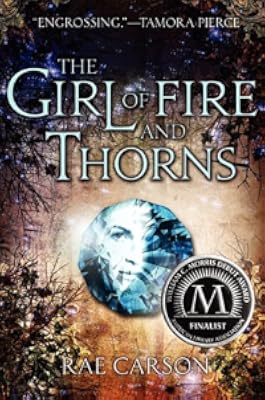
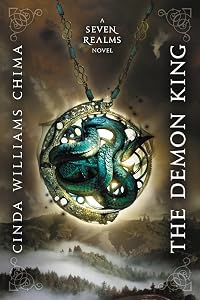
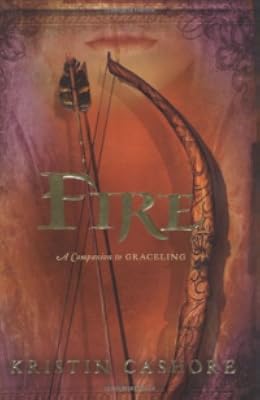
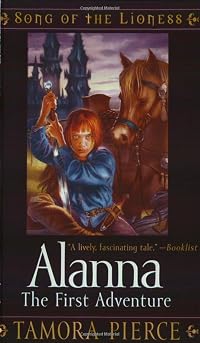




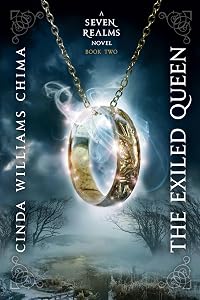
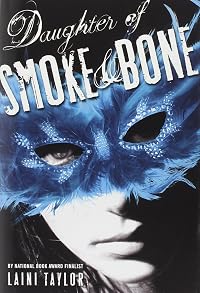

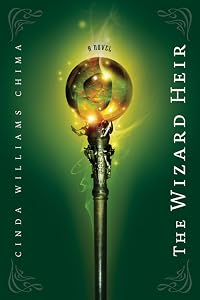
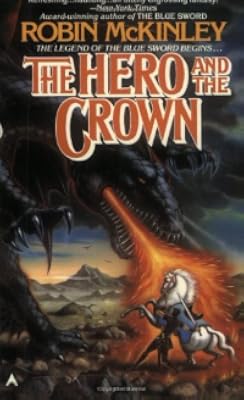
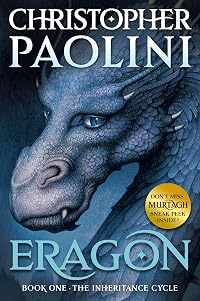
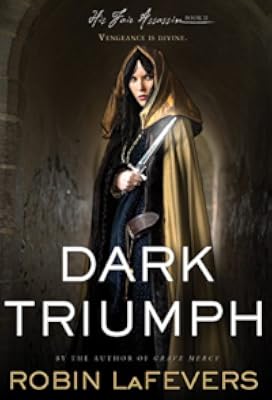
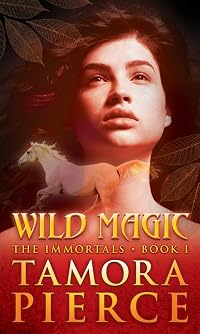

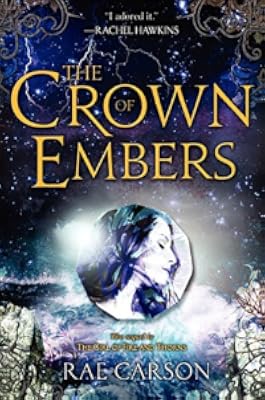
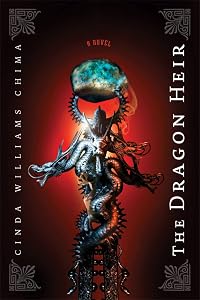
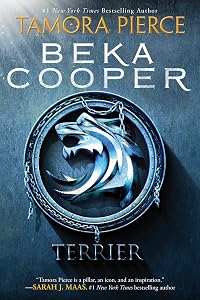
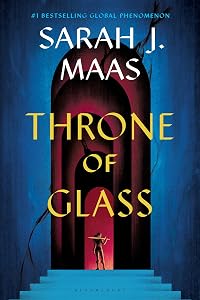
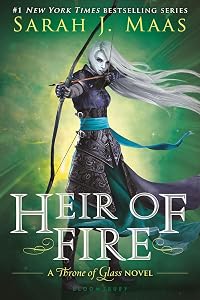
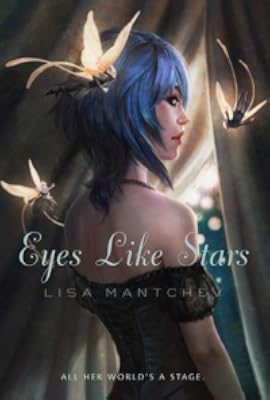
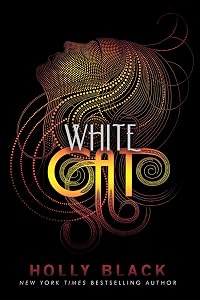

Member Recommendations
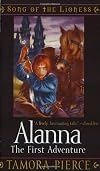
shadrach_anki There are definite similarities in theme between these two books, but each has its own take on it.
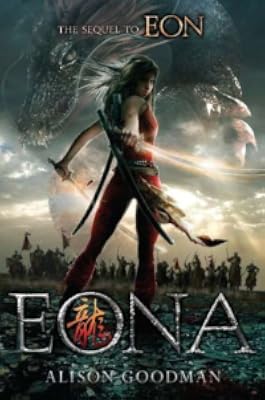
Caramellunacy Both of these stories are fantasy stories about a girl disguising herself as a boy in order to be allowed to apprentice & learn to fight. Alanna learns to wield both sword and magic as a knight & mage. Eon(a) is chosen to be a dragoneye and must learn to wield the political and magical power this brings.
0628perfect In both Eon and this book the main female protaganist have to hide their identities. They have to pretend to be boys to survive in the world.
61
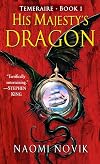
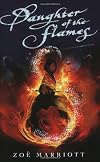
stephxsu Similar strong female protagonist, engaging fantasy world, martial arts action
Member Reviews
While a lot of crossdressing adventure stories deal with issues of gender and sexism in some way, very few acknowledge transgender people, let alone engage with the trans perspective on gender. This is a damn shame.
Eon bucks the trend by accepting transgender experiences as central to its discussion of gender. The book does this in several ways: first, transgender experiences are acknowledged by having the main character discuss gender issues with a transgender woman. In addition, transgender experiences are acknowledged in the rules of the world's story: Eon has its main character perform a setting-appropriate equivalent of hormone replacement therapy (HRT), imbibing a substance that will help her emulate maleness in the same way that show more testosterone is used by real life trans men.*
Most powerfully, the main character's arc echoes the emotional experiences of many trans people. Her crossdressing ruse is not merely a physical inconvenience, but also mentally taxing and spiritually painful. The experience almost destroys her in the same way that being forced to live contrary to one's gender often destroys the lives of trans people. And the pain of living at odds with herself combines with the main character's other struggles, such as her disability and internalized sexism, to create a tortured but realistic inner world.
In spite of a few imperfections, Eon's portrayal of the transgender experience is both functional and sincere. My big question is this: why isn't the main character just a trans girl? It feels like all the groundwork for that choice is there. Sure, there's a lot more precedent for the crossdressing cis girl narrative than for what I suggest (especially in 2008, when this was published), but that disparity makes placing a trans protagonist into that narrative all the more powerful and groundbreaking. In fact, such a book would still be groundbreaking if it was published today. In many ways, Eon is ahead of its times, but I can't help feeling that it didn't go far enough.
* While a lot of media attention outside of transgender circles is focused on surgery as the primary goal of those transitioning, quite a few trans people consider the hormonal changes caused by HRT a more significant part of their transition, showing that Goodman's knowledge of trans issues is more than surface level. show less
Eon bucks the trend by accepting transgender experiences as central to its discussion of gender. The book does this in several ways: first, transgender experiences are acknowledged by having the main character discuss gender issues with a transgender woman. In addition, transgender experiences are acknowledged in the rules of the world's story: Eon has its main character perform a setting-appropriate equivalent of hormone replacement therapy (HRT), imbibing a substance that will help her emulate maleness in the same way that show more testosterone is used by real life trans men.*
Most powerfully, the main character's arc echoes the emotional experiences of many trans people. Her crossdressing ruse is not merely a physical inconvenience, but also mentally taxing and spiritually painful. The experience almost destroys her in the same way that being forced to live contrary to one's gender often destroys the lives of trans people. And the pain of living at odds with herself combines with the main character's other struggles, such as her disability and internalized sexism, to create a tortured but realistic inner world.
In spite of a few imperfections, Eon's portrayal of the transgender experience is both functional and sincere. My big question is this: why isn't the main character just a trans girl? It feels like all the groundwork for that choice is there. Sure, there's a lot more precedent for the crossdressing cis girl narrative than for what I suggest (especially in 2008, when this was published), but that disparity makes placing a trans protagonist into that narrative all the more powerful and groundbreaking. In fact, such a book would still be groundbreaking if it was published today. In many ways, Eon is ahead of its times, but I can't help feeling that it didn't go far enough.
* While a lot of media attention outside of transgender circles is focused on surgery as the primary goal of those transitioning, quite a few trans people consider the hormonal changes caused by HRT a more significant part of their transition, showing that Goodman's knowledge of trans issues is more than surface level. show less
Synopsis: Eon has been studying the ancient art of Dragon Magic for four years, hoping he’ll be able to apprentice to one of the twelve energy dragons of good fortune. But he also has a dark secret. He is actually Eona, a sixteen-year-old girl who has been living a dangerous lie for the chance to become a Dragoneye, the human link to an energy dragon’s power. It is forbidden for females to practice the Dragon Magic and, if discovered, Eon faces a terrible death. After a dazzling sword ceremony, Eon’s affinity with the twelve dragons catapults him into the treacherous world of the Imperial court where he makes a powerful enemy, Lord Ido. As tension builds and Eon’s desperate lie comes to light, readers won’t be able to stop show more turning the pages…
Dragons. A fantasy world and royal court in the style of Ancient China. And a girl who has spent so much time pretending to be a boy that she has almost forgotten her true self. Eon is part one of a fantasy epic spanning two installments-- the second book, Eona is yet to be released.
This book begins like so many others: a girl risking death by disguising herself as a boy, an under-dog heroine with everything to lose, and a complex fantasy world. But Eon quickly reveals itself to be so much more than just that. The characters reminded me of some of those from Tamora Pierce's books (ie The Lioness Quartet, Protector of the Small Quartet), in that there were a lot of them, but the author somehow managed to endow every character with personality and heart. Eon(a) is a heroine who at first struck me as passive-- everything she is trying to accomplish is at the will of her master, a former Dragoneye-- but as the story wore on, she both won me over and proved that she's capable of choosing her own destiny.
The story world is roughly based on the beliefs, settings, and traditions of Ancient China, especially the Chinese Zodiac-- each year and animal corresponds to one of the twelve mystical dragons. The magic system is complex, and there were a few times I found myself flipping back through the pages to double-check some magical term. The dragons themselves are a far cry from Saphira in Eragon (whom I love). Dragoneye does not mean 'dragon rider'-- the Dragoneyes are powerful lords who are constantly involved in court politics and power struggles. Eon(a) herself actually does not interact with the dragons as much as you might think, over the course of five hundred pages, but the moments when she does are mystical in a way that somehow transcends the words on the page.
Another concept the story world borrows from Chinese Taoist belief is the concept of Yin and Yang, the feminine and the masculine. I keep referring to Eon(a) as such because although she is a girl, she behaves, is treated as, and even thinks of herself as being male so frequently in the book that it was difficult even for the reader to think of her as female. This reflects Eon(a)'s own confusion, because she also half-believes and accepts that she is a boy. This book is a true gender-bender, and Eona is not the only character who seems to have a double identity, gender-wise. Lady Dela is a courtier and friend of Eon(a)'s, and one of the most intriguing characters. Lady Dela is friendly and scholarly and very wise to the ways of the court, and it is a while before Eona realizes that she's also a 'contraire'-- a woman's spirit born into a man's body. Ryko, an eunuch, is Eon(a)'s loyal bodyguard and friend, and-- well, I'm giving nothing else away. Suffice to say that in Eon, gender identity is a major theme and never manifests in the way that you expect.
Altogether, I really loved Eon. The book has gorgeous description and court intrigue, fascinating characters, an engrossing storyline... it is pretty much perfect. My pet peeve for the novel is that it seems to have been released in just about every nation in the world-- and each edition seems to have a different title. Of course, it doesn't affect the story at all, but it has to make for marketing hell. I'd recommend this book to anyone who loves fantasy and especially a beautiful and magically-realized story world.
Read more YA reviews: at http://www.amyriadofbooks.blogspot.com show less
Dragons. A fantasy world and royal court in the style of Ancient China. And a girl who has spent so much time pretending to be a boy that she has almost forgotten her true self. Eon is part one of a fantasy epic spanning two installments-- the second book, Eona is yet to be released.
This book begins like so many others: a girl risking death by disguising herself as a boy, an under-dog heroine with everything to lose, and a complex fantasy world. But Eon quickly reveals itself to be so much more than just that. The characters reminded me of some of those from Tamora Pierce's books (ie The Lioness Quartet, Protector of the Small Quartet), in that there were a lot of them, but the author somehow managed to endow every character with personality and heart. Eon(a) is a heroine who at first struck me as passive-- everything she is trying to accomplish is at the will of her master, a former Dragoneye-- but as the story wore on, she both won me over and proved that she's capable of choosing her own destiny.
The story world is roughly based on the beliefs, settings, and traditions of Ancient China, especially the Chinese Zodiac-- each year and animal corresponds to one of the twelve mystical dragons. The magic system is complex, and there were a few times I found myself flipping back through the pages to double-check some magical term. The dragons themselves are a far cry from Saphira in Eragon (whom I love). Dragoneye does not mean 'dragon rider'-- the Dragoneyes are powerful lords who are constantly involved in court politics and power struggles. Eon(a) herself actually does not interact with the dragons as much as you might think, over the course of five hundred pages, but the moments when she does are mystical in a way that somehow transcends the words on the page.
Another concept the story world borrows from Chinese Taoist belief is the concept of Yin and Yang, the feminine and the masculine. I keep referring to Eon(a) as such because although she is a girl, she behaves, is treated as, and even thinks of herself as being male so frequently in the book that it was difficult even for the reader to think of her as female. This reflects Eon(a)'s own confusion, because she also half-believes and accepts that she is a boy. This book is a true gender-bender, and Eona is not the only character who seems to have a double identity, gender-wise. Lady Dela is a courtier and friend of Eon(a)'s, and one of the most intriguing characters. Lady Dela is friendly and scholarly and very wise to the ways of the court, and it is a while before Eona realizes that she's also a 'contraire'-- a woman's spirit born into a man's body. Ryko, an eunuch, is Eon(a)'s loyal bodyguard and friend, and-- well, I'm giving nothing else away. Suffice to say that in Eon, gender identity is a major theme and never manifests in the way that you expect.
Altogether, I really loved Eon. The book has gorgeous description and court intrigue, fascinating characters, an engrossing storyline... it is pretty much perfect. My pet peeve for the novel is that it seems to have been released in just about every nation in the world-- and each edition seems to have a different title. Of course, it doesn't affect the story at all, but it has to make for marketing hell. I'd recommend this book to anyone who loves fantasy and especially a beautiful and magically-realized story world.
Read more YA reviews: at http://www.amyriadofbooks.blogspot.com show less
Eon is a small, underdeveloped eunuch, an underdog, and everyone’s last choice to win the coveted title of Dragoneye. But Eon has another secret: Eon isn’t a boy at all. Eon is really Eona, a crippled teenage girl pretending to be a crippled teenage boy in a world where girls aren’t allowed to fight, and especially not allowed to become Dragoneyes, mystical warriors that channel the power of the eleven Dragon Aspects and care for the earth. When Eona is chosen not only to be a Dragoneye, but the first Dragoneye of the Mirror Dragon in five hundred years, she is suddenly thrust into a world of flowery titles, terrible poetry, and court intrigue. With her newfound power comes incredible responsibility, and Eona must work harder than show more ever to discover the secret of her complex family history and guard her secrets against the Imperial Court, which holds both uncertain alliances and bitter rivalries for the young Dragoneye-in-training. With enemies everywhere, even in her circle of allies, Eona must be very careful if she wants to survive the deadly firestorm tearing the country apart. show less
It's a young adult book. Don't expect extreme moral complexity, but hop on for an atmospheric world, some "fuck yeah, feminism!" moments, and a compelling ensemble of heroes. Any story that, at its core, is a tale of a young woman learning how powerful she really is, has a good chance of winning me over.
This is the only story about a woman masquerading as a man that actually addresses the dysphoria she might feel, the profound discomfort caused by living as a person she isn't. It's made all the more powerful by her mentor and friend Lady Dila, who is a trans woman and communicates the message that being a woman isn't necessarily about the body, but about a strong internal feeling of womanhood.
My major reservations are that the villain show more is a bit too cartoonish, andthe Throwing Off the Disability trope at the end made me go "Nooooo!" It was such a good representation of disability until then, why did you have to take it away from me? show less
This is the only story about a woman masquerading as a man that actually addresses the dysphoria she might feel, the profound discomfort caused by living as a person she isn't. It's made all the more powerful by her mentor and friend Lady Dila, who is a trans woman and communicates the message that being a woman isn't necessarily about the body, but about a strong internal feeling of womanhood.
My major reservations are that the villain show more is a bit too cartoonish, and
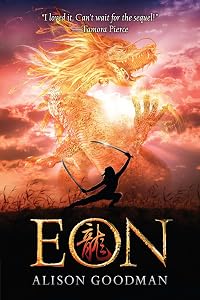
4.5 stars. Eon was such an exhilarating, page-turning, and suspenseful read. Oh, and action-packed. Lots of action. Also, did I mention how gorgeous the cover is? A normal dragon is already majestic enough, but a spirit dragon? I can only revel at its powerful glory. That, added with the fierce silhouette of a girl with swords and the intricate scrawl of the character symbol, just makes me want to stare at it all day.
First of all, I love the fact that the book was inspired by Chinese and Japanese culture! I'm always drawn to such books, and this one was no exception. It was fun reading about the dragons each representing a member of the Chinese zodiac, and I liked the diagram at the beginning depicting each of them. The empire was show more similar to that of ancient Asian culture, too--there was the "heavenly emperor" who ruled over all, there was an imperial court (rankings, concubines, eunuchs, servants, and all), and there was the ever-present danger of royalty. The amount of time Eona spent in the court filled the book up to its brim in political intrigue. Even though the harshness of their ways of life made me cringe in sympathy more than once, I loved it all. It just made the whole book much more interesting, adrenaline-pumping, and delightful to read.
Lady Dela was probably my favorite character. She was witty, clever, and filled with courage. She was living proof that being female didn't necessarily being weak. Even though technically she was male, she had the mindset of a woman, and that was what mattered. Not surprisingly, most of the empire is very sexist (save for her home tribe), but she ignored them all and stood firm in her declaration of being feminine. That is definitely something to be greatly admired. I wish Eona was as self-accepting as Lady Dela. That would have solved many problems, but since it was part of her character development, oh well. Although Lady Dela is still my favorite.
This book was heavy on masculinity and femininity. Since nearly everyone in the empire favored males, thinking them to be stronger and more reliable, Eona tried her best to suppress her secret girl identity. She refused to listen to Lady Dela when she told her that females could be strong, and she thought the way to power and dragons was masculinity. Hence the many scenes where I wanted to smack her over the head for her stubborn ignorance.I was so relieved when she finally accepted her real identity at the end. Nevertheless, the whole topic about everyone's opinions on genders was interesting to read about. Thank goodness for today's gender equality (at least compared to ancient times).
Do I recommend this book? Of course, that's an easy yes, especially if you enjoy fantasy and stories based on Asian cultures (like I do!). Go try it out! show less
First of all, I love the fact that the book was inspired by Chinese and Japanese culture! I'm always drawn to such books, and this one was no exception. It was fun reading about the dragons each representing a member of the Chinese zodiac, and I liked the diagram at the beginning depicting each of them. The empire was show more similar to that of ancient Asian culture, too--there was the "heavenly emperor" who ruled over all, there was an imperial court (rankings, concubines, eunuchs, servants, and all), and there was the ever-present danger of royalty. The amount of time Eona spent in the court filled the book up to its brim in political intrigue. Even though the harshness of their ways of life made me cringe in sympathy more than once, I loved it all. It just made the whole book much more interesting, adrenaline-pumping, and delightful to read.
Lady Dela was probably my favorite character. She was witty, clever, and filled with courage. She was living proof that being female didn't necessarily being weak. Even though technically she was male, she had the mindset of a woman, and that was what mattered. Not surprisingly, most of the empire is very sexist (save for her home tribe), but she ignored them all and stood firm in her declaration of being feminine. That is definitely something to be greatly admired. I wish Eona was as self-accepting as Lady Dela. That would have solved many problems, but since it was part of her character development, oh well. Although Lady Dela is still my favorite.
This book was heavy on masculinity and femininity. Since nearly everyone in the empire favored males, thinking them to be stronger and more reliable, Eona tried her best to suppress her secret girl identity. She refused to listen to Lady Dela when she told her that females could be strong, and she thought the way to power and dragons was masculinity. Hence the many scenes where I wanted to smack her over the head for her stubborn ignorance.
Do I recommend this book? Of course, that's an easy yes, especially if you enjoy fantasy and stories based on Asian cultures (like I do!). Go try it out! show less
Eon is a crippled servant in a world where cripples are untouchable, considered to bring bad luck with them wherever they go. They are not even allowed in the imperial presence. However, Eon's ambitious master has plans for him still and has spent years training Eon to become a Dragoneye. The Dragoneyes are special men, each chosen by one of the eleven celestial dragons, able to commune with their dragon and use its power on behalf of the emperor. The Rat Dragon is now the ascendent, and Eon is one of several candidates to become the apprentice Rat Dragoneye. He and his master have staked everything on Eon being chosen; if he is not, his master will lose what little political power and wealth he has left. Eon has a special gift -- he is show more able to see all of the dragons in the spirital realm at once, a power unheard of in any other -- and this is the reason he, a cripple, is allowed to compete. However, Eon has a terrifying secret that only he and his master know -- he is really Eona, a girl. Women are forbidden to be Dragoneyes -- they are forbidden from most aspects of power -- and discovery of this fact will mean instant death for Eon and his master. They have both ruthlessly eradicated all traces of the female in Eon, but it is still a dangerous plan, and one that both does not go as expected and yet exceeds all expectations. Eon is not chosen by the Rat Dragon, but by the Mirror Dragon, the twelfth dragon that has not been seen for hundreds of years. This marvel instantly catapults Eon to Lord status and co-ascendant Dragoneye with the cruel and power-mad Lord Ido, the Rat Dragoneye. Now it is even more important for Eon to hide his sex, as he is quickly immersed in a political power struggle between the current emperor, whose health is failing, and Lord Ido and his brother, High Lord Sethon, who intend to take over the throne.
I picked this book up because it was a fantasy in an Asian-inspired world and because it has a phenomenal cover closely tied to the subject of the book. (Not that I knew that at the time.) The deep reds signify the colors of the Imperial family as well as the Mirror Dragon, and the shining golden compass held in the dragon's claw is a key item for communicating with the dragons. Plus, it just looks badass. Am I right? I'm always curious to see how different authors reimagine and reinterpret Asian cultures to create an entirely new world, one not based on the standard European fantasy model that permeates the genre, and Alison Goodman really knocks it out of the park for me. Her world is very imaginative and unique (it doesn't seem like a thinly veiled copy of China, for example) and yet has a lot of research behind it. Every detail was crystal clear: court protocol; dragon mythology; decorative embellishments on buildings, items, hairpieces; gardens built to harness certain kinds of energy; Story robes that told tales in the weaving; the emphasis on poetry as communication as well as art. Simply amazing.
But what I really love about this book -- and Goodman's writing -- is how skillfully she weaves in themes of sex and gender and its importance (both the seeming and the being) in this society. While men are supreme, there's Eon, a girl pretending to be a boy; Lady Dela, a Contraire, a man who lives publicly as a woman; and Ryko, a Shadow Man, or eunuch; and they all have different views on the power each gains, or loses, from their roles. The interplay between Eon and Lady Dela is especially interesting, as their roles are swapped: Eon gains status by denying her femininity and adopting a masculine identity, while Lady Dela lives as a woman because she never felt at home in her male body. However, Eon is living a lie, while Lady Dela is not, and Eon is the one who has given up the most. Of course, it turns out that Eon's power does come from her femininity -- her Moon energy, rather then the male Sun energy -- and the hardest journey she undertakes in the book is the one to reclaim her true self.
All of the characters are fascinating, and even Lord Ido ends up having more to him then the standard mustache-twirling villain, despite how he appears at the beginning. Eon is a wonderful character, humble, conflicted, brave, proud, desperate, but not perfect at all -- she makes plenty of mistakes and has plenty of moments where she has less-then noble ideals. But she comes through at the end. The book also has suspenseful, high stakes political intrigue mixed with heart-pounding action, and sometimes the conflicts grew so intense that I found myself racing through paragraphs, almost afraid to know what happened next but needing to know right away. This is how I felt about the ending -- I know Goodman is writing the sequel, and I only wish I had it right now.
The pacing in the middle lags. I'm not sure why. I think it is because the reader has already figured out why Eon is having such trouble calling the Mirror Dragon, why the dragon continually eludes her, leaving her powerless just when she needs power the most. The Mirror Dragon is female, the Queen of the dragons, and Eon pushes the dragon away every time she does something to reinforce her male identity. It takes Eon far, far too long to figure this out, and she actually doesn't do it on her own, though she should have. I got increasingly frustrated with her, especially when she starts ingesting the Sun drug in large doses (steroids, basically) and can't figure out why that has seemed to make the dragon less accessible, not more. "Put it together already!", I wanted to yell. I might have actually done this at least once.
Also, and this is the one that really bothers me -- I think Goodman did an excellent, unique thing when she made Eon crippled, something heroes often are not, especially not to the extent that Eon is. It's an important facet of her character, dealing with her painful lameness; it affects every single part of her life and accounts for a lot of her strength of character later on. But when she finally figures out how to call the Mirror Dragon (at the end, natch), the first thing that happens is that her leg is magically healed and she is "whole". While I understand Goodman's desire to emphasis Eon's new power with a mirroring in her physical body, it seemed like a cop-out. I wanted to see her go all the way despite being untouchable to some, despite being physically hampered. How much more interesting it would have been.
Still, this was an excellent book, a must-read, especially for people who love fantasies, love incredible female protagonists, and who are looking for really detailed worlds that don't rehash the Euro-centric medieval standard. It's smart, it's emotional, it's (mostly) fast-paced, and it has a killer ending. And dragons -- celestial dragons. Let's not forget them. It's nice to see dragons done in a new way. The sequel can't come out fast enough. show less
I picked this book up because it was a fantasy in an Asian-inspired world and because it has a phenomenal cover closely tied to the subject of the book. (Not that I knew that at the time.) The deep reds signify the colors of the Imperial family as well as the Mirror Dragon, and the shining golden compass held in the dragon's claw is a key item for communicating with the dragons. Plus, it just looks badass. Am I right? I'm always curious to see how different authors reimagine and reinterpret Asian cultures to create an entirely new world, one not based on the standard European fantasy model that permeates the genre, and Alison Goodman really knocks it out of the park for me. Her world is very imaginative and unique (it doesn't seem like a thinly veiled copy of China, for example) and yet has a lot of research behind it. Every detail was crystal clear: court protocol; dragon mythology; decorative embellishments on buildings, items, hairpieces; gardens built to harness certain kinds of energy; Story robes that told tales in the weaving; the emphasis on poetry as communication as well as art. Simply amazing.
But what I really love about this book -- and Goodman's writing -- is how skillfully she weaves in themes of sex and gender and its importance (both the seeming and the being) in this society. While men are supreme, there's Eon, a girl pretending to be a boy; Lady Dela, a Contraire, a man who lives publicly as a woman; and Ryko, a Shadow Man, or eunuch; and they all have different views on the power each gains, or loses, from their roles. The interplay between Eon and Lady Dela is especially interesting, as their roles are swapped: Eon gains status by denying her femininity and adopting a masculine identity, while Lady Dela lives as a woman because she never felt at home in her male body. However, Eon is living a lie, while Lady Dela is not, and Eon is the one who has given up the most. Of course, it turns out that Eon's power does come from her femininity -- her Moon energy, rather then the male Sun energy -- and the hardest journey she undertakes in the book is the one to reclaim her true self.
All of the characters are fascinating, and even Lord Ido ends up having more to him then the standard mustache-twirling villain, despite how he appears at the beginning. Eon is a wonderful character, humble, conflicted, brave, proud, desperate, but not perfect at all -- she makes plenty of mistakes and has plenty of moments where she has less-then noble ideals. But she comes through at the end. The book also has suspenseful, high stakes political intrigue mixed with heart-pounding action, and sometimes the conflicts grew so intense that I found myself racing through paragraphs, almost afraid to know what happened next but needing to know right away. This is how I felt about the ending -- I know Goodman is writing the sequel, and I only wish I had it right now.
The pacing in the middle lags. I'm not sure why. I think it is because the reader has already figured out why Eon is having such trouble calling the Mirror Dragon, why the dragon continually eludes her, leaving her powerless just when she needs power the most. The Mirror Dragon is female, the Queen of the dragons, and Eon pushes the dragon away every time she does something to reinforce her male identity. It takes Eon far, far too long to figure this out, and she actually doesn't do it on her own, though she should have. I got increasingly frustrated with her, especially when she starts ingesting the Sun drug in large doses (steroids, basically) and can't figure out why that has seemed to make the dragon less accessible, not more. "Put it together already!", I wanted to yell. I might have actually done this at least once.
Also, and this is the one that really bothers me -- I think Goodman did an excellent, unique thing when she made Eon crippled, something heroes often are not, especially not to the extent that Eon is. It's an important facet of her character, dealing with her painful lameness; it affects every single part of her life and accounts for a lot of her strength of character later on. But when she finally figures out how to call the Mirror Dragon (at the end, natch), the first thing that happens is that her leg is magically healed and she is "whole". While I understand Goodman's desire to emphasis Eon's new power with a mirroring in her physical body, it seemed like a cop-out. I wanted to see her go all the way despite being untouchable to some, despite being physically hampered. How much more interesting it would have been.
Still, this was an excellent book, a must-read, especially for people who love fantasies, love incredible female protagonists, and who are looking for really detailed worlds that don't rehash the Euro-centric medieval standard. It's smart, it's emotional, it's (mostly) fast-paced, and it has a killer ending. And dragons -- celestial dragons. Let's not forget them. It's nice to see dragons done in a new way. The sequel can't come out fast enough. show less
I chose this book as part of my blog buddy's Big Book Challenge... and I'm so glad I did. It is a fantastic book!
Eon is a candidate to become a Dragoneye (an avatar for Dragons that correspond to the 12 Lunar Calendar animals). Eon is one of 12 that is being considered for the Rat Dragon year. If chosen, Eon will apprentice and then, ultimately serve as conduit for the Dragon.
Eon is not favored. Eon is a cripple and cannot complete all the sequences required, but nonetheless, must do this to be of value. Eon is being groomed for this, as he is a bond slave to his master and has no other choice.
Oh, there's also the little fact that Eon is really Eona! She's a girl pretending to be a boy, a secret that can kill her if found out. Only show more boys can be considered for this as girls are considered treacherous and conniving. Eon's master, however, knows that she is the only one in a long time that can actually see all 12 dragons. The force is strong in this one :) He is the one that concocts this plan, as he wants to regain his position in the Imperial Court.
During the choosing, she is not picked by the Rat Dragon, but my the Dragon Dragon! The Mirror Dragon, as it's called, has been missing for 500 years and it finally awakes... choosing Eon as its avatar. The Mirror Dragon returns during a very tumultuous time and Eon must navigate the political (and personal) unrests that are conspiring to hurt her and bond with her Dragon.
The book is very fast paced. The events happen quickly and we're along for the ride as Eona tries to survive and unravel the mystery of her destiny and her dragon. I could not go to sleep last night until I finished it. It was quite a ride :) The writing is great and the words evoke a clear picture of what the author is expressing. I was rooting for Eona and just wanted to know she was going to be OK. I sort of figured out what the deal with the dragon was, but that didn't disappoint me, as I hate surprises anyway :) There was variety in the characters and all were treated respectfully I thought.
My one niggle is the Rat Dragon Dragoneye's comeuppance was not harsh enough, I thought. He needed gelding, as far as I'm concerned. This might have brought the rating down but not enough to make it noticeable.
The sequel is out and already in my possession. show less
Eon is a candidate to become a Dragoneye (an avatar for Dragons that correspond to the 12 Lunar Calendar animals). Eon is one of 12 that is being considered for the Rat Dragon year. If chosen, Eon will apprentice and then, ultimately serve as conduit for the Dragon.
Eon is not favored. Eon is a cripple and cannot complete all the sequences required, but nonetheless, must do this to be of value. Eon is being groomed for this, as he is a bond slave to his master and has no other choice.
Oh, there's also the little fact that Eon is really Eona! She's a girl pretending to be a boy, a secret that can kill her if found out. Only show more boys can be considered for this as girls are considered treacherous and conniving. Eon's master, however, knows that she is the only one in a long time that can actually see all 12 dragons. The force is strong in this one :) He is the one that concocts this plan, as he wants to regain his position in the Imperial Court.
During the choosing, she is not picked by the Rat Dragon, but my the Dragon Dragon! The Mirror Dragon, as it's called, has been missing for 500 years and it finally awakes... choosing Eon as its avatar. The Mirror Dragon returns during a very tumultuous time and Eon must navigate the political (and personal) unrests that are conspiring to hurt her and bond with her Dragon.
The book is very fast paced. The events happen quickly and we're along for the ride as Eona tries to survive and unravel the mystery of her destiny and her dragon. I could not go to sleep last night until I finished it. It was quite a ride :) The writing is great and the words evoke a clear picture of what the author is expressing. I was rooting for Eona and just wanted to know she was going to be OK. I sort of figured out what the deal with the dragon was, but that didn't disappoint me, as I hate surprises anyway :) There was variety in the characters and all were treated respectfully I thought.
My one niggle is the Rat Dragon Dragoneye's comeuppance was not harsh enough, I thought. He needed gelding, as far as I'm concerned. This might have brought the rating down but not enough to make it noticeable.
The sequel is out and already in my possession. show less
Members
- Recently Added By
Lists

Best Fantasy Novels
821 works; 361 members

Here There Be Dragons
143 works; 21 members

Girls Dressed as Boys
20 works; 4 members

Absolute Power
107 works; 1 member

Fantasy by Women Who Broke Away from Europe
144 works; 12 members

al.vick-series
381 works; 2 members
Talk Discussions
Past Discussions
Found: YA Fiction early 2000s "Chinese girl learns martial arts dressed as boy and chosen by dragon." in Name that Book (February 2021)
Author Information

13+ Works 7,485 Members
Alison Goodman is an award winning novelist. Her novels include the Eon/Eona duology, A New Kind of Death, and The Dark Days Club. Singing the Dogstar Blues won an Aurealis Award for Best Young Adult Novel in 2004 and The Two Pearls of Wisdom won the Aurealis Award for Best Fantasy Novel in 2008. (Bowker Author Biography)
Awards and Honors
Awards
Distinctions
Notable Lists
Series

Belongs to Publisher Series
Work Relationships
Is contained in
Common Knowledge
- Canonical title*
- Eona : Drachentochter
- Original title
- The Two Pearls of Wisdom
- Alternate titles
- Eon: Rise of the Dragoneye; Eon: Dragoneye Reborn
- Original publication date
- 2008-12-26
- People/Characters
- Eona (Eon); Rilla; Chart; Heuris Brannon; Lady Dela; Dillon (show all 9); Lord Ido; Ryko; Prince Kygo
- Important places
- The Empire of the Celestial Dragons
- Dedication
- For my dear friend, Karen McKenzie
- First words
- No one knows how the first Dragoneyes made their dangerous bargain with the twelve energy dragons of good fortune.
- Last words
- (Click to show. Warning: May contain spoilers.)"And I want to join your resistance."
- Publisher's editor
- November, Sharyn
- Blurbers
- Pierce, Tamora; Card, Orson Scott
- Disambiguation notice
- Published as Eon: Dragoneye Reborn in the US, as Eon: Rise of the Dragoneye in the UK, and in Australia as The Two Pearls of Wisdom (adult edition) and Eon (YA edition)
*Some information comes from Common Knowledge in other languages. Click "Edit" for more information.
Classifications
Statistics
- Members
- 2,923
- Popularity
- 6,135
- Reviews
- 150
- Rating
- (3.92)
- Languages
- 9 — Czech, Dutch, English, French, German, Indonesian, Polish, Portuguese, Spanish
- Media
- Paper, Audiobook, Ebook
- ISBNs
- 54
- ASINs
- 14