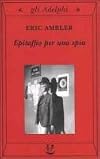
Epitaph for a Spy
by Eric Ambler
On This Page
Description
Vadassy was just another name on the guest list at the seedy Mediterranean Hotel until he was accused of spying. Then, suddenly, he was on everybody's list.Tags
Recommendations




















Member Recommendations

Member Reviews
I was aware that Eric Ambler was an author of thrillers, but somehow I totally missed that he wrote spy novels. As it turns out, he not only did but it even was him and not, as I’d always assumed, John le Carré who first injected literary ambitions into the genre, and all later authors then built on his efforts.
Having said that, Epitaph for a Spy is quite different from anything Le Carré (really the only author of spy novels I have read so far) was to do later: Ambler’s protagonist, Josef Vassady, is not a professional spy but gets involved in espionage through a mixture of accident and blackmail. And the reader soon (rather sooner than Vassaly himself) finds at that he is really, really bad at it – he does try hard, but bungles show more one amateurish attempt after the other. His task (or what he assumes to be his task) is to ferret out a spy among the handful of residents of a small hotel in a French seaside resort and as our protagonist conceives and spectacularly fails to execute one hare-brained scheme after another, quite a bit of hilarity ensues.
Epitaph for a Spy is mainly a comedy which draws its humour chiefly from the way Vassady attempts to apply plans he seems to not so much have come up with himself but snatched from a variety of James-Bond-like spy novels to what is at hear a realistic setting. Obviously (obviously, that is, for everyone buy Vassaly) this can`t work, and doesn’t and ends up being quite funny. We’re dealing with a parody of the spy novel genre then, and Ambler ridicules it by repeatedly showing how none of the common clichés of that genre would hold up if anyone actually tried them out.
But while the parody unfolds, it turns out that none of the hotel’s guest, who seemed a bit bizarre but overall quite charming, is quite what they claimed to be, that in fact some of them are quite sinister figures and as the novel progresses its canny humour takes on an increasingly creepy undertone.
The novel was first published in 1938 and Ambler obviously was very aware of what was going on politically at the time and very critical from what is clearly a very left-wing perspective. The introduction of my edition is quick to emphasise how he was not a communist, but that is pretty much a mandatory disclaimer (see most of the introductions to the novels by Sjöwall/Wahlöö) and personally I am inclined to think Ambler’s astonishing clearsightedness owes rather a lot to his political leanings.
However that may be, the longer the novel progresses, the more the political situation keeps seeping into its atmosphere which grows increasingly menacing even as the narrative retains its comical aspects. But even as the Vassady continues his bumbling Ambler raises the reader’s awareness that the novel’s protagonist does not act out of his own volition but is forced into playing a spy and that his situation is becoming more and more desperate as his target keeps eluding him. And we also learn some of the resort guests’ background stories some of which are also quite grim. And there is a twist at the end which come almost as an aside and is not even part of the main plot which is quite chilling and ends the novel on a very bleak outlook for the future. And I think it is precisely this balancing act between the comical and the menacing which makes Epitaph for a Spy remarkable – Ambler handles this very deftly and uses the increasing tension between those two elements to both drive his plot and create a unique atmosphere for his novel. show less
Having said that, Epitaph for a Spy is quite different from anything Le Carré (really the only author of spy novels I have read so far) was to do later: Ambler’s protagonist, Josef Vassady, is not a professional spy but gets involved in espionage through a mixture of accident and blackmail. And the reader soon (rather sooner than Vassaly himself) finds at that he is really, really bad at it – he does try hard, but bungles show more one amateurish attempt after the other. His task (or what he assumes to be his task) is to ferret out a spy among the handful of residents of a small hotel in a French seaside resort and as our protagonist conceives and spectacularly fails to execute one hare-brained scheme after another, quite a bit of hilarity ensues.
Epitaph for a Spy is mainly a comedy which draws its humour chiefly from the way Vassady attempts to apply plans he seems to not so much have come up with himself but snatched from a variety of James-Bond-like spy novels to what is at hear a realistic setting. Obviously (obviously, that is, for everyone buy Vassaly) this can`t work, and doesn’t and ends up being quite funny. We’re dealing with a parody of the spy novel genre then, and Ambler ridicules it by repeatedly showing how none of the common clichés of that genre would hold up if anyone actually tried them out.
But while the parody unfolds, it turns out that none of the hotel’s guest, who seemed a bit bizarre but overall quite charming, is quite what they claimed to be, that in fact some of them are quite sinister figures and as the novel progresses its canny humour takes on an increasingly creepy undertone.
The novel was first published in 1938 and Ambler obviously was very aware of what was going on politically at the time and very critical from what is clearly a very left-wing perspective. The introduction of my edition is quick to emphasise how he was not a communist, but that is pretty much a mandatory disclaimer (see most of the introductions to the novels by Sjöwall/Wahlöö) and personally I am inclined to think Ambler’s astonishing clearsightedness owes rather a lot to his political leanings.
However that may be, the longer the novel progresses, the more the political situation keeps seeping into its atmosphere which grows increasingly menacing even as the narrative retains its comical aspects. But even as the Vassady continues his bumbling Ambler raises the reader’s awareness that the novel’s protagonist does not act out of his own volition but is forced into playing a spy and that his situation is becoming more and more desperate as his target keeps eluding him. And we also learn some of the resort guests’ background stories some of which are also quite grim. And there is a twist at the end which come almost as an aside and is not even part of the main plot which is quite chilling and ends the novel on a very bleak outlook for the future. And I think it is precisely this balancing act between the comical and the menacing which makes Epitaph for a Spy remarkable – Ambler handles this very deftly and uses the increasing tension between those two elements to both drive his plot and create a unique atmosphere for his novel. show less
It's hard not to feel sorry for the hapless Vadassy, roped into a plot, forced to hunt for a spy, a task for which he is woefully unprepared and which he goes about with a bumbling desperation. This is the anthisesis of one of those books where a clever slueth probes the doings and stories of a series of characters all confined to a single location, eventually, putting the clues together and seeing through the deceptions to finally reveal the culprit. Poor Vadassy acts in a way that probably more closely resembles how the rest of us would act in that situation, completely out of our depth. In the end, the hidden world of espionage and intrigue are larger and nastier than he could ever have imagined.
Meet Josef Vadassy. He was born in Hungary but after the last changes in Europe, his birth place is now part of Yugoslavia. Hungary refuses to issue him a passport (as he is not really Hungarian); Yugoslavia will not renew his expired one (this unfortunate circumstance has a lot to do with his family getting into troubles and being shot). So as a man of no land, he is trying to live in Europe - and at the time the novel opens, he had found himself a place as a teacher of languages in Paris. Except that it is the vacation so he is away from the capital - in Nice and Toulon. His most prized possession is a camera and when he arrives in the nice cozy hotel where he had decided to spend the last few days of his vacation, he brings his film show more to be developed at the chemist. And suddenly he is arrested for espionage - because of some pictures on his film - pictures he knows he had not made. The police gives him a choice and a few hours later, our hero is back at the hotel, trying to help the police to figure out how the pictures ended up on his film.
And this is where the fun begins. Knowing that he is innocent but never done any detecting before (or even thought of doing it), Vadassy makes a mistake after a mistake and manages to walk from one comical situation into another - mainly because he does not understand why the police asks him to do some things and decides to be... creative. Somewhere along the lines, he gets attacked, a lot of people tell him their life stories and the reality of the pre-war Europe is starting to show up. This is where Ambler's strong suit is - he is a keen observer of the times and a lot of what he predicts in his novels actually happens in a few years. "Epitaph for a Spy" does not have as many observations on the state of affairs as "The Mask of Dimitrios" but considering that it is written before 1939, some of these observations are chilling. And the people that are staying at the hotel cannot be more different from each other - an English couple, American brother and sister, a Swiss Family, a German man and a few French guys (we are in France after all). Slowly, very slowly, secrets start getting revealed and the real stories start emerging. Our poor Vadassy start getting more and more confused - and this leads to even more interesting situations.
The book is amusing and a spy is involved (so it is technically a spy book) - in a way the spy is a main character. But it is mainly about a man that has nothing left being faced with the possibility to be thrown in jail for something he had not done... and deciding to do anything needed to make sure that this does not happen. At the end of the novel, when the police puts their cards on the table, the whole story becomes even funnier - because Ambler had played masterfully on misunderstandings that lead to unexpected results and acts based on the partial information that a character had at the time. show less
And this is where the fun begins. Knowing that he is innocent but never done any detecting before (or even thought of doing it), Vadassy makes a mistake after a mistake and manages to walk from one comical situation into another - mainly because he does not understand why the police asks him to do some things and decides to be... creative. Somewhere along the lines, he gets attacked, a lot of people tell him their life stories and the reality of the pre-war Europe is starting to show up. This is where Ambler's strong suit is - he is a keen observer of the times and a lot of what he predicts in his novels actually happens in a few years. "Epitaph for a Spy" does not have as many observations on the state of affairs as "The Mask of Dimitrios" but considering that it is written before 1939, some of these observations are chilling. And the people that are staying at the hotel cannot be more different from each other - an English couple, American brother and sister, a Swiss Family, a German man and a few French guys (we are in France after all). Slowly, very slowly, secrets start getting revealed and the real stories start emerging. Our poor Vadassy start getting more and more confused - and this leads to even more interesting situations.
The book is amusing and a spy is involved (so it is technically a spy book) - in a way the spy is a main character. But it is mainly about a man that has nothing left being faced with the possibility to be thrown in jail for something he had not done... and deciding to do anything needed to make sure that this does not happen. At the end of the novel, when the police puts their cards on the table, the whole story becomes even funnier - because Ambler had played masterfully on misunderstandings that lead to unexpected results and acts based on the partial information that a character had at the time. show less
I have a fondness for this sub-genre of spy novels - the type in which an innocent person gets caught up in some way with espionage and tries to muddle things out while unsure whom to trust. Ambler is one of the creators (if not the creator) of this sub-genre & the excellence of his books is witnessed by the number of authors who have followed in his footsteps.
This novel, though published in the 1950s, is set during the 1930s. Thus tensions are high in Europe & an accusation of espionage is no light matter, especially for state-less Josef Vadassy with no embassy or consul to act on his behalf. One aspect I liked about this book is that while Vadassy triesto comply with the instructions he has been given by French Naval Intelligence, show more since it is his only hope of escape out this tangle , he is hopelessly inept at it! And he realizes that... show less
This novel, though published in the 1950s, is set during the 1930s. Thus tensions are high in Europe & an accusation of espionage is no light matter, especially for state-less Josef Vadassy with no embassy or consul to act on his behalf. One aspect I liked about this book is that while Vadassy tries
Not a fun spy thriller cos Vadassy is quite a bumbling spy catcher. Can't blame him since he is an amateur. But what is interesting is the book's depiction of human nature. Vadassy received instructions from Beghin but he didn't carry them out to the T, thinking that they would alert the spy. However, this is precisely what Beghin wanted! But Vadassy didn't know Beghin's real intentions so he couldn't be blamed.
I don't know if I was just in the wrong mood, but I did not think this book lived up to expectations. I'm told it's considered one of Ambler's best; I found it rather boring. Ambler's debt to Agatha Christie has surely been commented upon before, and I felt it most strongly in this novel. Ambler, however, lacks her genius for characterization.
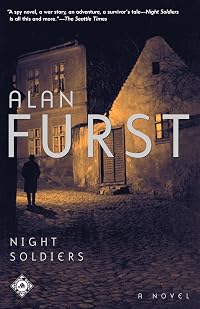
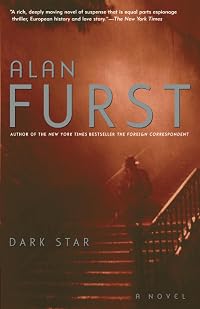
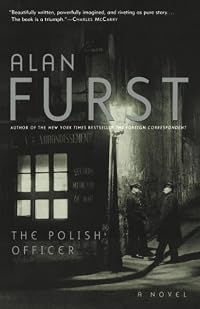
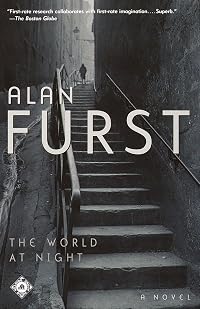
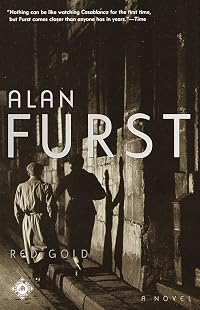
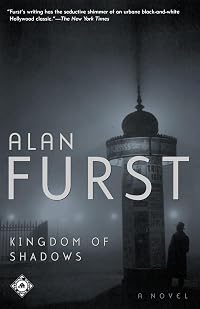
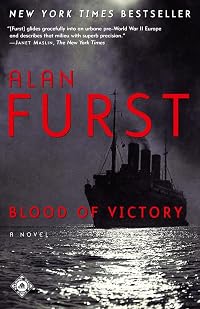
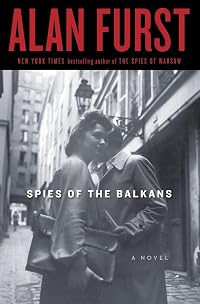
Ambler is a master of the spy novel, even arguably it's originator. Not as notable a success as his iconic "A Coffin for Demetrios," in this book Ambler still delivers a thrilling "wrongly-suspected man" story (a favorite sub-genre of mine!) in a very spare less-than-300 pages. Unlike so many over long, current-day works that desperately need an editor with a few sharp red pencils, Ambler tells here a remarkably exciting, deeply atmospheric and engaging story without a lot of filler. It's very evocative of Alan Furst's best work; I suspect Furst must consider Ambler an influence.
Members
- Recently Added By
Lists

The Guardian's 1000 Novels Everyone Must Read
1,005 works; 550 members

Best Espionage (Fiction)
55 works; 20 members
Best Spy Fiction
153 works; 102 members

SantaThing 2014 Gifts
299 works; 17 members

Books mentioned in Julian Symons’ Bloody Murder
438 works; 6 members

Folio Society
831 works; 49 members

1930s
262 works; 5 members

Books Read in 2023
5,547 works; 145 members
Author Information

71+ Works 10,358 Members
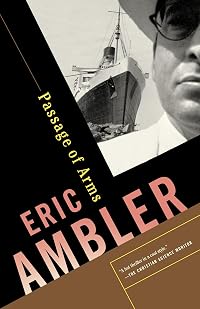
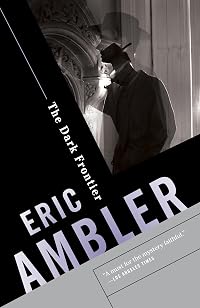
Eric Ambler was born in London on June 28, 1909. Ambler toured in the late 1920s as a music-hall comedian and wrote plays, following in the footsteps of his parents, who were entertainers. After studying engineering at London University from 1924 to 1927, he took an apprenticeship in engineering at the Edison Swan Electric Company. When the show more company became part of Associated Electrical Industries, he worked in its advertising department and wrote avant-garde plays in his spare time. By 1937 he was the director of a London ad agency. He later resigned and moved to Paris where he dedicated himself to writing. In 1936, his first novel, The Dark Frontier, appeared and followed by another five by 1940, as well as working as script consultant for Alexander Korda. During World War II he joined first the artillery and was then later posted to a combat photographic unit. He served in Italy as assistant director of army cinematography and during this period, wrote and produced nearly one hundred training and propaganda films. After the war Ambler was screenwriter for the Rank organization and starting from 1951 he published a number of novels with Charles Rodda under the pseudonym Eliot Reed. Several of his novels were made into films, including A Coffin for Dimitrios in 1944, Journey into Fear in 1942, and Topkapi in 1964. Ambler also wrote screenplays, including those for The Cruel Sea in 1953 and The Guns of Navarone in 1961. In the 1960s he moved to Hollywood and was responsible for the TV shows Checkmate and The Most Deadly Game. Ambler received the Gold Dagger in 1959 for Passage of Arms, in 1967 for Dirty Story and in 1972 for The Levanter. He also received the Diamond Dagger in 1986 plus an Edgar in 1964 for The Light of Day and was nominated Grand Master in 1975. Ambler was named an Officer of the Order of the British Empire in 1981, and received other literary awards in France and Sweden. He died in London in October 1998. Ambler published 23 novels total, 19 under his own name and four in collaboration Eric Amber died in London on October 22, 1998, at the age of 89. (Bowker Author Biography) show less
Some Editions
Awards and Honors
Distinctions
Notable Lists
Series
Belongs to Publisher Series
Crime de la Crime (Arbeiderspers)
Bantam Books (1772)
Work Relationships
Common Knowledge
- Canonical title*
- Nachruf auf einen Spion
- Original title
- Epitaph for a Spy
- Alternate titles*
- Die Stunde des Spions
- Original publication date
- 1938
- People/Characters
- Joseph Vadassy; Robert Duclos; André Roux; Odette Martin; Warren Skelton; Mary Skelton (show all 13); Walter Vogel; Hulde Vogel; Herbert Clandon-Hartley; Maria Clandon-Hartley; Emile Schimler; Albert Köche; Suzanne Köche
- Important places
- Saint-Gratien, Île-de-France, France; Toulon, Var, Provence-Alpes-Côte d'Azur, France
- Related movies
- Hotel Reserve (1944 | IMDb); Epitaph for a Spy (1953 | IMDb); Epitaph for a Spy (1963 | IMDb)
- First words
- I arrived at St Gatien from Nice on Tuesday, the fourteenth of August.
- Last words
- (Click to show. Warning: May contain spoilers.)I was surprise to see how small it looked among the trees.
- Original language
- English
*Some information comes from Common Knowledge in other languages. Click "Edit" for more information.
Classifications
Statistics
- Members
- 853
- Popularity
- 32,005
- Reviews
- 21
- Rating
- (3.88)
- Languages
- 11 — Czech, Dutch, English, Finnish, French, German, Italian, Portuguese, Romanian, Spanish, Swedish
- Media
- Paper, Audiobook, Ebook
- ISBNs
- 39
- ASINs
- 24