On This Page
Description
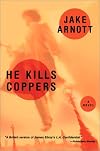
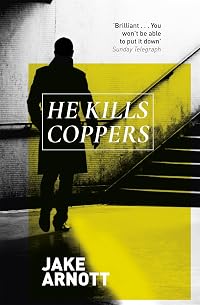
August 1966, the long hot summer of World Cup euphoria is suddenly shattered by a brutal crime that shocks a nation seemingly at ease with itself. Three characters' fates are irrevocably bound up with this event and consequences that reverberate across three decades. An ambitious detective dragged into intrigues of corruption. A gutter press journalist with a nose for a nasty story. And a disaffected petty criminal pushed over the edge by a violent crime that haunts him. An epic story that show more looks at morality and corruption on both sides of the law and at the very heart of the state. show lessTags
Recommendations







Member Recommendations
Member Reviews
I first read this novel four years ago, after watching the television adaptation, which I thought was really well acted and very emotional. Arnott's fictionalisation of two real life events, the Shepherds Bush police murders of 1966 and the 'Battle of Beanfield' riot in 1985, is still a corking piece of writing, however.
'Our best man was dead. Though it would be a long time before his ghost was put to rest. Especially with his killer still on the run. Dave was always there. Between us.'
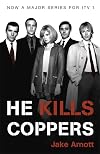
Split between three narratives - the first person recountings of detective Frank Taylor and twisted journalist Tony Meehan, plus Billy Porter, Arnott's take on Harry Roberts - the story follows Frank Taylor's guilt-ridden and career-long hunt for Porter, show more who kills Taylor's best friend Dave Thomas and two other policeman on the day that England won the cup against Germany. The Shepherds Bush 'massacre' really happened, of course, but 'names and identities' have been blurred slightly to protect the innocent and presumably prevent lawsuits. Thrown in to fill the pages is a convoluted investigation into seedy underworld dealings and bent coppers, plus a love triangle between Frank, Dave and a prostitute called Jeannie, which I think is actually the strongest subplot in the novel. Rafe Spall, Liam Garrigan and Kelly Reilly play the respective lead roles to perfection in the miniseries.
I don't usually like 'gangster' novels like this, stocked with shady characters and flimsy female stereotypes, but Arnott's novel works well, perhaps because the story is based on real events, making Dave's death even more sad and shocking, but also because the characters are so convincing. Frank is a berk, but he's also a sympathetic narrator, openly admitting his failures to the reader, and Jeannie is wonderfully enigmatic. Tony and Billy are less attractive, obviously, and Tony's story continues in Truecrime, but both of their dramatic narratives are distinctive and realistic.
I haven't read any of Jake Arnott's other novels, but I most definitely recommend this one (and the adaptation too, for a great soundtrack!) show less
'Our best man was dead. Though it would be a long time before his ghost was put to rest. Especially with his killer still on the run. Dave was always there. Between us.'
Split between three narratives - the first person recountings of detective Frank Taylor and twisted journalist Tony Meehan, plus Billy Porter, Arnott's take on Harry Roberts - the story follows Frank Taylor's guilt-ridden and career-long hunt for Porter, show more who kills Taylor's best friend Dave Thomas and two other policeman on the day that England won the cup against Germany. The Shepherds Bush 'massacre' really happened, of course, but 'names and identities' have been blurred slightly to protect the innocent and presumably prevent lawsuits. Thrown in to fill the pages is a convoluted investigation into seedy underworld dealings and bent coppers, plus a love triangle between Frank, Dave and a prostitute called Jeannie, which I think is actually the strongest subplot in the novel. Rafe Spall, Liam Garrigan and Kelly Reilly play the respective lead roles to perfection in the miniseries.
I don't usually like 'gangster' novels like this, stocked with shady characters and flimsy female stereotypes, but Arnott's novel works well, perhaps because the story is based on real events, making Dave's death even more sad and shocking, but also because the characters are so convincing. Frank is a berk, but he's also a sympathetic narrator, openly admitting his failures to the reader, and Jeannie is wonderfully enigmatic. Tony and Billy are less attractive, obviously, and Tony's story continues in Truecrime, but both of their dramatic narratives are distinctive and realistic.
I haven't read any of Jake Arnott's other novels, but I most definitely recommend this one (and the adaptation too, for a great soundtrack!) show less
I had a slightly love-hate relationship with this novel. More hate really. I had read The Long Firm (the two books form part of a trilogy) with some - um - not enjoyment; it's far too grungy for that, and expected to react similarly to this one. He Kills Coppers spans three decades from the 1960s to the 1980s. There are stories of corruption, in the Police service principally, but also in the world of journalism: it reminds us, in the section recording developments in the ‘80’s, of the sheer nastiness of much of Thatcher's Britain.
The three main characters, who take turns with the narrative, are hard to warm to and are somewhat two dimensional, while all other participants in the narrative remain strictly one dimensional. Each, in show more their different ways, has an interest in small time criminal-turned-murderer Billy Porter.
I remained fairly unengaged by the story. But as a memorial to country going though profound social change, corrupt in many of its institutions, it makes an interesting if rather horrifying read.. show less
The three main characters, who take turns with the narrative, are hard to warm to and are somewhat two dimensional, while all other participants in the narrative remain strictly one dimensional. Each, in show more their different ways, has an interest in small time criminal-turned-murderer Billy Porter.
I remained fairly unengaged by the story. But as a memorial to country going though profound social change, corrupt in many of its institutions, it makes an interesting if rather horrifying read.. show less
This is how I reviewed this book in Class War issue 82, way back in 2001.
He Kills Coppers by Jake Arnott, (Sceptre, £10)
Arnott's second novel takes its title from the ever popular song about your friend and mine, Harry Roberts. Roberts, re-named Billy Porter is one of three core characters - the others a policeman struggling to avoid the corruption of the Met, and a particularly odious tabloid journalist - whose lives are followed from the 1960s to the 1980s.
By taking historical characters and re-naming them for fictional stories (Arnott's previous novel The Long Firm was clearly based on the Kray Twins) one of the essential requirements for a novelist - the need to create believable characters - is removed. Equally Arnott seems show more incapable of writing about women, who are absent from the book virtually throughout. You do not have to be that well read to discover that Arnott has digested books like The Fall Of Scotland Yard by Cox, Shirley and Short, Anarchist by Ian Bone or that he watched the BBC series Our Friends In The North on video a few times before putting pen to paper.
That said the book does take you into and give you a feel for 1960s London. Moving on from the 60s, it stands (and falls) on its twist surrounding one of the three central characters. Its observations of the 1980s Anarchist scene (and Class War) are somewhat predictable and lazy - all the more disappointing in that no Anarchist group has tried harder to avoid a 'crustie' image than Class War, and that Arnott himself was allegedly involved in the movement during the 1980s.
There is a great book to be written about Harry Roberts, both as an individual and how he impacted on the lives of others. This is not it.
Whether as an author Arnott is more than a one trick pony it is too soon to tell, although the planned televising of The Long Firm will no doubt guarantee best seller status for this and subsequent books. show less
He Kills Coppers by Jake Arnott, (Sceptre, £10)
Arnott's second novel takes its title from the ever popular song about your friend and mine, Harry Roberts. Roberts, re-named Billy Porter is one of three core characters - the others a policeman struggling to avoid the corruption of the Met, and a particularly odious tabloid journalist - whose lives are followed from the 1960s to the 1980s.
By taking historical characters and re-naming them for fictional stories (Arnott's previous novel The Long Firm was clearly based on the Kray Twins) one of the essential requirements for a novelist - the need to create believable characters - is removed. Equally Arnott seems show more incapable of writing about women, who are absent from the book virtually throughout. You do not have to be that well read to discover that Arnott has digested books like The Fall Of Scotland Yard by Cox, Shirley and Short, Anarchist by Ian Bone or that he watched the BBC series Our Friends In The North on video a few times before putting pen to paper.
That said the book does take you into and give you a feel for 1960s London. Moving on from the 60s, it stands (and falls) on its twist surrounding one of the three central characters. Its observations of the 1980s Anarchist scene (and Class War) are somewhat predictable and lazy - all the more disappointing in that no Anarchist group has tried harder to avoid a 'crustie' image than Class War, and that Arnott himself was allegedly involved in the movement during the 1980s.
There is a great book to be written about Harry Roberts, both as an individual and how he impacted on the lives of others. This is not it.
Whether as an author Arnott is more than a one trick pony it is too soon to tell, although the planned televising of The Long Firm will no doubt guarantee best seller status for this and subsequent books. show less
A great follow-up to 'The Long Firm', with many overlapping themes and some characters in common. This one has a different structure, though, following three people (a policeman, a journalist and a criminal) through the late 1960s and beyond. They are all connected by the crime at the centre of the novel, and though their paths cross relatively little during the course of the story, there is the sense that they will converge at the end. If anything surprised me, it was that the conclusion was rather less surprising than the blurb suggested, and that the journalist's story became slightly detached from the others.
The quality of the writing is excellent, this is an author who doesn't get in the way of the writing, who understands how to show more drive a strory forwards. I don't remember the 1960s but I felt as if I was there in the early chapters. show less
The quality of the writing is excellent, this is an author who doesn't get in the way of the writing, who understands how to show more drive a strory forwards. I don't remember the 1960s but I felt as if I was there in the early chapters. show less
August 1966 - the long hot summer of World Cup euphoria is abruptly shattered when three policemen are gunned down in a West London street. A bewilderingly senseless crime that shocks a nation seemingly at ease with itself and brings an end to the victory celebrations. Yet it also marks a beginning for three men, whose fates are irrevocably bound up with the event and its consequences, which come to a head thirty years on.
An unusual and disturbing crime novel. A very good read.
I saw the tv version with Rafe Spall a few years back and enjoyed it. The book is also excellent
Members
- Recently Added By
Author Information

17+ Works 1,628 Members
Series

Work Relationships
Is contained in
Common Knowledge
- Canonical title
- He Kills Coppers
- Original title
- He Kills Coppers
- Original publication date
- 2001
- Epigraph
- 'For I ain't, you must know,' said Betty, 'much of a hand at reading writing-hand, though I can read my Bible and most print. And I do love a newspaper. You mightn't think it, but Sloppy is a beautiful reader of a newspape... (show all)r. He do the Police in different voices.'
Charles Dickens, Our Mutual Friend - First words
- Billy's hand rested against the trunk of a tree.
- Last words
- (Click to show. Warning: May contain spoilers.)But I would think of something.
- Original language
- English
Classifications
Statistics
- Members
- 331
- Popularity
- 96,134
- Reviews
- 9
- Rating
- (3.52)
- Languages
- English, French, Italian, Spanish
- Media
- Paper, Audiobook
- ISBNs
- 14
- ASINs
- 2