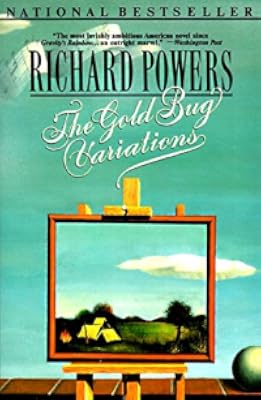
The Gold Bug Variations
by Richard Powers
On This Page
Description
National Bestseller National Book Critics Circle Award Nominee From the Pulitzer Prize-winning author of Playground and The Overstory, a magnificent double love story of two young couples separated by a distance of twenty-five years. "The most lavishly ambitious American novel since Gravity's Rainbow . . . An outright marvel." -Washington Post Stuart Ressler, a brilliant young molecular biologist, sets out in 1957 to crack the genetic code. His efforts are sidetracked by other, more show more intractable codes-social, moral, musical, spiritual-and he falls in love with a member of his research team. Years later, another young man and woman team up to investigate a different scientific mystery: Why did the eminently promising Ressler suddenly disappear from the world of science? Strand by strand, these two love stories twist about each other in a double helix of desire. The critically acclaimed third novel from Pulitzer Prize-winning author Richard Powers, The Gold Bug Variations is an intellectual tour-de-force that probes the meaning of love, science, music, and art. show lessTags
Recommendations
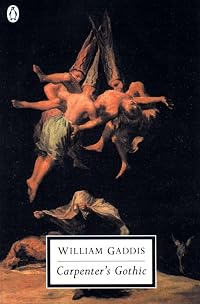
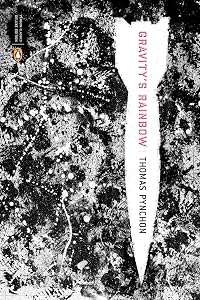

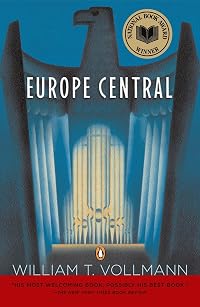
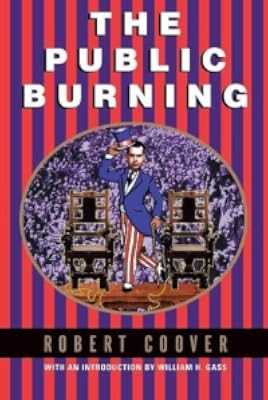


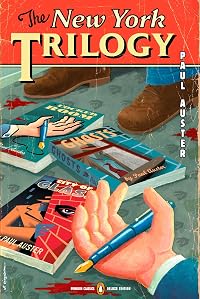
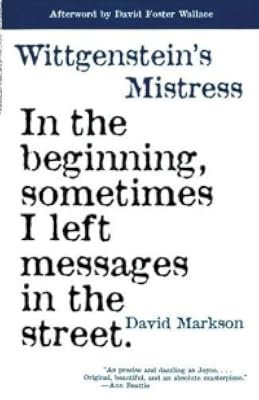
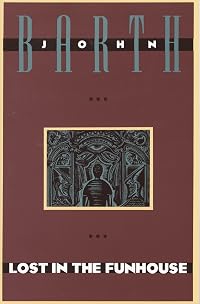
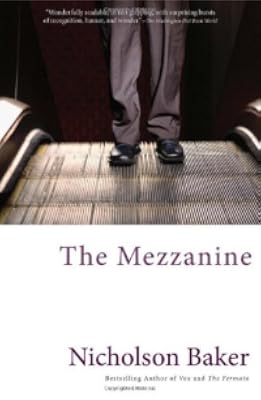

Member Recommendations



TheoClarke Dissonance and The Gold Bug Variations both address loss, love, and the power of music. Both use piano music as a key symbol and draw parallels between music, mathematics, and science while staying true to the normal novel form. If you like the spirit of one then I am sure that you will appreciate that of the other but their disparate lengths may be a hurdle to some readers' enjoyment: Powers' novel is longer than average and Lenard-Cook's is little more than a novella.
Member Reviews
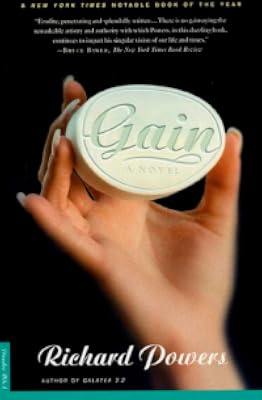
Two moving and mobile plotlines, a clever high-level structure, and more affectionate science nerdery than you could reasonably hope for. The novel's title works in Edgar Allan Poe's The Gold Bug and Johann Sebastian Bach's The Goldberg Variations, in a clever nod to the main thematic material, but in addition to those motifs of codebreaking and music, Powers also works strains of genetics, knowledge, and information into the mix, in addition to more human subjects like love, fidelity, and responsibility. Much like in Gain, the only other book of his I've read, he manages a deft admixture of somewhat quotidian plots with high-level concepts (in Gain, the fictional history of a soap company is overlaid onto a woman's struggle with show more cancer; here, it's genetics and Bach over two interrelated love affairs), and I think he succeeded even better in this earlier work at unifying ideas and messages he wanted to get across with the action. In fact, the scaffolding tricks he used to unfold the story were so clever that it's even more impressive that the main narratives were as compelling as they were in comparison.
There are two separate but inter-related narratives. The earlier one is set in the 1950s, the quest of biologist Stuart Ressler to determine how DNA translates genotypes into phenotypes while simultaneously struggling with his love affair with a married fellow biologist. The later one is set in the 1980s, the contemporary journey of reference librarian Jan O'Deigh to dig up more information on Ressler's failure and retreat into doing IT drudge work for a bank, along with her love affair with his coworker Franklin Todd. In the past, Ressler is the classic archetype of a science junkie, near-monastically devoted to his work until he falls in love with one of his co-researchers, who's inconveniently happily married even as she more than returns his feelings. In the present, Jan has been drifting along in her career as a librarian until Franklin asks her to help him indulge his curiosity about why his genius coworker abandoned his field in his prime, and she subsequently becomes much closer to both of them as she retraces Ressler's research steps. While each plot can move somewhat slowly at times, as each main character periodically pauses to ponder for a bit too long, their stories are quite compelling and relatable, especially the way that each struggles with big questions about life, responsibility, and parenthood.
However, the book gets even better once it's accepted that the slow parts are there for a reason. Powers decided to use Bach's famous Goldberg Variations as a template for the structure of the novel. This is obvious from the very first chapter, a brief poem laying out the major themes and goals of the novel under the heading of Aria, but the true import of that doesn't sink in for a while - each chunk of the story has its part to play in the overall piece. What seems like a slower, more contemplative part is just fulfilling the role of a quieter spot in the Goldberg Variations. Additionally, the main characters bond to their love interests and then peel away like complementary strands of DNA (though not identically in each timeline), so the genetics angle gets worked into the structure as well, and also into the narrative as Ressler attempts to follow in Crick's footsteps and Jan tries to follow in his. It's still written very humanistically in spite of all the high level science content, with long runs of great descriptive writing that's always on the edge of being self-indulgent while never quite going over. And while I preferred the science chat to the human narrative most of the time, much like with Gain, Powers managed to deliver a touching resolution that emphasized the themes without feeling forced. "Virtuosic" is a strong word, but it fits here. show less
There are two separate but inter-related narratives. The earlier one is set in the 1950s, the quest of biologist Stuart Ressler to determine how DNA translates genotypes into phenotypes while simultaneously struggling with his love affair with a married fellow biologist. The later one is set in the 1980s, the contemporary journey of reference librarian Jan O'Deigh to dig up more information on Ressler's failure and retreat into doing IT drudge work for a bank, along with her love affair with his coworker Franklin Todd. In the past, Ressler is the classic archetype of a science junkie, near-monastically devoted to his work until he falls in love with one of his co-researchers, who's inconveniently happily married even as she more than returns his feelings. In the present, Jan has been drifting along in her career as a librarian until Franklin asks her to help him indulge his curiosity about why his genius coworker abandoned his field in his prime, and she subsequently becomes much closer to both of them as she retraces Ressler's research steps. While each plot can move somewhat slowly at times, as each main character periodically pauses to ponder for a bit too long, their stories are quite compelling and relatable, especially the way that each struggles with big questions about life, responsibility, and parenthood.
However, the book gets even better once it's accepted that the slow parts are there for a reason. Powers decided to use Bach's famous Goldberg Variations as a template for the structure of the novel. This is obvious from the very first chapter, a brief poem laying out the major themes and goals of the novel under the heading of Aria, but the true import of that doesn't sink in for a while - each chunk of the story has its part to play in the overall piece. What seems like a slower, more contemplative part is just fulfilling the role of a quieter spot in the Goldberg Variations. Additionally, the main characters bond to their love interests and then peel away like complementary strands of DNA (though not identically in each timeline), so the genetics angle gets worked into the structure as well, and also into the narrative as Ressler attempts to follow in Crick's footsteps and Jan tries to follow in his. It's still written very humanistically in spite of all the high level science content, with long runs of great descriptive writing that's always on the edge of being self-indulgent while never quite going over. And while I preferred the science chat to the human narrative most of the time, much like with Gain, Powers managed to deliver a touching resolution that emphasized the themes without feeling forced. "Virtuosic" is a strong word, but it fits here. show less
Fantastic, obsessive compulsive writing. Beautiful and tragic and uplifting and flawed and annoying and informative, it ties together themes from disparate fields (biology, computer science, music, humanity) all to support a beautiful and complicated love story.
Just when you start to think you are smart, a guy like Richard Powers comes along and reveals how little you know about so many things. The raw candle-power of this man is stunning, but what I like best about all of his books is the genuine compassion he has for his characters.
This novel is basically a love story set against the backdrop of the quest to solve the mysteries of genetic coding. Music also plays a prominent theme; in fact, the blueprint of the novel itself is patterned after the structure of Bach’s Goldberg Variations for piano. Reading this one is unlikely to be a relaxing experience--in fact, it might feel a whole lot more like investment than consumption--but it is well worth the effort.
This novel is basically a love story set against the backdrop of the quest to solve the mysteries of genetic coding. Music also plays a prominent theme; in fact, the blueprint of the novel itself is patterned after the structure of Bach’s Goldberg Variations for piano. Reading this one is unlikely to be a relaxing experience--in fact, it might feel a whole lot more like investment than consumption--but it is well worth the effort.
"What could be simpler?" scientist Stuart Ressler asks. The four bases making up DNA, the four bases making up Bach's Goldberg Variations: the phenotypes revealed by these bases in the spiraling helices of life and music comprise the double-stranded metaphor that drives the four characters in this Joycean epic. The stories of Jan O'Deigh and Franklin Todd, and Stuart Ressler and Jeannette Koss parallel one another as all four struggle to bridge the gap between signified and signifier. How does life start from only four notes to end up as butterflies, flowers, birds, humans, emotions? The exploration of this mystery by the characters affords Powers the opportunity to go off on many riffs about molecular biology, evolution, physics, and show more emergence. In working out the relationship between noise and sound, the characters discover the serendipitous correspondence of The Goldberg Variations, with its dazzling virtuousity moving from four notes to sixty-four and back, to the elements of life itself. "Ultimately," Powers writes, "the Goldbergs are about the paradox of variation, preserved divergence, the transition effect inherent in terraced unfolding, the change in nature attendant upon a change in degree. ... how variation might ultimately free itself from the instruction that underwrites it, sets it in motion, but nowhere anticipates what might come from experience's trial run."
This book is an intellectual challenge that can impart joy from its uses of language as well as its uses of science . A snowstorm produces "spectral trees glazed with lapidary." A pianist shows "less than gershwinning ways." Evolutionary selection can be summarized as "weed it and reap." Thanksgiving offers "a plenitude of pies, pride of drop-in guests, brace of hams, corsage of table settings, parliament of mashed potatoes, supplication of network sports, clatch of conversation, covey of vacation days, school of parades, volume of preserves, brood of read-alouds, keepsake of snapshots: everything running at glut, at glorious surplus." Like the helix itself: poetic, recursive, emergent, capable of inspiring wonder. Highly recommended!
(JAF) show less
This book is an intellectual challenge that can impart joy from its uses of language as well as its uses of science . A snowstorm produces "spectral trees glazed with lapidary." A pianist shows "less than gershwinning ways." Evolutionary selection can be summarized as "weed it and reap." Thanksgiving offers "a plenitude of pies, pride of drop-in guests, brace of hams, corsage of table settings, parliament of mashed potatoes, supplication of network sports, clatch of conversation, covey of vacation days, school of parades, volume of preserves, brood of read-alouds, keepsake of snapshots: everything running at glut, at glorious surplus." Like the helix itself: poetic, recursive, emergent, capable of inspiring wonder. Highly recommended!
(JAF) show less
The title is a warning to the casual reader:
"If you don't get the title, or
if you don't want to get the title,
beware."
In The Gold Bug Variations, author Richard Powers perspicaciously composes a novel with themes of puzzles (Edgar Allen Poe's The Gold Bug), music structure (Bach's Goldberg Variations), romance (two love stories that intertwine across twenty-five years), computer technology, art history, and DNA genetic codes. I remember reading this book when it was first published, maybe twenty years ago, feeling like I'd plunged into the deepest and most bewitching lake on earth, hopelessly unable to surface for 638 pages, desperate for a breath of air, powerless to return to the top of the water, smitten with the sparkle of the show more words all around me, bewildered by the enigmatic story, in awe of the intelligence of the writing. show less
"If you don't get the title, or
if you don't want to get the title,
beware."
In The Gold Bug Variations, author Richard Powers perspicaciously composes a novel with themes of puzzles (Edgar Allen Poe's The Gold Bug), music structure (Bach's Goldberg Variations), romance (two love stories that intertwine across twenty-five years), computer technology, art history, and DNA genetic codes. I remember reading this book when it was first published, maybe twenty years ago, feeling like I'd plunged into the deepest and most bewitching lake on earth, hopelessly unable to surface for 638 pages, desperate for a breath of air, powerless to return to the top of the water, smitten with the sparkle of the show more words all around me, bewildered by the enigmatic story, in awe of the intelligence of the writing. show less
Clever interpolations of Genetics, Music, and People...
yet not one of the main characters holds any fascination
unless one enjoys betrayal, obsession, stupidity, adultery,
and the constant of death.
Why did Jan never go to see Ressler before he died?
Her incessant "I-I- I" wore thin really fast.
Readers may also be overwhelmed by the overwhelming compounding of genetics.
Worse was the Animal Cruelty, from the tortoise parade and lobster's tail to the lab rats.
The most intriguing parts were the results of the Daily Library research.
yet not one of the main characters holds any fascination
unless one enjoys betrayal, obsession, stupidity, adultery,
and the constant of death.
Why did Jan never go to see Ressler before he died?
Her incessant "I-I- I" wore thin really fast.
Readers may also be overwhelmed by the overwhelming compounding of genetics.
Worse was the Animal Cruelty, from the tortoise parade and lobster's tail to the lab rats.
The most intriguing parts were the results of the Daily Library research.
The Gold Bug Variations wrecked the world of one jon faith a long time ago. My ecstatic reply generated ripples of both interest and disquiet . I loved the three characters, loved the Midwestern backdrop, the nerdy affinity that adults could maintain with straight faces. No, there wasn't much beer drinking, but the rich foam of ideas was a fair compensation. What followed was pure reverence. Then I had a girlfriend who found the novel to be shit. It should be noted that she was an actual scientist. I argued but in name only. I was defeated. My spirits sank. I now fear any return to this one.
Members
- Recently Added By
Published Reviews
ThingScore 100
A formidable masterpiece, deeply vital and sparkling in its many facets, whimsical in its prose yet precise in its elucidation- -rewarding in every sense but, in particular, a profoundly moving love story.
added by Richardrobert
Lists

Recommend the 20 best books you've read in the last five years
2,168 works; 607 members

novels in or about bookshops (or libraries)
59 works; 21 members

Favourite Books
1,820 works; 316 members

music to my eyes
86 works; 12 members

BingoDOG - Scientists in Fiction
111 works; 17 members

A Rainbow of Books: Colors in the Title
570 works; 24 members
Animals in the Title
498 works; 11 members

Books Read in 2024
4,727 works; 128 members

Vlogbrothers Book Recommendations
307 works; 4 members
Author Information

21+ Works 22,459 Members
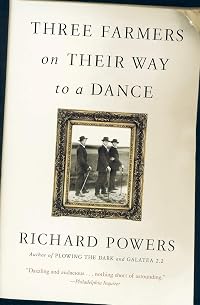
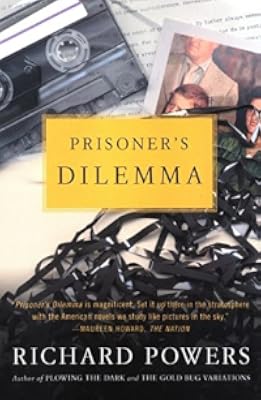
Richard Powers was born on June 18, 1957 in Evanston, Illinois. He received bachelor's and master's degrees in English from the University of Illinois at Urbana-Champaign. After graduation, he moved to Boston, Massachusetts and worked as a computer programmer and freelance data processor. One day he saw August Sander's 1914 black-and-white show more photograph of three Westerwald farm boys heading to a dance at the Museum of Fine Arts. This photograph inspired Powers to quit his job and try writing a novel. Three Farmers on Their Way to a Dance was published in 1985. His other works include Prisoner's Dilemma, The Gold Bug Variations, Operation Wandering Soul, Galatea 2.2, Plowing the Dark, The Time of Our Singing, and Generosity: An Enhancement. He received numerous awards including the James Fenimore Cooper Prize for Best Historical Fiction for Gain, the National Book Award for The Echo Maker, and Pulitzer Prize in fiction for The Overstory: A Novel. (Bowker Author Biography) show less
Awards and Honors
Awards
Common Knowledge
- Canonical title
- The Gold Bug Variations
- Original title
- The Gold Bug Variations
- Original publication date
- 1991
- People/Characters
- Stuart Ressler; Jan O'Deigh; Frank Todd; Jeanette Koss; Herbert Koss; Joe Lovering (show all 10); Toveh Botkin; Dan Woytowich; Annie Martens; Tooney Blake
Classifications
Statistics
- Members
- 1,348
- Popularity
- 17,813
- Reviews
- 19
- Rating
- (4.09)
- Languages
- Dutch, English, French, Italian
- Media
- Paper, Ebook
- ISBNs
- 15
- ASINs
- 8