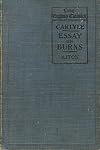
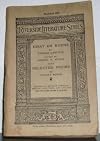
Essay on Burns
by Thomas Carlyle, thomas carlyle
104 Members (4.00)
On This Page
Description
Thomas Carlyle's "Essay on Burns" offers a compelling look at the life and work of Robert Burns, Scotland's most beloved poet. More than a simple biography, this study delves into the essence of Burns's genius, exploring his impact on Scottish literature and his enduring appeal. Carlyle's critical lens examines Burns's poetry within the context of 18th-century Scotland, providing valuable insight into the social and cultural forces that shaped his art. This volume is a significant show more contribution to both biographical studies and literary criticism. Readers interested in Scottish poetry, the Romantic era, and the life of Robert Burns will find Carlyle's essay to be an engaging and thought-provoking exploration of a literary icon. It remains a cornerstone for understanding Burns and his lasting legacy. This work has been selected by scholars as being culturally important, and is part of the knowledge base of civilization as we know it. This work is in the public domain in the United States of America, and possibly other nations. Within the United States, you may freely copy and distribute this work, as no entity (individual or corporate) has a copyright on the body of the work. Scholars believe, and we concur, that this work is important enough to be preserved, reproduced, and made generally available to the public. We appreciate your support of the preservation process, and thank you for being an important part of keeping this knowledge alive and relevant. show lessTags
Recommendations




















Member Reviews
Members
- Recently Added By
Lists

Merrill's English Texts
59 works; 2 members
Author Information

478+ Works 6,296 Members
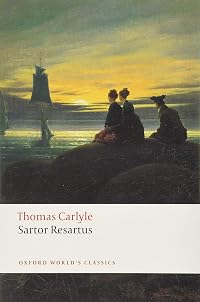
Thomas Carlyle was a social critic and historian born in Ecclefechan, Dumfriesshire, Scotland, December 4, 1795, the same year as John Keats, but Carlyle is considered an early Victorian rather than a Romantic. After completing his elementary studies, he went to the University of Edinburgh but left in 1814 without a degree. His parents wanted him show more to become a minister in the Scottish church, but his independence of spirit made such a life program impossible. In 1816 he fell in love with, and was rejected by, a young woman. His love affair was followed by a period of doubt and uncertainty described vividly in Sartor Resartus, a work published in 1833 that attracted much attention. Carlyle's first literary work reveals his admiration for German thought and philosophy, and especially for the two great German poets Schiller and Goethe. The fictional autobiography of a philosopher deeply impressed Ralph Waldo Emerson who brought it back to the United States to be published there. History of the French Revolution (1837), rewritten after parts of it were mistakenly burned as kindling by John Stuart Mill, cemented Carlyle's reputation. The work brought him fame but no great wealth. As a result of his comparative poverty he was induced to give four series of public lectures. Of these the most famous were those On Heroes, Hero-Worship, and the Heroic of History delivered in 1840 and published in 1841. Past and Present (1843), and Latter Day Pamphlets (1850) present his economic and industrial theories. With The Letters and Speeches of Oliver Cromwell (1845), The Life of John Sterling (1851), and History of Frederick II of Prussia, Called Frederick the Great (1858-1865) he returned to biography. In 1865, Carlyle was made Lord Rector of Edinburgh. (Bowker Author Biography) show less
17 Works 126 Members
Work Relationships
Common Knowledge
- Original publication date
- 1922
Classifications
Statistics
- Members
- 104
- Popularity
- 312,288
- Rating
- (4.00)
- Languages
- English
- Media
- Paper, Ebook
- ISBNs
- 5
- ASINs
- 24