
Spheres Of Justice: A Defense Of Pluralism And Equality
by Michael Walzer
On This Page
Description
Explains how diverse societies distribute such entities as education, citizenship, work, leisure time, honors, and love, as well as wealth and power, and argues that a just distribution necessitates an open egalitarianism.Tags
Recommendations

























Member Reviews
I've wanted to read this book for a long time, but overall I was somewhat disappointed. It is much more an assertion than an argument, and certainly not the "defense of pluralism and equality" promised in the subtitle.
The basic problem is with the 'boundaries' between the spheres. According to Walzer, 'tyranny' is any transgression of one sphere into the realm of another (e.g. the influence of wealth on politics). However, the boundaries between these spheres are constructs, "vulnerable to shifts in social meaning." So, crossing the line is illegitimate, but where the line is drawn is, in effect, arbitrary. While Walzer recognizes this problem, he doesn't go far enough in solving it. In fact, it undermines his entire thesis.
A show more hypothetically stronger case could have been made by grounding the spheres and their boundaries in some way. Walzer seems to be under the impression that this would be an illegitimate universalization, implying that his theory was applicable to all societies at all times. That would of course not work (e.g. given that pluralism is also essential, etc.). But he could have offered some sort of performative or conditional grounds, i.e. 'If a society works in such and such a way, or has such and such features, then the boundary between sphere x and sphere y is this.' Instead of giving even this limited sort of definition, he simply takes them as (historical) givens. However, philosophically speaking, this leaves the ground of his argument arbitrary and dogmatic.
Thus, one might be able to use Walzer's theory to make historical judgments on matters of justice, but not in any critical or productive way. In other words, using Walzer's theory, one could say "We think that was just" but not "In order to be just, we should do this." It is a justice for moral spectators, not moral agents.
Well, back to the drawing board.... show less
The basic problem is with the 'boundaries' between the spheres. According to Walzer, 'tyranny' is any transgression of one sphere into the realm of another (e.g. the influence of wealth on politics). However, the boundaries between these spheres are constructs, "vulnerable to shifts in social meaning." So, crossing the line is illegitimate, but where the line is drawn is, in effect, arbitrary. While Walzer recognizes this problem, he doesn't go far enough in solving it. In fact, it undermines his entire thesis.
A show more hypothetically stronger case could have been made by grounding the spheres and their boundaries in some way. Walzer seems to be under the impression that this would be an illegitimate universalization, implying that his theory was applicable to all societies at all times. That would of course not work (e.g. given that pluralism is also essential, etc.). But he could have offered some sort of performative or conditional grounds, i.e. 'If a society works in such and such a way, or has such and such features, then the boundary between sphere x and sphere y is this.' Instead of giving even this limited sort of definition, he simply takes them as (historical) givens. However, philosophically speaking, this leaves the ground of his argument arbitrary and dogmatic.
Thus, one might be able to use Walzer's theory to make historical judgments on matters of justice, but not in any critical or productive way. In other words, using Walzer's theory, one could say "We think that was just" but not "In order to be just, we should do this." It is a justice for moral spectators, not moral agents.
Well, back to the drawing board.... show less
Real world philosophy rather than the ivory tower justice of Rawls, Walzer separates the world into spheres where justice is distributed differently in each sphere, with many real world examples. Ronald Dworkin knee jerks on the caste system of India, ignoring that the caste system is real. Dworkin's shallow review in the New York Review of Books was an embarrassingly lazy effort. It would be unjust if Dworkin was paid for the review. "Spheres of Justice" should be required reading in jurisprudence and political science classes.
Walzer tries, and to a large degree succeeds, in squaring the circle. That is, he's got two principles, liberty and equality, which seem, at first instance not to fit well with each other, and he comes up with a way of reconciling them. This, then, could be considered a work of social-democratic liberty.
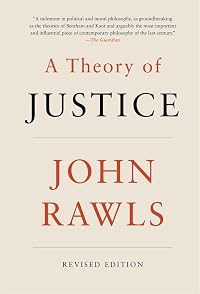
Walzer argues in favour of an idea he calls "complex equality", and against the view that goods with different meaning and content can be lumped together into the larger category of primary goods, as is advocated by John Rawls, in his A Theory of Justice (1971).
May 22, 2021Dutch
Ratings
Members
- Recently Added By
Author Information

61+ Works 3,706 Members
Michael Walzer is professor emeritus of social science at the Institute for Advanced Study, Princeton, NJ, and the author of many widely heralded books, including Spheres of Injustice, Exodus and Revolution, and The Company of Critics. He lives in Princeton and New York.
Awards and Honors
Notable Lists
Work Relationships
Common Knowledge
- Original publication date
- 1983
- Epigraph*
- "The memory of the righteous is a blessing"
- Dedication*
- Joseph P. Walzer (1906-1981)
*Some information comes from Common Knowledge in other languages. Click "Edit" for more information.
Classifications
- Genres
- Politics and Government, Philosophy, Nonfiction, General Nonfiction
- DDC/MDS
- 320.011 — Society, government, & culture Political science Types of Government Political Science Philosophy and Theory Systems
- LCC
- JC575 .W34 — Political Science Political theory Political theory. The state. Theories of the state Purpose, functions, and relations of the state
- BISAC
Statistics
- Members
- 480
- Popularity
- 63,635
- Reviews
- 4
- Rating
- (3.76)
- Languages
- 7 — English, French, German, Italian, Portuguese, Spanish, Swedish
- Media
- Paper, Ebook
- ISBNs
- 20
- ASINs
- 2