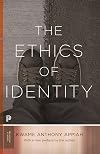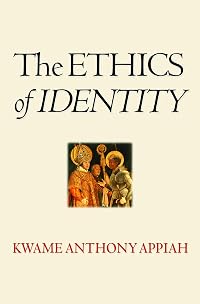
The Ethics of Identity
by Kwame Anthony Appiah
On This Page
Description
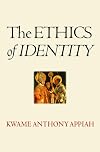
Race, ethnicity, nationality, religion, gender, sexuality: in the past couple of decades, a great deal of attention has been paid to such collective identities. They clamor for recognition and respect, sometimes at the expense of other things we value. But to what extent do "identities" constrain our freedom, our ability to make an individual life, and to what extent do they enable our individuality? In this beautifully written work, renowned philosopher and African Studies scholar Kwame show more Anthony Appiah draws on thinkers through the ages and across the globe to explore such questions. The Ethics of Identity takes seriously both the claims of individuality--the task of making a life---and the claims of identity, these large and often abstract social categories through which we define ourselves. What sort of life one should lead is a subject that has preoccupied moral and political thinkers from Aristotle to Mill. Here, Appiah develops an account of ethics, in just this venerable sense--but an account that connects moral obligations with collective allegiances, our individuality with our identities. As he observes, the question who we are has always been linked to the question what we are. Adopting a broadly interdisciplinary perspective, Appiah takes aim at the clichés and received ideas amid which talk of identity so often founders. Is "culture" a good? For that matter, does the concept of culture really explain anything? Is diversity of value in itself? Are moral obligations the only kind there are? Has the rhetoric of "human rights" been overstretched? In the end, Appiah's arguments make it harder to think of the world as divided between the West and the Rest; between locals and cosmopolitans; between Us and Them. The result is a new vision of liberal humanism--one that can accommodate the vagaries and variety that make us human. show lessTags
Recommendations




























Member Reviews
In The Ethics of Identity, Anthony Kwame Appiah (2005) argues for understanding identity in terms of autonomy, drawing on John Stuart Mill and liberalism. Diversity of identity, then, isn't valuable inherently in and of itself, but is rather valuable in "the enterprise of self-creation" (6).
Appiah argues that the version of individuality as "authentic" and the version of individuality as "existential" are both misguided; instead, we need to understand individuality as created in response and with the resources around and prior to you (17-19). He also seeks to defend autonomy, arguing that it is not equivalent with autonomism (45). He understands identity as, in part, identification, and collective identity is formed through the show more "availability of terms in public discourse" (66), the internalization of these terms, the fitting of a life into patterns, and the patterns of behavior toward a type of person (68).
In Chapter 4, Appiah argues that we have misunderstood the value around culture and cultural diversity. Culture is not, as most people believe, a resource — you cannot not have a culture (123-124). The real issue, Appiah argues, is political exclusion, not cultural exclusion (125). He argues against preservation of culture, instead understanding culture as something that changes and is not necessarily inherited by through the history of a group (134-137). Diversity of culture itself should not be valued, but rather autonomy of individuals. Appiah states that we worry about homogeneity because "we take it to be evidence of a previous crime against autonomy" (153).
In Chapter 5, Appiah argues that the state should play a part in what he calls "soul making," "the project of intervening in the process of interpretation through which each citizen develops an identity—and doing so with the aim of increasing her chance of living an ethically successful life" (164). show less
Appiah argues that the version of individuality as "authentic" and the version of individuality as "existential" are both misguided; instead, we need to understand individuality as created in response and with the resources around and prior to you (17-19). He also seeks to defend autonomy, arguing that it is not equivalent with autonomism (45). He understands identity as, in part, identification, and collective identity is formed through the show more "availability of terms in public discourse" (66), the internalization of these terms, the fitting of a life into patterns, and the patterns of behavior toward a type of person (68).
In Chapter 4, Appiah argues that we have misunderstood the value around culture and cultural diversity. Culture is not, as most people believe, a resource — you cannot not have a culture (123-124). The real issue, Appiah argues, is political exclusion, not cultural exclusion (125). He argues against preservation of culture, instead understanding culture as something that changes and is not necessarily inherited by through the history of a group (134-137). Diversity of culture itself should not be valued, but rather autonomy of individuals. Appiah states that we worry about homogeneity because "we take it to be evidence of a previous crime against autonomy" (153).
In Chapter 5, Appiah argues that the state should play a part in what he calls "soul making," "the project of intervening in the process of interpretation through which each citizen develops an identity—and doing so with the aim of increasing her chance of living an ethically successful life" (164). show less
Slow going. I know there's interesting stuff in here, but I haven't found it yet.
Ratings
Members
- Recently Added By
Author Information

56+ Works 4,053 Members
Kwame Anthony Appiah was born in 1954 in London and raised in Ghana. After graduating with a degree in philosophy from Cambridge University, he taught at Yale, Duke, and Cornell universities. He is currently a professor of Philosophy and African American Studies at Harvard University. Appiah has written on such topics as language in Assertion and show more Conditional and For Truth in Semantics, and racial philosophy and identities in Color Conscious and In My Father's House. In addition to his scholarly publications, Appiah is the author of the popular Sir Patrick Scott Series of mysteries. In this series, which includes Avenging Angel and Another Death in Venice, Barrister Patrick Scott uses his intellectual skills to solve murders in a most British fashion. (Bowker Author Biography) show less
Awards and Honors
Awards
Common Knowledge
- Canonical title
- The Ethics of Identity
- Original publication date
- 2005
- First words
- Depending upon how you look at it, John Stuart Mill's celebrated education was either a case study in individuality or a vigorous attempt to erase it.
- Last words
- (Click to show. Warning: May contain spoilers.)Kuro korō mu nni nyansa, the proverb says: In a single [polis] there is no wisdom.
Classifications
Statistics
- Members
- 362
- Popularity
- 87,433
- Reviews
- 2
- Rating
- (3.95)
- Languages
- Chinese, English, Greek, Spanish
- Media
- Paper, Ebook
- ISBNs
- 9
- ASINs
- 2