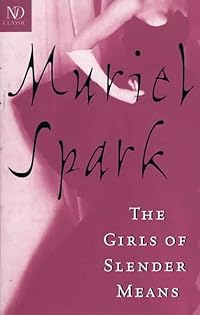
The Girls of Slender Means
by Muriel Spark
On This Page
Description
Thus begins Muriel Spark's tragic and rapier-witted portrait of a London ladies' hostel just emerging from the shadow of World War II. Like the May of Teck Club building itself-"three times window shattered since 1940 but never directly hit"-its lady inhabitants do their best to act as if the world were back to normal, practicing elocution and jostling over suitors and a single Schiaparelli gown. But the novel's harrowing ending reveals that the girls' giddy literary and amorous show more peregrinations are hiding some tragically painful war wounds. show lessTags
Recommendations




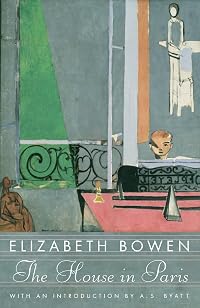


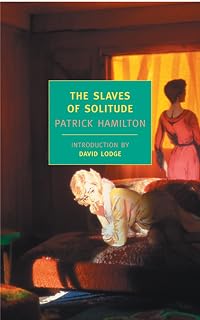
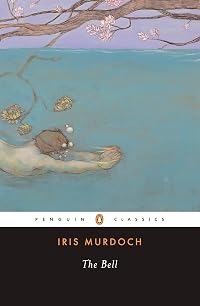
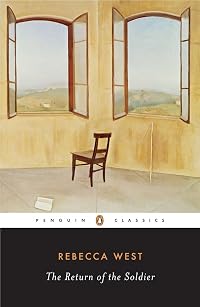










Member Recommendations

shaunie Two very short books set in wartime, both packed with meaning despite their length!
Member Reviews
The Girls of Slender Means by Muriel Spark is a short novel that showcases the author’s acerbic wit as she writes about a group of young women who are living in London in 1945, shortly after the end of the European war. These girls live in a slightly shabby Edwardian mansion called the May of Teck Club that has been converted to a residence for working girls below the age of 30 who have to live away from home in order to “follow an occupation”.
The author captures their conversations, hopes, aspirations and their pursuit of men as they go about their daily lives. While I can’t say that I loved this story or it’s characters, I did find it very interesting as the clever, elegant tone moves the reader back and forth through time show more and leads us into ever darker territory.
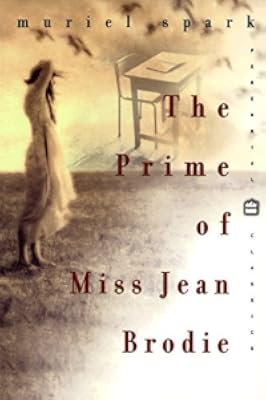
The Girls of Slender Means paints a vivid picture of a specific time in post-war London but the story definitely reminded me of The Prime of Miss Jean Brodie with it’s female cast totally zoned into their everyday concerns while history unfolds in the background. As these young women go about their daily lives, they are far more involved in their love affairs, gossip and in the sharing of a designer evening gown than in the politics of the day. The ending of the story which seemed like a play on the title word of “slender” was definitely unsettling and memorable. I listened to an audio version of this book as read by Juliet Stevenson who, once again, did a stellar job. show less
The author captures their conversations, hopes, aspirations and their pursuit of men as they go about their daily lives. While I can’t say that I loved this story or it’s characters, I did find it very interesting as the clever, elegant tone moves the reader back and forth through time show more and leads us into ever darker territory.
The Girls of Slender Means paints a vivid picture of a specific time in post-war London but the story definitely reminded me of The Prime of Miss Jean Brodie with it’s female cast totally zoned into their everyday concerns while history unfolds in the background. As these young women go about their daily lives, they are far more involved in their love affairs, gossip and in the sharing of a designer evening gown than in the politics of the day. The ending of the story which seemed like a play on the title word of “slender” was definitely unsettling and memorable. I listened to an audio version of this book as read by Juliet Stevenson who, once again, did a stellar job. show less
In 1945, between the VE day and VJ day celebrations, the girls of slender means who reside at the May of Teck Club in London, opposite the Albert Memorial, generally had one of two things on their minds: boys, for pleasure or as prospective husbands, and food, for brain work. And throughout such pursuits there was the ever-present need of an equanimity of body and mind, as poise is perfect balance. Into their lives stumbles Nicholas Farringdon, who, years later would lose his life in Haiti, a martyr to his own obnoxious interference in local practices, though at this point in time he thought himself an anarchist who nevertheless had a high regard for the royal family. His tragic end, which might actually have been comic, was preceded show more way back in 1945 by a more tragic ending, a loss of both innocence and fine elocution.
Muriel Spark is in high comic form here, both bitingly acerbic and bawdily frank. But it is the flittering anxiety of purpose, whether spiritual or profane, that permeates this club of genteel poverty which holds our interest. As Spark moves amongst the many inhabitants, of whom we rarely gain more than a sketch, she reveals both their weaknesses and their strength. None more so than Jane, who is not slender herself, but who observes all her slender peers and busies herself with brain work in the world of books. The result is a delightful comic presentation of a world which, most probably, was already a distant memory when Spark chose to capture it.
Recommended. show less
Muriel Spark is in high comic form here, both bitingly acerbic and bawdily frank. But it is the flittering anxiety of purpose, whether spiritual or profane, that permeates this club of genteel poverty which holds our interest. As Spark moves amongst the many inhabitants, of whom we rarely gain more than a sketch, she reveals both their weaknesses and their strength. None more so than Jane, who is not slender herself, but who observes all her slender peers and busies herself with brain work in the world of books. The result is a delightful comic presentation of a world which, most probably, was already a distant memory when Spark chose to capture it.
Recommended. show less
This short novel presents us with a slice of life in bombed out London shortly after the end of World War II for a group of young women living at the May of Teck Club, a sort of boarding home for "Ladies of Slender Means below the age of Thirty Years, who are obliged to reside apart from their families in order to follow an Occupation in London." We follow the lives of Jane Wright, who is fat, but does "brainwork," Anne Baberton, owner of the Schiaparelli gown shared among the girls, Joanna Childe, teacher of elocution, Selena Redwood, "the only woman present who could afford to loll, the three spinsters, Collie, Greggie, and Jarvis's, and several others. There is a "before and after" in this book, and the story alternates between the show more two. Spark's writing is witty and precise--the bombed out houses were like "giant teeth in which decay had been drilled out, leaving only the cavity," and the book conveys a great sense of time and place. I liked this book very much.
4 stars
First line: "Long ago in 1945 all the nice people in England were poor, allowing for exceptions."
Last line: "Nicholas marveled at her stamina, recalling her in this image years later in the country of his death--how she stood, sturdy and bare-legged on the dark grass, occupied with her hair--as if this was an image of all the May of Teck establishment in its meek, unselfconscious attitudes of poverty, long ago in 1945. show less
4 stars
First line: "Long ago in 1945 all the nice people in England were poor, allowing for exceptions."
Last line: "Nicholas marveled at her stamina, recalling her in this image years later in the country of his death--how she stood, sturdy and bare-legged on the dark grass, occupied with her hair--as if this was an image of all the May of Teck establishment in its meek, unselfconscious attitudes of poverty, long ago in 1945. show less
This is probably Spark's best-known book after The prime of Miss Jean Brodie. And - of course - it turns out not to be quite what we would expect. Just about any other writer, inspired to write a book about a period she'd spent 20 years ago living in a hostel for young women, would have come up with - and many of them did! - a light, nostalgic, romantic comedy, essentially a boarding-school story spiced up with a bit of grown-up sexual jealousy, in which the heroine falls for the wrong man but realises just in time and marries the quiet one instead. But not Muriel Spark. She somehow manages to turn this unpromising material into a formally and linguistically experimental novel-of-ideas which is at the same time a satire of experimental show more novels-of-ideas...
As usual in a Muriel Spark novel, you find that your sympathy is being bound to characters who later turn out not to be sympathetic at all (tip: nobody comes out of this story well), the narrator is constantly butting in with opinions that contradict or undermine your preconceptions, and everyone criticises everyone else. Two parallel lines of narrative from different time periods switch places without warning, and apparently random overheard fragments of Great Poetry (recited by the offstage Joanna, training to be an elocution teacher) act as an ironic commentary on everything else (or possibly vice-versa...).
But it is also a wonderful comic novel about growing up, about rationing and shortages and youthful poverty, about being hungry but afraid of getting fat, about sex and religion and literary and political posing, about beauty and whether it matters, and many other things that you couldn't imagine would fit into such a slender book. Endless fun!
Just a few random bits of Sparkery about poetry:
Joanna Childe had been drawn to this profession by her good voice and love of poetry which she loved rather as it might be assumed a cat loves birds; poetry, especially the declamatory sort, excited and possessed her; she would pounce on the stuff, play with it quivering in her mind, and when she had got it by heart, she spoke it forth with devouring relish.
...she wrote poetry of a strictly non-rational order, in which occurred, in about the proportion of cherries in a cherry-cake, certain words that she described as ‘of a smouldering nature’, such as loins and lovers, the root, the rose, the seawrack and the shroud.
...he took Jane to a party to meet the people she longed to meet, young male poets in corduroy trousers and young female poets with waist-length hair, or at least females who typed the poetry and slept with the poets, it was nearly the same thing. show less
As usual in a Muriel Spark novel, you find that your sympathy is being bound to characters who later turn out not to be sympathetic at all (tip: nobody comes out of this story well), the narrator is constantly butting in with opinions that contradict or undermine your preconceptions, and everyone criticises everyone else. Two parallel lines of narrative from different time periods switch places without warning, and apparently random overheard fragments of Great Poetry (recited by the offstage Joanna, training to be an elocution teacher) act as an ironic commentary on everything else (or possibly vice-versa...).
But it is also a wonderful comic novel about growing up, about rationing and shortages and youthful poverty, about being hungry but afraid of getting fat, about sex and religion and literary and political posing, about beauty and whether it matters, and many other things that you couldn't imagine would fit into such a slender book. Endless fun!
Just a few random bits of Sparkery about poetry:
Joanna Childe had been drawn to this profession by her good voice and love of poetry which she loved rather as it might be assumed a cat loves birds; poetry, especially the declamatory sort, excited and possessed her; she would pounce on the stuff, play with it quivering in her mind, and when she had got it by heart, she spoke it forth with devouring relish.
...she wrote poetry of a strictly non-rational order, in which occurred, in about the proportion of cherries in a cherry-cake, certain words that she described as ‘of a smouldering nature’, such as loins and lovers, the root, the rose, the seawrack and the shroud.
...he took Jane to a party to meet the people she longed to meet, young male poets in corduroy trousers and young female poets with waist-length hair, or at least females who typed the poetry and slept with the poets, it was nearly the same thing. show less
Muriel Spark packs a lot in to her short novels. I'm amazed at how many characters are developed over the 140 pages of this novel. The setting is a home for "girls of slender means", i.e. poor, where many young (and a few old) women live - sharing and bartering soap, food, and even clothes. In the opening of the book, we find out that an acquaintance of the house, Nicholas Farringdon, has been killed while living in Haiti. This leads to a series of flashbacks that make up most of the book, taking place in 1945. A tragedy is slowly revealed, and the book ends up sadly for several of the characters.
Spark writes women's relationships with a lot of depth, insight, and a brutal honesty about how women can be both the biggest support and the show more harshest critics of each other. I really love her writing. show less
Spark writes women's relationships with a lot of depth, insight, and a brutal honesty about how women can be both the biggest support and the show more harshest critics of each other. I really love her writing. show less
A story of a group of girls that inhabit a London boardinghouse established for the benefit of poor young women in the economically precarious, slightly surreal days that followed the end of the Second World War. Spark sets forth the details of their romantic entanglements, their financial position, and their outlook on the future with remarkable economy, making the Princess of Tek seem a bit like a female, twentieth century version of the Pequod. Her prose here is also just terrific: sharp, acid, and so unerringly straight -- if just on the surface -- that it qulifies as genuinely ironic throughout. Her descriptions of bombed-out postwar London are similarly observant, as are her observations of the girls' values, which are rapidly show more losing the color of youth and growing into cutthroat middle-class conservatism. Sharp forms a lot of these characters with remarkable care, but she isn't too gentle with any of them.
The problem I had with "The Girls of Slender Means" is that Nicholas Farringdon, the book's male counterpoint, isn't really a strong enough -- or defined enough -- character to hold the book together. After his death, there's a bit of a reveal, similar to the magnificent denouement at the end of "The Prime of Miss Jean Brodie." But unless I'm missing something -- and I may be -- it's well-done but not quite enough. It is, admittedly, wonderful to see how Spark can tell you exactly the way her characters end up without coming close to losing your interest, which might be the mark of a really great writer. This one left me wanting a bit more, but it's still highly recommended to the author's fans, and to fans of sharp, satirical writing in general. show less
The problem I had with "The Girls of Slender Means" is that Nicholas Farringdon, the book's male counterpoint, isn't really a strong enough -- or defined enough -- character to hold the book together. After his death, there's a bit of a reveal, similar to the magnificent denouement at the end of "The Prime of Miss Jean Brodie." But unless I'm missing something -- and I may be -- it's well-done but not quite enough. It is, admittedly, wonderful to see how Spark can tell you exactly the way her characters end up without coming close to losing your interest, which might be the mark of a really great writer. This one left me wanting a bit more, but it's still highly recommended to the author's fans, and to fans of sharp, satirical writing in general. show less
All hail Spark for her inimitable style, unique characterisations, and ability to wrap universal themes in seemingly light-hearted anecdotes of everyday life. The way she seems to be just slapdashing random broad strokes together to create a character and midstroke deciding to introduce another and another and another, then you step back and realise that she has created this incredibly detailed tableau of personalities of postwar London women (of slender means).
Aside: The climax in this book is particularly incredible, with Chekhov's gun firing off all over the place and everything coming together like an very well-directed play.
Aside: The climax in this book is particularly incredible, with Chekhov's gun firing off all over the place and everything coming together like an very well-directed play.
Members
- Recently Added By
Lists

The Guardian's 1000 Novels Everyone Must Read
1,005 works; 551 members

1001 Books You Must Read Before You Die
1,448 works; 1,135 members
20th Century Literature
1,161 works; 55 members

Best Psychological Fiction
81 works; 16 members
Lithub: 50 Great Classic Novels Under 200 pages
50 works; 10 members

Best of Scottish Literature
35 works; 6 members

Boarding House and Hotel Fiction
73 works; 25 members

Anthony Burgess 99 Post War Novels
99 works; 7 members

500 Great Books by Women
507 works; 60 members

1960s
281 works; 16 members

Big Jubilee List
70 works; 3 members

Global Reads: Books Set in the United Kingdom and Ireland
109 works; 5 members

Readable Classics
110 works; 15 members

1,001 BYMRBYD Concensus
723 works; 27 members
Literature About Women and Girls
394 works; 39 members

Books about World War II
241 works; 22 members

Books Read in 2017
4,249 works; 130 members
Favorite Books from the 1960s
34 works; 3 members
Books Read in 2015
3,299 works; 129 members
Best Books of the 20th Century
193 works; 5 members

Top Five Books of 2012
55 works; 11 members

Spotted on ABC Book Club
19 works; 1 member

Books Read in 2013
1,630 works; 51 members

Books About Girls
219 works; 17 members
Author Information

101+ Works 22,835 Members
Muriel Spark has been called "our most chillingly comic writer since Evelyn Waugh" by the London Spectator, and the New Yorker praised her novel Memento Mori ri (1959) as "flawless." Her fiction is marked by its remarkable diversity, wit, and craftsmanship. "She happens to be, by some rare concatenation of grace and talent, an artist, a show more serious---and most accomplished---writer, a moralist engaged with the human predicament, wildly entertaining, and a joy to read" (SRSR). She became widely known in the United States when the New Yorker devoted almost an entire issue to The Prime of Miss Jean Brodie (1961). Set in Edinburgh in the 1930s, this is the story of a schoolteacher, her unorthodox approach to life, and its effect on her select group of adolescent girls. Though their idol turns out to have feet of clay, she leaves an indelible mark on their lives. The Girls of Slender Means (1963), also warmly praised, is a sardonic look at the vivacity of youth and the anxieties of young womanhood. Reviewing The Mandelbaum Gate (1965) for the New Republic, Honor Tracy wrote: "There is an abundance here of invention, humor, poetry, wit, perception, that all but takes the breath away. . . . The story, in fact, is pure adventure, with the suspense as artfully maintained as anywhere by Graham Greene, but this is only one ingredient. There are memorable descriptions of the Holy Land, fascinating insights into the jumble of intrigue and piety surrounding the Holy Places, and penetrating studies of Arabs. . . . In each of [Spark's] novels heretofore one of her qualities has tended to predominate over the others. Here for the first time they are all impressively marshaled side by side, resulting in her best work so far." The daughter of an Englishwoman and a Scottish-Jewish father, Spark was born and educated in Edinburgh. After her marriage in 1938, she lived for some years in Central Africa, a period rarely reflected in her work. During World War II, she returned to Britain, where she worked in the Political Intelligence Department of the Foreign Office after the breakup of her marriage. She has been a magazine editor and written poetry and literary criticism. Spark has lived in London's Camberwell section, the setting of The Ballad of Peckham Rye (1960), but now makes her home in New York. Her novels reflect her conversion to Roman Catholicism. (Bowker Author Biography) Writer Muriel Spark was born in Edinburgh on February 1, 1918. In 1934-1935 she took a course in commercial correspondence and précis writing at Heriot-Watt College. After her marriage in 1937, she lived for some years in Central Africa. During World War II, she returned to Britain, where she worked in the Political Intelligence Department of the Foreign Office after the breakup of her marriage. After the war, she began her literary career. She became General Secretary of the Poetry Society, worked as an editor and wrote studies of Mary Shelley, John Masefield and the Brontë sisters. Her first book of poetry, The Fanfarlo and Other Verse, was published in 1952 and her first novel, The Comforters, was published in 1957. She wrote over twenty books including The Prime of Miss Jean Brodie and The Finishing School. She won numerous awards and honors including the 1965 James Tait Black Memorial Prize for The Mandelbaum Gate, the 1992 U. S. Ingersoll Foundation T. S. Eliot Award, the 1997 David Cohen British Literature Prize for Lifetime Achievement, and in 1993 she became Dame Commander of the Order of the British Empire in recognition of her services to literature. The Scottish Arts Council created the Muriel Spark International Fellowship in 2004. She died on April 13, 2006. (Bowker Author Biography) show less
Some Editions
Awards and Honors
Notable Lists
Series
Belongs to Publisher Series
Work Relationships
Is contained in
Is abridged in
Common Knowledge
- Canonical title
- The Girls of Slender Means
- Original title
- The girls of Slender Means
- Original publication date
- 1963
- People/Characters
- Joanna Childe; Selina Redwood; Nicholas Farringdon; Anne Baberton; Jane Wright; Dorothy Markham
- Important places
- The May of Teck Club, London, England, UK; London, England, UK
- Dedication
- For Alan Maclean
- First words
- Long ago in 1945 all the nice people in England were poor, allowing for exceptions.
- Last words
- (Click to show. Warning: May contain spoilers.)Nicholas marvelled at her stamina, recalling her in this image years later in the country of his death - how she stood, sturdy and bare-legged on the dark grass, occupied with her hair - as if this was an image of all the May of Teck establishment in its meek, unselfconscious attitudes of poverty, long ago in 1945.
- Original language
- English
Classifications
Statistics
- Members
- 1,494
- Popularity
- 15,580
- Reviews
- 62
- Rating
- (3.65)
- Languages
- 9 — Dutch, English, French, German, Italian, Norwegian (Bokmål), Portuguese, Russian, Spanish
- Media
- Paper, Audiobook, Ebook
- ISBNs
- 44
- ASINs
- 22