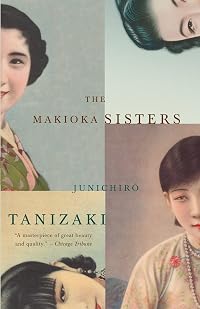
The Makioka Sisters
by Jun'ichirō Tanizaki
On This Page
Description
In Osaka in the years immediately before World War II, four aristocratic women try to preserve a way of life that is vanishing. The story of these women, the Makioka sisters, forms what is arguably the greatest Japanese novel of the twentieth century, a poignant yet unsparing portrait of a family--and an entire society--sliding into the abyss of modernity. Tsuruko, the eldest sister, clings obstinately to the prestige of her family name even as her husband prepares to move their household to show more Tokyo, where that name means nothing. Sachiko compromises valiantly to secure the future of her younger sisters. The unmarried Yukiko is a hostage to her family's exacting standards, while the spirited Taeko rebels by flinging herself into scandalous romantic alliances. The resulting novel is filled with vignettes of upper-class Japanese life, capturing both the decorum and the heartache of its protagonists. show lessTags
Recommendations

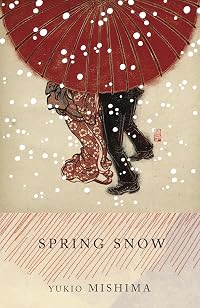
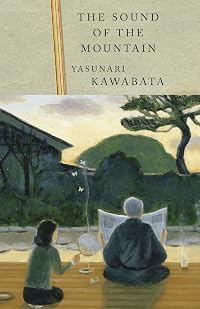
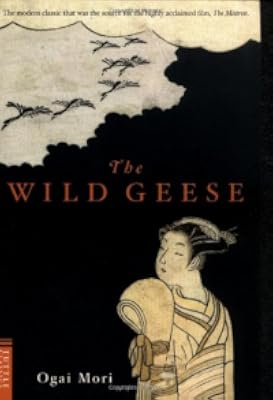
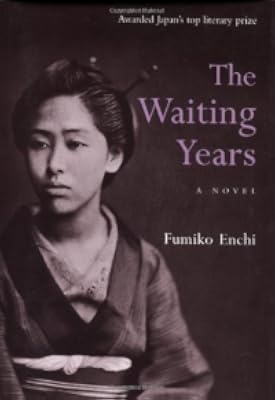
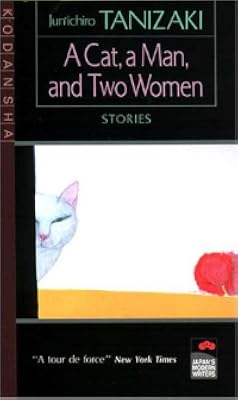

Member Recommendations
Emma by Jane Austen
Sarasamsara Like Austen's novels, The Makioka Sisters traces the daily lives and romances of an upper-class family-- the only difference is that this is pre-war Japan, not Regency England. Like in one of Austen's works, when you close the novel you feel like you are closing the door on someone's life.
20
kitzyl A family's quest to find a husband for an unmarried daughter/sister, set against the background of Indian/Japanese culture.
aprille Surface similarity — four sisters navigating life on the home front during a time of war, a family coping with diminished wealth, a focus on female autonomy vs social mores — makes for an interesting contrast between 20th century Japan and 19th century America.
Member Reviews
In 1930s Japan, the aristocratic Makioka family is sliding into genteel poverty but is determined to uphold its good name and its traditions. Those traditions mostly come into play around the attempt to find husbands for the two youngest sisters—in their mid-to-late 20s, both are verging on spinsterhood.
I picked this novel up because it's widely acclaimed as a modern classic, and because it's so often compared to the work of Jane Austen. Having read it, the Austen comparisons puzzle me. Sure, if you sum up the book in a sentence or two it sounds not dissimilar to Pride and Prejudice or Sense and Sensibility, but the tone and concerns of Austen and Junichiro Tanizaki seem to me wildly different.
As someone who knows very little about show more Japanese culture, and who is reading this in translation, I'm surely missing many layers of meaning in The Makioka Sisters. I will freely admit that maybe I just don't have the context I need to enjoy the book's subtleties. I get that this is one of those novels where "nothing happens" is the point. But I found this an increasingly dull slog full of prevaricating, static characters whose interiority I never grasped and whose Highly Metaphorical Illnesses were off-putting. (What's that, Skippy? There's a rot inside the body politic?)
And then that last chapter—that last line! I mean, you can't say that Tanizaki didn't commit to the bit, but good lord. show less
I picked this novel up because it's widely acclaimed as a modern classic, and because it's so often compared to the work of Jane Austen. Having read it, the Austen comparisons puzzle me. Sure, if you sum up the book in a sentence or two it sounds not dissimilar to Pride and Prejudice or Sense and Sensibility, but the tone and concerns of Austen and Junichiro Tanizaki seem to me wildly different.
As someone who knows very little about show more Japanese culture, and who is reading this in translation, I'm surely missing many layers of meaning in The Makioka Sisters. I will freely admit that maybe I just don't have the context I need to enjoy the book's subtleties. I get that this is one of those novels where "nothing happens" is the point. But I found this an increasingly dull slog full of prevaricating, static characters whose interiority I never grasped and whose Highly Metaphorical Illnesses were off-putting. (What's that, Skippy? There's a rot inside the body politic?)
And then that last chapter—that last line! I mean, you can't say that Tanizaki didn't commit to the bit, but good lord. show less
Whilst most of the Japanese novels I've been reading over the past couple of months are more like novellas in scale, this is a hefty tome with the length and pace of a European nineteenth-century triple-decker novel. And it even has a central plot device that could be straight out of Tolstoy or Jane Austen: sister no.4 (Taeko) can't get married because repeated attempts by the Makioka family to marry off sister no.3 (Yukiko) have come to nothing. What's more, Taeko has already tried once to elope with the man who loves her, and she goes on to have a fling with his disgraced protegé, so it's difficult to avoid thinking about empire frocks and minuets at the Assembly Rooms...
But, however much it references European fiction, this isn't a show more mere pastiche. The Makiokas are not living in Regency Bath or 1812 Moscow, but in the Osaka and Tokyo of the late 1930s. Tanizaki immerses us in all the tiny domestic problems - what shall we wear? what shall we eat? can the servants deal with it? - of running a lifestyle of leisurely marriage negotiations and miai, visits to the cherry blossom, firefly-hunting, dance and koto practice, visits to relatives, friendships with expat neighbours, major and minor illness, pregnant cats, etc., etc. And in the background we notice - dimly at first, but more and more clearly as the book goes on - how the whole social order that frames all these things is collapsing around the family as the world plunges into war. And we realise that this is not going to be a plot that can be resolved, by a marriage or by anything else.
Delicate, beautiful, complex, a constant fight between the randomness of actual life and the order that the reader tries to impose on a narrative. A book that's full of small, intensely memorable incidents that don't seem to have any obvious relevance to the "story", but which are still clearly enormously important to what Tanizaki wants to tell us. show less
But, however much it references European fiction, this isn't a show more mere pastiche. The Makiokas are not living in Regency Bath or 1812 Moscow, but in the Osaka and Tokyo of the late 1930s. Tanizaki immerses us in all the tiny domestic problems - what shall we wear? what shall we eat? can the servants deal with it? - of running a lifestyle of leisurely marriage negotiations and miai, visits to the cherry blossom, firefly-hunting, dance and koto practice, visits to relatives, friendships with expat neighbours, major and minor illness, pregnant cats, etc., etc. And in the background we notice - dimly at first, but more and more clearly as the book goes on - how the whole social order that frames all these things is collapsing around the family as the world plunges into war. And we realise that this is not going to be a plot that can be resolved, by a marriage or by anything else.
Delicate, beautiful, complex, a constant fight between the randomness of actual life and the order that the reader tries to impose on a narrative. A book that's full of small, intensely memorable incidents that don't seem to have any obvious relevance to the "story", but which are still clearly enormously important to what Tanizaki wants to tell us. show less
A novel of utmost serenity contradicting the turmoil brewing within the Makioka family and Japan at the onset of WWII. What seemed to be a tale of sister bonding on the surface jeopardised by different, clashing personalities turned out to be a complicated family affair built upon reputation, pride, and long-gone wealth. This was often fraught with tension — taking shape in forms of jealousy, insecurity, ill-health, and submissiveness — and was a deep reflection of Japanese tradition especially on marriage and women's role in society.
Conservatism was a big part of the novel. This was often frustrating to read about due to its unfortunate and apparent presence in our society even today. How limiting it was I can't imagine being bred show more in such an environment despite one of the sisters being set apart as a "representation of modernism", ie., not wearing a kimono often, earning money for one's self, and the desire to get higher education (but even these felt like a farce as the book's twists negated some of these ideas rather described as "rebellion"). The constant search for the perfect husband, economically, physically, and mentally, for one of the sisters was also Austenesque.
The Makioka Sisters spoke of cherry blossoms, family dinners, and soft conversations. It also spoke of how being deeply unyielding with regards to family traditions may break a family. All these women were dependent on their husbands without any choice on the matter with the saving grace of having a heartwarming and aptly sentimental connection with each other (Sachiko particularly is the best of the sisters). The enduring quality of this novel was how it could be taken apart in so many ways yet you're still left with more to take apart. Absolutely memorable. show less
Conservatism was a big part of the novel. This was often frustrating to read about due to its unfortunate and apparent presence in our society even today. How limiting it was I can't imagine being bred show more in such an environment despite one of the sisters being set apart as a "representation of modernism", ie., not wearing a kimono often, earning money for one's self, and the desire to get higher education (but even these felt like a farce as the book's twists negated some of these ideas rather described as "rebellion"). The constant search for the perfect husband, economically, physically, and mentally, for one of the sisters was also Austenesque.
The Makioka Sisters spoke of cherry blossoms, family dinners, and soft conversations. It also spoke of how being deeply unyielding with regards to family traditions may break a family. All these women were dependent on their husbands without any choice on the matter with the saving grace of having a heartwarming and aptly sentimental connection with each other (Sachiko particularly is the best of the sisters). The enduring quality of this novel was how it could be taken apart in so many ways yet you're still left with more to take apart. Absolutely memorable. show less
To begin at the end, this novel finished more abruptly than any I’ve read for a very long time. There is something fitting about this. Reading ‘The Makioka Sisters’ consists of observing the family Makioka through the eyes of the second sister, Sachiko, for an arbitrary amount of time. Family life proceeded prior to the start of the novel and will evidently continue on after it concludes. The narrative is one of subtle detail and minor incident, with even major happenings treated in a matter-of-fact fashion. The bond between the sisters ties things together and wider political events of the 1930s are alluded to only in passing (‘in this time of crisis…’). Sachiko, who is happily married with a daughter, is largely concerned show more with her two very different younger sisters, Yukiko and Taeko. They are both fascinating characters, more so for being seen through the eyes of a sister who loves but struggles to understand them. I had a great deal of sympathy for Yukiko, who is quiet, shy, and withdrawn, yet through careful deployment of passivity manages to repeatedly sabotage attempts to marry her off. Although it seems taboo in the family to admit it, she clearly does not want to marry. However, in order for her younger sister Taeko to marry, Yukiko must first do so. Moreover, Yukiko does not seem to have an alternative life plan to suggest.
‘The Makioka Sisters’ is a meandering family saga, the like of which could easily become dull if not written skilfully. Tanizaki colours events with visual and emotional details that beguile the reader and invest the story with depth and significance. Although details of vitamin injections and dinner parties may seem mundane, they give the narrative a materiality. The Makioka family somehow feel timeless, their concerns familiar to any family ever to exist, as well as specific to a time and place. I enjoyed the insight into the manners and traditions of 1930s Osaka, in particular the constraints and freedoms placed on women. Of the sisters, Yukiko could been seen to personify past traditions of womanhood, whereas Taeko represents a more liberated 20th century femininity. At various times, each experiences problems relating to their particular mode of feminine behaviour. The narrative does not take sides, however, and Sachiko loves her sisters first and judges them second. Or rather, she discovers some aspect of their behaviour, gives herself insomnia being annoyed about it, then talks to her sisters and finds her anger dissolves. Although the sisters are not especially demonstrative or even communicative, their bonds are strong. Sufficiently so to involve the reader for almost 500 pages. show less
‘The Makioka Sisters’ is a meandering family saga, the like of which could easily become dull if not written skilfully. Tanizaki colours events with visual and emotional details that beguile the reader and invest the story with depth and significance. Although details of vitamin injections and dinner parties may seem mundane, they give the narrative a materiality. The Makioka family somehow feel timeless, their concerns familiar to any family ever to exist, as well as specific to a time and place. I enjoyed the insight into the manners and traditions of 1930s Osaka, in particular the constraints and freedoms placed on women. Of the sisters, Yukiko could been seen to personify past traditions of womanhood, whereas Taeko represents a more liberated 20th century femininity. At various times, each experiences problems relating to their particular mode of feminine behaviour. The narrative does not take sides, however, and Sachiko loves her sisters first and judges them second. Or rather, she discovers some aspect of their behaviour, gives herself insomnia being annoyed about it, then talks to her sisters and finds her anger dissolves. Although the sisters are not especially demonstrative or even communicative, their bonds are strong. Sufficiently so to involve the reader for almost 500 pages. show less
I think it would be fair to say that Tanazaki is the Charles Dickens of Japanese literature. Set in the run-up to WWII, ending in 1941, in Osaka, the primary plot is that an old upper class Osaka family is trying to marry off the youngest two of four daughters. Sounds straightforward enough, I know. But no, no, no my friends. The story provides a means, a glimpse, of the extraordinary set of social rules the Makioka must observe to both marry off the two girls and save face as well. The complex dance between sisters, between spouses and between a traditional family clinging to social norms which are becoming obsolete in a rapidly changing society is fascinating to witness. Tanazaki's prose illuminates the minutiae of considerations in a show more family determined to remain faithful to the rules of family hierarchy, social class, and saving of face. I was agonizing along with the family as possible suitors came and went. This book is a literary pleasure, a record of cultural history, and a reminder that change can be terribly difficult to navigate. So glad to have read this book! show less
An absorbing insight into the social niceties of early 20th century Japan. The Makioka family has known better times and now, with war looming and austerity taking hold, they are finding it difficult to maintain standards. They are also reaping the consequences of their past aloofness in marriage negotiations in trying to marry off the third sister. The youngest sister is a modern woman, champing at the bit to live an independent life. Second sister Sachiko and her husband Teinosuke do their best to navigate their way through society's expectations and the changing times they live in. I was torn between feeling sympathy for Sachiko's frustrations with her younger sisters and empathy with youngest sister Taeko's nonconformity. The show more characterisations are beautiful, and I was immersed in the story completely. The ending is a little abrupt, but as I'm not always a fan of neatly tied up finishes, it didn't bother me too much. show less
Reading this book was strange. I kept expecting something to happen, some major change to take place, but the daughters of the once influential Makioka family are just on the cusp of change. They're in the last years in which they can focus on the minutiae of their lives while riding the tide of tradition.
That's not to say that nothing happens. A lot of small things happen, the kinds of things that make up the majority of daily life---meals, annual trips, family squabbles, moving house---but on the periphery, we get rather chilling inklings of what's going on outside the family in the late 1930's and early 1940's. There are passing references to the "China Incident," which appears to be how the characters refer the Sino-Japanese War in show more which Japan perpetrated horrific war crimes against China and massacred hundreds of thousands. There are casual mentions of Hitler Youth returning from visits to Japan. There's the character who takes a quick trip to California in 1941. There are German neighbors who return home to Hamburg and write letters inviting the Makiokas to visit when Germany has won the war, assuring them they will love the "new Germany." That last one especially gave me chills.
Despite myself, I felt drawn into the relationship between the sisters. Tsuruko, the eldest sister and mistress of the main house, raised to have total faith in the traditions within the family, tries along with her husband, to continue living as though those traditions still apply even with the modern world encroaching upon their lives. Tsuruko dedicates her life to controlling her sisters, and by the end she's jealous and clinging as she seems to realize that her relationship with her sisters has been irrevocably severed.
Sachiko, the married second sister, finds herself with the responsibility for her younger sisters but still beholden by tradition to first-born Tsuruko and the main house, which retains its name even when financial need and loss of influence forces Tsuruko's husband to move the household from Osaka to Tokyo. Sachiko is more driven by her love for her sisters and less concerned about reputation than Tsuruko, but she's too caught between her willful younger sisters and her controlling elder to do just what her heart tells her to do.
Yukiko, the third sister, is ancient (over thirty!) and not yet married. First, the main house found small flaws in each of suitor and refused proposal after proposal. As the years passed and the main house starts to see that they can no longer be so selective, Yukiko herself refuses suitors primarily through her passivity. It seems clear that Yukiko doesn't really want to be married, but because of tradition, the only way she's been able to put it off is through passive resistance. She comes across as an annoying, wheedling milquetoast, but if she'd just be let out of the requirement of marriage, I think she could be a happy, fulfilled woman.
And then there's Taeko, the youngest and most modern of the sisters. Where Yukiko controls through passivity, Taeko acts out, getting herself into one fix after another. The family always bails her out, not for Taeko's own good but for the sake of the family's honor. As the book progresses, it seems more and more clear that Taeko would do better if she were left to suffer the consequences of her actions.
Each sister is an individual, and even as their actions annoyed me, I felt a need to keep reading to see what they would do. Just like in real life, I got lost in the passage of the years and the daily and seasonal routines of the family. And just like in real life, the Makioka sisters keep doing the same things---or trying to do the same things---over and over and over again, undeterred by the fact that they are not in the least getting the outcome they seek.
The writing itself also drew me in. It was easy and pleasurable to immerse myself in the slow pace and rich imagery. It's like the artwork and calligraphy the Makioka sisters' father collected: a monument to a bygone era slowly being degraded by the passage of time.
Even now, I'm not completely sure if I like this book. If I do, it's because reading it is like enjoying the calm view of a lake knowing that beneath the surface there's a frenzy of activity as the drama of life and death plays out. This a book of entropy and decay, and at the end, the reader can only hope that the characters will eventually learn something of substance (or not, depending on how the reader feels about the characters).
But the last sentence of the book is perfect.
Yes, I guess I do like this book. show less
That's not to say that nothing happens. A lot of small things happen, the kinds of things that make up the majority of daily life---meals, annual trips, family squabbles, moving house---but on the periphery, we get rather chilling inklings of what's going on outside the family in the late 1930's and early 1940's. There are passing references to the "China Incident," which appears to be how the characters refer the Sino-Japanese War in show more which Japan perpetrated horrific war crimes against China and massacred hundreds of thousands. There are casual mentions of Hitler Youth returning from visits to Japan. There's the character who takes a quick trip to California in 1941. There are German neighbors who return home to Hamburg and write letters inviting the Makiokas to visit when Germany has won the war, assuring them they will love the "new Germany." That last one especially gave me chills.
Despite myself, I felt drawn into the relationship between the sisters. Tsuruko, the eldest sister and mistress of the main house, raised to have total faith in the traditions within the family, tries along with her husband, to continue living as though those traditions still apply even with the modern world encroaching upon their lives. Tsuruko dedicates her life to controlling her sisters, and by the end she's jealous and clinging as she seems to realize that her relationship with her sisters has been irrevocably severed.
Sachiko, the married second sister, finds herself with the responsibility for her younger sisters but still beholden by tradition to first-born Tsuruko and the main house, which retains its name even when financial need and loss of influence forces Tsuruko's husband to move the household from Osaka to Tokyo. Sachiko is more driven by her love for her sisters and less concerned about reputation than Tsuruko, but she's too caught between her willful younger sisters and her controlling elder to do just what her heart tells her to do.
Yukiko, the third sister, is ancient (over thirty!) and not yet married. First, the main house found small flaws in each of suitor and refused proposal after proposal. As the years passed and the main house starts to see that they can no longer be so selective, Yukiko herself refuses suitors primarily through her passivity. It seems clear that Yukiko doesn't really want to be married, but because of tradition, the only way she's been able to put it off is through passive resistance. She comes across as an annoying, wheedling milquetoast, but if she'd just be let out of the requirement of marriage, I think she could be a happy, fulfilled woman.
And then there's Taeko, the youngest and most modern of the sisters. Where Yukiko controls through passivity, Taeko acts out, getting herself into one fix after another. The family always bails her out, not for Taeko's own good but for the sake of the family's honor. As the book progresses, it seems more and more clear that Taeko would do better if she were left to suffer the consequences of her actions.
Each sister is an individual, and even as their actions annoyed me, I felt a need to keep reading to see what they would do. Just like in real life, I got lost in the passage of the years and the daily and seasonal routines of the family. And just like in real life, the Makioka sisters keep doing the same things---or trying to do the same things---over and over and over again, undeterred by the fact that they are not in the least getting the outcome they seek.
The writing itself also drew me in. It was easy and pleasurable to immerse myself in the slow pace and rich imagery. It's like the artwork and calligraphy the Makioka sisters' father collected: a monument to a bygone era slowly being degraded by the passage of time.
Even now, I'm not completely sure if I like this book. If I do, it's because reading it is like enjoying the calm view of a lake knowing that beneath the surface there's a frenzy of activity as the drama of life and death plays out. This a book of entropy and decay, and at the end, the reader can only hope that the characters will eventually learn something of substance (or not, depending on how the reader feels about the characters).
But the last sentence of the book is perfect.
Yes, I guess I do like this book. show less
Members
- Recently Added By
Published Reviews
It is a great character study of four very different sisters and the people in their lives, all the while revealing in great detail the attitudes and mores of Japanese society.
The tone of Tanizaki's writing is leisurely, meditative and full of elaborate observations about life and society at that time. Overall, there is a feeling of loss; it can be seen as an elegy to the receding aristocratic show more way of life as it gives way to the modern rendition. show less
The tone of Tanizaki's writing is leisurely, meditative and full of elaborate observations about life and society at that time. Overall, there is a feeling of loss; it can be seen as an elegy to the receding aristocratic show more way of life as it gives way to the modern rendition. show less
added by lilithcat
In its massive and tender reconstruction of a moment in social history, its day-to-day explicitness, its full but swiftly evocative dialogue, its psychological directness, it is like the work of a very fertile but conservative novelist of our own culture. Yet it still has a peculiarly Japanese sensibility.
added by lilithcat
Lists

Japanese Literature
230 works; 40 members

Best of World Literature
432 works; 51 members

Favorite Long Books
330 works; 41 members

The Top Ten: Writers Pick Their Favorite Books
240 works; 31 members

20th Century Literature
1,161 works; 54 members

Philip Ward's Lifetime Reading Plan
592 works; 22 members

Read the book and saw the movie
1,170 works; 192 members
1940s
221 works; 25 members

Best Books With Sisters
130 works; 30 members

Best family sagas
244 works; 32 members

Top Five Books of 2018
802 works; 265 members

Novels featuring siblings
133 works; 8 members

Best Japanese Fiction
41 works; 10 members

Literature by People of Color
81 works; 9 members

Books Read in 2023
5,547 works; 145 members

Great Book/Great Movie
5 works; 1 member

Must read
30 works; 2 members

Books Read in 2020
4,379 works; 124 members

Reading Globally
136 works; 16 members

Global Reads: Books Set in East Asia
139 works; 12 members

New Lifetime Reading Plan by Fadiman and Major
225 works; 5 members

Tagged 20th Century
33 works; 4 members

Books Read in 2024
4,623 works; 126 members

Favorite Books in Translation
320 works; 133 members

2025 Christmas Gifts
70 works; 19 members
Author Information

197+ Works 12,661 Members
Some Editions
Awards and Honors
Distinctions
Series
Belongs to Publisher Series
Work Relationships
Is contained in
Has the adaptation
Inspired
Common Knowledge
- Canonical title*
- Stille sneeuwval : de geschiedenis van de gezusters Makioka : roman
- Original title
- 細雪。; 細雪 (Sasameyuki (Sasameyuki); Sasameyuki
- Original publication date
- 1943 - 1948 (series) (series)
- People/Characters
- Yukiko Makioka; Sachiko Makioka; Tsuruko Makioka; Taeko Makioka
- Important places
- Japan; Osaka, Japan; Tokyo, Japan
- Important events
- 1930s; 1940s
- First words
- "Would you do this please, Koi-san?"
- Last words
- (Click to show. Warning: May contain spoilers.)Yukiko's diarrhea persisted through the twenty-six, and was a problem on the train to Tokyo.
- Original language
- Japanese
*Some information comes from Common Knowledge in other languages. Click "Edit" for more information.
Classifications
- Genres
- Fiction and Literature, General Fiction, Historical Fiction
- DDC/MDS
- 895.6344 — Literature & rhetoric Literatures of other languages Literatures of East and Southeast Asia Japanese Japanese fiction Meiji/Taishō periods 1868–1945 1912–1945
- LCC
- PL839 .A7 .S3713 — Language and Literature Languages and literatures of Eastern Asia, Africa, Oceania Languages of Eastern Asia, Africa, Oceania Japanese language and literature Japanese literature Individual authors and works
- BISAC
Statistics
- Members
- 2,530
- Popularity
- 7,565
- Reviews
- 48
- Rating
- (4.09)
- Languages
- 14 — Czech, Dutch, English, Finnish, French, German, Italian, Japanese, Norwegian (Bokmål), Russian, Slovak, Spanish, Portuguese (Portugal), Chinese, traditional
- Media
- Paper, Ebook
- ISBNs
- 43
- UPCs
- 1
- ASINs
- 31