
On This Page
Description
Regarded as one of Arnold Bennett's finest works, The Old Wives' Tale was first published in 1908. It tells the story of sisters Constance and Sophia Baines, both very different from one another, and follows their lives from youth into old age. Bennett's inspiration was an encounter in a Parisian restaurant: "an old woman came into the restaurant to dine. She was fat, shapeless, ugly, and grotesque. She had a ridiculous voice, and ridiculous gestures. It was easy to see that she lived alone, show more and that in the long lapse of years she had developed the kind of peculiarity which induces guffaws among the thoughtless." and "I reflected, concerning the grotesque diner: "This woman was once young, slim, perhaps beautiful; certainly free from these ridiculous mannerisms. Very probably she is unconscious of her singularities. Her case is a tragedy. One ought to be able to make a heartrending novel out of the history of a woman such as she." Every stout, ageing woman is not grotesque--far from it!--but there is an extreme pathos in the mere fact that every stout ageing woman was once a young girl with the unique charm of youth in her form and movements and in her mind. And the fact that the change from the young girl to the stout ageing woman is made up of an infinite number of infinitesimal changes, each unperceived by her, only intensifies the pathos.". show less
Tags
Recommendations





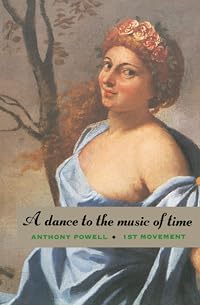
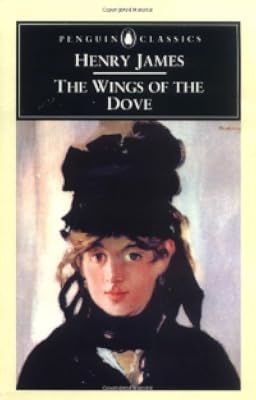

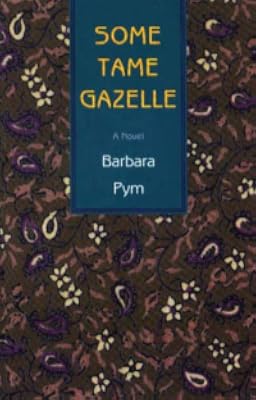
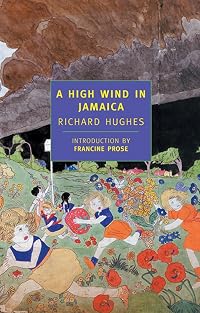







Member Recommendations
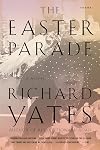
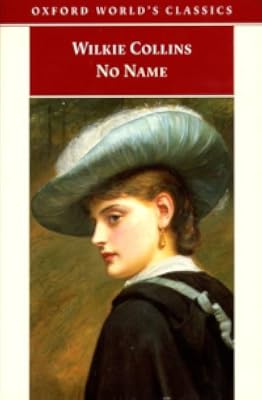
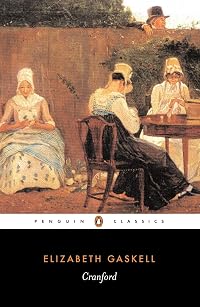
bluepiano One's a fat early 20th-century English novel and the other a spare modern American one but both recount the lives of two sisters, one of them settling into domesticity and the other going further afield to lead an apparently more eventful life. And more strikingly both books leave the reader with a great sense of sadness because both Bennett and Yates convey so overwhelming a sense of the transience and smallness of a life.

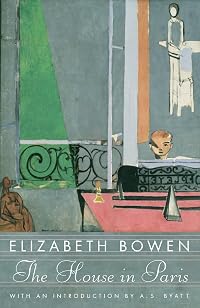
bluepiano A good novel about the very different lives of two very different sisters in rural Wales. One leaves home, one stays there.

Member Reviews
A simple concept of parallels and contrasts in the lives of sisters, carefully told with gentle irony. It starts in 1864 when Constance and Sophia are 16 and 15 respectively and follows them to the end of their lives.
Book 1 covers their teenage years together above and in a draper’s shop in a small town in the Staffordshire Potteries (central England). Book 2 is in the same location, but focuses on Constance. Book 3 is set in Paris during great political upheaval and war, and is about Sophia. In book 4, the two threads come together again.
Bennett modelled it on the great realistic French novels of the time (Balzac, Flaubert et al); in some ways it is very mundane, and yet the attention to detail is extraordinary and compelling. As show more an elderly Sophia muses,
“My life has been so queer – and yet every part of it separately seemed ordinary enough.”
Image: French café scene by Jean Béraud.
Contrasts
It opens with a description of the bucolic countryside, observing “But though Constance and Sophia were in it they were not of it” because “no person who lives in the district… ever thinks about the county”, even though it’s so much pleasanter than the busy, dirty town.
They are the only children of a bedridden but successful and respected draper whose hatred of “puffing” meant he refused to replace the fallen shop sign lest he “condone, yea, to participate in, the modern craze for unscrupulous self-advertisement”. The draper’s shop and home is their world, and yet their lives end up taking very different paths.
Sometimes the contrasts are more parallel than they first seem, and I think this is an aspect that bears further thought and eventual rereading. Constance spends her whole life in the town, living a traditional life as dutiful daughter, wife, mother and widow, whereas Sophia spends many years in France, surviving the Siege of Paris and building independent success.
Their lives seem so different, and for Sophia, there is an aspect of missing England when she’s in France and vice versa. However, despite the apparent exoticism of her life, she comes to realise that her “life, in its way, had been as narrow as Constance’s. Though her experience of humanity was wide… she had been utterly absorbed in doing one single thing.”
I think the only weak point was some aspects of the ending, but in such a long and wonderful book, it's only a minor issue.
Sisterhood
The sisters are deliberately treated equally by their parents: their workboxes “were different but one was not more magnificent than the other. Indeed, a rigid equality was the rule” and yet “in some subtle way, Constance had a standing with her parents which was more confidential than Sofia’s”. This is clear when Mrs Baines confides in Constance about her problems with Sophia: “her tone was peculiar, charged with import, confidential, and therefore very flattering to Constance.”
They are close, though they have very different temperaments, with Sophia being the more mischievous and “a prey ripe for the evil one”. She is clever, proud, shrewd with money, independent and obstinate; she would rather suffer than beg or ask for forgiveness. Constance is… suited to her name, like the continuity and familiarity in her life. She is more dutiful and happy to assume she will go into the shop, but Sophia “had always hated the shop. She did not understand how her mother and Constance could bring themselves to be deferential and flattering to every customer that entered”.
Their teenage banter, mild naughtiness (trying on mother’s new dress), and sneering at a servant from afar could easily be transplanted to teenage sisters anywhere or when. Curiously, their adult relationship seems more like something from a historical novel than their childhood one.
Is Blindness the Price of Love?
A recurring theme is the wilful blindness of love, be that of a parent, spouse or even another relative. All the main characters suffer for it in different ways, though one finally acknowledges the truth to herself, if not to others, and “her affection was unimpaired”. For a more extreme analysis of this idea, that I rated only 2*, see Ford Madox Ford's The Good Soldier, which I reviewed HERE.
Can a child of less than five be bad? Is it “hidden sullenness or mere callous indifference, or a perfect unconsciousness of sin?” And is it misguided to say “If we can be happy only when I give way to him, I must give way to him”? However, that is hard to maintain:
“She lived for nothing but to please him; he was, however, exceedingly difficult to please, not in the least because he was hypocritical and exacting, but because he was indifferent… whereas he was the whole of her universe, she was merely a dim figure in the background of his.”
Modernity and Feminine Insight?
The book has a curiously modern feeling in some ways. In particular, Sophia’s teenage rebellion doesn’t feel like something from a Victorian novel (though this was written in Edwardian times), either in terms of what she says, or what she does. When defiant, she is sullen and evasive, exhibits a “diffident boldness”, plays the fairness card (“Oh, of course Constance is always right”), answers back with excessive logic (“You tell me not to answer back, and then you say you’re waiting”) and declares “You all want to make me miserable… Put me in prison if you like! I know you’d be glad if I was dead!”. One confrontation ends when, “with a brusque precipitation of herself, vanished upstairs”. I’m sure most modern readers have been involved in such conversations.
Although written by a man, all the main characters are women, but they are convincingly and insightfully rendered. For example, Constance’s feelings after her honeymoon are delicately but touchingly described:
“She sat there full of new knowledge and new importance, brimming with experience and strange, unexpected aspirations, purposes, yes - and cunnings!...You could see the timid thing [old, virginal Constance] peeping wistfully out of the eyes of the married woman.”
And the all-encompassing love of a new mother for her baby, she “dived into the recesses of the perambulator and extricated from its cocoon the centre of the universe, and scrutinised him with quiet passion.” The awkwardness of breastfeeding in front of others, and the stresses of controlled crying (not that it’s called that) are also discussed.
At a more trivial level, problems with builders promises, timescales and workmanship are timeless, and the etiquette of all-you-can-eat fare troubled even Edwardians, apparently: the delicate dilemma of “fixed price per day for as much as they can consume while observing the rules of the game… in an instant decided how much they could decently take, and to what extent they could practise the theoretical liberty of choice… they had the right to seize all that was present under their noses, like genteel tigers; and they had the right to refuse; that was all.”
(In contrast, it is very Victorian in the way that women can be laid low by severe shock or a bit of a chill.)
Sympathy
In the Preface, Bennett says “it is an absolute rule that the principal characters of a novel must not be unsympathetic”. I don’t necessarily agree, but he stuck to his principle in this, and the others of his that I have read, which is not to say that his characters are flat or saccharine. And he has no such qualms where some of the minor male characters are concerned.
Quotes
• “It is to be remembered that in those days Providence was still busying himself [yes, him] with everybody’s affairs.”
• The wakes (regional festival) were “an orgiastic carnival, gross in all its manifestations of joy. The whole centre of the town was given over to the furious pleasures of the people… displaying all the delights of the horrible.”
• “She was athirst for sympathy in the task of scorning everything local.”
• Typical Bennett: “One of Maggie’s deepest instincts, always held in check by the dominance of Mrs Baines, was to leave pails prominent on the main routes of the house: and now, divining what was at hand, it flamed into insurrection.”
• Dr Harrop was “common sense in breeches”.
• When Mr Scales mentioned his fox-terrier bitch, he “had no suspicion that he was transgressing a convention by virtue of which dogs have no sex” (and I wonder if any Edwardian readers would have balked at Bennett’s use of the word “sex”).
• Be careful what may be overheard by servants, “A clumsy question might enlighten a member of the class which ought ever be enlightened about one’s private affairs”.
• “The era of good old-fashioned Christmases, so agreeably picturesque for the poor, was not yet at an end.”
• “The remarkable notion that twelve thousand pounds represents the infinity of wealth, that this sum possessed special magical properties which rendered it insensible to the process of subtraction.”
• “Good clothes, when put to the test, survive a change in fortune, as a Roman arch survives the luxury of departed empire.”
• “The irrational obstinacy of a physically weak man who sticks to it that he can defy the laws of nature.”
• Bennett loves writing about hotels, and says “critically examining newcomers was one of the amusements of the occupants of the lounge.”
• “The patched and senile drabness of the [hotel] bedroom.”
• You can tell respectable hotel guests because “their clothes… did not flatter the lust of the eye”.
• “The respectability of a luxury private hotel makes proper every act that passes within its walls.”
Modern British Asian Retelling!
Hugely disappointing, and I suggest avoiding it. My review is here: Marriage Material show less
Book 1 covers their teenage years together above and in a draper’s shop in a small town in the Staffordshire Potteries (central England). Book 2 is in the same location, but focuses on Constance. Book 3 is set in Paris during great political upheaval and war, and is about Sophia. In book 4, the two threads come together again.
Bennett modelled it on the great realistic French novels of the time (Balzac, Flaubert et al); in some ways it is very mundane, and yet the attention to detail is extraordinary and compelling. As show more an elderly Sophia muses,
“My life has been so queer – and yet every part of it separately seemed ordinary enough.”
Image: French café scene by Jean Béraud.
Contrasts
It opens with a description of the bucolic countryside, observing “But though Constance and Sophia were in it they were not of it” because “no person who lives in the district… ever thinks about the county”, even though it’s so much pleasanter than the busy, dirty town.
They are the only children of a bedridden but successful and respected draper whose hatred of “puffing” meant he refused to replace the fallen shop sign lest he “condone, yea, to participate in, the modern craze for unscrupulous self-advertisement”. The draper’s shop and home is their world, and yet their lives end up taking very different paths.
Sometimes the contrasts are more parallel than they first seem, and I think this is an aspect that bears further thought and eventual rereading. Constance spends her whole life in the town, living a traditional life as dutiful daughter, wife, mother and widow, whereas Sophia spends many years in France, surviving the Siege of Paris and building independent success.
Their lives seem so different, and for Sophia, there is an aspect of missing England when she’s in France and vice versa. However, despite the apparent exoticism of her life, she comes to realise that her “life, in its way, had been as narrow as Constance’s. Though her experience of humanity was wide… she had been utterly absorbed in doing one single thing.”
I think the only weak point was some aspects of the ending, but in such a long and wonderful book, it's only a minor issue.
Sisterhood
The sisters are deliberately treated equally by their parents: their workboxes “were different but one was not more magnificent than the other. Indeed, a rigid equality was the rule” and yet “in some subtle way, Constance had a standing with her parents which was more confidential than Sofia’s”. This is clear when Mrs Baines confides in Constance about her problems with Sophia: “her tone was peculiar, charged with import, confidential, and therefore very flattering to Constance.”
They are close, though they have very different temperaments, with Sophia being the more mischievous and “a prey ripe for the evil one”. She is clever, proud, shrewd with money, independent and obstinate; she would rather suffer than beg or ask for forgiveness. Constance is… suited to her name, like the continuity and familiarity in her life. She is more dutiful and happy to assume she will go into the shop, but Sophia “had always hated the shop. She did not understand how her mother and Constance could bring themselves to be deferential and flattering to every customer that entered”.
Their teenage banter, mild naughtiness (trying on mother’s new dress), and sneering at a servant from afar could easily be transplanted to teenage sisters anywhere or when. Curiously, their adult relationship seems more like something from a historical novel than their childhood one.
Is Blindness the Price of Love?
A recurring theme is the wilful blindness of love, be that of a parent, spouse or even another relative. All the main characters suffer for it in different ways, though one finally acknowledges the truth to herself, if not to others, and “her affection was unimpaired”. For a more extreme analysis of this idea, that I rated only 2*, see Ford Madox Ford's The Good Soldier, which I reviewed HERE.
Can a child of less than five be bad? Is it “hidden sullenness or mere callous indifference, or a perfect unconsciousness of sin?” And is it misguided to say “If we can be happy only when I give way to him, I must give way to him”? However, that is hard to maintain:
“She lived for nothing but to please him; he was, however, exceedingly difficult to please, not in the least because he was hypocritical and exacting, but because he was indifferent… whereas he was the whole of her universe, she was merely a dim figure in the background of his.”
Modernity and Feminine Insight?
The book has a curiously modern feeling in some ways. In particular, Sophia’s teenage rebellion doesn’t feel like something from a Victorian novel (though this was written in Edwardian times), either in terms of what she says, or what she does. When defiant, she is sullen and evasive, exhibits a “diffident boldness”, plays the fairness card (“Oh, of course Constance is always right”), answers back with excessive logic (“You tell me not to answer back, and then you say you’re waiting”) and declares “You all want to make me miserable… Put me in prison if you like! I know you’d be glad if I was dead!”. One confrontation ends when, “with a brusque precipitation of herself, vanished upstairs”. I’m sure most modern readers have been involved in such conversations.
Although written by a man, all the main characters are women, but they are convincingly and insightfully rendered. For example, Constance’s feelings after her honeymoon are delicately but touchingly described:
“She sat there full of new knowledge and new importance, brimming with experience and strange, unexpected aspirations, purposes, yes - and cunnings!...You could see the timid thing [old, virginal Constance] peeping wistfully out of the eyes of the married woman.”
And the all-encompassing love of a new mother for her baby, she “dived into the recesses of the perambulator and extricated from its cocoon the centre of the universe, and scrutinised him with quiet passion.” The awkwardness of breastfeeding in front of others, and the stresses of controlled crying (not that it’s called that) are also discussed.
At a more trivial level, problems with builders promises, timescales and workmanship are timeless, and the etiquette of all-you-can-eat fare troubled even Edwardians, apparently: the delicate dilemma of “fixed price per day for as much as they can consume while observing the rules of the game… in an instant decided how much they could decently take, and to what extent they could practise the theoretical liberty of choice… they had the right to seize all that was present under their noses, like genteel tigers; and they had the right to refuse; that was all.”
(In contrast, it is very Victorian in the way that women can be laid low by severe shock or a bit of a chill.)
Sympathy
In the Preface, Bennett says “it is an absolute rule that the principal characters of a novel must not be unsympathetic”. I don’t necessarily agree, but he stuck to his principle in this, and the others of his that I have read, which is not to say that his characters are flat or saccharine. And he has no such qualms where some of the minor male characters are concerned.
Quotes
• “It is to be remembered that in those days Providence was still busying himself [yes, him] with everybody’s affairs.”
• The wakes (regional festival) were “an orgiastic carnival, gross in all its manifestations of joy. The whole centre of the town was given over to the furious pleasures of the people… displaying all the delights of the horrible.”
• “She was athirst for sympathy in the task of scorning everything local.”
• Typical Bennett: “One of Maggie’s deepest instincts, always held in check by the dominance of Mrs Baines, was to leave pails prominent on the main routes of the house: and now, divining what was at hand, it flamed into insurrection.”
• Dr Harrop was “common sense in breeches”.
• When Mr Scales mentioned his fox-terrier bitch, he “had no suspicion that he was transgressing a convention by virtue of which dogs have no sex” (and I wonder if any Edwardian readers would have balked at Bennett’s use of the word “sex”).
• Be careful what may be overheard by servants, “A clumsy question might enlighten a member of the class which ought ever be enlightened about one’s private affairs”.
• “The era of good old-fashioned Christmases, so agreeably picturesque for the poor, was not yet at an end.”
• “The remarkable notion that twelve thousand pounds represents the infinity of wealth, that this sum possessed special magical properties which rendered it insensible to the process of subtraction.”
• “Good clothes, when put to the test, survive a change in fortune, as a Roman arch survives the luxury of departed empire.”
• “The irrational obstinacy of a physically weak man who sticks to it that he can defy the laws of nature.”
• Bennett loves writing about hotels, and says “critically examining newcomers was one of the amusements of the occupants of the lounge.”
• “The patched and senile drabness of the [hotel] bedroom.”
• You can tell respectable hotel guests because “their clothes… did not flatter the lust of the eye”.
• “The respectability of a luxury private hotel makes proper every act that passes within its walls.”
Modern British Asian Retelling!
Hugely disappointing, and I suggest avoiding it. My review is here: Marriage Material show less
Modern Library's list of the 20th century's 100 best English-language novels was my introduction to Arnold Bennett's [The Old Wives' Tale]. Published in 1908, it bobbed on the waves of nearly 100 years of literary output to beach itself at #87 on that list. At 729 pages, it isn't short—in fact it was my first Dead-weight Doorstop challenger for 2016—nor is it upbeat. But it was not, for me, a wallow in misery and despair.
The story is that of sisters Constance and Sophia Baines. Their parents own and operate a draper's shop in a small English town. (A draper sells fabric and notions and makes clothing.) By the time the sisters are in their teens, Mr. Baines has suffered a catastrophic stroke and is bedridden, largely helpless. Mrs. show more Baines is running the shop and directing the work of the several employees. The sisters display different temperments. Constance, as her name suggests, is reserved, obedient, practical, conscientious. Sophia, several years younger, is impulsive, independent, passionate.
Sophia chafes at the prospect of a life behind the shop counters and, through persistance, persuades her mother to allow her remain in school beyond the time girls usually quit. She wants to be a teacher; until, that is, she is smitten by a traveling salesman. Convinced he intends to marry her, she sneaks away and is squired to London, with the next stop to be Paree. He gets her to Paris, but only after marrying her (which of course was never his plan. Because of her impulsive elopement, Sophia cuts herself off from her family, certain they want nothing to do with her. Her husband burns through all their money, then badgers her to solicit funds from her family. When she refuses, he abandons her.
Back in England, Constance remains with her mother, working in the shop. She marries the business manager of the shop and they take over when Mrs. Baines dies. She maintains the same domestic routine of the household her mother established. The business grows. Constance has a son. Her husband dies; she carries on.
The book is structured in four parts. The first is devoted to the sisters' lives with their mother. The second tells of Constance's life, the third of Sophia's life in Paris. In part four, Sophia contacts her sister and returns from Paris to her birthplace in England. Both women are financially well off, yet neither can break out of her now-well-established life routine.
In an introduction, Bennett wrote that a chance encounter in a Paris restaurant inspired the book. A woman he described as "grotesque" came in and attracted his interest.
The story is that of sisters Constance and Sophia Baines. Their parents own and operate a draper's shop in a small English town. (A draper sells fabric and notions and makes clothing.) By the time the sisters are in their teens, Mr. Baines has suffered a catastrophic stroke and is bedridden, largely helpless. Mrs. show more Baines is running the shop and directing the work of the several employees. The sisters display different temperments. Constance, as her name suggests, is reserved, obedient, practical, conscientious. Sophia, several years younger, is impulsive, independent, passionate.
Sophia chafes at the prospect of a life behind the shop counters and, through persistance, persuades her mother to allow her remain in school beyond the time girls usually quit. She wants to be a teacher; until, that is, she is smitten by a traveling salesman. Convinced he intends to marry her, she sneaks away and is squired to London, with the next stop to be Paree. He gets her to Paris, but only after marrying her (which of course was never his plan. Because of her impulsive elopement, Sophia cuts herself off from her family, certain they want nothing to do with her. Her husband burns through all their money, then badgers her to solicit funds from her family. When she refuses, he abandons her.
Back in England, Constance remains with her mother, working in the shop. She marries the business manager of the shop and they take over when Mrs. Baines dies. She maintains the same domestic routine of the household her mother established. The business grows. Constance has a son. Her husband dies; she carries on.
The book is structured in four parts. The first is devoted to the sisters' lives with their mother. The second tells of Constance's life, the third of Sophia's life in Paris. In part four, Sophia contacts her sister and returns from Paris to her birthplace in England. Both women are financially well off, yet neither can break out of her now-well-established life routine.
In an introduction, Bennett wrote that a chance encounter in a Paris restaurant inspired the book. A woman he described as "grotesque" came in and attracted his interest.
show less
It was easy to see that she lived alone, and that in the long lapse of years she had developed the kind of peculiarity which induces guffaws among the thoughtless…One ought to be able to make a heartrending novel out of the history of a woman such as she… the mere fact that every stout ageing woman was once a young girl with the unique charm of youth in her form and movements and in her mind. And the fact that the change from the young girl to the stout ageing woman is made up of an infinite number of infinitesimal changes, each unperceived by her, only intensifies the pathos.
Sitting in a restaurant in Paris, Arnold Bennett observed a woman whom he described as grotesque and ridiculous. But like a writer will, he imagined the course of events in the woman’s life that might have brought her to that moment. He imagined a young and charming woman whose life was met with tragedy. In his ruminations he thought, “that the change from the young girl to the stout aging woman is made up of an infinite number of infinitesimal changes, each unperceived by her.” The novel that followed is [The Old Wives’ Tale].
Bennett’s tale recounts Sophia and Constance’s lives from their young lives in their father’s shop through to the end, each following very different paths. Sophia runs away to Paris with a traveling show more salesman who turns out to be a real rascal. Constance marries and takes over her father’s shop with her husband.
The shifting chronology of the narrative is genius, dashing assumptions with later revelations. But Bennett’s real genius is in his uber-complete characterizations of the two girls. The non-linear narrative and minute examination of the two main characters provides just what Bennett set out to create – a complete story of a life. [The Old Wives’ Tale] is a surprise, as this is a book that is not in the literary mainstream any longer but has much to offer those who get off the beaten path.
Bottom Line: Detailed examination of a life lived and a surprise for those who’ve never heard of it.
4 bones ½ !!!! show less
Bennett’s tale recounts Sophia and Constance’s lives from their young lives in their father’s shop through to the end, each following very different paths. Sophia runs away to Paris with a traveling show more salesman who turns out to be a real rascal. Constance marries and takes over her father’s shop with her husband.
The shifting chronology of the narrative is genius, dashing assumptions with later revelations. But Bennett’s real genius is in his uber-complete characterizations of the two girls. The non-linear narrative and minute examination of the two main characters provides just what Bennett set out to create – a complete story of a life. [The Old Wives’ Tale] is a surprise, as this is a book that is not in the literary mainstream any longer but has much to offer those who get off the beaten path.
Bottom Line: Detailed examination of a life lived and a surprise for those who’ve never heard of it.
4 bones ½ !!!! show less
An amazing work. Bennett's book takes two old women, sisters, and imagines the lives they led.
Now, if you are like me, when I was young, I used to make fun of"useless old people." Well, now I'm one of those"useless old things," but I have a different viewpoint now, oh yes I do. I know how my years have been spent, in quiet joy, in bleak despair, working hard, raising two daughters alone after an abusive marriage, often misunderstood, and finally, able to retire. And nearly every one of us "useless old people" has a similar story.
Bennett tells the story of these two old English sisters with a beauty that leads the reader to be invested in their believability, and to feel truly sad when their lives, and their story, are finally at an end.
Now, if you are like me, when I was young, I used to make fun of"useless old people." Well, now I'm one of those"useless old things," but I have a different viewpoint now, oh yes I do. I know how my years have been spent, in quiet joy, in bleak despair, working hard, raising two daughters alone after an abusive marriage, often misunderstood, and finally, able to retire. And nearly every one of us "useless old people" has a similar story.
Bennett tells the story of these two old English sisters with a beauty that leads the reader to be invested in their believability, and to feel truly sad when their lives, and their story, are finally at an end.
Another classic that I thoroughly enjoyed, although not all the way through. I think it made a difference that I am older and could identify with some of the preoccupations of the protaganists (the are widows btw, not spinsters, which is what I was expecting, possibly foolishly) Bennett uncannily captures the emotions and thought processes of people (not just women) - his description of a young woman falling in love/lust is faultless. Much more candid than one is lead to expect from Victorian novels (I haven't read many, not even all of Dickens - is that a terrible confession?) Ultimately though, the greatest interest for me was the description of retail and trade in a small Midlands town - loads of notes made for the research I shall show more ... one day ... carry out! Zola's novels are often cited as excellent sources in this field, but I think this is just as useful and fascinating. show less
Very enjoyable, an interesting plot of intersecting lives of two sisters who forged different destinies. Seemed quite modern, or ahead of its time, I would've assumed it was decades newer than it is.
"The Old Wives' Tale" was first published in 1908, and could be referred to as Bennett’s masterpiece. It is the story of 2 sisters, Sophia and Constance. Sophia is beautiful, strong willed, adventurous, and courageous, and Constance is plain, humble, obedient, and cautious. The opening scene: their home in a small town in England. Sophia and Constance are in their teens, sharing a cozy afternoon; young, innocent, playful, and oblivious of their future. We follow their lives, spanning nearly 50 years, and the genius of the tale is not the plot, but the philosophical message, the intense reality of everyone’s mortality. E. M. Forster, speaking of the sisters, made the cynical comment, “They are doomed to decay with a completeness show more that is very rare in literature.”
My husband often watches the Biography channel on TV. And I always tell him I don’t like to watch with him because every story has such a sad ending. Everyone gets old and dies! Well, reading this book is like watching the Biography channel. The only difference is that this story is about 2 ordinary women and their joys and sorrows, accomplishments and disappointments. The plot takes some unexpected twists and turns, and just like real life, things do not always work out the way they intended. Max Beerbohm put it most eloquently, “it’s about the passing of time, about the stealthy merging of youth into age, the invisibility of the traps in our own characters into which we walk unwary, unknowing.”
Both Sophia and Constance are genuine characters. They could have been your grandmother, your mother, your aunt or your sister. They could have been me, or you. They both had strengths and weaknesses, virtues and flaws. And they both had hopes and dreams. We watch them each take a different path in life; marriage, children, work. And we witness the external changes that occur during their lifetime; war, politics, business, society, attitudes, manners, everything that makes up a lifetime of memories. And we watch them age.
I loved this book. It gave me a greater appreciation for those that came before me. It made me think about what is important in life. It helped me put things in perspective. "The Old Wives' Tale" is a timeless classic. show less
My husband often watches the Biography channel on TV. And I always tell him I don’t like to watch with him because every story has such a sad ending. Everyone gets old and dies! Well, reading this book is like watching the Biography channel. The only difference is that this story is about 2 ordinary women and their joys and sorrows, accomplishments and disappointments. The plot takes some unexpected twists and turns, and just like real life, things do not always work out the way they intended. Max Beerbohm put it most eloquently, “it’s about the passing of time, about the stealthy merging of youth into age, the invisibility of the traps in our own characters into which we walk unwary, unknowing.”
Both Sophia and Constance are genuine characters. They could have been your grandmother, your mother, your aunt or your sister. They could have been me, or you. They both had strengths and weaknesses, virtues and flaws. And they both had hopes and dreams. We watch them each take a different path in life; marriage, children, work. And we witness the external changes that occur during their lifetime; war, politics, business, society, attitudes, manners, everything that makes up a lifetime of memories. And we watch them age.
I loved this book. It gave me a greater appreciation for those that came before me. It made me think about what is important in life. It helped me put things in perspective. "The Old Wives' Tale" is a timeless classic. show less
This review was written for LibraryThing Member Giveaways.
Members
- Recently Added By
Lists

The Guardian's 1000 Novels Everyone Must Read
1,005 works; 551 members

1001 Books You Must Read Before You Die
1,448 works; 1,136 members
Best of British Literature
226 works; 41 members

Recommend the 20 best books you've read in the last five years
2,168 works; 607 members

Favourite 19th century fiction
257 works; 62 members
Books I've Read More Than Once
602 works; 49 members

Canon de la narrativa universal del siglo XX
254 works; 6 members
20th Century Literature
1,161 works; 55 members

F. Scott Fitzgerald's 22 Essential Books (1936)
22 works; 3 members

Best 20th Century Books as of 1924
100 works; 6 members

Folio Society
831 works; 48 members

Global Reads: Books Set in the United Kingdom and Ireland
109 works; 5 members

Family Drama
56 works; 14 members

Harold Bloom - The Western Canon: D. The Chaotic Age
833 works; 24 members

Western World's Greatest Books - Project Gutenberg
295 works; 15 members
1,001 BYMRBYD Concensus
723 works; 27 members

Out of Copyright
244 works; 14 members
The Modern Library's 100 Best Novels: The Board's List
85 works; 6 members

Lamont's Hundred Best Novels (1947)
100 works; 4 members

University literature
145 works; 5 members

Fiction Set During a Revolution
55 works; 24 members
Paris, City of Lights
103 works; 17 members
Trinity College Booklist (1951): Class Ten, English Literature
358 works; 5 members

Books Read in 2022
5,226 works; 115 members

My TBR
371 works; 3 members

Unmarried women
66 works; 6 members

KayStJ's to-read list
1,616 works; 11 members

Books You Read For University
184 works; 3 members
Canon de la narrativa universal del s. XX (cicutadry)
499 works; 3 members
Tagged Widows
9 works; 4 members

el
1,139 works; 1 member
.
396 works; 1 member
Modern Library's 100 Best Novels
100 works; 2 members
Author Information

193+ Works 6,838 Members
Arnold Bennett was born on May 27, 1867 in Hanley, Staffordshire, England. He began his working career as a law clerk and later he left the legal field and became an editor for the magazine Woman. His first novel was "A Man from the North." He wrote several novels set in Hanley, the town where he was born. These are known as the Five Town novels. show more Other titles include "The Babylon Hotel," "The Truth about an Author," and "How to Live on 24 Hours a Day." Bennett won the 1923 James Tait Black Memorial Prize for his novel "Riceyman Steps." "The Journal of Arnold Bennett" was published posthumously in three volumes. Bennett was also the author of "Hugo" which was made into a major motion picture in 2011 starring Jude law and Ben Kingsley, directed by Martin Scorsese. During WWI, Bennett was Director of Propaganda for France at the Ministry of Information. (At that time "propaganda" did not have the negative connotations it would have later in the twentieth century.) This appointment was based on the recommendation of Lord Beaverbrook, who also recommended him as Deputy Minister of that department at the end of the war. Bennett refused a knighthood in 1918. He died in London of typhoid fever on March 27, 1931. (Bowker Author Biography) show less
Some Editions
Awards and Honors
Notable Lists
Series

Belongs to Publisher Series
Work Relationships
Is contained in
Common Knowledge
- Canonical title
- The Old Wives' Tale
- Alternate titles
- The Old Wive's Tale
- Original publication date
- 1908
- People/Characters
- Sophia Baines Scales; Constance Baines Povey
- Important places
- Bursley, England, UK; Staffordshire, England, UK; England, UK
- Important events
- Siege of Paris
- First words
- In the autumn of 1903 I used to dine frequently in a restaurant in the Rue de Clichy, Paris. Here were, among others, two waitresses that attracted my attention. One was a beautiful, pale young girl, to whom I never spoke, fo... (show all)r she was employed far away from the table which I affected. The other, a stout, middle-aged managing Breton woman, had sole command over my table and me, and gradually she began to assume such a maternal tone towards me that I saw I should be compelled to leave that restaurant. -Preface
Those two girls, Constance and Sopha Baines, paid no heed to the manifold interest of their situation, of which, indeed, they had never been conscious. -Chapter I, The Square - Canonical DDC/MDS
- 823.912
- Canonical LCC
- PR6003.E6 O4
Classifications
Statistics
- Members
- 1,678
- Popularity
- 13,354
- Reviews
- 27
- Rating
- (3.89)
- Languages
- 6 — Czech, Dutch, English, Russian, Spanish, Swedish
- Media
- Paper, Audiobook, Ebook
- ISBNs
- 97
- ASINs
- 78