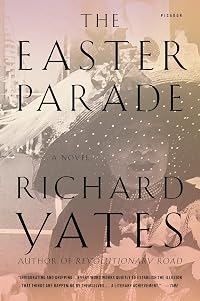
The Easter Parade
by Richard Yates
On This Page
Description
In The Easter Parade, first published in 1976, we meet sisters Sarah and Emily Grimes when they are still the children of divorced parents. We observe the sisters over four decades, watching them grow into two very different women. Sarah is stable and stalwart, settling into an unhappy marriage. Emily is precocious and independent, struggling with one unsatisfactory love affair after another. Richard Yates's classic novel is about how both women struggle to overcome their tarnished family's show more past, and how both finally reach for some semblance of renewal. show lessTags
Recommendations


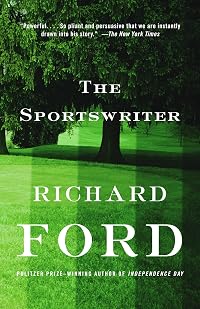
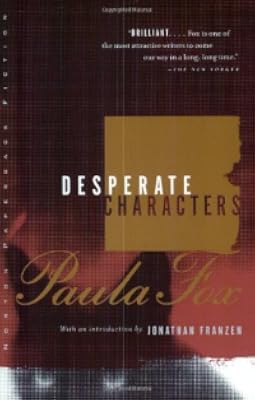
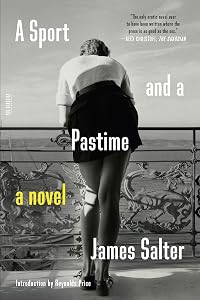
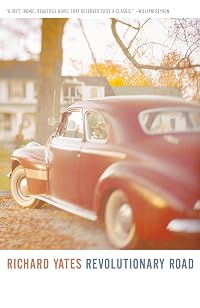
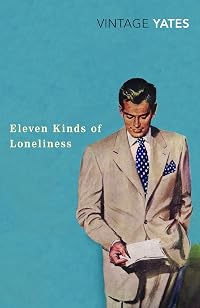
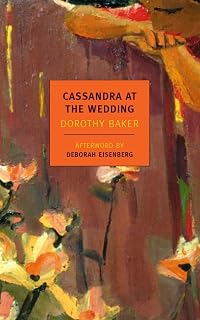
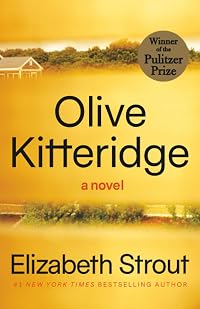
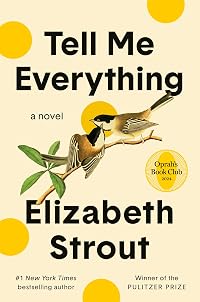
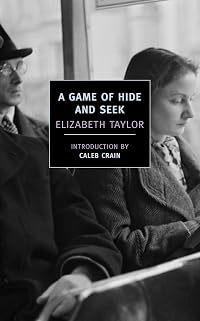



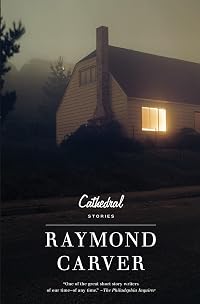
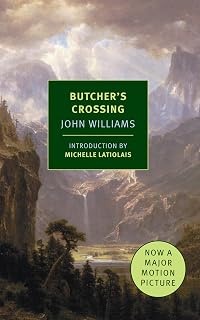
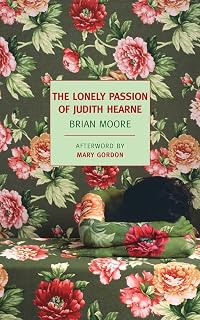
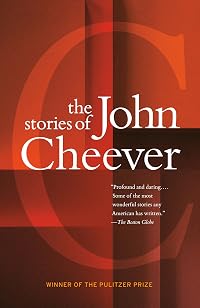
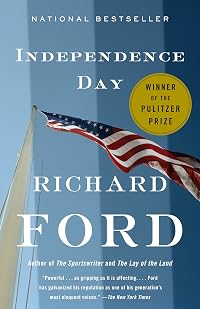

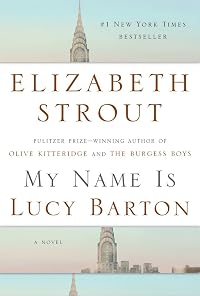
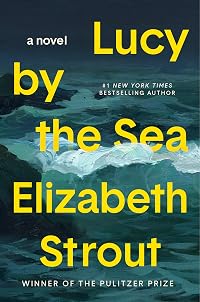
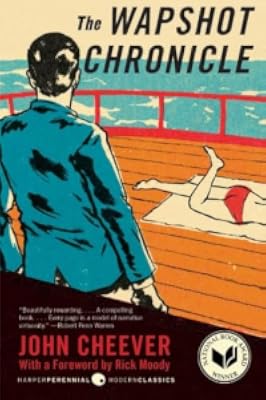
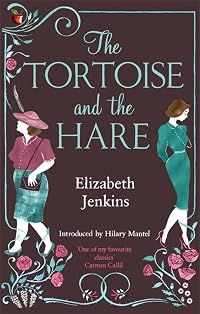
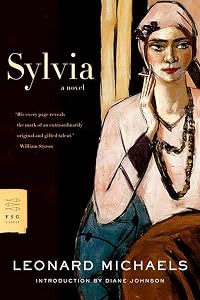
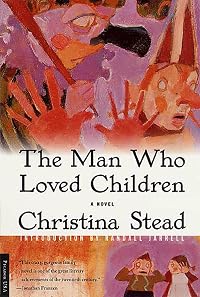
Member Recommendations

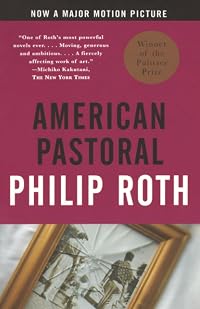
bluepiano One's a fat early 20th-century English novel and the other a spare modern American one but both recount the lives of two sisters, one of them settling into domesticity and the other going further afield to lead an apparently more eventful life. And more strikingly both books leave the reader with a great sense of sadness because both Bennett and Yates convey so overwhelming a sense of the transience and smallness of a life.
20
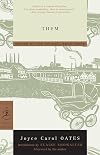
anonymous user A similar look at the unhappy lives of an American family during the same period (1930s through the 1960s.)
Member Reviews
Perhaps a more fitting title would be The Parade of Tragic Couplings or The Parade of Piteous Mediocrities and Facades, the novel succinctly covers over forty years of two sisters' lives in the span of two hundred pages through a whirlwind of mundanely significant snapshots of their relationships with others and each other. There is a lack of sympathy for the characters due to the fast pace of each recounted episode but the clinical dissection of the feelings was still fascinating and engrossing. I loved how flawed every character was, no gender gets a preferential treatment, everybody was equally awful. Every woman should read him if only to make a list of all the men you should never be in a relationship with. Recommended for fans of show more midcentury American malaise, like Betty's arc in the first few seasons of Mad Men.
Aside: I thought the eponymous photo would shine more of thematic spotlight over the idea of façades but ends up shining more on the rushed nature of Yates' style here: he'll mostly just throw them all out at you, "You deal with that, I'm too busy running ahead with my other ideas to do more with it." show less
Aside: I thought the eponymous photo would shine more of thematic spotlight over the idea of façades but ends up shining more on the rushed nature of Yates' style here: he'll mostly just throw them all out at you, "You deal with that, I'm too busy running ahead with my other ideas to do more with it." show less
This is my second Yates book, and I'm delighted to say I loved it every bit as much as Revolutionary Road, if not more. I don't know what it is about Yates, but I just love, love, LOVE his writing. I also enjoy Updike who writes in a similar sort of style, but I think Yates is a little softer around the edges and his prose is tighter.
Easter Parade tells the story of 2 sisters as they grow up, both leading dysfunctional lives but in very different ways. One conforms to the steady path of marriage and children, and is hell-bent on keeping to that road even though she pays a terrible price for it. The younger sister goes the other way - a career girl with many lovers, she also struggles to find happiness but for very different reasons.
If show more circumstances had allowed I could have easily devoured this in one sitting without ever stopping. Yates' stories are always melancholy, but I fall in love with his vivid, damaged characters every time, and his writing never loses pace. I find myself racing towards the end but hoping I don't quite get there for a little while longer.
It just has to be 5 stars. What can I say - I love this guy's books.
I will have to space out his remaining books or I will cry when I get to the last one. show less
Easter Parade tells the story of 2 sisters as they grow up, both leading dysfunctional lives but in very different ways. One conforms to the steady path of marriage and children, and is hell-bent on keeping to that road even though she pays a terrible price for it. The younger sister goes the other way - a career girl with many lovers, she also struggles to find happiness but for very different reasons.
If show more circumstances had allowed I could have easily devoured this in one sitting without ever stopping. Yates' stories are always melancholy, but I fall in love with his vivid, damaged characters every time, and his writing never loses pace. I find myself racing towards the end but hoping I don't quite get there for a little while longer.
It just has to be 5 stars. What can I say - I love this guy's books.
I will have to space out his remaining books or I will cry when I get to the last one. show less
While undeniably a brilliantly written book, The Easter Parade offered what felt like constant whiffs of misogyny that I had trouble getting past. I did not feel this when reading Revolutionary Road, despite the fact that awful things also happen to the female protagonist in that book (so it doesn't have anything to do with the events of the story, more the tone in which they were occasionally rendered).
The characters of Emily and Sarah were both so vividly shown using spare and unflinching prose, of which Yates was an unquestionable master. The threads of sadness and failure in this novel are timeless. However, it felt deeply dated and disturbing in ways that were, I think, unintentional. (I'm totally fine with the intentionally show more disturbing parts, BTW. It's just hard to take this novel at face value as a 21st century feminist.) Reminiscent of Updike and Cheever. show less
The characters of Emily and Sarah were both so vividly shown using spare and unflinching prose, of which Yates was an unquestionable master. The threads of sadness and failure in this novel are timeless. However, it felt deeply dated and disturbing in ways that were, I think, unintentional. (I'm totally fine with the intentionally show more disturbing parts, BTW. It's just hard to take this novel at face value as a 21st century feminist.) Reminiscent of Updike and Cheever. show less
Richard Yates' The Easter Parade follows the very lives of the two Grimes sisters--Emily, the divorced career woman, and Sarah, the suburban housewife. Yates is, at least, upfront about what to expect, beginning his tale with the warning that "Neither of the Grimes sisters would have a happy life," and he certainlly fulfills that promise. Emily drifts from one affair to the next, successful in her career but unsuccessful in love (and happiness), while Sarah is anchored in an unhappy marriage. Both women, like their ineffective mother before them, eventually drown their unhappiness in a sea of alcohol.
Emily, the main focus of the story, has broken out of the traditional female mold, and is so severely punished for her life choices that show more It is tempting to call Yates anti-feminist. However, Sarah, the little housewife, fares no better. Yates also gets called out for his misogyny, but really his men tend to be no better, and no happier, than his women. The Easter Parade is dark, sad, and hopeless, but while I walked away from it needing a shower to wash the despair away, I would still recommend it. Yates' writing is spare and truthful, and it packs a powerful punch. show less
Emily, the main focus of the story, has broken out of the traditional female mold, and is so severely punished for her life choices that show more It is tempting to call Yates anti-feminist. However, Sarah, the little housewife, fares no better. Yates also gets called out for his misogyny, but really his men tend to be no better, and no happier, than his women. The Easter Parade is dark, sad, and hopeless, but while I walked away from it needing a shower to wash the despair away, I would still recommend it. Yates' writing is spare and truthful, and it packs a powerful punch. show less
 This review was written for LibraryThing Early Reviewers.
Sarah and Emily are sisters. Yates takes us from their childhood through their middle age. He tells us in the first sentence that their lives are not easy. It's a damned if you do, damned if you don't, the choice women have to make. A traditional devoted marriage, or not getting trapped. It's gritty reality throughout, mostly the New York City region, from the 1930s through the 1960s.
The plot of this story is heartbreaking. I demanded to be let into the mind of the protagonist, but the author keeps the reader at a distance. This distance really captures the issue of identity for the character and her relationship with herself, her sister, her partners, the world. She lives at a particular distance from everything--and at great cost to happiness. Perhaps the author only intended to tell the story as it unfolded without judgement, which indeed happens. But this kind of distance added, for me, a layer of dissociative tendencies marked by childhood trauma. And for that, it was very well done.
This older finely-written novel, originally published in 1976, is outstandingly depressing and tells about two girls growing up in a extremely troubled family. After one sister dies, the surviving (more together) sister observes: "Yes, I'm tired," she said. "And do you known a funny thing? I'm almost fifty years old and I've never understood anything in my whole life."
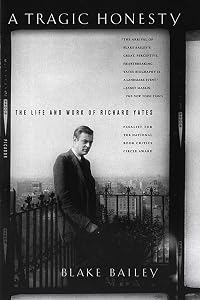
Richard Yates is known best for his novel Revolutionary Road -- the film version starred Leonardo DiCaprio and Kate Winslet. He is also known for being a dark man himself, one who lead a very troubled life of his own. I read Blake Bailey's biography of Yates, A Tragic Honesty, years ago, and it became so obvious that he was writing what he knew. The troubled, mostly show more middle-class, constantly drinking and smoking people that filled his books lived in the Yate's world.
The two sisters in the book are very distinctive, and their lives take them in very different directions. The writing seems simple and direct, as Yates describes the decisions they each make, but there is a brutal side to the book when he reveals the heartache and the violence around the suburban sister, Sarah, and her unhappy marriage. Her sister, Emily is a much more independent woman, always worked in the city, and had many lovers and relationships, but her life has many problems of its own.
The storyline still swirls around in my mind. It took me many years to finally read this novel, and I agree with Joan Didion, when she declared it to be her favorite Yate's novel. His fiction is painful to read, but the writing always reveals itself to be so well crafted and worth it.
_____ show less
Richard Yates is known best for his novel Revolutionary Road -- the film version starred Leonardo DiCaprio and Kate Winslet. He is also known for being a dark man himself, one who lead a very troubled life of his own. I read Blake Bailey's biography of Yates, A Tragic Honesty, years ago, and it became so obvious that he was writing what he knew. The troubled, mostly show more middle-class, constantly drinking and smoking people that filled his books lived in the Yate's world.
The two sisters in the book are very distinctive, and their lives take them in very different directions. The writing seems simple and direct, as Yates describes the decisions they each make, but there is a brutal side to the book when he reveals the heartache and the violence around the suburban sister, Sarah, and her unhappy marriage. Her sister, Emily is a much more independent woman, always worked in the city, and had many lovers and relationships, but her life has many problems of its own.
The storyline still swirls around in my mind. It took me many years to finally read this novel, and I agree with Joan Didion, when she declared it to be her favorite Yate's novel. His fiction is painful to read, but the writing always reveals itself to be so well crafted and worth it.
_____ show less
Members
- Recently Added By
Lists

The American novels that should have won the Booker prize
16 works; 3 members

Undiscovered Classics to Read
70 works; 15 members
Author Information

46+ Works 12,600 Members
Richard Yates is the author of the novels "Revolutionary Road", "A Special Providence", "Disturbing the Peace", "The Easter Parade", "A Good School", "Young Hearts Crying", & "Cold Spring Harbor". He died in 1992. (Bowker Author Biography) Richard Yates was born in Yonkers, New York in 1926. Yates was a well-known American novelist and short-story show more writer. Yates first became interested in writing and journalism while attending Avon Old Farms School in Avon, Connecticut. After Yates' return from France and Germany after serving in the army, he worked as a journalist, publicity writer, and freelance ghost writer. It was not until 1961 that his career as a novelist was officially launched with the publication of his first novel, Revolutionary Road. Revolutionary Road was a finalist for the National Book Award and was subsequently made into a movie in 2008. Yates also taught writing at several universities and institutions including Columbia University, Boston University, Wichita State University, and the University of Southern California Master of Professional Writing Program. Yates was divorced twice and has three daughters: Sharon, Monica, and Gina. He died in 1992 in Birmingham, Alabama of emphysema and complications from a minor surgery. show less
Some Editions
Awards and Honors
Awards
Series
Belongs to Publisher Series
Minimum Fax Classics (26)
A tot vent (506)
Work Relationships
Common Knowledge
- Canonical title
- The Easter Parade
- Original title
- The Easter Parade
- Original publication date
- 1976
- People/Characters
- Emily Grimes; Sarah Grimes
- Important places
- New York, New York, USA
- Dedication
- To Gina Catherine
- First words
- Neither of the Grimes sisters would have a happy life, and looking back it always seemed that the trouble began with their parents' divorce.
- Last words
- (Click to show. Warning: May contain spoilers.)"All right, Aunt Emmy. Now, would you like to come and meet the family?"
- Blurbers
- McMurtry, Larry; O'Nan, Stewart; Didion, Joan; Richler, Mordecai; Hornby, Nick; Atkinson, Kate (show all 7); Faulks, Sebastian
- Original language*
- Inglese
*Some information comes from Common Knowledge in other languages. Click "Edit" for more information.
Classifications
Statistics
- Members
- 1,328
- Popularity
- 18,153
- Reviews
- 59
- Rating
- (4.03)
- Languages
- 12 — Catalan, Danish, Dutch, English, French, German, Italian, Norwegian (Bokmål), Polish, Portuguese, Spanish, Swedish
- Media
- Paper, Audiobook, Ebook
- ISBNs
- 39
- ASINs
- 12
