On This Page
Description
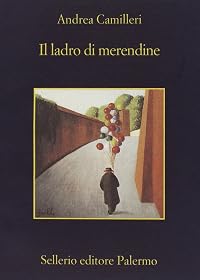
When an elderly man is stabbed to death in an elevator and a crewman on an Italian fishing trawler is machine-gunned by a Tunisian patrol boat off Sicily's coast, only Inspector Montalbano, with his keen insight into human nature, suspects the link between the two incidents. His investigation leads to the beautiful Karima, an impoverished housecleaner and occasional prostitute, whose young son steals other schoolchildren's midmorning snacks. But Karima disappears, and the young snack thief's show more life, as well as Montalbano's, is endangered when the inspector exposes a viper's nest of government corruption and international intrigue. show lessTags
Recommendations












Member Reviews
The Snack Thief by Andrea Camilleri is the third book in his Inspector Monalbano Mystery series. In this book, the character of Inspector Montalbano is clearly defined and although he can be quite childish and selfish at times, he takes a step toward adulthood at the end of the book which is making me eager to pick up the next volume. These books still delight me with their sharp humor and strong sense of place. Sicily comes alive on these pages, and the descriptions of food that the author includes has me booking a reservation at my favorite Italian restaurant!
Great characters and dialogue move the story along at a rapid pace. The Snack Thief has Montalbano investigating both the death of an elderly man in an elevator and the shooting show more of a Tunisian man on a fishing boat. Eventually he realizes these cases are connected and, in doing so, runs afoul of a certain branch of government.
I read in the notes that the translator of these books, Stephen Sartarelli is a New York poet, and he deserves a great deal of praise for retaining the fluent style and farcical manner that the author originally gave these books. show less
Great characters and dialogue move the story along at a rapid pace. The Snack Thief has Montalbano investigating both the death of an elderly man in an elevator and the shooting show more of a Tunisian man on a fishing boat. Eventually he realizes these cases are connected and, in doing so, runs afoul of a certain branch of government.
I read in the notes that the translator of these books, Stephen Sartarelli is a New York poet, and he deserves a great deal of praise for retaining the fluent style and farcical manner that the author originally gave these books. show less
Inspector Montalbano is my kind of guy. He loves food, to the point of intellectualizing food. He does not suffer the fool lightly, in fact he delights in insulting the fools that surround him. He has a rather devout and unique sense of justice and morality. He is one of the great characters in mysteries. This is the third book on Andrea Camilleri's sardonic and witty series set in Sicily and it is the best of the three that I have read. I like to read them in series so that I can see the character grow. This book seems like the previous two except that the orneriness of Inspector Montalbano is coming out in greater volumes. His complaints are louder and more vehemant, his patiences in shorter supply, and his judgment a little more show more flawed.
The story is about two seemingly unrelated murders which eventually, of course, become inextricably intertwined. One is the murder of an elderly gentlemen, stabbed to death in his building elevator. The other is a Tunisian sailor shot to death by the Tunisians themselves. The mechanics of solving a crime in modern day Sicily is described in delicious details, written in the voice of a true skeptic.
The plot of the story meanders along languorously in typical Camilleri style until a number of things all come together. The result of which is a philosophical and emotional series of moments for Inspector Montalbano, something wholly unexpected of Camilleri and his character because Salvo Montalbano has played the spectator all along in this series, we do not expect him to show his true self, but circumstances pushes him forward to confront his life, his future, his love, and why he is. I don't want to make this sound like an angst ridden novella, it isn't. It is a barely cracked window into the soul of the character, a window that is surreptitiously opened for the briefest moment to let the air and sun in, just to give us a peek at the inner workings of the character.
This is ususally a dangerous yet intriguing decision for an author for he is now forever saddled with a psychosis he himself created while he is also given himself a means to explore many different things.
I am hoping that Camilleri takes advantage of this trap that he set for himself and make the best of it, which means that I just got started on the next book in the series, just to find out what will happen next.
The Snack Thief is a nice bridge from the beginning: The Shape of Water and The Terra Cotta Dog, into a greater unknown, we hope. show less
The story is about two seemingly unrelated murders which eventually, of course, become inextricably intertwined. One is the murder of an elderly gentlemen, stabbed to death in his building elevator. The other is a Tunisian sailor shot to death by the Tunisians themselves. The mechanics of solving a crime in modern day Sicily is described in delicious details, written in the voice of a true skeptic.
The plot of the story meanders along languorously in typical Camilleri style until a number of things all come together. The result of which is a philosophical and emotional series of moments for Inspector Montalbano, something wholly unexpected of Camilleri and his character because Salvo Montalbano has played the spectator all along in this series, we do not expect him to show his true self, but circumstances pushes him forward to confront his life, his future, his love, and why he is. I don't want to make this sound like an angst ridden novella, it isn't. It is a barely cracked window into the soul of the character, a window that is surreptitiously opened for the briefest moment to let the air and sun in, just to give us a peek at the inner workings of the character.
This is ususally a dangerous yet intriguing decision for an author for he is now forever saddled with a psychosis he himself created while he is also given himself a means to explore many different things.
I am hoping that Camilleri takes advantage of this trap that he set for himself and make the best of it, which means that I just got started on the next book in the series, just to find out what will happen next.
The Snack Thief is a nice bridge from the beginning: The Shape of Water and The Terra Cotta Dog, into a greater unknown, we hope. show less
Ambiguity is a highly valued and well-tolerated state in Italy. (Likewise Japan.) It makes so much of the insane, illogical world the Italians have created and laughingly called a "government" and a "social fabric" function, this ability to be more than one thing at one time.
Immigrants, seldom from high ambiguity-tolerant climes, screw things up mightily. Karima certainly does, that Tunisian house cleaner-cum-sex worker. She thinks she's moved to a place away from the stark complexities she comes from in Tunisia, and instead ends up at the center of an only-in-Sicily clusterfuck that had me fearing for Montalbano's life, sanity, and love relationship.
I don't fear for his waistline or his palate. Yet again, he swims and savors his way show more through the book. The food descriptions! *sigh* I wish I could eat Adelina the housekeeper's roulades of bream. I long for the koftas that the Mazarase chef reinvents after a visitation from the Virgin Mary while he was in prison. The sheer sensual glory of Camilleri's Sicily makes a hungry gourmand into a ravening beast. Jean Anthelme Brillat-Savarin's The Physiology of Taste has not one thing on this series for sheer torture of the tastebuds.
In the end, Karima's story, which of course is so much larger than we first imagine it to be, resolves itself with losses and gains all around...death, of course, but also the slow, steady taking away that growing older in a life well lived requires us to accept and endure; the inevitable time-caused losses; but the surprises of joy and courage buoy up the other end of that cork in the wine-barrel of living emotion.
And really, in the end, isn't that what reading books is about? Experiencing living emotion, only at a safe remove; pre-feeling our feelings, or re-feeling them, in safety and without the need to explain or the desire to complain. Storytelling is, for this among many reasons, a brilliant use of language, no matter that the story told has been told before. Camilleri says as much, explicitly, on page 37: "There is no Sicilian woman alive, of any class, aristocrat or peasant, who, after her fiftieth birthday, isn't always expecting the worst. What kind of worst? Any, so long as it's the worst."
Word, as the kids of today used to say before we figured it out. show less
Immigrants, seldom from high ambiguity-tolerant climes, screw things up mightily. Karima certainly does, that Tunisian house cleaner-cum-sex worker. She thinks she's moved to a place away from the stark complexities she comes from in Tunisia, and instead ends up at the center of an only-in-Sicily clusterfuck that had me fearing for Montalbano's life, sanity, and love relationship.
I don't fear for his waistline or his palate. Yet again, he swims and savors his way show more through the book. The food descriptions! *sigh* I wish I could eat Adelina the housekeeper's roulades of bream. I long for the koftas that the Mazarase chef reinvents after a visitation from the Virgin Mary while he was in prison. The sheer sensual glory of Camilleri's Sicily makes a hungry gourmand into a ravening beast. Jean Anthelme Brillat-Savarin's The Physiology of Taste has not one thing on this series for sheer torture of the tastebuds.
In the end, Karima's story, which of course is so much larger than we first imagine it to be, resolves itself with losses and gains all around...death, of course, but also the slow, steady taking away that growing older in a life well lived requires us to accept and endure; the inevitable time-caused losses; but the surprises of joy and courage buoy up the other end of that cork in the wine-barrel of living emotion.
And really, in the end, isn't that what reading books is about? Experiencing living emotion, only at a safe remove; pre-feeling our feelings, or re-feeling them, in safety and without the need to explain or the desire to complain. Storytelling is, for this among many reasons, a brilliant use of language, no matter that the story told has been told before. Camilleri says as much, explicitly, on page 37: "There is no Sicilian woman alive, of any class, aristocrat or peasant, who, after her fiftieth birthday, isn't always expecting the worst. What kind of worst? Any, so long as it's the worst."
Word, as the kids of today used to say before we figured it out. show less
Another great installment but I had some interesting mixed reactions as I was listening to this one. Previous stories have shown Montalbano's more playful sardonic side, as he playfully takes stabs at his work colleagues and the individuals he encounters. In this story, we see a rather nasty sarcastic side of our beloved Inspector. Even food is not the balm to temper his attitude so I started to get rather offended with how he pretty much jumped down everyone's throats, even his lady love, Livia. I will give Camilleri credit. He has given Montalbano a female love interest that is prepared to call him an "a**hole" to his face when he is acting up. Even his work colleagues call him the spade that he is acting like and ask "What gives?" so show more I let my emotions simmer down and decided to settle in and enjoy the story, which proves to be another one of those crime cases that shows how bureaucracy and corruption can make a crime seem like a walk in the park, in comparison. The story does go on to shed further insight into Montalbano's personality - including his jealous side - and I am seeing a very complex, intelligent character underneath all that bluff, gruff and single-minded food lover we have seen in the first two books in the series. As with any series, some interesting curve balls from some of the reoccurring characters made this another delightful audiobook read for me. show less
As Inspector Montalbano and his colleagues investigate the murder of a retired businessman, their case converges with another jurisdiction's investigation into the death of a Tunisian fisherman. The common thread seems to be a Tunisian prostitute whose young son, left to fend for himself, has taken to stealing other children's snacks. Montalbano enlists the aid of his partner Livia in first questioning the child and then caring for him while the police search for his missing mother. Montalbano's concern for the boy's safety grows as he discovers more about the circumstances of his mother's disappearance.
The Montalbano books have a very strong sense of place in the fictional Vigata on Sicily. Montalbano enjoys his food, and its show more descriptions will leave most readers (or listeners, as the case may be) with mouths watering. Moments of laugh-out-loud humor provide balance for some very dark crimes and evil villains. Montalbano seemed more irritable than I remember from the first two books in the series. He comes across as self-absorbed and stingy with his affections. My sympathies were with Livia this time around. show less
The Montalbano books have a very strong sense of place in the fictional Vigata on Sicily. Montalbano enjoys his food, and its show more descriptions will leave most readers (or listeners, as the case may be) with mouths watering. Moments of laugh-out-loud humor provide balance for some very dark crimes and evil villains. Montalbano seemed more irritable than I remember from the first two books in the series. He comes across as self-absorbed and stingy with his affections. My sympathies were with Livia this time around. show less
3 in the Salvo Montalbano Italian police procedural series. Once again Salvo manages to be offensive to almost everyone while investigating the murder of an elderly man in an elevator. When he learns it is (at least peripherally) related to an international case in which a man was shot on a fishing boat, he’s like a pit bull that won’t let go as he manipulates the stupid secret service and his superiors into dropping the answers he needs into his lap. Also with some serious personal conflicts and things to go through, Salvo spends time soul searching and consuming various gustatory delights along the way as well. Enjoyable as always—don’t know how such an ornery cuss manages to be so likable, but like him I do!
Un crimen aparentemente simple se cruza con las consecuencias del ametrallamiento de un barco en un momento de tensión en la vida de Montalbano. Todo ello condimentado con momentos gastronómicos que abren el apetito. Buenas tramas con misterios bien enlazados y resueltos y muy buen trabajo en el desarrollo del protagonista y su entorno.
Members
- Recently Added By
Lists

Italian Literature
556 works; 41 members
Author Information

424+ Works 41,971 Members
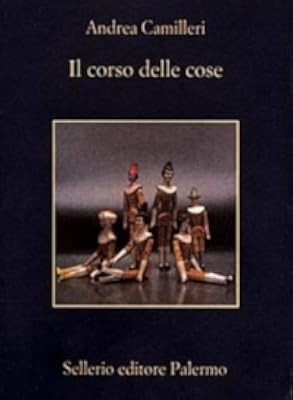
Andrea Camilleri lives in Italy. Andrea Camilleri was born in Porto Empedocle, Sicily on September 6, 1925. He began his studies at Faculty of Literature in 1944 but never finished. He started to publish poems and short stories. He studied stage and film direction at the Silvio D'Amico Academy of Dramatic Arts from 1948 to 1950 and soon began work show more as a director and screen writer. Andrea Camilleri worked on several TV productions such as Inspector Maigret wirh Gino Cervi. In 1971 he returned to the Academy of Dramatic Arts holding the chair of Movie Direction and keeping it for 20 years. In 1978 he wrote his first novel - The Way Things Go which was followed by A Thread of Smoke in 1980. In 1992 he published The Hunting Season which turned out to be a best seller. In 1994 Andrea Camilleri published the first in a long series of novels - The Shape of Water which features the character Inspector Montalbano - a ficticious Sicilian detective in the police force of Vigata, an imaginary Sicilian town. The TV adaption of this book took off in popularity and Andrea Camilleri's home town was renamed Porto Empedocle Vigata. In 1998 he won the Nino Mortoglio International Book Award. He received an honorary degree from the University of Pisa in 2005. Camilleri has worked as a television and theater director, as well as a screenwriter. In 1978 he wrote his first novel, Il Corso delle Cose. The Montalbano series, featuring the Sicilian detective Inspector Montalbano, is Camilleri's most famous work of fiction, and it has been adapted into a television series. Camilleri had written a few historical novels when, in 1994, he wrote The Shape of Water, the first book starring a Sicilian detective based in the fictional town of Vigata. Camilleri won the Nino Martoglio International Book Award in 1998. He is considered to be one of Italy's greatest contemporary writers. Andrea Camilleri passed away on July 17, 2019 at the age of 93. (Bowker Author Biography) show less
Some Editions
Awards and Honors
Notable Lists
Series

Belongs to Publisher Series
BLT (92076)
La memoria [Sellerio] (374)
Work Relationships
Is contained in
Common Knowledge
- Canonical title
- The Snack Thief
- Original title
- Il ladro di merendine
- Original publication date
- 1996 (original Italian) (original Italian); 2003 (English: Sartarelli) (English: Sartarelli)
- People/Characters
- Salvo Montalbano; Mimi Augello; Livia; Fazio; Catarella
- Important places
- Vigàta, Sicily, Italy
- Related movies
- Il commissario Montalbano (1999 | IMDb)
- Dedication
- (From the Author's Note):
"The novel is dedicated to Flem. He liked stories like this." - First words
- He woke up in a bad way.
(translated by Stephen Sartarelli, 2003)
S’arrisbigliò malamente: i linzòla, nel sudatizzo del sonno agitato per via del chilo e mezzo di sarde a beccafico che la sera avanti si era sbafàto, gli si erano strettamente arruvugliate torno torno il corpo, gli parse... (show all) d’essere addiventato una mummia. - Last words
- (Click to show. Warning: May contain spoilers.)But it wasn't him the inspector was thanking.
(trans. Sartarelli, 2003)
(Click to show. Warning: May contain spoilers.)Ma il commissario non stava ringraziando lui. - Publisher's editor*
- La Butxaca
- Original language
- Italian
*Some information comes from Common Knowledge in other languages. Click "Edit" for more information.
Classifications
- Genres
- Fiction and Literature, Mystery
- DDC/MDS
- 853.914 — Literature & rhetoric Italian, Romanian & related literatures Italian fiction 1900- 20th Century 1945-1999
- LCC
- PQ4863 .A3894 .L3313 — Language and Literature French, Italian, Spanish and Portuguese literatures Italian literature Individual authors, 1961-2000
- BISAC
Statistics
- Members
- 1,806
- Popularity
- 12,023
- Reviews
- 67
- Rating
- (3.85)
- Languages
- 17 — Catalan, Danish, Dutch, English, Finnish, French, German, Greek, Hungarian, Italian, Japanese, Lithuanian, Polish, Russian, Slovenian, Spanish, Portuguese (Brazil)
- Media
- Paper, Audiobook, Ebook
- ISBNs
- 75
- ASINs
- 13