On This Page
Description
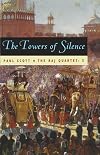
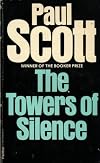
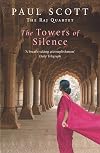
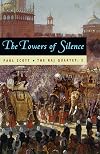
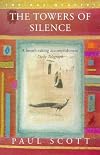
India, 1943: In a regimental hill station, the ladies of Pankot struggle to preserve the genteel façade of British society amid the debris of a vanishing empire and World War II. A retired missionary, Barbara Batchelor, bears witness to the connections between many human dramas; the love between Daphne Manner and Hari Kumar; the desperate grief an old teacher feels for an India she cannot rescue; and the cruelty of Captain Ronald Merrick, Susan Layton's future husband.Tags
Recommendations



























Member Reviews
"Nothing can bring you peace but yourself. Nothing can bring you peace but the triumph of principles."
This is the third instalment of the "Raj Quartet," and again the ripples from the incidents at the core of "The Jewel in the Crown." are still being felt.
We were introduced to Barbie Batchelor in the previous book but there she was but a small bit part player, here she takes centre stage. Barbie is a former missionary teacher who on retirement moves into Rose Cottage in Pankot with the Layton's step-grandmother-in-law Mabel. Many in Pankot were shocked that Barbie should have moved in with Mabel rather than the latter's daughter-in-law,Mildred, and her two daughters but despite some dark mutterings nothing was said. Mabel and Barbie show more live a quiet rather insular life away from the hustle and bustle of the encampment but Barbie is still generally disliked in particular by Mildred and her daughter Susan, whilst the other daughter Sarah is friendly towards her.
Pankot was largely untouched by the trouble that broke out in Mayapore after the incidents concerning Daphne Manners and Edwina Crane, its residents instead having to rely on rumour and second hand news for its information but Barbie comes to some prominence when she reveals that she knew her fellow missionary, Edwina Crane.
In this novel the reader learns about the courtship of Susan and Teddie and the events that led up to Ronald Merrick, the police inspector at the centre of the Mayapore incident, becoming Teddie's best man. However, central to this book are the parallels between the two ex-missionaries Barbie and Edwina, their gradual decline of confidence in the evangelical rationale of their calling and the loneliness of the British once their work in India comes to an end, in particular as the Second World War also heads towards its conclusion.
Teddie's reaction to Merrick's talk about the Indian National Army which allies against the British with the Japanese makes for interesting reading and rather oddly the meaning behind the previous novel's title is revealed but as with the previous books in this series there is little action here. Instead its strength lies in conversational shifts and character revelations, many of them taking place in Rose Cottage.
This book does its job in advancing the timeline towards the end the war, even if these events remain distant. However, this was also my least favourite so far. In many its disturbing depiction of the breakdown of belief and of order, as a Britain, makes this an unsettling read but I believe that the author attempts to link Barbie's decline with that of the empire and its crown jewel felt, especially considering what had gone before, a bit simplistic and strangely heavy handed. I must admit that the lack of new action was also beginning to frustrate me. On with the final book in the series, here's hoping it goes out with a bang. show less
This is the third instalment of the "Raj Quartet," and again the ripples from the incidents at the core of "The Jewel in the Crown." are still being felt.
We were introduced to Barbie Batchelor in the previous book but there she was but a small bit part player, here she takes centre stage. Barbie is a former missionary teacher who on retirement moves into Rose Cottage in Pankot with the Layton's step-grandmother-in-law Mabel. Many in Pankot were shocked that Barbie should have moved in with Mabel rather than the latter's daughter-in-law,Mildred, and her two daughters but despite some dark mutterings nothing was said. Mabel and Barbie show more live a quiet rather insular life away from the hustle and bustle of the encampment but Barbie is still generally disliked in particular by Mildred and her daughter Susan, whilst the other daughter Sarah is friendly towards her.
Pankot was largely untouched by the trouble that broke out in Mayapore after the incidents concerning Daphne Manners and Edwina Crane, its residents instead having to rely on rumour and second hand news for its information but Barbie comes to some prominence when she reveals that she knew her fellow missionary, Edwina Crane.
In this novel the reader learns about the courtship of Susan and Teddie and the events that led up to Ronald Merrick, the police inspector at the centre of the Mayapore incident, becoming Teddie's best man. However, central to this book are the parallels between the two ex-missionaries Barbie and Edwina, their gradual decline of confidence in the evangelical rationale of their calling and the loneliness of the British once their work in India comes to an end, in particular as the Second World War also heads towards its conclusion.
Teddie's reaction to Merrick's talk about the Indian National Army which allies against the British with the Japanese makes for interesting reading and rather oddly the meaning behind the previous novel's title is revealed but as with the previous books in this series there is little action here. Instead its strength lies in conversational shifts and character revelations, many of them taking place in Rose Cottage.
This book does its job in advancing the timeline towards the end the war, even if these events remain distant. However, this was also my least favourite so far. In many its disturbing depiction of the breakdown of belief and of order, as a Britain, makes this an unsettling read but I believe that the author attempts to link Barbie's decline with that of the empire and its crown jewel felt, especially considering what had gone before, a bit simplistic and strangely heavy handed. I must admit that the lack of new action was also beginning to frustrate me. On with the final book in the series, here's hoping it goes out with a bang. show less
So, once more we circle the events of the first two books. In this case the tale is told primarily from the perspective of Barbara Batchelor, the companion to Mable Layton. And this one is particularly sad. There is a great deal of discussion of faith, knowledge and certainty; the finding, loosing and discovery of all three. And positions change multiple times. All the while the Raj is apparently disintegrating before the eyes of those with wit to see it happening - and the contrast between those that d and those that can;t or wont is most marked. Sanity and state of mind also plays a large part in this, with various people appearing to be somewhat irrational or actually insane at various points in the book. It managed to be, in a way, show more the most personally moving of all the books so far, but I don;t think it would make any sense at all if you'd not read the preceding two books.
I find myself hoping for some form of resolution for at least some of the characters in the forth book, as they seem to be left dangling at the conclusion of this one. show less
I find myself hoping for some form of resolution for at least some of the characters in the forth book, as they seem to be left dangling at the conclusion of this one. show less
”A Dakhma, also called a Tower of Silence, is a circular, raised structure built by Zoroastrians for excarnation---that is, for dead bodies to be exposed to carrion birds, usually vultures.” ----From Wikipedia.
This third book of The Raj Quartet begins in 1939 when Barbie Batchelor’s shortcomings catch up with her and she is retired from the Mission that she has given her entire life to. She finds a place to live when Mildred Layton runs an ad in the Pankot paper advertising for a housemate. We have met both of these characters previously and really many of the events in the book are just a retelling of incidents that have been reported earlier. Most of the narrative takes place through Barbie’s point of view. And although this show more volume may be considered by some to be a rehash of what has already transpired, I found it to be just as compelling as the first two books.
Barbie is consumed by two deaths in particular; her friend Edwina Crane, who burned herself alive in 1942 in the first book and Mabel Layton’s eventual death in 1944. But really what Scott wants us to consider is the eventual death he is leading us up to: the death of The Raj. I cannot wait so see how he handles that in the fourth volume.
A great deal of the book is taken up by the doings of the women who are left behind in Pankot while their husbands are at the front. They are trying desperately to hang on to the world that they have become accustomed to. The most unusual tidbit I took away from their conversations is the length of time they would be away from their children. It would be unheard of today to go for four or five years without seeing your offspring but it was just an accepted part of this life.
But it’s death, both real and literal that this novel is concerned with. When we get to the end of the novel and Barbie has been consumed with watching the vultures gathered over the Dakhma for the Parsees she is asked by Sarah Layton if she doesn’t remember anything and Barbie thinks, ‘She remembered a great deal. But was unable to say what it was. The birds had picked the words clean.’
To say I’m blown away by Scott’s writing would be a complete understatement. His passages flow so beautifully that I caught myself holding my breath at times. I wish I hadn’t come to this series so late in life. I wonder how many times I would have reread it. Very highly recommended. show less
This third book of The Raj Quartet begins in 1939 when Barbie Batchelor’s shortcomings catch up with her and she is retired from the Mission that she has given her entire life to. She finds a place to live when Mildred Layton runs an ad in the Pankot paper advertising for a housemate. We have met both of these characters previously and really many of the events in the book are just a retelling of incidents that have been reported earlier. Most of the narrative takes place through Barbie’s point of view. And although this show more volume may be considered by some to be a rehash of what has already transpired, I found it to be just as compelling as the first two books.
Barbie is consumed by two deaths in particular; her friend Edwina Crane, who burned herself alive in 1942 in the first book and Mabel Layton’s eventual death in 1944. But really what Scott wants us to consider is the eventual death he is leading us up to: the death of The Raj. I cannot wait so see how he handles that in the fourth volume.
A great deal of the book is taken up by the doings of the women who are left behind in Pankot while their husbands are at the front. They are trying desperately to hang on to the world that they have become accustomed to. The most unusual tidbit I took away from their conversations is the length of time they would be away from their children. It would be unheard of today to go for four or five years without seeing your offspring but it was just an accepted part of this life.
But it’s death, both real and literal that this novel is concerned with. When we get to the end of the novel and Barbie has been consumed with watching the vultures gathered over the Dakhma for the Parsees she is asked by Sarah Layton if she doesn’t remember anything and Barbie thinks, ‘She remembered a great deal. But was unable to say what it was. The birds had picked the words clean.’
To say I’m blown away by Scott’s writing would be a complete understatement. His passages flow so beautifully that I caught myself holding my breath at times. I wish I hadn’t come to this series so late in life. I wonder how many times I would have reread it. Very highly recommended. show less
Installment number three in Paul Scott’s Indian quartet, The Towers of Silence is a heady and emotionally exacting read. Imagine my surprise when, instead of opening his next installment with the continuing story of Sarah Layton, Scott chooses to bring forward a rather minor character in the person of Barbara (Barbie) Bachelor. Of course, before we have reached the end of the novel, Bachelor is not a minor character at all, she is in fact a crux or hub around which what is happening in India can be observed with candor and some degree of understanding. She is, at the same moment, within the machine and outside it, and her presence represents more of the truth than many of her contemporaries can bear to acknowledge.
A retired show more missionary, Barbie has come to live as a paying guest with Mabel Layton, a recognized member of the military elite who has herself come to see India in a way that makes her question the life of the British raj and the disdain with which the Indian people have been and are treated. While Mabel can be accepted, because of her position, with whatever strange ideas she may entertain, the same cannot be said for Barbie, and it is the reactions of the other women as much as anything else that drives this story and tells us what ails the British in India.
As in the previous two novels of this series, Paul Scott has delved deeply and with precision into the wound that is festering in India. His ability to show all the ugliness, all the pomp and ostentation, alongside the uncomfortable realization that a way of life is ending and there is little that the participants can do but continue the play until the curtain falls, is masterful. With even the most reprehensible of his characters there is a touch of humanity that begs you to feel a twinge of pity for a life so misspent and deluded.
At the same time, there is nobility on display on both sides of the divide. Barbie Bachelor, I would say, represents a bit of that nobility and a great deal of courage. She faces some difficult truths, along with the slow erosion of her faith in God himself, and she perseveres nonetheless. Her good intentions and loyalty drive her sometime bizarre thoughts and actions. She is at everyone’s mercy and yet she is, without doubt, the most independent and genuine character in this group of lost souls.
Scott’s writing is rich in metaphor and symbolism, and I fear there is no way to catch every nuance or even grand design on a first reading. I found myself wishing to “go back” and read sections of the previous two novels, knowing that what seemed like a minor event in those books had taken on powerful and complicated meaning in this one. One example being the butterfly lace that Mabel owned--lace that was used to make a christening gown andbecomes a death shroud for Barbie Bachelor. Thanks to Jean, I was paying special attention to this symbol as it unfolded. The lace was made by a blind woman, we are told, and its intricacies are a bit of wonder for each of those who encounter it; the butterflies unseen unless the lace is moving. It stands perfectly for India, moving forward and unfolding into a new and unique entity, different from what it was before the Raj and different from what it has been under the Raj, but it also stands as a perfect metaphor for the individual life, unfolding as well and sometimes standing so still that it takes on the pallor of death. So many of these people are not moving forward anymore, they are stifled, waiting and not living in any significant meaning of the word.
The language and construction Scott employs is a thing of beauty. This is a history lesson, but there are no long, boring lecture notes here. The story moves effortlessly and the history is so much a part of the action that it melds into the story, piercing the consciousness almost unnoticed. I marked dozens of passages, hoping to sere them into my mind. One which struck me particularly had to do with the picture...the original picture “The Jewel in the Crown” with which we began this adventure:
’One should always share one’s hopes,’ she said. ‘That represents one of the unfulfilled ones. Oh, not the gold and scarlet uniforms, not the pomp, not the obeisance. We’ve had all that and plenty. We’ve had everything in the picture except what got left out.’
‘What was that, Miss Bachelor?’
She said, not wishing to use that emotive word, ‘I call it the unknown Indian. He isn’t there. So the picture isn’t finished.’
The British have had India, they have ruled it, they have used it, but they have never understood it and their greatest failure can be seen in the omission of the main component that should have mattered, the Indian himself.
I mused throughout the book about the significance of its title. The silence?Barbara is a chatterbox, but in the end, even before her death, she is silenced. And she considers the loss of her voice as being as significant to her as the loss of sight to an artist or hearing to a musician. I could not help thinking of the silence before a storm. Everyone is in denial about the changes they see coming and the voices of reason are muffled and unheeded. The moment of silence we so often observe in reverence or remembrance of a loss. The very personal moment of silence at the end:
She raised a questioning or admonitory finger, commanding just a short moment of silence for the tiny anticipated sound: the echo of her own life.
But, on a larger scale, the Towers of Silence are real. They are daunting and large and they loom in the distance, and Barbie sees them surrounded by birds that circle and swoop. The birds are vultures, and the towers belong to the Parsees...the Muslim Indians...and Scott has just foreshadowed his final chapter--India’s final chapter--The Division of the Spoils. show less
A retired show more missionary, Barbie has come to live as a paying guest with Mabel Layton, a recognized member of the military elite who has herself come to see India in a way that makes her question the life of the British raj and the disdain with which the Indian people have been and are treated. While Mabel can be accepted, because of her position, with whatever strange ideas she may entertain, the same cannot be said for Barbie, and it is the reactions of the other women as much as anything else that drives this story and tells us what ails the British in India.
As in the previous two novels of this series, Paul Scott has delved deeply and with precision into the wound that is festering in India. His ability to show all the ugliness, all the pomp and ostentation, alongside the uncomfortable realization that a way of life is ending and there is little that the participants can do but continue the play until the curtain falls, is masterful. With even the most reprehensible of his characters there is a touch of humanity that begs you to feel a twinge of pity for a life so misspent and deluded.
At the same time, there is nobility on display on both sides of the divide. Barbie Bachelor, I would say, represents a bit of that nobility and a great deal of courage. She faces some difficult truths, along with the slow erosion of her faith in God himself, and she perseveres nonetheless. Her good intentions and loyalty drive her sometime bizarre thoughts and actions. She is at everyone’s mercy and yet she is, without doubt, the most independent and genuine character in this group of lost souls.
Scott’s writing is rich in metaphor and symbolism, and I fear there is no way to catch every nuance or even grand design on a first reading. I found myself wishing to “go back” and read sections of the previous two novels, knowing that what seemed like a minor event in those books had taken on powerful and complicated meaning in this one. One example being the butterfly lace that Mabel owned--lace that was used to make a christening gown and
The language and construction Scott employs is a thing of beauty. This is a history lesson, but there are no long, boring lecture notes here. The story moves effortlessly and the history is so much a part of the action that it melds into the story, piercing the consciousness almost unnoticed. I marked dozens of passages, hoping to sere them into my mind. One which struck me particularly had to do with the picture...the original picture “The Jewel in the Crown” with which we began this adventure:
’One should always share one’s hopes,’ she said. ‘That represents one of the unfulfilled ones. Oh, not the gold and scarlet uniforms, not the pomp, not the obeisance. We’ve had all that and plenty. We’ve had everything in the picture except what got left out.’
‘What was that, Miss Bachelor?’
She said, not wishing to use that emotive word, ‘I call it the unknown Indian. He isn’t there. So the picture isn’t finished.’
The British have had India, they have ruled it, they have used it, but they have never understood it and their greatest failure can be seen in the omission of the main component that should have mattered, the Indian himself.
I mused throughout the book about the significance of its title. The silence?
She raised a questioning or admonitory finger, commanding just a short moment of silence for the tiny anticipated sound: the echo of her own life.
But, on a larger scale, the Towers of Silence are real. They are daunting and large and they loom in the distance, and Barbie sees them surrounded by birds that circle and swoop. The birds are vultures, and the towers belong to the Parsees...the Muslim Indians...and Scott has just foreshadowed his final chapter--India’s final chapter--The Division of the Spoils. show less
Paul Scott's series continues to provide me with succour for the miserable fact that there are no sequels to A Passage to India. I've stopped trying to look as hard as I would with Forster for something below the surface. Scott can be read and enjoyed pretty much as-is, but that's good enough for me. I like these portraits of social entanglements and cultural politics in this setting and the depth of character, even while the pacing lacks momentum and we've seen most of this before.
I don't know if I'll remember, looking back, why I marked this novel as above average. I don't think it will be especially memorable except in a vague sort of way, but the grade will be to remind me of the sheer pleasure I took in the reading. I very much show more like this author's style: the slow way he unrolls a scene or reveals a secret, a kind of langour luxuriated in like one would feel in the exhausting heat of India. The setting is brought into sharper focus through the style, and this atmosphere I experience as a reader makes the motivations of the characters feel perfectly clear and logical. They are a world, an era and a culture apart from me, yet I'm made to readily understand all that they do and be intrigued or even excited by their resolutions and slightest actions.
This is all to the good since three quarters of the novel is spent on covering old ground from new perspectives. It's been a while since I read "Day of the Scorpion", which led to a mixed situation: helpful reminders of what had gone before, but not always seeing what information was new. Barbara is a great central character for being so different on the inside from her exterior, and I fully sided with her in contrast to Mildred's airs and self-centered intolerance. Teddy's was a less inspired choice of perspective but his section is relatively short.
There's many references to death in this novel, as implied by the title, all of which seem a metaphor for the passing of the Raj into antiquity that everyone in this story senses coming. I wouldn't rank the entertainment value as better than average in standalone form, but within the Quartet's context this third piece ties together and summarizes all that has come before and definitively sets the tone for the imminent passing of an age.
(edit, July 2016: now looking back on the Quartet and Staying On, TToS is my favourite.) show less
I don't know if I'll remember, looking back, why I marked this novel as above average. I don't think it will be especially memorable except in a vague sort of way, but the grade will be to remind me of the sheer pleasure I took in the reading. I very much show more like this author's style: the slow way he unrolls a scene or reveals a secret, a kind of langour luxuriated in like one would feel in the exhausting heat of India. The setting is brought into sharper focus through the style, and this atmosphere I experience as a reader makes the motivations of the characters feel perfectly clear and logical. They are a world, an era and a culture apart from me, yet I'm made to readily understand all that they do and be intrigued or even excited by their resolutions and slightest actions.
This is all to the good since three quarters of the novel is spent on covering old ground from new perspectives. It's been a while since I read "Day of the Scorpion", which led to a mixed situation: helpful reminders of what had gone before, but not always seeing what information was new. Barbara is a great central character for being so different on the inside from her exterior, and I fully sided with her in contrast to Mildred's airs and self-centered intolerance. Teddy's was a less inspired choice of perspective but his section is relatively short.
There's many references to death in this novel, as implied by the title, all of which seem a metaphor for the passing of the Raj into antiquity that everyone in this story senses coming. I wouldn't rank the entertainment value as better than average in standalone form, but within the Quartet's context this third piece ties together and summarizes all that has come before and definitively sets the tone for the imminent passing of an age.
(edit, July 2016: now looking back on the Quartet and Staying On, TToS is my favourite.) show less
I can't believe this book has only six reviews on LibraryThing. Why aren't more people reading and talking about it? This is the third book in The Raj Quartet. It doesn't so much move the story along as it provides more details of the same story through the eyes of the impulsive Miss Barbara Batchelor, an English missionary teacher in India. Facing a lonely retirement, she accepts the challenge of moving to a different region and sharing a cottage with another woman. Mabel Layton welcomes her new boarder in her usual calm manner, but her step-daughter-in-law, Mildred, is not happy with the arrangement. Huh, kind of like the way the Indian population is not thrilled with the way the Raj takes over more and more of their country.
I really show more like the way Paul Scott uses the intimate stories of Colonial India to give a personalized look at what was happening in India in the 1940s. He throws in elements of spirituality, philosophy, and mysticism to further shroud the political situation only to slowly reveal the levels of mistrust. This is the slowest volume so far but I so enjoyed the characterization of the Cruella-DeVil-type villain Mildred, the female counterpart to the jealousy and cruelty of Robert Merrick, and the constant gossip and grasping for power among the military wives, that I didn't mind the rehashing of plot. There was a wedding, a birth, several deaths of major characters, insanity, and the constant worry of WWII in the background to hold the reader's attention. Scott details the incidentals of daily life while keeping an eye on the big picture. I am eager to see how he wraps up this complex package in the fourth and final installment. show less
I really show more like the way Paul Scott uses the intimate stories of Colonial India to give a personalized look at what was happening in India in the 1940s. He throws in elements of spirituality, philosophy, and mysticism to further shroud the political situation only to slowly reveal the levels of mistrust. This is the slowest volume so far but I so enjoyed the characterization of the Cruella-DeVil-type villain Mildred, the female counterpart to the jealousy and cruelty of Robert Merrick, and the constant gossip and grasping for power among the military wives, that I didn't mind the rehashing of plot. There was a wedding, a birth, several deaths of major characters, insanity, and the constant worry of WWII in the background to hold the reader's attention. Scott details the incidentals of daily life while keeping an eye on the big picture. I am eager to see how he wraps up this complex package in the fourth and final installment. show less
(22) The third book in this mesmerizing tale of the end of the British rule of India. These books are so fascinating because they do not move the story far into time but instead retrace much of the time from the last book but through a different optic. This book is primarily through the eyes of Barbie Batchelor, the retired mission teacher, who was Mabel Layton's paying guest. I believe we also get Mildred Layton's perspective as well which gives the reader more of a view into Susan as opposed to Sarah Layton who was the protagonist of the second book. We do also see the aftermath of Merrick's hospitalization as well as Sarah's visit to Calcutta - but not until the end.
This was a quieter book than the first three. I am not sure that it show more stands alone. I found Miss Batchelor to be such a sad character, so lonely and full of frustrated hopes - she was very well drawn but maybe not as intriguing as our previous protagonists. Scott's prose though is just excellent. Complex, but feels effortless. Evocative, but not flowery. Incredibly atmospheric such that I feel as if I have been living in stuffy Rose cottage in Pankot with the cloying scent of roses, mixed with mildew, and a bit of body odor for the last few weeks.
I would love to see Susan's son and Daphne's daughter as they grow up but I have a feeling we really won't get that. I am not quite ready to leave behind Hari Kumar or Sarah Layton so I hope the 4th book has more of those characters. This series really is in my opinion the best of literary fiction. I look forward to the last installment. show less
This was a quieter book than the first three. I am not sure that it show more stands alone. I found Miss Batchelor to be such a sad character, so lonely and full of frustrated hopes - she was very well drawn but maybe not as intriguing as our previous protagonists. Scott's prose though is just excellent. Complex, but feels effortless. Evocative, but not flowery. Incredibly atmospheric such that I feel as if I have been living in stuffy Rose cottage in Pankot with the cloying scent of roses, mixed with mildew, and a bit of body odor for the last few weeks.
I would love to see Susan's son and Daphne's daughter as they grow up but I have a feeling we really won't get that. I am not quite ready to leave behind Hari Kumar or Sarah Layton so I hope the 4th book has more of those characters. This series really is in my opinion the best of literary fiction. I look forward to the last installment. show less
Members
- Recently Added By
Lists

All Things India
95 works; 21 members

Folio Society
831 works; 53 members

Best books made into television
66 works; 4 members
Talk Discussions
Past Discussions
July Group Read: The Raj Quartet #3 - Towers of Silence in 2014 Category Challenge (July 2014)
Author Information

27+ Works 6,914 Members
Author Paul Scott was born in England on March 25, 1920. At the age of 16, he left the Winchmore Hill Collegiate School because of financial difficulties and started a career as an accountant. In 1940, he joined the army and was sent to India. After World War II, he worked as an accountant for two small publishing houses and then as a literary show more agent. In 1952, he published his first novel Johnny Sahib and in 1960, he decided to become a full-time author. He is best-known for his series the Raj Quartet and his novel Staying On won the 1977 Booker Prize. He also wrote reviews and was a visiting professor at the University of Tulsa in Oklahoma. He died on March 1, 1978. (Bowker Author Biography) show less
Awards and Honors
Notable Lists
Series

Belongs to Publisher Series
Work Relationships
Common Knowledge
- Canonical title
- The Towers of Silence
- Original publication date
- 1971
- People/Characters
- Barbara Batchelor (Barbie); Sarah Layton; Mabel Layton (Aunty Mabel); Mildred Layton (née Muir); Susan Layton (Susan Bingham); Ronald Merrick (Captain) (show all 18); Edward Bingham (Captain Edward Arthur David Bingham | Teddie); Count Dmitri Bronowsky; Mohammed Ali Kasim; Fenella Grace (née Muir | Aunt Fenny); Ethel Manners (Lady Manners); Kevin Coley (Captain); Hari Kumar; John Layton (Colonel); Arthur Grace (Major/Lieutenant Colonel | Uncle Arthur); Pandit Baba (Pandit B. N. V.); Captain Dicky Beauvais; Edgar Maybrick
- Important places
- India; Ranpur, India (fictional); Mayapore, India (fictional); Mirat, India (fictional); Premanagar, India (fictional); Muzzafirabad, India (fictional) (show all 8); Sundernagar, India (fictional); Nanoora Hills, India (fictional)
- Important events
- World War II
- Related movies
- The Jewel in the Crown (1984 | IMDb)
- Dedication
- To Penny With all my Love
- First words
- In September 1939, when the war had just begun, Miss Batchelor retired from her post as superintendent of the Protestant mission schools in the city of Ranpur.
- Quotations
- "He should have died in the rubble of Quetta. In most ways he did. The Lord alone knows for what purpose the remains are preserved."
Classifications
Statistics
- Members
- 915
- Popularity
- 29,308
- Reviews
- 17
- Rating
- (4.06)
- Languages
- 10 — Dutch, English, Finnish, French, German, Hungarian, Italian, Polish, Spanish, Swedish
- Media
- Paper, Audiobook, Ebook
- ISBNs
- 30
- ASINs
- 20