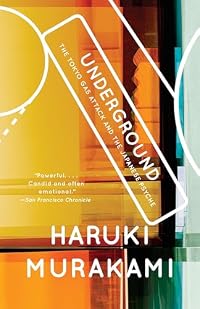
Underground: The Tokyo Gas Attack and the Japanese Psyche
by Haruki Murakami
On This Page
Description
In this haunting work of journalistic investigation, Haruki Murakami tells the story of the horrific terrorist attack on Japanese soil that shook the entire world.On a clear spring day in 1995, five members of a religious cult unleashed poison gas on the Tokyo subway system. In attempt to discover why, Haruki Murakmi talks to the people who lived through the catastrophe, and in so doing lays bare the Japanese psyche. As he discerns the fundamental issues that led to the attack, Murakami show more paints a clear vision of an event that could occur anytime, anywhere. show less
Tags
Recommendations





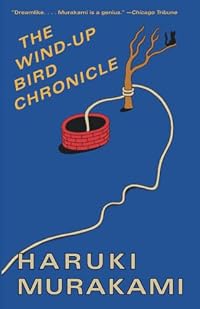


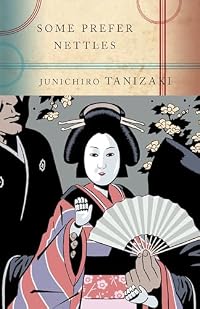



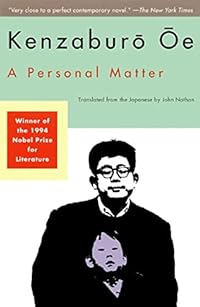
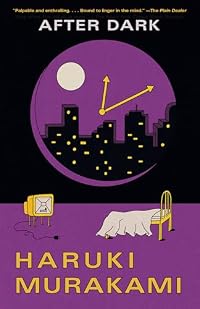






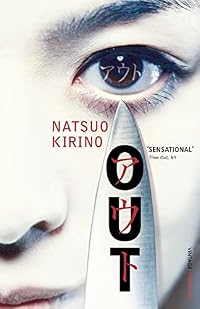

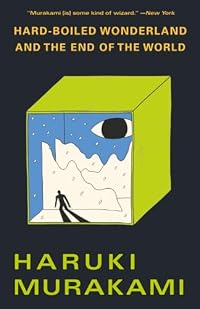
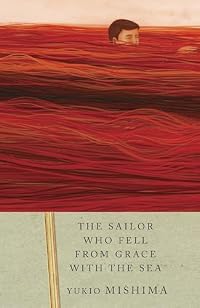
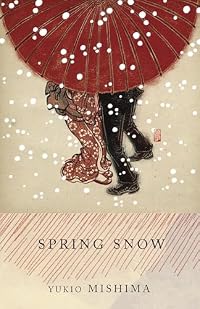



















Member Recommendations


Member Reviews
This is not your typical non-fiction book for various reasons. The largest part of the book includes interviews with survivors of the attack or relatives of those who did not survive. Murakami describes his method of finding the interviewees, convincing them to talk (which would have been a challenge in 1990s Japanese society), meeting with them, & recording their words. I worked for Japanese companies for over ten years (so I worked with many Japanese co-workers) & the survivor sections reflect what I know -- work & duty come first (before the individual), people (individually) & society as a whole are highly regulated, there is a tendency to want to ignore it & move on, etc.... In that respect, some reviews of the book have said all show more the sections get repetitive... & they do, but I think that just underscores how deeply these behaviors are ingrained across the spectrum of Japanese society.
After this section, he includes quite a few pages of his thoughts, titled "Blind Nightmare: Where are We Japanese Going?" I think it's his attempt to wrap his head around what happened (he had been living out of the country for many years before the sarin attack & had just recently returned to Japan), the way everyone handled the situation, to try to guess what might lead people to joining cults that eventually lead them into killing others.
The end of the book includes some interviews with Aum Shinrikyo members (group who released the sarin gas on the subways). When he first released the book, it had only the side of the survivors. Many panned it as not being real non-fiction, not showing both sides, & so on. That was never his intent in the first place (to provide multiple viewpoints; he was interested only in the survivors & how the attack affected them as it happened & in the longer term); he wanted to balance out what he felt had been skewed reporting on the victims of the attacks. Later, he wondered how fair the reporting on the Aum members had been & embarked on a similar endeavor to interview some of them. His methods were slightly different & there are fewer people interviewed, but it was interesting to read their accounts of how distanced from 'normal' society they felt which, to a large part, led to them joining the Aum group.
He ends with some final comments of his own, urging Japanese society (and, really, the world at large) to get to the root causes of what compel people join cults & work to prevent the root causes.
Lots of food for thought here, especially if you consider how out of the norm an attack like this was in Japanese society at the time. A completely shocking & unexpected act. An era that was pre-FB, pre-Twitter. An era when terrorism & attacks on the random public were not as 'normal' as they seem to be today. Murakami gathered the info & gives it to you with the merest touches of his own opinions or commentary. He's not a reporter, nor a psychologist; he's just a novelist trying to unravel the narrative behind a shocking incident.
An interesting & thought-provoking work. I'm thankful for the voices of all who spoke out (because I know it was very against the nature of a typical Japanese citizen to do so at the time) & for Haruki Murakami for seeking out these voices. A work I am very glad to have read.
In the longer term, I do think Murakami has mulled over these people, these groups... leading him to include facets of what he uncovered in some of his subsequent fiction works, including 1Q84. show less
After this section, he includes quite a few pages of his thoughts, titled "Blind Nightmare: Where are We Japanese Going?" I think it's his attempt to wrap his head around what happened (he had been living out of the country for many years before the sarin attack & had just recently returned to Japan), the way everyone handled the situation, to try to guess what might lead people to joining cults that eventually lead them into killing others.
The end of the book includes some interviews with Aum Shinrikyo members (group who released the sarin gas on the subways). When he first released the book, it had only the side of the survivors. Many panned it as not being real non-fiction, not showing both sides, & so on. That was never his intent in the first place (to provide multiple viewpoints; he was interested only in the survivors & how the attack affected them as it happened & in the longer term); he wanted to balance out what he felt had been skewed reporting on the victims of the attacks. Later, he wondered how fair the reporting on the Aum members had been & embarked on a similar endeavor to interview some of them. His methods were slightly different & there are fewer people interviewed, but it was interesting to read their accounts of how distanced from 'normal' society they felt which, to a large part, led to them joining the Aum group.
He ends with some final comments of his own, urging Japanese society (and, really, the world at large) to get to the root causes of what compel people join cults & work to prevent the root causes.
"... However, we need to realize that most of the people who join cults are not abnormal; they're not disadvantaged; they're not eccentrics. They are the people who live average lives (and maybe from the outside, more than average lives), who live in my neighborhood. And in yours.
Maybe they think about things a little too seriously. Perhaps there's some pain they're carrying around inside. They're not good at making their feelings known to others and are somewhat troubled. They can't find a suitable means to express themselves, and bounce back and forth between feelings of pride and inadequacy. That might very well be me. It might be you."
Lots of food for thought here, especially if you consider how out of the norm an attack like this was in Japanese society at the time. A completely shocking & unexpected act. An era that was pre-FB, pre-Twitter. An era when terrorism & attacks on the random public were not as 'normal' as they seem to be today. Murakami gathered the info & gives it to you with the merest touches of his own opinions or commentary. He's not a reporter, nor a psychologist; he's just a novelist trying to unravel the narrative behind a shocking incident.
An interesting & thought-provoking work. I'm thankful for the voices of all who spoke out (because I know it was very against the nature of a typical Japanese citizen to do so at the time) & for Haruki Murakami for seeking out these voices. A work I am very glad to have read.
In the longer term, I do think Murakami has mulled over these people, these groups... leading him to include facets of what he uncovered in some of his subsequent fiction works, including 1Q84. show less
"Underground" isn't always riveting stuff: much of the book consists of retelling the events of the Aum Shinriyko's nerve gas attack on the Tokyo subway system. These accounts fit with Murakami's interest in straightforward, unembellished narrative, and I suppose comparisons to "Rashomon" are in order, but most readers probably won't notice or care too much about the small differences between these accounts. It's interesting see how profoundly even those victims who didn't suffer serious long-term physical effects from the sarin attack have been affected: Murakami may be right when he argues that this event triggered deep and powerful feelings in his country's national psyche. What's most interesting about them, from my perspective, show more anyway, is what they say about life in modern Japan. One of Murakami's stated aims in writing this book was to explore how the attack disrupted people's lives, and in that, he was largely successful. He also revealed, intentionally or otherwise, that the life of the average Tokyo resident is astonishingly busy and very work-centric: the biographies that Murakami's subjects provide could probably serve as informal résumés. Fittingly enough, the author argues that the cult that perpetrated the attack could be seen as a sort of mirror-image of a society that has become more more materialistic over the past few decades while leaving little room for those who might not want to do everything possible to advance their careers in a socially acceptable manner. Murakami notes that several of the cult's higher-ups had extremely successful careers before they abandoned them almost overnight to join Aum: it's possible that they wouldn't have taken such drastic measures if they had lived in a more flexible society.
The second half of "Underground," which consists of interviews with former Aum members, will probably be of more interest to the average reader, perhaps because extraordinary evil, for better or for worse, seems to cast a spell that ordinary life can't quite compete with. The ex-members certainly paint an interesting portrait of the cult: it was strict in some ways, but remarkably forgiving in others. Its theology was a confusing new-age mishmash, and many of the members don't entirely regret their experiences with the group. I noticed that many of the former members share a rather logical cast of mind which sometimes contrasts oddly with their spiritual interests, though I suppose that it might explain why they found a cult that talked discussed spiritual advancement in terms of a precise hierarchy and seemed to have been organized like a multinational corporation appealing. It's also interesting to note the hold that Aum still has on many of its former members: many admit to keeping up relationships they made while in the cult and to still finding some of the group's meditative techniques useful. Their contact with the group, like that of their victims, seems to have very long-term implications. Even though most of the former cult members that Murakami interviews seem to have left the group before things got really dark, these interviews provide a startlingly matter-of-fact account of a demonstrably evil organization in action. show less
The second half of "Underground," which consists of interviews with former Aum members, will probably be of more interest to the average reader, perhaps because extraordinary evil, for better or for worse, seems to cast a spell that ordinary life can't quite compete with. The ex-members certainly paint an interesting portrait of the cult: it was strict in some ways, but remarkably forgiving in others. Its theology was a confusing new-age mishmash, and many of the members don't entirely regret their experiences with the group. I noticed that many of the former members share a rather logical cast of mind which sometimes contrasts oddly with their spiritual interests, though I suppose that it might explain why they found a cult that talked discussed spiritual advancement in terms of a precise hierarchy and seemed to have been organized like a multinational corporation appealing. It's also interesting to note the hold that Aum still has on many of its former members: many admit to keeping up relationships they made while in the cult and to still finding some of the group's meditative techniques useful. Their contact with the group, like that of their victims, seems to have very long-term implications. Even though most of the former cult members that Murakami interviews seem to have left the group before things got really dark, these interviews provide a startlingly matter-of-fact account of a demonstrably evil organization in action. show less
I read this because I love Murakami. I had never heard of the Tokyo gas attacks, and now am frankly pretty surprised it had never come up in the US.
Anyhow, Murakami mostly stays out of his subjects' ways in the first portion of the book. He lets survivors speak for themselves and neither he nor the translator make many intrusions, unless it's to clarify some detail (usually the translator notes are for people like me who don't have any background knowledge about the attacks).
It's really interesting to see how people viewed the same situation differently--there are several times when one survivor will describe a person that later tells their own story of the event, and both are pretty different. Despite this being a really cool show more perspective, it can get a tiny bit repetitive, but it's worth it to stick it out and finish the book.
The last section of the book is Murakami's reflections on what the gas attacks meant in the broader context of Japanese society and interviews with ex and current Aum members. During this, he waxes philosophical about his own complex relationship with his home country.As a western fan who has never visited Japan I found this fascinating. It's easy to pick up on themes feeling isolated or like something is wrong in your society (or the way you relate to it) in his other books, but it was very interesting to see him speak directly about these thoughts.
He's more intrustive in the Aum section, which I actually appreciate--his anger at the naive beleifs that led to so many deaths is palpable, and most of his interviewees don't shrink back from it.
Overall, a really good read if you're interested in Japan, terrorism, cults or just Haruki Murakami. show less
Anyhow, Murakami mostly stays out of his subjects' ways in the first portion of the book. He lets survivors speak for themselves and neither he nor the translator make many intrusions, unless it's to clarify some detail (usually the translator notes are for people like me who don't have any background knowledge about the attacks).
It's really interesting to see how people viewed the same situation differently--there are several times when one survivor will describe a person that later tells their own story of the event, and both are pretty different. Despite this being a really cool show more perspective, it can get a tiny bit repetitive, but it's worth it to stick it out and finish the book.
The last section of the book is Murakami's reflections on what the gas attacks meant in the broader context of Japanese society and interviews with ex and current Aum members. During this, he waxes philosophical about his own complex relationship with his home country.As a western fan who has never visited Japan I found this fascinating. It's easy to pick up on themes feeling isolated or like something is wrong in your society (or the way you relate to it) in his other books, but it was very interesting to see him speak directly about these thoughts.
He's more intrustive in the Aum section, which I actually appreciate--his anger at the naive beleifs that led to so many deaths is palpable, and most of his interviewees don't shrink back from it.
Overall, a really good read if you're interested in Japan, terrorism, cults or just Haruki Murakami. show less
"Underground" consists of two parts (published in Japan as separate volumes): 60 interviews with victims of the 1995 Tokyo sarin gas attack - mostly survivors, with some family members of the victims and a couple of medics - followed by interviews with eight former or current members of the Aum Shinrikyo cult.
Murakami's aim in the first part (explained in a final chapter) was, firstly, to humanise the stories of the victims, and secondly to understand whether there was anything within Japanese society which made the cult, and the attack, possible. He also wanted to work on something specifically Japanese, to mark his return from living in the US.
He certainly succeeded in his first aim - the stories of what individuals actually show more experienced on the day may seem quite similar, but they gradually build up a very effective picture of the horror of the events of that day, all the more terrifying for the everyday setting.
I'm not so sure about the second. Some of the details certainly seem to me to be typically Japanese - the fact that people carried on struggling to get to work even though they could hardly see or walk, the small number of voices who were angry at the unco-ordinated reaction of the emergency services, the fact that very few of the interviewees talk about their personalities when describing how they reacted to events - but most of it could have happened anywhere.
Even the cult members interviewed are recognisable personalities - the nihilistic teen, the woman who turns to spirituality after starting to question whether there's more to life than parties, karaoke and meeting men. I found their stories more interesting than those of the victims - partly because it's an experience which I can't imagine ever having (and a good insight into the way that people were brainwashed), and partly because the stories themselves are more varied. But what they all have in common is that they were attracted to the cult because its worldview was easier to deal with than the contradictions and confusions of the real world - life within the cult was tough, but there was a clear system of rewards and punishments for your actions - very seductive when you are used to it, and probably the reason why it was possible to order adherents to carry out such horrific crimes.
This book is, in many ways, Murakami's response to this argument - the accreted detail of seventy lives explicitly stands against the totalitarian logic of a cult like Aum. It is a deeply humane work, much more than simple reportage. show less
Murakami's aim in the first part (explained in a final chapter) was, firstly, to humanise the stories of the victims, and secondly to understand whether there was anything within Japanese society which made the cult, and the attack, possible. He also wanted to work on something specifically Japanese, to mark his return from living in the US.
He certainly succeeded in his first aim - the stories of what individuals actually show more experienced on the day may seem quite similar, but they gradually build up a very effective picture of the horror of the events of that day, all the more terrifying for the everyday setting.
I'm not so sure about the second. Some of the details certainly seem to me to be typically Japanese - the fact that people carried on struggling to get to work even though they could hardly see or walk, the small number of voices who were angry at the unco-ordinated reaction of the emergency services, the fact that very few of the interviewees talk about their personalities when describing how they reacted to events - but most of it could have happened anywhere.
Even the cult members interviewed are recognisable personalities - the nihilistic teen, the woman who turns to spirituality after starting to question whether there's more to life than parties, karaoke and meeting men. I found their stories more interesting than those of the victims - partly because it's an experience which I can't imagine ever having (and a good insight into the way that people were brainwashed), and partly because the stories themselves are more varied. But what they all have in common is that they were attracted to the cult because its worldview was easier to deal with than the contradictions and confusions of the real world - life within the cult was tough, but there was a clear system of rewards and punishments for your actions - very seductive when you are used to it, and probably the reason why it was possible to order adherents to carry out such horrific crimes.
This book is, in many ways, Murakami's response to this argument - the accreted detail of seventy lives explicitly stands against the totalitarian logic of a cult like Aum. It is a deeply humane work, much more than simple reportage. show less
'Wild Sheep Chase' was the first book I bought at university - the cool cover design and trip blurb was to be an icon for the new chapter of my life entitled 'student'. The studies are somewhat behind me but in the years since, I have worked my way through Murakami's offerings and this is the latest in my sojourn. 'Underground' is a journalistic catalogue of the personal accounts of the survivors from the Tokyo sarin gas attacks in 1995, perpetrated by the infamous religious cult Aum Shinrikyo. Murakami saw the tragedy as an opportunity for Japan to take a good look at itself - to understand why the attack happened, to review the city's response to such an attack and to prevent it fading from public consciousness without lessons being show more learnt. The book is in two parts. Part one presents verbatim accounts of the fateful morning from as many victims as would speak to him. The second part of the book uses a similar format but this time Murakami presents accounts of past and present Aum members about how they came to become followers and their thoughts about the attack and the future of their religion.
The book is good but hard going in the sense that the accounts follow the same format and there are many. I don't mean this to trivialise the suffering, just that the repetitive nature can be hard to read in big chunks. The second part however I found to be increasingly interesting - is it bad that I found more in common with the Aum interviewees than the victims?! To explain, the religion is in essence based around an existential disillusionment with 'normal' society and its followers come together and find solace in like-minded individuals who are unable to make relationships with people in the 'real' world who share their beliefs and interests about the impermanence of life and the yearning to cleanse their spirit in preparation for an anticipated afterlife. They are sensitive, thoughtful, some lonely and pained, questioners and philosophers who I can't but help but think show traits that I like in people. To explain further, the religion is also very hierarchical and it is quite apparent from the testimonies that these Aum members were pure in the beliefs stated and not of the mindset of an 'inner-circle' of practitioners led by Shoko Asahara. It was he and his trusted 'masters' that abused and manipulated the original tenets of the religion to justify punishment, shock therapy and sending people to the afterlife (mass murder).
Murakami has created a rich topic of discussion and successfully brings to the fore issues that are prevalent in the modern world: disillusionment, fear, prejudice and a lack of understanding and communication between nations and groups. He deftly illuminates the Japanese psyche being part of the problem - of saving face, brushing things under the carpet, of wanting to forget and pretend things are ok. I was surprised at how few of the victims hated or spoke badly of the aggressors but this in turn spoke volumes about the problem Murakami saw and wants to address. He says that the problem is everyones and needs to be acknowledged to be solved. This isn't a book I'd necessarily recommend but then I think it is very well done and I'm glad I've read it - make of that what you will! show less
The book is good but hard going in the sense that the accounts follow the same format and there are many. I don't mean this to trivialise the suffering, just that the repetitive nature can be hard to read in big chunks. The second part however I found to be increasingly interesting - is it bad that I found more in common with the Aum interviewees than the victims?! To explain, the religion is in essence based around an existential disillusionment with 'normal' society and its followers come together and find solace in like-minded individuals who are unable to make relationships with people in the 'real' world who share their beliefs and interests about the impermanence of life and the yearning to cleanse their spirit in preparation for an anticipated afterlife. They are sensitive, thoughtful, some lonely and pained, questioners and philosophers who I can't but help but think show traits that I like in people. To explain further, the religion is also very hierarchical and it is quite apparent from the testimonies that these Aum members were pure in the beliefs stated and not of the mindset of an 'inner-circle' of practitioners led by Shoko Asahara. It was he and his trusted 'masters' that abused and manipulated the original tenets of the religion to justify punishment, shock therapy and sending people to the afterlife (mass murder).
Murakami has created a rich topic of discussion and successfully brings to the fore issues that are prevalent in the modern world: disillusionment, fear, prejudice and a lack of understanding and communication between nations and groups. He deftly illuminates the Japanese psyche being part of the problem - of saving face, brushing things under the carpet, of wanting to forget and pretend things are ok. I was surprised at how few of the victims hated or spoke badly of the aggressors but this in turn spoke volumes about the problem Murakami saw and wants to address. He says that the problem is everyones and needs to be acknowledged to be solved. This isn't a book I'd necessarily recommend but then I think it is very well done and I'm glad I've read it - make of that what you will! show less
There are two halves to Underground. The first consists of Murakami's conversations/interviews with survivors (and relatives of victims) of the sarin gas attacks in Tokyo, the second half are interviews/conversations with former Aum members (the cult that perpetrated the attacks). I found the first half of the book to be engrossing and moving (especially a few of the interviews toward the end of the section). The second section was much harder to get into, but ultimately more interesting and less emotionally stirring. As someone who hasn't spent much time reading about cults, except in the vaguest sense, Murakami's conversations with former Aum members was eye opening.
Overall the book was interesting and while the second half has a show more similar set up (brief bio and then the interview/conversation), it has a totally different tone than the first. The most important thing to remember and Murakami brings this up a few times, is that we're reading people's opinions and recollections, which will always be distorted from the truth of what actually happened, as memories are prone to be. Regardless, I found the whole book interesting and I wonder if some of Murakami's inspiration for 1Q84 (which I read quite recently) came from these interviews and conversations. show less
Overall the book was interesting and while the second half has a show more similar set up (brief bio and then the interview/conversation), it has a totally different tone than the first. The most important thing to remember and Murakami brings this up a few times, is that we're reading people's opinions and recollections, which will always be distorted from the truth of what actually happened, as memories are prone to be. Regardless, I found the whole book interesting and I wonder if some of Murakami's inspiration for 1Q84 (which I read quite recently) came from these interviews and conversations. show less
Murakami's sharp commentary is honest and uncomfortable. He reminds us that societal outsiders are not too different from us -- "[we] bounce back and forth between feelings of pride and inadequacy. They might as well be me. It might be you."
Members
- Recently Added By
Published Reviews
"Citing examples from recent and ancient Japanese history, Murakami establishes a pattern of a traditionally proud culture that discourages examining or accepting shame. It is precisely this painful examination that Murakami has undertaken."
added by private library
"Like ''Sputnik Sweetheart,'' which begins with a straightforward love-triangle plot before developing an odder geometry, the cult members describe humdrum personal histories that suddenly lurch into the bizarre."
added by private library
"Like Mr Murakami’s novels, “Underground” makes for an unsettling read."
added by private library
Lists

Disaster Books
74 works; 19 members

Romans
49 works; 1 member

Books That Made Us Cry
278 works; 145 members

Book Club suggestions
20 works; 1 member

Non-Fiction
68 works; 1 member

Book Riot Read Harder 2026
80 works; 1 member
Author Information

285+ Works 173,975 Members
Haruki Murakami was born on January 12, 1949 in Kyoto, Japan and studied at Tokyo's Waseda University. He opened a coffeehouse/jazz bar in the capital called Peter Cat with his wife. He became a full-time author following the publication of his first novel, Hear the Wind Sing, in 1979. He writes both fiction and non-fiction works. His fiction show more works include Norwegian Wood, Colorless Tsukuru Tazaki and His Years of Pilgrimage, The Strange Library, and Men Without Women. Several of his stories have been adapted for the stage and as films. His nonfiction works include What I Talk About When I Talk About Running. He has received numerous literary awards including the Franz Kafka Prize for Kafka on the Shore, the Yomiuri Prize for The Wind-Up Bird Chronicle, and the Jerusalem Prize. He has translated into Japanese literature written by F. Scott Fitzgerald, Raymond Carver, Truman Capote, John Irving, and Paul Theroux. (Bowker Author Biography) show less
Some Editions
Awards and Honors
Series
Belongs to Publisher Series
Work Relationships
Has the (non-series) sequel
Common Knowledge
- Canonical title*
- Underground
- Original title
- Andaguraundo (Part One) (Part One); Yakusoku sareta basho de (Part Two) (Part Two)
- Original publication date
- 1997 (original Japanese) (original Japanese); 1998 (original Japanese) (original Japanese); 2000 (English translation) (English translation)
- Important places
- Tokyo, Japan; Tokyo Subway, Tokyo, Japan
- Important events
- Tokyo gas attack
- First words
- PREFACE: Leafing through a magazine one afternoon, I found myself looking at the readers' letters page.
- Quotations
- Autonomy is only the mirror image of dependency on others. (p. 200)
Yet without a proper ego, nobody can create a personal narrative, any more than you can drive a car without an engine, or cast a shadow without a real physical object. But once you've consigned your ego to someone else, where... (show all) on earth do you go from there? (p. 201)
Now, as one psychoanalyst defines it: "Human memory is nothing more that a 'personal interpretation' of events." (p. 203)
...we had still not begun to deal with, let alone solve, any of the fundamental issues arising from the gas attack. Specifically, for people who are outside the main system of Japanese society (the young in particular), there... (show all) remains no effective alternative or safety net. As long as this crucial gap exists in our society, like a kind of black hole, even if Aum is suppressed, other magnetic force-fields -- "Aum-like" groups -- will rise up again, and similar incidents are bound to take place. (p. 214)
Reality is created out of confusion and contradiction, and if you exclude those elements, you're no longer talking about reality. You might think that -- by following language and a logic that appears consistent -- you're abl... (show all)e to exclude that aspect of reality, but it will always be lying in wait for you, ready to take revenge. (p. 308)
The sad fact is that language and logic cut off from reality have a far greater power than the language and logic of reality... (p. 308)
However, we need to realize that most of the people who join cults are not abnormal; they're not disadvantaged; they're not eccentrics. They are the people who live average lives (and maybe from the outside, more than average... (show all) lives) who live in my neighbourbood. And in yours.
Maybe they think about things a little too seriously, Perhaps there's some pain the're carrying around inside. They're not good at making their feelings known to others and are somewhat troubled. They can't find a suitable means to express themselves, and bounce back and forth between feelings of pride and inadequacy. That might very well be me. It might be you. (p. 309) - Last words
- (Click to show. Warning: May contain spoilers.)They can't find a suitable means to express themselves, and bounce back and forth between feelings of pride and inadequacy. That might very well be me. It might be you.
- Original language
- Japanese
*Some information comes from Common Knowledge in other languages. Click "Edit" for more information.
Classifications
- Genres
- Nonfiction, General Nonfiction
- DDC/MDS
- 364.15230952 — Society, Government, and Culture Social problems and social services Crime Criminal offenses Offenses against the person Homicide Murder History, geographic treatment, biography
- LCC
- BP605 .O88 .M8613 — Philosophy, Psychology and Religion Islam. Bahaism. Theosophy, etc. Islam. Bahai Faith. Theosophy, etc. Other beliefs and movements
- BISAC
Statistics
- Members
- 2,879
- Popularity
- 6,219
- Reviews
- 64
- Rating
- (3.82)
- Languages
- 13 — Catalan, English, French, German, Hebrew, Italian, Japanese, Polish, Portuguese, Romanian, Russian, Spanish, Swedish
- Media
- Paper, Audiobook, Ebook
- ISBNs
- 39
- ASINs
- 19