
On This Page
Description
Montalbano's gruesome discovery of a lovely, naked young woman suffocated in her bed immediately sets him on a search for her killer. Among the suspects are her aging husband, a famous doctor; a shy admirer, now disappeared; an antiques-dealing lover from Bologna; and the victim's friend Anna, whose charms Montalbano cannot help but appreciate. But it is a reclusive violinist who holds the key to the murder. Montalbano does not disappoint, bringing his compelling mix of humor, cynicism, show more compassion, and love of good food to solve another riveting mystery. show lessTags
Recommendations






















Member Reviews
The Book Report: Inspector Montalbano, adjusting to a new climate both professional and personal, is presented with a dilemma: How can he officially take note of a crime he discovers when committing a crime himself? He resolves to solve a horrible, seemingly inexplicable murder, one that truly makes your heart hurt, and yet faces mounting problems within his new professional situation. In the end, he takes his lowest, to date, policemanly ebb and turns it into the routing of forces arrayed against him with the help of a shut-in paraplegic, a reclusive retired musician, and the Mafia, abetted by his media lapdogs and loyal through-and-through team.
His personal life, meanwhile, takes its customary back seat...but with more-than-usually show more severe consequences, ones that make the ending of the previous book look very unlikely to come to fruition. The resolution of this story line is surprising, but in line with Camilleri's evolving character portrait of Montalbano.
My Review: As always, Camilleri makes me drool, moan, and breathe deeply with his Sicilian cuisine and atmosphere evocation. I want to go there now, and stay there, and follow Montalbano around saying "I'll have what he's having" to everyone I meet. But there are lots of emotional roadblocks in Montalbano's world, and there are a lot of points where he seems hell-bent for leather to snatch defeat from the jaws of victory. That he, in the end, decides to do the things that are true to his character in the last ~40pp is a testament to how clear Camilleri's vision of him is. And I would like to offer, with grateful hugs and awestruck genuflections, praise unstinting to the translator of the series: Stephen Sartarelli, apparently a published poet in his own right. He's deft, he's witty, he's thorough, and he's got something I've seldom encountered: a submersible ego. His translation, I am reliably informed by an ex-pat family member who's been reading the gialli as they come out in Italy, is tonally spot-on to Camilleri's original language.
Wow.
Don't read the series out of order, too much subtle and delicious detail is lost that way. But really, really wise and discerning fiction readers will read the series. show less
His personal life, meanwhile, takes its customary back seat...but with more-than-usually show more severe consequences, ones that make the ending of the previous book look very unlikely to come to fruition. The resolution of this story line is surprising, but in line with Camilleri's evolving character portrait of Montalbano.
My Review: As always, Camilleri makes me drool, moan, and breathe deeply with his Sicilian cuisine and atmosphere evocation. I want to go there now, and stay there, and follow Montalbano around saying "I'll have what he's having" to everyone I meet. But there are lots of emotional roadblocks in Montalbano's world, and there are a lot of points where he seems hell-bent for leather to snatch defeat from the jaws of victory. That he, in the end, decides to do the things that are true to his character in the last ~40pp is a testament to how clear Camilleri's vision of him is. And I would like to offer, with grateful hugs and awestruck genuflections, praise unstinting to the translator of the series: Stephen Sartarelli, apparently a published poet in his own right. He's deft, he's witty, he's thorough, and he's got something I've seldom encountered: a submersible ego. His translation, I am reliably informed by an ex-pat family member who's been reading the gialli as they come out in Italy, is tonally spot-on to Camilleri's original language.
Wow.
Don't read the series out of order, too much subtle and delicious detail is lost that way. But really, really wise and discerning fiction readers will read the series. show less
Inspector Salvo Montalbano, maverick policeman in the Sicilian backwater town of Vigàta, returns in this tale that will have you guessing nearly to the very end. As always, Montalbano gets to the bottom of the mystery -- in this case the suffocation of a knock-out blonde in her own home -- through experience, intuition, hard work, and, at times, lies, police misconduct, and other chicanery.
Watching Montalbano operate, whether as a policeman or an unwilling pawn in a political gamble, is like watching a great chess master at work. He's always several steps ahead of his opponents -- as well as the reader -- and it's with a gasp that you watch the irascible Montalbano pull off yet another checkmate.
This may be No. 4 in the series, but show more Montalbano has lost none of his appeal. show less
Watching Montalbano operate, whether as a policeman or an unwilling pawn in a political gamble, is like watching a great chess master at work. He's always several steps ahead of his opponents -- as well as the reader -- and it's with a gasp that you watch the irascible Montalbano pull off yet another checkmate.
This may be No. 4 in the series, but show more Montalbano has lost none of his appeal. show less
There's a Renault Twingo referred to as having "committed suicide" when Gallo, the station's driver, he of the "Indianapolis Complex", slams into it in a spectacular example of mad driving that had me crying with laughter on page 4 of VOICE OF THE VIOLIN. Which is not a bad writing feat at all, in 4 pages you know that Montalbano's in a mood after a fabulous meal was interrupted by his nemesis Catarella. That his car's in the shop and he has to get to a funeral. That Gallo's a madman, and there's now a green Renault Twingo parked on the side of the road that's now got a smashed rear end. And you're laughing.
There's nothing particularly funny about the subsequent discoveries when Montalbano returns more than a bit intrigued as to why show more nobody has rung the station breathing fire over the damage to their car. And it's not all plain sailing in this case as Montalbano battles mutual dislike between him and his new boss, has the investigation taken off him with dreadful consequences, and stares down a bit of discontent in his team all whilst he battles to come to grips with a major upset in his personal life.
As is expected in this series, tight, descriptive, brilliant storytelling with a wonderfully engaging central character who has raised grumpiness to a glorious art form.
http://www.austcrimefiction.org/review/voice-violin-andrea-camilleri show less
There's nothing particularly funny about the subsequent discoveries when Montalbano returns more than a bit intrigued as to why show more nobody has rung the station breathing fire over the damage to their car. And it's not all plain sailing in this case as Montalbano battles mutual dislike between him and his new boss, has the investigation taken off him with dreadful consequences, and stares down a bit of discontent in his team all whilst he battles to come to grips with a major upset in his personal life.
As is expected in this series, tight, descriptive, brilliant storytelling with a wonderfully engaging central character who has raised grumpiness to a glorious art form.
http://www.austcrimefiction.org/review/voice-violin-andrea-camilleri show less
The fourth installation of Andrea Camilleri’s Inspector Montalbano series, The Voice of the Violin contains all the ingredients that I have come to expect from this excellent series. A perplexing mystery, interesting characters, a little humor, a lot of food and some authentic Sicilian touches. In this outing the Inspector is investigating the murder of a beautiful woman who was suffocated in her bedroom. There are a number of suspects but motive is the thing that needs to be discovered. My only quibble with the book was the fact that the title indicated in which direction Montalbano and his crew needed to look.
Montalbano is in fine form as he bends and shapes the rules to suit him in his investigation. There is also a sidestory that show more explore the Inspector’s life away from police work, and resolves a plot that was carried over from his previous book, The Snack Thief. In a series that is full of excellent characters, Montalbano is unique. He manages to be three steps ahead of his opposition, deals with political fallout, keeps his underlings in line yet still takes time to savour life, romance and food. I am looking forward to the next book. show less
Montalbano is in fine form as he bends and shapes the rules to suit him in his investigation. There is also a sidestory that show more explore the Inspector’s life away from police work, and resolves a plot that was carried over from his previous book, The Snack Thief. In a series that is full of excellent characters, Montalbano is unique. He manages to be three steps ahead of his opposition, deals with political fallout, keeps his underlings in line yet still takes time to savour life, romance and food. I am looking forward to the next book. show less
Another well-crafted plot in a gorgeous setting with one of the best cast of characters in detective fiction today. Montalbano and his crew are worth following in the series from the beginning. Camilleri gives us the soul of Sicily in robust but realistic dialogue, dazzling descriptions of food, and the temperament of a hardened detective who still appreciates opera, poetry, classical texts, the ocean breezes and a beautiful woman. Perhaps the best part for English readers is the wonderful translation by Stephen Sartarelli. The cadence of the language, the imagery and the emotions are all wonderfully preserved.
It is sad that Montalbano and Livia will not get their adopted son but this might be good because I still see this couple as completely mismatched - and the child is obviously happy where he is. Montalbano is a free spirit as far as detection is concerned, and must always leave time to appreciate the finer things in life, like excellent coffee and gourmet food. Not a bad mystery although I spotted his early mistake right away when he omitted to search the car, an obvious course of action in the circumstances .
4th in the Inspector Montalbano series.
Montalbano and Gallo are on their way to a funeral. Thanks to Gallo’s mania for speed, they inadvertently crash into a parked car, causing extensive damage to both cars. Still, the police car can move, and they proceed to the funeral after Montalbano conscientiously leaves a note with his name and phone number under the windshield wiper of the other car. But when they return, there is no sign that the owner has even been near the car.
Suspicious, Montalbano makes a midnight reconnaissance of the house in front of which the car is parked, and finds a beautiful naked woman who has been murdered by suffocation. Naturally, he can not report the crime, since he is in the house illegally, but ever show more ingenious, he calls on a friend, an old woman with whom he has worked before, to make an anonymous phone call to the police.
The old police commissioner, a friend of Montalbano’s, has retired, and a new one who has absolutely no use for Montalbano (the feeling is mutual) and his idiosyncratic ways, removes him from the case and puts it in the hands of an arrogant publicity seeker—with disastrous results.
To make life even more bizarre, Catarella is selected to attend computer school to the cynical amusement of all hands. Except that strange things happen in that arena as well.
This is pure Montalbano in the hands of that master craftsman, Camilleri, and has all the elements that so delighted in the earlier books: humor, well-drawn characters over the entire spectrum of recurring and non-recurring, it-can-only-happen-in-Sicily ambiance, good plotting, and more food to die for. You can’t lose with this series.
Highly recommended. show less
Montalbano and Gallo are on their way to a funeral. Thanks to Gallo’s mania for speed, they inadvertently crash into a parked car, causing extensive damage to both cars. Still, the police car can move, and they proceed to the funeral after Montalbano conscientiously leaves a note with his name and phone number under the windshield wiper of the other car. But when they return, there is no sign that the owner has even been near the car.
Suspicious, Montalbano makes a midnight reconnaissance of the house in front of which the car is parked, and finds a beautiful naked woman who has been murdered by suffocation. Naturally, he can not report the crime, since he is in the house illegally, but ever show more ingenious, he calls on a friend, an old woman with whom he has worked before, to make an anonymous phone call to the police.
The old police commissioner, a friend of Montalbano’s, has retired, and a new one who has absolutely no use for Montalbano (the feeling is mutual) and his idiosyncratic ways, removes him from the case and puts it in the hands of an arrogant publicity seeker—with disastrous results.
To make life even more bizarre, Catarella is selected to attend computer school to the cynical amusement of all hands. Except that strange things happen in that arena as well.
This is pure Montalbano in the hands of that master craftsman, Camilleri, and has all the elements that so delighted in the earlier books: humor, well-drawn characters over the entire spectrum of recurring and non-recurring, it-can-only-happen-in-Sicily ambiance, good plotting, and more food to die for. You can’t lose with this series.
Highly recommended. show less
Members
- Recently Added By
Published Reviews
Chronologically the fourth outing for Inspector Salvo Montalbano and his Sicilian team of detectives, THE VOICE OF THE VIOLIN is a perfect example of all that is good about this series. The plot is one of the stronger, leaner ones...Salvo's gradual uncovering of the true story leading to the crime is logically satisfying, as well as introducing a rewarding set of characters among the witnesses show more and suspects. show less
added by mysterymax
Lists

Italian Literature
556 works; 41 members
Author Information

458+ Works 41,859 Members
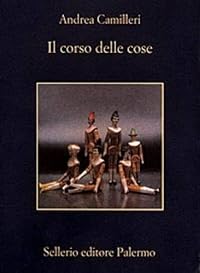
Andrea Camilleri lives in Italy. Andrea Camilleri was born in Porto Empedocle, Sicily on September 6, 1925. He began his studies at Faculty of Literature in 1944 but never finished. He started to publish poems and short stories. He studied stage and film direction at the Silvio D'Amico Academy of Dramatic Arts from 1948 to 1950 and soon began work show more as a director and screen writer. Andrea Camilleri worked on several TV productions such as Inspector Maigret wirh Gino Cervi. In 1971 he returned to the Academy of Dramatic Arts holding the chair of Movie Direction and keeping it for 20 years. In 1978 he wrote his first novel - The Way Things Go which was followed by A Thread of Smoke in 1980. In 1992 he published The Hunting Season which turned out to be a best seller. In 1994 Andrea Camilleri published the first in a long series of novels - The Shape of Water which features the character Inspector Montalbano - a ficticious Sicilian detective in the police force of Vigata, an imaginary Sicilian town. The TV adaption of this book took off in popularity and Andrea Camilleri's home town was renamed Porto Empedocle Vigata. In 1998 he won the Nino Mortoglio International Book Award. He received an honorary degree from the University of Pisa in 2005. Camilleri has worked as a television and theater director, as well as a screenwriter. In 1978 he wrote his first novel, Il Corso delle Cose. The Montalbano series, featuring the Sicilian detective Inspector Montalbano, is Camilleri's most famous work of fiction, and it has been adapted into a television series. Camilleri had written a few historical novels when, in 1994, he wrote The Shape of Water, the first book starring a Sicilian detective based in the fictional town of Vigata. Camilleri won the Nino Martoglio International Book Award in 1998. He is considered to be one of Italy's greatest contemporary writers. Andrea Camilleri passed away on July 17, 2019 at the age of 93. (Bowker Author Biography) show less
Some Editions
Awards and Honors
Awards
Series

Belongs to Publisher Series
BLT (92087)
La memoria [Sellerio] (401)
Work Relationships
Is contained in
Common Knowledge
- Canonical title
- The Voice of the Violin
- Original title
- La voce del violino
- Original publication date
- 1997-11-27; 2003 (English: Sartarelli) (English: Sartarelli)
- People/Characters
- Salvo Montalbano; Livia; Mimi Augello
- Important places
- Vigàta, Sicily, Italy
- First words
- Inspector Salvo Montalbano could immediately tell that it was not going to be his day the moment he opened the shutters of his bedroom window.
- Last words
- (Click to show. Warning: May contain spoilers.)'I'll be waiting for you,' said Livia.
(trans. Sartarelli, 2003) - Original language
- Italià; Italiano
Classifications
- Genres
- Fiction and Literature, Mystery
- DDC/MDS
- 853.914 — Literature & rhetoric Italian, Romanian & related literatures Italian fiction 1900- 20th Century 1945-1999
- LCC
- PQ4863 .A3894 .V613 — Language and Literature French, Italian, Spanish and Portuguese literatures Italian literature Individual authors, 1961-2000
- BISAC
Statistics
- Members
- 1,749
- Popularity
- 12,540
- Reviews
- 55
- Rating
- (3.84)
- Languages
- 17 — Catalan, Danish, Dutch, English, Finnish, French, German, Greek, Hungarian, Italian, Japanese, Polish, Russian, Croatian, Slovenian, Spanish, Portuguese (Brazil)
- Media
- Paper, Audiobook, Ebook
- ISBNs
- 75
- ASINs
- 15