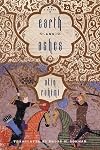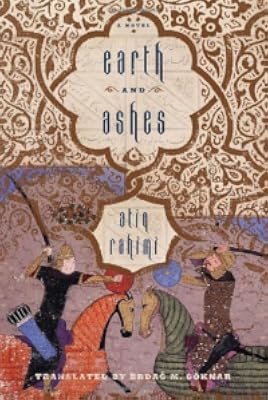
Earth and Ashes
by Atiq Rahimi
On This Page
Description
"You know, father, sorrow can turn to water and spill from your eyes, or it can sharpen your tongue into a sword, or it can become a time bomb that, one day, will explode and destroy you"Earth and Ashes is the spare, powerful story of an Afghan man, Dastaguir, trying desperately to reach his son Murad, who has left his village to earn a living working at a mine. In the meantime the village has been bombed by the Russian army, and Dastaguir, with his newly-deaf grandson Yassin in tow, must show more reach Murad to tell him of the carnage. The old man is beset on all sides by sorrow, that of his grandson, who cannot understand, that of his son, who does not yet know, and his own, made even crueler by the message he must deliver.
Atiq Rahimi, whose reputation for writing war stories of immense drama and intimacy began with this, his first novel, has managed to condense centuries of Afghan history into a short tale of three very different generations. But he has also created a universal story about fathers and sons, and the terrible strain inflicted on those bonds of family during the unpredictable carnage of war.
. Literature. Fiction. show less
Tags
Recommendations





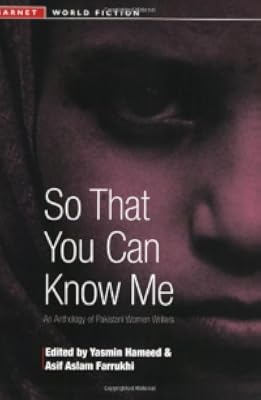


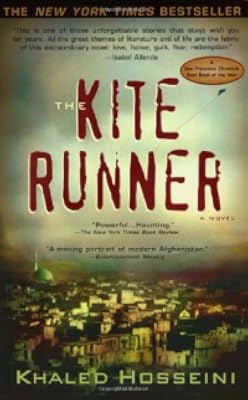
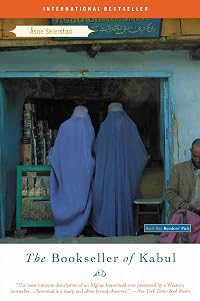
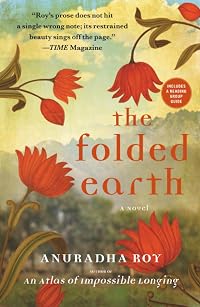





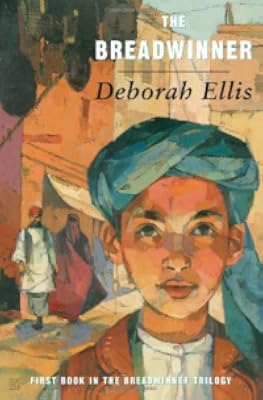
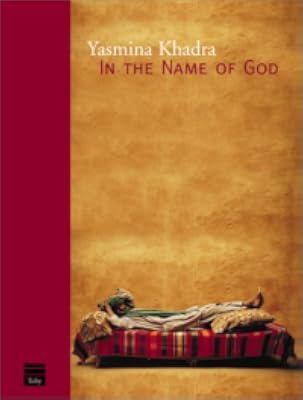

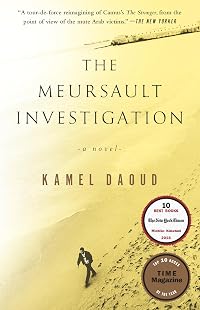
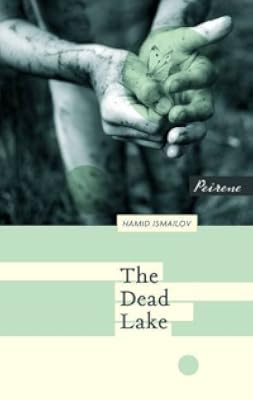
Member Recommendations
Member Reviews
This Afghani novella of only 81 pages is one of the most poignant, moving pieces I've ever read! Upon finishing it, I closed the book and took a long pause to get my breath back; this simple story of a grandfather, Dastaguir, and his little grandson, Yassin, broke my heart. Written in stark, spare prose with no wasted words, this tragic story encapsulates the whole broken war-torn land of Afghanistan through two peasants.
During the Soviet invasion of Afghanistan, a grandfather and grandson, the only survivors from their bombed-out village, make a journey to see the boy's father, who is a coal miner in another location. The little boy has been deafened by the loud noise of bombs. From time to time Dastaguir remembers his family and the show more day of the bombing. He daydreams about family or himself as a child or naps, having strange dreams as the truck carries him to the mine. We read his interior monologues: what will he say to his son about the attack and his family?
Dastaguir and Yassin are vivid characters, as well as others: a shopkeeper, a guard, a truck driver. The author painted a masterful picture using few uncomplicated words. I could see everything before me on every page. For some reason the author's device of using an omniscient narrator talking to Dastaguir [casting the story in second person] was very effective. References to the Persian epic Shahnama are worked into the plot. [Rostam and Sohrab are as well known in that part of the world as Agamemnon and Orestes are here.] I had never heard of this novella before; now I highly recommend it to everyone! show less
During the Soviet invasion of Afghanistan, a grandfather and grandson, the only survivors from their bombed-out village, make a journey to see the boy's father, who is a coal miner in another location. The little boy has been deafened by the loud noise of bombs. From time to time Dastaguir remembers his family and the show more day of the bombing. He daydreams about family or himself as a child or naps, having strange dreams as the truck carries him to the mine. We read his interior monologues: what will he say to his son about the attack and his family?
Dastaguir and Yassin are vivid characters, as well as others: a shopkeeper, a guard, a truck driver. The author painted a masterful picture using few uncomplicated words. I could see everything before me on every page. For some reason the author's device of using an omniscient narrator talking to Dastaguir [casting the story in second person] was very effective. References to the Persian epic Shahnama are worked into the plot. [Rostam and Sohrab are as well known in that part of the world as Agamemnon and Orestes are here.] I had never heard of this novella before; now I highly recommend it to everyone! show less
For fans of McCarthy's The Road, this is the book to read. It's gritty, real and important - and no baby eating Zombies! Written in the Persian language variant of Afghanistan known as Darsi in 2000 (pre-911), it was translated into English in 2002. It's a simple short novella about a tragic event, the kind that happens every day in Afghanistan. Through the eyes of an old man and his young grandson we experience the trauma of war and the angst of modernity pulling the past into the present. The ancient code of honor which holds society together is falling apart and what is left to replace it is deaf to us, an unknown. Although written before 9-11 about the Soviet invasion, it could just as easily be about present day events. Because it show more is written by a native Afghani in the native language, his sympathy for his culture, the small details and mannerisms, are all enlightening and curious. Afghanistan is such a mystery, a land of contradictions, this short novella goes a long way in revealing some deeper truths. show less
[Earth and Ashes] was Rahimi's first novel, and the first film that he directed. It's the story of Dastaguir and his grandson, who have been displaced and are waiting for a ride into the Karkar coal mine region where Dastaguir's son, Murad, works. Dastaguir has bad news to bring to Murad, and over the course of the novella we learn what that news is. This is the third work by Rahimi that I've read, and I've liked them all. Some reviewers have written that his books feel script-like, and I can understand their point. But the tradeoff is that his writing is very cinematic; I can visualize the settings and characters as though I had seen them.
Rahimi was born and raised in Afghanistan, but fled when the Soviets invaded. He was granted show more political asylum in France and attended the Sorbonne. Taking a break from producing documentaries for French television, in 2000 Rahimi wrote [Earth and Ashes], which was a bestseller in Europe and South America. He subsequently directed a movie version of the book, and it was awarded a prize at the 2004 Cannes Film Festival. show less
Rahimi was born and raised in Afghanistan, but fled when the Soviets invaded. He was granted show more political asylum in France and attended the Sorbonne. Taking a break from producing documentaries for French television, in 2000 Rahimi wrote [Earth and Ashes], which was a bestseller in Europe and South America. He subsequently directed a movie version of the book, and it was awarded a prize at the 2004 Cannes Film Festival. show less
Dastaguir, an Afghan man, is traveling to see his son who years earlier left his village to work in the mines. Dastaguir’s young grandson, Yassin, accompanies him. As they sit waiting for a ride to the mine, dust billows around them and the reader learns that Yassin is newly deaf after a Russian attack on Dastaguir’s village has left its mark.
Written in the second person point of view, Earth and Ashes is a poignant, heartbreaking novella about grief and the family bonds between father and son. Rahimi has distilled down centuries of Afghan history into this short tale about a father’s journey to deliver the devastating news of war to a son who he has not seen for years. The prose is stark, yet surprisingly poetic. Rahimi’s show more economical delivery of the story makes its impact dramatic. Squeezed into 67 short pages, Earth and Ashes covers large themes such as loss, identity, and the heavy weight of grief.
Rahimi’s ability to develop complete and empathetic characters using very few words speaks volumes about his talent. He captures the innocence of childhood brilliantly in his portrayal of Yassin who does not understand his own deafness, but instead believes the Russian bombs have stolen the voices of those around him.
“They must’ve come and taken the voice of the shopkeeper and the voice of the guard…Grandfather, have the Russians come and taken away everyone’s voice? What do they do with all the voices? Why did you let them take away your voice? If you hadn’t, would they’ve killed you? Grandma didn’t give them her voice and she’s dead. If she were here, she’d tell me the story of Baba Kharkash…No, if she were here, she’d have no voice…” – from Earth and Ashes, page 32 -
Readers might be interested to learn that Earth and Ashes has been adapted to film which was in the Official Selection at Cannes in 2004 and went on to win several prizes.
Rahimi’s slim novella packs a big punch. Readers who enjoy literary fiction and works in translation, will want to pick up a copy of this book.
Highly recommended. show less
Written in the second person point of view, Earth and Ashes is a poignant, heartbreaking novella about grief and the family bonds between father and son. Rahimi has distilled down centuries of Afghan history into this short tale about a father’s journey to deliver the devastating news of war to a son who he has not seen for years. The prose is stark, yet surprisingly poetic. Rahimi’s show more economical delivery of the story makes its impact dramatic. Squeezed into 67 short pages, Earth and Ashes covers large themes such as loss, identity, and the heavy weight of grief.
Rahimi’s ability to develop complete and empathetic characters using very few words speaks volumes about his talent. He captures the innocence of childhood brilliantly in his portrayal of Yassin who does not understand his own deafness, but instead believes the Russian bombs have stolen the voices of those around him.
“They must’ve come and taken the voice of the shopkeeper and the voice of the guard…Grandfather, have the Russians come and taken away everyone’s voice? What do they do with all the voices? Why did you let them take away your voice? If you hadn’t, would they’ve killed you? Grandma didn’t give them her voice and she’s dead. If she were here, she’d tell me the story of Baba Kharkash…No, if she were here, she’d have no voice…” – from Earth and Ashes, page 32 -
Readers might be interested to learn that Earth and Ashes has been adapted to film which was in the Official Selection at Cannes in 2004 and went on to win several prizes.
Rahimi’s slim novella packs a big punch. Readers who enjoy literary fiction and works in translation, will want to pick up a copy of this book.
Highly recommended. show less
This haunting novella is narrated by Dastaguir, a middle aged man who travels to the coal mine where his son Murad is working, in order to inform him of the tragedy that has befallen their village during the Soviet War in Afghanistan. Dastaguir travels with Murad's mischevious son Yassin, who struggles to understand what has happened to himself and his family. Dastaguir is deeply affected by the event, and fearful of the reaction of his volatile son once he finds out what has happened. Rahimi paints a simple and economical yet unforgettable and affecting story, which I highly recommended.
Of note, Earth and Ashes was a bestselling book in Europe and South America, and Rahimi directed a movie based on the book that won 25 awards, show more including the Prix du Regard vers l'Avenir at the 2004 Cannes Film Festival. show less
Of note, Earth and Ashes was a bestselling book in Europe and South America, and Rahimi directed a movie based on the book that won 25 awards, show more including the Prix du Regard vers l'Avenir at the 2004 Cannes Film Festival. show less
This poignant novella is set in Russian-occupied Afghanistan. A heartbroken old man sets out with his grandson, Yassin, who has been rendered deaf by the bomb-blast that destroyed his home, killing his wife, son and daughter-in-law under the most demoralizing conditions. His task is to find his son, Murad, who is away working in the mines, to tell him the devastating news.
The narrative, though short, is very touching as the old man grapples with the harshness of war and the moral dilemmas facing him. This is a very short but powerful book that succeeds in depicting an old man's anguish in extremely demanding circumstances.
The narrative, though short, is very touching as the old man grapples with the harshness of war and the moral dilemmas facing him. This is a very short but powerful book that succeeds in depicting an old man's anguish in extremely demanding circumstances.
This is an extraordinary short story or novella. It is the story of a grandfather and grandson travelling together to find their son/father respectively. It sounds like a simple story, but it is based during the Russian occupation of Afghanistan and blends great tragedy with honest thoughts and feelings of the characters whilst also making reference to the eleventh century, Persian, Book of Kings. It is absolutely transferrable to the present day and could easily be a story of a family in the very recent past!
This book was a recommendation for me based on other books I had read. It was a great recommendation and I will definitely read more from this author.
This book was a recommendation for me based on other books I had read. It was a great recommendation and I will definitely read more from this author.
Members
- Recently Added By
Lists

International IMPAC Dublin Literary Award
179 works; 6 members

Afghanistan
42 works; 2 members

Canon de la narrativa universal del s. XX (cicutadry)
499 works; 3 members
Author Information

15+ Works 1,301 Members
Some Editions
Awards and Honors
Awards
Series
Belongs to Publisher Series
Gallimard, Folio (5044)
Work Relationships
Common Knowledge
- Canonical title
- Earth and Ashes
- Original title
- Khâkestar-o-khâk
- Original publication date
- 2000 (Dari) (Dari); 2003 (Deutsch) (Deutsch)
- People/Characters
- Yassin; Fateh; Mirza Qadir; Murad; Dastaguir
- Important places
- Afghanistan; Kabul, Afghanistan; Pul-i-Khumri, Afghanistan
- Important events
- Soviet occupation of Afghanistan
- Epigraph
- He has a great heart,
As great as his sorrow.
—Rafaat Hosseini - Dedication
- To my father, and other fathers
who wept during the war - First words
- "I'm hungry."
- Last words*
- (Click to show. Warning: May contain spoilers.)So rasch!
- Original language
- Dari
*Some information comes from Common Knowledge in other languages. Click "Edit" for more information.
Classifications
- Genres
- General Fiction, Fiction and Literature, Historical Fiction
- DDC/MDS
- 891.563 — Literature & rhetoric Literatures of other languages East Indo-European and Celtic literatures Iranian literatures Ossetic Fiction
- LCC
- PK6878.9 .R34 .K4513 — Language and Literature Indo-Iranian languages and literatures Indo-Iranian philology and literature Iranian philology and literature
- BISAC
Statistics
- Members
- 307
- Popularity
- 104,382
- Reviews
- 21
- Rating
- (3.94)
- Languages
- 16 — Catalan, Czech, Danish, Dutch, English, Finnish, French, German, Italian, Norwegian (Bokmål), Norwegian, Polish, Portuguese, Slovak, Spanish, Swedish
- Media
- Paper, Ebook
- ISBNs
- 31
- ASINs
- 4