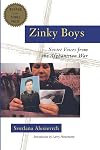
Zinky Boys: Soviet Voices from the Afghanistan War
by Svetlana Alexievich
On This Page
Description
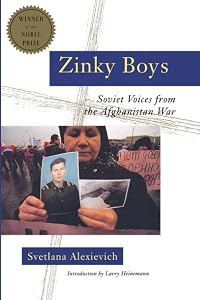
From 1979 to 1989, a million Soviet troops engaged in a devastating war in Afghanistan that claimed 50,000 casualties-- and the youth and humanity of many tens of thousands more. In Zinky Boys journalist Svetlana Alexievich gives voice to the tragic history of the Afghanistan War. What emerges is a story that is shocking in its brutality and revelatory in its similarities to the American experience in Vietnam-- a resemblance that Larry Heinemann describes movingly in his introduction to the show more book, providing American readers with an often uncomfortably intimate connection to a war that may have seemed very remote to us. The Soviet dead were shipped back in sealed zinc coffins (hence the term "Zinky Boys"), while the State denied the very existence of the conflict; even today the radically altered Soviet society continues to reject the memory of the "Soviet Vietnam." Creating controversy and outrage when it was first published in the USSR-- it was called by reviewers there a "slanderous piece of fantasy" and part of a "hysterical chorus of malign attacks"-- Zinky Boys presents the candid and affecting testimony of the officers and grunts, nurses and prostitutes, mothers, sons, and daughters who describe the war and its lasting effects. Svetlana Alexievich has snatched from the memory hole the truth of the Afghanistan War-- the beauty of the country and the savage Army bullying, the killing and the mutilation, the profusion of Western goods, the shame and shattered lives of returned veterans. Zinky Boys offers a unique, harrowing, and unforgettably powerful insight into the realities of war and the turbulence of Soviet life today. show lessTags
Recommendations








Member Recommendations
Member Reviews
I strive desperately (from book to book) to do one and the same thing - reduce history to the human being... What must be reclaimed is the small, the personal and the specific. The single human being. The only human being for someone. Not as the state regards him, but who he is for his mother, for his wife, for his child. True to her aim, Alexievich details the Soviet government's systematic deception and neglect of its citizens and soldiers during the Soviet-Afghan war, as told to her by surviving soldiers and families. A collage of sacrifice, disillusion and heartbreak.
Interestingly, the last fifth of my edition of Boys in Zinc came with documents which detailed the trial where Alexievich was sued by some of the witnesses in her book show more for misconstruing their words.
Perhaps she did cherry-pick stories and change some details (and perhaps even composite stories into one) to support her own belief in the senselessness of the war or perhaps the trial was indeed a propaganda orchestrated by some powers-that-be coercing the witnesses to change their statements in order to discredit Alexievich.
I don't know.
Of course the statements must have been edited, for length, for clarity, for literary merit. Perhaps some details are not entirely accurate or perhaps downright false. But I believe in the general sentiment of the statements. That even if the details of one statement didn't actually all happen to that one witness, it happened to someone, interviewed or not. Oral history is so diaphanous, so emotionally charged, can it itself ever be truly factual, can it ever be captured factually?
That Alexievich manages to articulate such a public and private pain in a way that reduces meaningless historical statistics into stories about the individuals that we can relate to and empathise with, I find that to be more powerful than completely accurate "facts". But that might just be because this book and its version of events already conform with my preconceived ideas and this way my beliefs can go on unchallenged. show less
Interestingly, the last fifth of my edition of Boys in Zinc came with documents which detailed the trial where Alexievich was sued by some of the witnesses in her book show more for misconstruing their words.
Perhaps she did cherry-pick stories and change some details (and perhaps even composite stories into one) to support her own belief in the senselessness of the war or perhaps the trial was indeed a propaganda orchestrated by some powers-that-be coercing the witnesses to change their statements in order to discredit Alexievich.
I don't know.
Of course the statements must have been edited, for length, for clarity, for literary merit. Perhaps some details are not entirely accurate or perhaps downright false. But I believe in the general sentiment of the statements. That even if the details of one statement didn't actually all happen to that one witness, it happened to someone, interviewed or not. Oral history is so diaphanous, so emotionally charged, can it itself ever be truly factual, can it ever be captured factually?
That Alexievich manages to articulate such a public and private pain in a way that reduces meaningless historical statistics into stories about the individuals that we can relate to and empathise with, I find that to be more powerful than completely accurate "facts". But that might just be because this book and its version of events already conform with my preconceived ideas and this way my beliefs can go on unchallenged. show less
10-2025
Como los anteriores libros de esta autora, se lee en nada y es una delicia como escribe.
Vuelve a armar una historia, con los diferentes relatos que va escuchando a los protagonistas. En este caso los que vivieron la guerra de Afganistán en primera persona: los que fueron a la guerra, mujeres y sus madres.
El sin sentido de la guerra, lo poco que vale una vida en un conflicto, lo desgarrador de la perdida de un hijo, el no saber: ni porque murió, ni porque se fue o para qué.
Lo diferente, y que desconocía, es lo que provocó la publicación. Algunas de las personas, que contaron a la autora su historia, se sintieron engañados, ofendidos, que les había dejado como asesinos sin escrúpulos.
La parte final del libro, cuenta show more todo el proceso judicial. Muy interesante tanto los testimonios, como se desarrollo el juicio, lo que pedían, el contexto en el que se vivió (perestroika, el fin del comunismo).
Mi percepción es muy diferente a lo que ellos sintieron al ver plasmadas sus palabras. Fueron víctimas de su tiempo, de esa parte de la historia, de la que no tenían ninguna posibilidad de escapar. Y la autora es tremendamente respetuosa con ellos. show less
Como los anteriores libros de esta autora, se lee en nada y es una delicia como escribe.
Vuelve a armar una historia, con los diferentes relatos que va escuchando a los protagonistas. En este caso los que vivieron la guerra de Afganistán en primera persona: los que fueron a la guerra, mujeres y sus madres.
El sin sentido de la guerra, lo poco que vale una vida en un conflicto, lo desgarrador de la perdida de un hijo, el no saber: ni porque murió, ni porque se fue o para qué.
Lo diferente, y que desconocía, es lo que provocó la publicación. Algunas de las personas, que contaron a la autora su historia, se sintieron engañados, ofendidos, que les había dejado como asesinos sin escrúpulos.
La parte final del libro, cuenta show more todo el proceso judicial. Muy interesante tanto los testimonios, como se desarrollo el juicio, lo que pedían, el contexto en el que se vivió (perestroika, el fin del comunismo).
Mi percepción es muy diferente a lo que ellos sintieron al ver plasmadas sus palabras. Fueron víctimas de su tiempo, de esa parte de la historia, de la que no tenían ninguna posibilidad de escapar. Y la autora es tremendamente respetuosa con ellos. show less
Visceral, searing, and full of emotion. Svetlana found herself "having" to write this book, I think. She opens the book with her going to Afghanistan and not wanting to cover yet another war after her emotional experience in publishing War's Unwomanly Face. She, however, realized these people's stories had to be told, especially with the at-home propaganda machine churning out nonsense like "Our brave international soldiers are planting trees, paving roads, and helping the Afghan people."
Much like any war that is not popular or considered a mistake, the combat veterans heavily contemplate why exactly they were fighting, dying, and mentally scarring themselves. Given how the veterans were treated when they returned home by their show more politicians, the civilians, etc., I am even more completely comfortable calling this Russia's Vietnam.
An incredible learning experience for me that Svetlana doesn't shy away from is how many Soviet women were involved in the war. I was unaware of this facet within the war beyond medical staff and how often they bled and died just like the men.
The author closes her book with various transcripts of the court proceedings brought against her once the book was published. People who the KGB pressured to rescind their statements and say she twisted their words. Mercifully just about across the board, the court sided with the author. show less
Much like any war that is not popular or considered a mistake, the combat veterans heavily contemplate why exactly they were fighting, dying, and mentally scarring themselves. Given how the veterans were treated when they returned home by their show more politicians, the civilians, etc., I am even more completely comfortable calling this Russia's Vietnam.
An incredible learning experience for me that Svetlana doesn't shy away from is how many Soviet women were involved in the war. I was unaware of this facet within the war beyond medical staff and how often they bled and died just like the men.
The author closes her book with various transcripts of the court proceedings brought against her once the book was published. People who the KGB pressured to rescind their statements and say she twisted their words. Mercifully just about across the board, the court sided with the author. show less
Before the United States had its failed war in Afghanistan the Soviet Union had its version and in its aftermath Svetlana Alexievich chose to interview and tell the stories of the soldiers, mothers and wives who were directly affected. The result has been described as a documentary novel about the experienced trauma. This makes for uneasy reading if still compelling as so many of the individual stories are heart rendering. It brought about in me an unexpected anger against the rulers in Moscow who brought this about which matched my ill feelings about the stupidity, ignorance, and arrogance of our own leadership and our time in Afghanistan. This raises a question of why the United States has not produced such a needed appropriate effort show more as Alexievich's.
Quotes: (page 17) “We drove through the lifeless streets of Kabul, past the familiar posters in the centre of the city: 'The bright future of communism' – Kabul-city of peace' – 'The people and the party united'. Our posters, printed in our print shops. Our Lenin, standing here with his arm raised...
I met some cameramen from Moscow.
They were filming the loading of a 'black tulip' – an An-12 plane that takes coffins back home. Without raising their eyes they tell me that the dead are dressed in old army uniforms from the 1940s, still with breeches instead of trousers; sometimes even these uniforms are in short supply, and they're put in the coffin without being dressed. Old wooden boards, rusty nails...' They've brought more dead for the freezer. The smell's a bit like rank wild sheep.'
Who would believe me if I write about this?”
(page 51) “Why make me remember at all? When I got back from the war I couldn't wear my old jeans and shirts. Those clothes belonged to a stranger, someone I didn't know, even though they still had my smell on them, or so my mother told me. That person is gone, he doesn't exist any more. This other person, who I am now, only has the same name. Before the army I was dating a girl, I was in love. When I came back I didn't call her. She found out by chance that I was in town and she found me. She shouldn't have looked for me. We shouldn't have met...'That man you loved, and used to love you, is gone,' I told her. 'I'm a different person. Look, I'm not the same!' She cried. She came around lots of times. She called me. What for? I'm not the same! I'm different! (He pauses for a while and calms down.) I actually used to like that other person...Who can I fling those words at? Like a grenade.
A private, artilleryman
(page 136) “I take her to kindergarten. In the evening, when I have to take her home, she bawls: ' I won't leave until papa comes gets me. Where's my papa?'
I don't know how to answer her. How can I explain? I'm only 21 myself. This summer I took her to my mother in the country. Perhaps she'll forget him there...I don't have the strength to cry everyday. And every minute. If I see a husband and wife walking alone together, with a child – I cry. My heart screams out, my body screams out...I remember our love. Pardon me for being so frank. I can only confide in you, someone I don't know. Its hard to talk to anyone close to you. 'If you could just come back for one minute...and see how your daughter has grown!' I tell him at night. For you that senseless war is over. But not for me. And for our daughter? Our children are the most unfortunate ones – they'll bear the brunt of everything. Do you hear me...'
Who am I shouting to? Who will here me?” show less
Quotes: (page 17) “We drove through the lifeless streets of Kabul, past the familiar posters in the centre of the city: 'The bright future of communism' – Kabul-city of peace' – 'The people and the party united'. Our posters, printed in our print shops. Our Lenin, standing here with his arm raised...
I met some cameramen from Moscow.
They were filming the loading of a 'black tulip' – an An-12 plane that takes coffins back home. Without raising their eyes they tell me that the dead are dressed in old army uniforms from the 1940s, still with breeches instead of trousers; sometimes even these uniforms are in short supply, and they're put in the coffin without being dressed. Old wooden boards, rusty nails...' They've brought more dead for the freezer. The smell's a bit like rank wild sheep.'
Who would believe me if I write about this?”
(page 51) “Why make me remember at all? When I got back from the war I couldn't wear my old jeans and shirts. Those clothes belonged to a stranger, someone I didn't know, even though they still had my smell on them, or so my mother told me. That person is gone, he doesn't exist any more. This other person, who I am now, only has the same name. Before the army I was dating a girl, I was in love. When I came back I didn't call her. She found out by chance that I was in town and she found me. She shouldn't have looked for me. We shouldn't have met...'That man you loved, and used to love you, is gone,' I told her. 'I'm a different person. Look, I'm not the same!' She cried. She came around lots of times. She called me. What for? I'm not the same! I'm different! (He pauses for a while and calms down.) I actually used to like that other person...Who can I fling those words at? Like a grenade.
A private, artilleryman
(page 136) “I take her to kindergarten. In the evening, when I have to take her home, she bawls: ' I won't leave until papa comes gets me. Where's my papa?'
I don't know how to answer her. How can I explain? I'm only 21 myself. This summer I took her to my mother in the country. Perhaps she'll forget him there...I don't have the strength to cry everyday. And every minute. If I see a husband and wife walking alone together, with a child – I cry. My heart screams out, my body screams out...I remember our love. Pardon me for being so frank. I can only confide in you, someone I don't know. Its hard to talk to anyone close to you. 'If you could just come back for one minute...and see how your daughter has grown!' I tell him at night. For you that senseless war is over. But not for me. And for our daughter? Our children are the most unfortunate ones – they'll bear the brunt of everything. Do you hear me...'
Who am I shouting to? Who will here me?” show less
This is going to sound rather peculiar, but I was expecting to be more devastated by this book. [b:The Unwomanly Face of War: An Oral History of Women in World War II|32905382|The Unwomanly Face of War An Oral History of Women in World War II|Svetlana Alexievich|https://i.gr-assets.com/images/S/compressed.photo.goodreads.com/books/1481621902l/32905382._SY75_.jpg|15615499] and [b:Chernobyl Prayer: A Chronicle of the Future|29675406|Chernobyl Prayer A Chronicle of the Future|Svetlana Alexievich|https://i.gr-assets.com/images/S/compressed.photo.goodreads.com/books/1459250416l/29675406._SY75_.jpg|1103107] fully knocked me flat; I had to stop and read gentler books part-way through to cope. Perhaps the pandemic has significantly desensitised show more me to human suffering, or maybe I just don't have the same level of context for 'Boys In Zinc'. I haven't read any other books about the Soviet invasion and decade of war in Afghanistan, whereas I had prior knowledge of the Eastern Front of WWII and Chernobyl disaster. I must emphasise here, these are my faults rather than those of the book. 'Boys in Zinc' is as magnificently assembled as Alexievich's other work. She brings together testimony of soldiers, doctors, and civilian workers who survived the war, as well as the wives and mothers of those killed out there. A profound critique of the USSR and a synthesis of collective trauma emerge from this patchwork of voices. Indeed, Alexievich's whole oeuvre demonstrates just how many horrific social traumas scar Russian society and 'Boys in Zinc' is in dialogue with her other books. Like [b:The Unwomanly Face of War: An Oral History of Women in World War II|32905382|The Unwomanly Face of War An Oral History of Women in World War II|Svetlana Alexievich|https://i.gr-assets.com/images/S/compressed.photo.goodreads.com/books/1481621902l/32905382._SY75_.jpg|15615499], it shows how women's suffering in war is constantly downplayed and disbelieved. Like [b:Second-Hand Time|26854453|Second-Hand Time|Svetlana Alexievich|https://i.gr-assets.com/images/S/compressed.photo.goodreads.com/books/1448954026l/26854453._SY75_.jpg|27225929], it depicts a profound generation gap. In this case, between those who fought to defend their homeland from Nazis in WWII and those sent into a disastrous colonial quagmire in the 1980s. Like [b:Chernobyl Prayer: A Chronicle of the Future|29675406|Chernobyl Prayer A Chronicle of the Future|Svetlana Alexievich|https://i.gr-assets.com/images/S/compressed.photo.goodreads.com/books/1459250416l/29675406._SY75_.jpg|1103107], it illustrates the reckless disregard for human life that precipitated a loss of faith in communism.
One thing that distinguishes 'Boys in Zinc' from these is a greater presence of Alexievich's own voice. The first substantive chapter of the 2017 edition I read consists of her notebooks when observing the war on the ground. She muses on her intentions as a writer, which I found fascinating:
A notable theme that emerges from 'Boys in Zinc' is that the Russian public was largely unaware and uncaring about the nine year war in Afghanistan. It was very far from the total war of WWII and soviet media presented it as helping the Afghan people rather than invading them. Thousands of soviet soldiers died, rather than millions. Those that returned were widely assumed to have had an easy time and smuggled consumer goods back from the non-communist world. This seems to have precipitated culture shock, disillusionment, and bitterness among veterans:
Reading about the soviet soldiers who were killed, wounded, traumatised, and burned out by their war in Afghanistan reminded me that America subsequently launched its own Afghan invasion with similar results. America has now been at war in Afghanistan for very nearly twenty years, twice as long as the USSR was. According to wikipedia (I know, I know), it's now the longest war in US history. Like the soviets, American troops found themselves fighting guerillas in constant small-scale skirmishes rather than battles, with relentless attrition from improvised explosive devices. While the technologies of war may have changed in the last forty years, it sure looks like history repeating itself.
Of course, absent from any of this are the voice of the Afghan people, millions of whom have been killed, wounded, or displaced by successive invading and occupying forces. They do not go unmentioned, however, and another theme of the book is blame for the war and the possibility of justice for its victims. A professor's view:
Such a trial has unfortunately proved impossible. Instead of reckoning with their disastrous Cold War invasions and taking lessons for the future, both Russia and America have both continued their 'escapades' in the name of neo-nationalism and counter-terrorism. Russia's political resistance to acknowledging past mistakes is demonstrated in the final chapters of this book. At the end of the 2017 edition are accounts of a lawsuit seeking to suppress it and discredit Alexievich, during which she was accused of insulting the honour of soldiers and their mothers by publishing their words. These chapters include quotes from newspaper coverage, court transcripts, and letters written in support or condemnation of Alexievich, all from 1993 and 1994. They constitute a compelling and alarming record of official resistance to admitting the truth of the war.
Although this is not my favourite of Alexievich's uniquely powerful books, the format and structure she uses is truly incredible. She exposes and elucidates collective societal traumas unlike any other writer I've come across. I was left wondering where Britain's Svetlana Alexievich can be found. While the COVID-19 has caused societal trauma on a global scale, as a UK resident I want to understand specifically what went so appallingly wrong here. We are a supposedly developed and rich country with free healthcare, yet somehow more than a hundred thousand lives have already been lost to this pandemic. The UK death rate from coronavirus is one of the worst in the world and we incubated a dangerous new variant that in 2021 is spreading across Europe and beyond. I think we need to understand why and how this catastrophe occurred, and to reckon with its political, social, and cultural consequences. As Tony Judt's [b:Postwar: A History of Europe Since 1945|29658|Postwar A History of Europe Since 1945|Tony Judt|https://i.gr-assets.com/images/S/compressed.photo.goodreads.com/books/1388276992l/29658._SY75_.jpg|1979891] made clear, English culture has a strong tendency towards conveniently selective forgetfulness, blurring history into spurious nostalgia, and refusal to acknowledge failures. I think we need to overcome that now more than ever. Alexievich's books demonstrate how important it is to record and remember the past, not as an abstraction but as varied and contradictory lived experience. show less
One thing that distinguishes 'Boys in Zinc' from these is a greater presence of Alexievich's own voice. The first substantive chapter of the 2017 edition I read consists of her notebooks when observing the war on the ground. She muses on her intentions as a writer, which I found fascinating:
After the great wars of the twentieth century and the mass deaths, writing about modern (small) wars, like the war in Afghanistan, requires different ethical and metaphysical stances. What must be reclaimed is the small, the personal, and the specific. The single human being. The only human being for someone. Not as the state regards him, but who he is for his mother, for his wife, for his child. How can we ever recover a normal vision of life?
I am also interested in the body, the human body, as the link between nature and history, between the animal and speech. All the physical details are important: the way blood changes in the sun, the human being just before he passes away. Life is incredibly artistic in itself and - cruel as this may sound - human suffering is especially artistic. The dark side of art.
A notable theme that emerges from 'Boys in Zinc' is that the Russian public was largely unaware and uncaring about the nine year war in Afghanistan. It was very far from the total war of WWII and soviet media presented it as helping the Afghan people rather than invading them. Thousands of soviet soldiers died, rather than millions. Those that returned were widely assumed to have had an easy time and smuggled consumer goods back from the non-communist world. This seems to have precipitated culture shock, disillusionment, and bitterness among veterans:
A man doesn't change when he's at war: he changes after the war. He changes when he takes the eyes that saw everything wit there and looks at what's here. For the first few months it's double vision - you're there and here at the same time. The withdrawal takes place here. Now I'm ready to think about what happened to me there... The security guards at the banks, the rich businessmen's bodyguards, the hitmen - they're all our boys. I met them and talked to them, and I realised that they didn't want to come back from the war. To come back here. They liked it better back there. They've still got the feelings from that life back there that can't be expressed... First of all, it's a contempt for death...
[A different soldier:]
I realised that we aren't needed at home. What we went through isn't needed. It's superfluous, inconvenient. Immediately after Afghanistan I worked as a mechanic, repairing cars, and as an instructor at the district committee of the Komsomol. But I left. It's the same morass everywhere. People busy with earning money, with their dachas, cars, and smoked sausage. Nobody has any time for us. If we didn't stand up for our rights ourselves, it would be an unknown war. If there weren't so many of us, hundreds of thousands, they would have hushed us up, the same way they hushed up Vietnam and Egypt in their time... Out there we all hated the 'spirits' [Afghans] together. Who can I hate now, so that I can have friends again?
Reading about the soviet soldiers who were killed, wounded, traumatised, and burned out by their war in Afghanistan reminded me that America subsequently launched its own Afghan invasion with similar results. America has now been at war in Afghanistan for very nearly twenty years, twice as long as the USSR was. According to wikipedia (I know, I know), it's now the longest war in US history. Like the soviets, American troops found themselves fighting guerillas in constant small-scale skirmishes rather than battles, with relentless attrition from improvised explosive devices. While the technologies of war may have changed in the last forty years, it sure looks like history repeating itself.
Of course, absent from any of this are the voice of the Afghan people, millions of whom have been killed, wounded, or displaced by successive invading and occupying forces. They do not go unmentioned, however, and another theme of the book is blame for the war and the possibility of justice for its victims. A professor's view:
Yes, justice does require a trial. A court of honour must try the initiators and inspirers of the Afghan crime - both the living and the dead. It is not required in order to fuel high passions, but as a lesson for the future to anyone who might think up new escapades in the name of the people - and for the moral condemnation of atrocities already committed. It is needed in order to dispel the false claim that guilt for the crimes in Afghanistan is shared only by the top five: Brexhnev, Gromyko, Ponomaryov, Ustinov, and Andropov. Because there were sessions of the Politburo and secretariats, a plenum of the Central Committee of the CPSU and confidential letters to all of the members of the CPSU. But out of all these active participants and audiences, not a single person objected...
Such a trial has unfortunately proved impossible. Instead of reckoning with their disastrous Cold War invasions and taking lessons for the future, both Russia and America have both continued their 'escapades' in the name of neo-nationalism and counter-terrorism. Russia's political resistance to acknowledging past mistakes is demonstrated in the final chapters of this book. At the end of the 2017 edition are accounts of a lawsuit seeking to suppress it and discredit Alexievich, during which she was accused of insulting the honour of soldiers and their mothers by publishing their words. These chapters include quotes from newspaper coverage, court transcripts, and letters written in support or condemnation of Alexievich, all from 1993 and 1994. They constitute a compelling and alarming record of official resistance to admitting the truth of the war.
Although this is not my favourite of Alexievich's uniquely powerful books, the format and structure she uses is truly incredible. She exposes and elucidates collective societal traumas unlike any other writer I've come across. I was left wondering where Britain's Svetlana Alexievich can be found. While the COVID-19 has caused societal trauma on a global scale, as a UK resident I want to understand specifically what went so appallingly wrong here. We are a supposedly developed and rich country with free healthcare, yet somehow more than a hundred thousand lives have already been lost to this pandemic. The UK death rate from coronavirus is one of the worst in the world and we incubated a dangerous new variant that in 2021 is spreading across Europe and beyond. I think we need to understand why and how this catastrophe occurred, and to reckon with its political, social, and cultural consequences. As Tony Judt's [b:Postwar: A History of Europe Since 1945|29658|Postwar A History of Europe Since 1945|Tony Judt|https://i.gr-assets.com/images/S/compressed.photo.goodreads.com/books/1388276992l/29658._SY75_.jpg|1979891] made clear, English culture has a strong tendency towards conveniently selective forgetfulness, blurring history into spurious nostalgia, and refusal to acknowledge failures. I think we need to overcome that now more than ever. Alexievich's books demonstrate how important it is to record and remember the past, not as an abstraction but as varied and contradictory lived experience. show less
ZINKY BOYS has been on my to-read list for a looooong time, since I first read about it over twenty years ago. I've been curious for many years about how the Soviet soldiers who fought in the Soviet-Afghan war (1979-89) felt about their role in that long military misadventure, and what happened to its survivors. Well, now I kinda know. Because Belorussian oral historian Svetlana Alexievich just recorded their thoughts and then gave us the transcripts with very minimal editorializing. She's hardly there at all, in fact. And it's not just the soldiers who fought in that war that we get here. We also get reactions, feelings and memories from Soviet civilians who worked in Afghanistan as part of the war effort, both men and women. We get show more stories from wives and parents of the 'Afgantsi' (military veterans of the Afghan war). We learn of the calculated lies and deceit practiced by the Soviet government and state-run media about what was happening there, and the lasting bitterness and anger of the people affected, particularly the surviving veterans, many of them maimed and scarred, both physically and emotionally. Most of these men feel themselves to have been used and then discarded, especially the ones who came home missing limbs and having to deal with abysmally inadequate prosthetics provided by the government, as well as the stigma of having been part of a war that has since been written off as a mistake.
One segment of respondents which surprised me here were the women who served in Afghanistan, both military and civilian, people you hear little about. The doctors and nurses who tended the wounded and watched so many young men die. And there were also women who were perhaps no more than 'camp followers,' who went under the guise of librarians and clerks, but quickly set up shop on the side to 'service' the staff bureaucrats, officers and men. But the stories that were perhaps the most heartbreaking and wrenching to read were from the young wives and mothers of soldiers killed 'over there,' who were never really told exactly what happened to these 'boys' who were returned home in sealed zinc containers (hence the title, "Zinky Boys"). Some of these women were driven nearly mad with grief.
The Introduction to this edition by Larry Heinemann (author of PACO'S STORY, winner of the NBA for fiction) draws the inevitable parallels to the Vietnam War, fought by an earlier generation of Americans. The deceit, the national furor over the war, the lack of welcome for returning veterans, the lasting physical and emotional wounds and traumas - all of these things were equally true of the Soviet-Afghan war.
ZINKY BOYS is a difficult book to read. There is so much pain and anger and grief expressed in these pages, you are forced to turn away from it periodically. There are no real conclusions to be drawn, other than the old cliché that 'war is hell,' perhaps. And this war, like Vietnam, was fought mainly by very young men, between the ages of 18 and 20 - barely more than boys. Tough truths abound here. I don't really know what to say, except that Alexievich has recorded some very important stories here. She is to be commended. Very highly recommended, especially for students of military history.
- Tim Bazzett, author of the Cold War memoir, SOLDIER BOY: AT PLAY IN THE ASA show less
One segment of respondents which surprised me here were the women who served in Afghanistan, both military and civilian, people you hear little about. The doctors and nurses who tended the wounded and watched so many young men die. And there were also women who were perhaps no more than 'camp followers,' who went under the guise of librarians and clerks, but quickly set up shop on the side to 'service' the staff bureaucrats, officers and men. But the stories that were perhaps the most heartbreaking and wrenching to read were from the young wives and mothers of soldiers killed 'over there,' who were never really told exactly what happened to these 'boys' who were returned home in sealed zinc containers (hence the title, "Zinky Boys"). Some of these women were driven nearly mad with grief.
The Introduction to this edition by Larry Heinemann (author of PACO'S STORY, winner of the NBA for fiction) draws the inevitable parallels to the Vietnam War, fought by an earlier generation of Americans. The deceit, the national furor over the war, the lack of welcome for returning veterans, the lasting physical and emotional wounds and traumas - all of these things were equally true of the Soviet-Afghan war.
ZINKY BOYS is a difficult book to read. There is so much pain and anger and grief expressed in these pages, you are forced to turn away from it periodically. There are no real conclusions to be drawn, other than the old cliché that 'war is hell,' perhaps. And this war, like Vietnam, was fought mainly by very young men, between the ages of 18 and 20 - barely more than boys. Tough truths abound here. I don't really know what to say, except that Alexievich has recorded some very important stories here. She is to be commended. Very highly recommended, especially for students of military history.
- Tim Bazzett, author of the Cold War memoir, SOLDIER BOY: AT PLAY IN THE ASA show less
https://nwhyte.livejournal.com/3726941.html
A grim grim read by Belarus's Nobel prize-winning writer - the only Nobel laureate for literature whose output is primarily non-fictional since, errr, Winston Churchill in 1953. This is generally rated her best book; it's a gruelling set of first-person accounts from Soviet soldiers and other personnel involved with the 1979-89 war in Afghanistan. The personally brutalising effects of war on the combatants are not especially new; what Alexievich manages to do is to eloquently convey the trauma and confusion, especially of those who realised pretty early on that they were fighting for a lie. The frank accounts of the Russian and Belarussian women who signed up as nurses or admin staff, and were show more then sexually exploited by the system, is another aspect that is surely also true of more recent conflicts but little discussed. An appendix recounts the dispiriting story of attempts to censor or punish the author for having the audacity to publish a book that challenged the Army. It's tremendous stuff, applicable to many wars. show less
A grim grim read by Belarus's Nobel prize-winning writer - the only Nobel laureate for literature whose output is primarily non-fictional since, errr, Winston Churchill in 1953. This is generally rated her best book; it's a gruelling set of first-person accounts from Soviet soldiers and other personnel involved with the 1979-89 war in Afghanistan. The personally brutalising effects of war on the combatants are not especially new; what Alexievich manages to do is to eloquently convey the trauma and confusion, especially of those who realised pretty early on that they were fighting for a lie. The frank accounts of the Russian and Belarussian women who signed up as nurses or admin staff, and were show more then sexually exploited by the system, is another aspect that is surely also true of more recent conflicts but little discussed. An appendix recounts the dispiriting story of attempts to censor or punish the author for having the audacity to publish a book that challenged the Army. It's tremendous stuff, applicable to many wars. show less
Members
- Recently Added By
Lists

Stories of War and Revolution
143 works; 54 members

Read These Too
458 works; 9 members

Nobel Price Winners
222 works; 20 members

Vine Reads
60 works; 1 member
Author Information

31+ Works 8,398 Members
Svetlana Alexievich was born in Stanislav, Ukraine, Soviet Union on May 31, 1948. She became a journalist and wrote narratives from interviews with witnesses to events such as World War II, the Soviet-Afghan war, the fall of the Soviet Union, and the Chernobyl disaster. Her books include Zinky Boys: Soviet Voices from the Afghanistan War and War's show more Unwomanly Face. She won the National Book Critics Circle Award in 2005 for Voices from Chernobyl: The Oral History of a Nuclear Disaster and the 2015 Nobel Prize in Literature. (Bowker Author Biography) show less
Some Editions
Series
Belongs to Publisher Series
Common Knowledge
- Canonical title
- Zinky Boys: Soviet Voices from the Afghanistan War
- Original title
- Цинковые мальчики; Cinkovye malʹčiki
- Alternate titles
- Boys in Zinc
- Original publication date
- 1989 (1e édition originale russe) (1e édition originale russe); 1991 (1e traduction et édition française ∙ 10/18, Christian Bourgeois) (1e traduction et édition française ∙ 10/18, Christian Bourgeois); 2002 (Réédition française, Christian Bourgeois) (Réédition française, Christian Bourgeois); 2006-06-08 (Nouvelle édition française avec une préface de Dimitri Savitski, Titre, Christian Bourgeois) (Nouvelle édition française avec une préface de Dimitri Savitski, Titre, Christian Bourgeois); 2016 (Nouvelle édition russe revue et complétée, Vierma, Moscou) (Nouvelle édition russe revue et complétée, Vierma, Moscou); 2018-02-21 (Nouvelle édition française revue et complétée, Lettres russes, Actes Sud) (Nouvelle édition française revue et complétée, Lettres russes, Actes Sud) (show all 7); 2021-04-07 (Réédition française, Babel, Actes Sud) (Réédition française, Babel, Actes Sud)
- Important places
- Soviet Union; Afghanistan
- Important events
- Soviet-Afghan War
- Epigraph*
- (Edition Actes Sud, 2018, Lettres russes)
Le 20 janvier 1801, les Cosaques du Don de l’ataman Vassili Orlov reçurent l’ordre de marcher sur l’Inde. Un mois leur était donné pour atteindre Orenbourg et, ... (show all)là, trois mois “pour rejoindre le fleuve Indus en passant par Boukhara et Khiva”.
Trente mille cosaques allaient bientôt traverser la Volga et s’enfoncer dans les steppes kazakhes.
En lutte pour le pouvoir. Pages de l’histoire politique de la Russie du xviie siècle, Moscou, Mysl, 1988, p. 475.
(Edition Actes Sud, 2018, Lettres russes)
En décembre 1979, les dirigeants soviétiques prirent la décision d’envoyer des troupes en Afghanistan. La guerre se poursuivit de 1979 à 1989. Elle dura neuf ans, ... (show all)un mois et dix-neuf jours. Plus d’un demi-million de combattants d’un contingent limité de troupes soviétiques sont passés par l’Afghanistan. Les pertes totales des Forces armées soviétiques se sont montées à 15 051 hommes. 417 hommes ont été portés disparus ou faits prisonniers. Début 2000, il demeurait 287 hommes qui n’étaient pas rentrés de captivité et n’avaient toujours pas été localisés.
Polit.ru, 19 novembre 2003. - First words*
- (Edition Actes Sud, 2018, Lettres russes)
Prologue
“Je marche toute seule… Maintenant, il va falloir que je marche toute seule pendant longtemps. [...]
(Edition Actes Sud, 2018, Lettres russes)
JOURNAL DE BORD (À la guerre)
Juin 1986
Je ne veux plus écrire sur la guerre. Vivre à nouveau à l’aune de la “philosophie de la perte” ... (show all)et non plus dans la “philosophie de la vie”. Rassembler l’expérience infinie du non-être.
[...] - Last words*
- (Click to show. Warning: May contain spoilers.)The earth is a desert without you...
- Publisher's editor*
- Parfenov, Michel (Directeur de la série "Lettres russes", Actes Sud)
- Original language*
- Russe
- Disambiguation notice*
- Problem CK :
Date de première publication
- 1989 (1e édition originale russe)
- 1991 (1e traduction et édition française ∙ 10/18, Christian Bourgeois)
- 2002 (Réédition française, Chris... (show all)tian Bourgeois)
- 2006-06-08 (Nouvelle édition française avec une préface de Dimitri Savitski, Titre, Christian Bourgeois)
- 2016 (Nouvelle édition russe revue et complétée, Vierma, Moscou)
- 2018-02-21 (Nouvelle édition française revue et complétée, Lettres russes, Actes Sud)
2021-04-07 (Réédition française, Babel, Actes Sud)
*Some information comes from Common Knowledge in other languages. Click "Edit" for more information.
Classifications
Statistics
- Members
- 755
- Popularity
- 37,359
- Reviews
- 29
- Rating
- (4.14)
- Languages
- 18 — Catalan, Chinese, Czech, Danish, Dutch, English, Finnish, French, German, Greek, Hungarian, Italian, Japanese, Polish, Portuguese (Portugal), Russian, Spanish, Swedish
- Media
- Paper, Audiobook, Ebook
- ISBNs
- 63
- ASINs
- 10