
The man who kept the secrets: Richard Helms & the CIA
by Thomas Powers
On This Page
Description
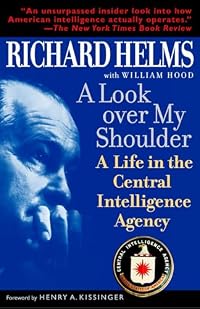
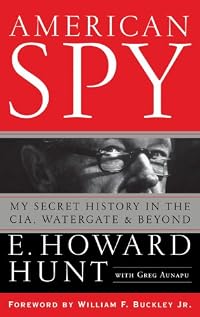
Richard Helms is the quintessential CIA man. For thirty years--from the very inception of the Central Intelligence Agency and before--he occupied pivotal positions in that shadowy world: OSS operator, spymaster, planner and plotter, and, finally, for more than six years, Agency director. No other man was so closely and personally involved, over so long a period, with so many CIA activities, successful and otherwise. His story is the story of the CIA, and in portraying Helms's extraordinary show more career Pulitzer Prize-winning author Thomas Powers has in fact written the first comprehensive inside history of the CIA itself. It is a history, moreover, that is entirely uncensored. While the information on which it is based has been drawn from intensive interviews with dozens of former key Agency officials, including Helms himself, as well as from exhaustive research through hundreds of published and unpublished sources, the author is not subject to the kind of legal restraints that have burdened others writing about the CIA. The result is a picture of the Agency more objective, more complete, and more revealing than any hitherto available. And because it is written with an eye for character and anecdote, it is as readable as it is important. Here, for example, is the full story of the long-running plot, first launched by Dwight Eisenhower and pressed by the Kennedys, to kill Fidel Castro; of the overthrow of the Arbenz government in Guatemala in 1954; of the disastrous and little-known CIA operation in Indonesia in the mid-1950s; of the Bay of Pigs adventure (including a persuasive revisionist analysis of why it was doomed); of CIA involvement in Vietnam and Laos; and the desperate attempts to change the course of Chilean politics. Here too are the personalities that created and shaped the CIA: Frank Wisner, one of Helms's executive predecessors, being treated for a nervous breakdown and warning a nurse, "I control thousands of goons!"; Allen Dulles telling his favorite story, about passing up (in favor of a tennis game) yet another boring interview with yet another fanatical Russian exile in Switzerland during World War I--and later finding out that it had been Lenin; the odd genius of Richard Bissell, who triumphantly created the U-2 high-level reconnaissance program--and then superintended the Bay of Pigs fiasco; James Angleton, the man who raised suspicion to an art form as counterintelligence chief; E. Howard Hunt (Helms's favorite spy novelist--he hated le Carré), the maverick undercover man, who, when asked by an old CIA colleague what he was doing in Nixon's White House, replied, "Well, you know, political work"--And many more. At the center of it all is Richard Helms, "the man who kept the secrets," who at the end of his long career found himself charged with perjury for doing what he conceived to be his job, lying to a Senate investigating committee. "It is said," writes Powers, "that men begin life with a tabula rasa; Helms ended it that way." Yet, as this book makes clear, the dilemma of Richard Helms is not his alone, but a conflict of principle in many ways inherent in the Agency itself, and in a society that insists on creating such an institution and then letting it go its way. With the publication of this book, we are at last in a position to see, to understand, and to judge the CIA.--Dust jacket. show lessTags
Recommendations















Member Reviews
Members
- Recently Added By
Author Information

13+ Works 1,223 Members
Thomas Powers is the author of The Man Who Kept the Secrets: Richard Helms and the CIA (1979), Heisenberg's War: The Secret History of the German Bomb (1993), and The Confirmation (2000), a novel. He won a Pulitzer Prize for National Reporting in 1971 and has contributed to The New York Review of Books, The New York Times Book Review, Harper's, show more The Nation, The Atlantic, and Rolling Stone. show less
Awards and Honors
Distinctions
Common Knowledge
- People/Characters
- Richard Helms; Allen Dulles; Richard Bissell; Thomas Karamessines; Edward Korry; E. Howard Hunt (show all 47); John Ehrlichman; John Dean; H. R. Haldeman; William Colby; Ngo Dinh Diem; Frank Wisner; Kim Philby; James Angleton; Salvador Allende; Vernon Walters; Ray Cline; Henry Hecksher; Rafael Trujillo; Walter Bedell Smith; Joseph McCarthy; Dean Rusk; James Schlesinger; Stuart Symington; Richard M. Nixon; Robert S. McNamara; John McCone; Patrice Lumumba; Edward Lansdale; Roger Hilsman; John F. Kennedy; Robert F. Kennedy; Lyndon Baines Johnson; Lawrence Houston; Daniel Schorr; J. Edgar Hoover; William Harvey; William King Harvey; Anatoliy Golitsyn; John Foster Dulles; Dwight D. Eisenhower; Jorge Alessandri; Jacobo Arbenz; McGeorge Bundy; Henry Kissinger; Lyman Kirkpatrick; Desmond FitzGerald
- First words
- Introduction
The Central Intelligence Agency and the career of Richard Helms are not neutral subjects. - Last words
- (Click to show. Warning: May contain spoilers.)Helms belongs to the past.
Classifications
- Genres
- Nonfiction, General Nonfiction, Biography & Memoir, History, Politics and Government
- DDC/MDS
- 327.12 — Society, government, & culture Political science International Relations: Spies Foreign policy and specific topics in international relations Espionage and subversion
- LCC
- JK468 .I6 .P68 — Political Science Political institutions and public administration (United States) Political institutions and public administration United States Government. Public administration
Statistics
- Members
- 184
- Popularity
- 177,296
- Rating
- (4.25)
- Languages
- English, German
- Media
- Paper
- ISBNs
- 8
- ASINs
- 1


