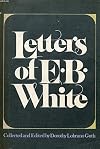
Letters of E. B. White
by E. B. White
On This Page
Description
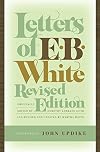
Originally edited by Dorothy Lobrano Guth, and revised and updated by Martha White. With a foreword by John Updike. These letters are, of course, beautifully written but above all personal, precise, and honest. They evoke E.B. White's life in New York and in Maine at every stage of his life. They are full of memorable characters: White's family, the New Yorker staff and contributors, literary types and show business people, farmers from Maine and sophisticates from New York-Katherine S. show more White, Harold Ross, James Thurber, Alexander Woolcott, Groucho Marx, John Updike, and many, many more. Each decade has its own look and taste and feel. Places, too-from Belgrade (Maine) to Turtle Bay (NYC) to the S.S. Buford, Alaska-bound in 1923-are brought to life in White's descriptions. There is no other book of letters to compare with this; it is a book to treasure and savor at one's leisure. As White wrote in this book, "A man who publishes his letters becomes nudist--nothing shields him from the world's gaze except his bare skin....a man who has written a letter is stuck with it for all time." show lessTags
Recommendations























Member Reviews
I started reading this in 2013, but being 662 pages long, it got set aside and buried at some point. A couple of months ago I dug it back up and have finally finished it.
What a charming and pithy letter writer was Mr. White. I guess that's no surprise given that he became a co-author of the famous "Elements of Style" on just that subject.
I loved meeting his friends and family in this way, and learning his views. Despite enjoying a bevy of "litry" friends and several friends outside that realm as well, he seems on the whole, to have been a shy person, never accepting an offer to speak to, or even belong to any group, nor even make an appearance to receive a national award from a president (both Kennedy and Nixon show up in these pages). show more
I mostly loved his interest in, affection for, and attendance to creatures in all shapes and sizes.
What struck me too, about the book, that seems unique to a book of letters, was the passage of time. He doesn’t mention his age until he’s in his 50’s, by which time we've already had visits to the hospital for one thing or another for he or his wife, and then, occasionally, an age number is dropped, and each time is a call to reminisce about the days of old, even though I wasn’t alive when he was young. Imagining, at times, my folks in those days, I'd gotten fond of his memories, as though they were mine and I missed our younger days of better health and less clash, grit, and modernity in our world. show less
What a charming and pithy letter writer was Mr. White. I guess that's no surprise given that he became a co-author of the famous "Elements of Style" on just that subject.
I loved meeting his friends and family in this way, and learning his views. Despite enjoying a bevy of "litry" friends and several friends outside that realm as well, he seems on the whole, to have been a shy person, never accepting an offer to speak to, or even belong to any group, nor even make an appearance to receive a national award from a president (both Kennedy and Nixon show up in these pages). show more
I mostly loved his interest in, affection for, and attendance to creatures in all shapes and sizes.
What struck me too, about the book, that seems unique to a book of letters, was the passage of time. He doesn’t mention his age until he’s in his 50’s, by which time we've already had visits to the hospital for one thing or another for he or his wife, and then, occasionally, an age number is dropped, and each time is a call to reminisce about the days of old, even though I wasn’t alive when he was young. Imagining, at times, my folks in those days, I'd gotten fond of his memories, as though they were mine and I missed our younger days of better health and less clash, grit, and modernity in our world. show less
Ratings
Members
- Recently Added By
Lists

the preppy handbook
36 works; 1 member
Author Information

94+ Works 111,448 Members
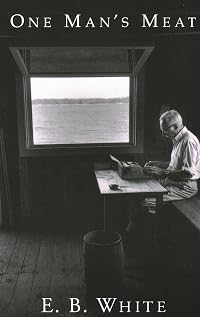
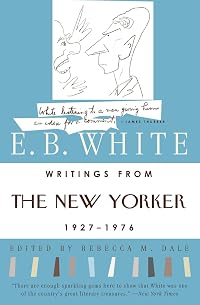
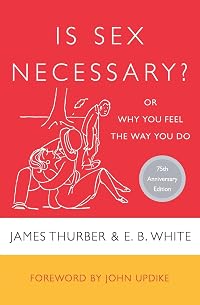
Born in Mount Vernon, New York, E. B. White was educated at Cornell University and served as a private in World War I. After several years as a journalist, he joined the staff of the New Yorker, then in its infancy. For 11 years he wrote most of the "Talk of the Town" columns, and it was White and James Thurber who can be credited with setting the show more style and attitude of the magazine. In 1938 he retired to a saltwater farm in Maine, where he wrote essays regularly for Harper's Magazine under the title "One Man's Meat." Like Thoreau, White preferred the woods; he also resembled Thoreau in his impatience and indignation. White received several prizes: in 1960, the gold medal of the American Academy of Arts and Letters; in 1963, the Presidential Medal of Freedom, the nation's highest civilian award (he was honored along with Thornton Wilder and Edmund Wilson); and in 1978, a special Pulitzer Prize. His verse is original and witty but with serious undertones. His friend James Thurber described him as "a poet who loves to live half-hidden from the eye." Three of his books have become children's classics: Stuart Little (1945), about a mouse born into a human family, Charlotte's Web (1952), about a spider who befriends a lonely pig, and The Trumpet of the Swan (1970). Among his best-known and most widely used books is The Elements of Style (1959), a guide to grammar and rhetoric based on a text written by one of his professors at Cornell, William Strunk, which White revised and expanded. White was married to Katherine Angell, the first fiction editor of the New Yorker. (Bowker Author Biography) Elwyn Brooks White was born on July 11, 1899, in Mt. Vernon, New York. After graduating from Cornell University, he worked briefly for an advertising agency and as a newspaper reporter before joining the staff of The New Yorker magazine in 1927. As a columnist for The New Yorker and a contributor to Harper's Magazine, White established a reputation as a prose stylist of exceptional elegance, clarity and wit. His interests, as reflected in his writing, were numerous and varied; his essays touched on such wide-ranging subjects as politics, farm animals, and life in New York City. White married Katharine S. Angell in 1929. They had one son, and in 1957 the family left New York for a farm in North Brookline, Maine. Writings from The New Yorker, 1927-1976 is a compilation of columns and essays produced during White's long relationship with the magazine. One Man's Meat, published in 1942, is a collection of his writings for Harper's. White adapted a short guide to English grammar and usage, The Elements of Style, from a college text written by one of his professors at Cornell, William Strunk Jr. It has sold millions of copies since it was first published in 1959 and has become a cherished resource for guidance in writing. White also co-authored Is Sex Necessary? with the humorist James Thurber, a fellow staff member at The New Yorker. E.B. White died on October 1, 1985 after succumbing to Alzheimer's. His diverse legacy also includes three children's books: Stuart Little, Charlotte's Web, and The Trumpet of the Swan. In 1970 the American Library Association presented White the Laura Ingalls Wilder Award in recognition of his "substantial and lasting contribution to literature for children." He was also awarded the Presidential Medal of Freedom in 1963 and received a special Pulitzer Prize citation for his body of work in 1970. (Bowker Author Biography) show less
All Editions
Awards and Honors
Awards
Distinctions
Common Knowledge
- Canonical DDC/MDS
- 818.5209
- Canonical LCC
- PS3545.H5187
Classifications
- Genres
- Biography & Memoir, Literature Studies and Criticism
- DDC/MDS
- 818.5209 — Literature & rhetoric American literature in English American miscellaneous writings in English 20th Century 1900-1945 Biography
- LCC
- PS3545 .H5187 — Language and Literature American literature American literature Individual authors 1900-1960
- BISAC
Statistics
- Members
- 544
- Popularity
- 54,503
- Reviews
- 1
- Rating
- (4.13)
- Languages
- English
- Media
- Paper, Ebook
- ISBNs
- 7
- ASINs
- 5