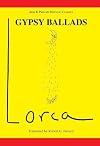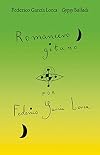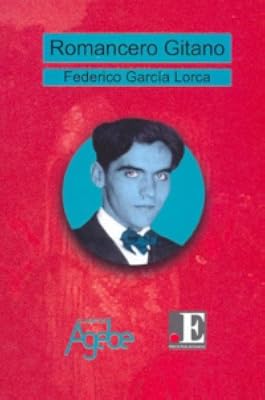
Gypsy Ballads
by Federico García Lorca
On This Page
Description
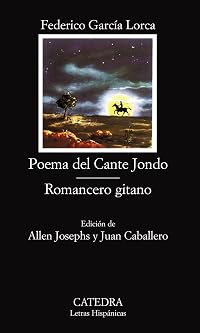
Lorca's famous Gypsy Ballads were composed in the 1920s, when his poetic style was evolving from the traditional towards the surrealist. The combination of the ballad's perennial narrative format with startling and allusive imagery has intrigued readers ever since. Dr Havard argues that the fatalism and tribalism of the gypsy settings relate to Lorca's own subjective dilemma and sexual anxieties, and that they ultimately make a deeply personal statement. The translations are broadly into show more free verse which aims to preserve the directness and the rhythm of the Spanish original so that the force of the poems may be appreciated by English readers. 162p show lessTags
Recommendations

















Member Reviews
No puedo reseñar nada de nada cuando se trata de Federico, para mí es simplemente amor: su poesía es pura música, sangre, sol calcinante en las tardes de toros, la brisa en la sierra, el frescor del río, pasión a manos llenas. ritmo en cada verso como el bombeo de tu corazón.
Lo único de la poesía de Federico que para mi gusto personal está por encima del Romancero Gitano es el Llanto por Ignacio Sánchez Mejía.
Lo único de la poesía de Federico que para mi gusto personal está por encima del Romancero Gitano es el Llanto por Ignacio Sánchez Mejía.
Spanish author Lorca set his ballads in Andalusia which was the regionof Spain he was from, among the gypsy people. He was gay and was later killed by General Franco's Civil Guard on 19th August 1936, barely a month after the start of the Spanish Civil War. On of his friends was artist Salvador Dali.
His poems often revolve around sexuality and violence and it makes a moving collection. My favourites of the 18 ballads wer "Ballad of the Moon, Moon" about the moon who abducts a child to sleep, "The Unfaithful Wife" about a man who sleeps with a woman who turns out to be already married, "Ballad of the Summoned Man" about a man who is fated to die at a specific time and does so, "The Martyrdom of Saint Olalla" about a young girl tortured show more and killed who becomes a martyr and "Tamar and Amnon" which is a Biblical tale of incest from Sammuel concerning King David's children.
The ballads themselves are quite short for the most part, usually not longer than 3 pages each. It was interesting that the original Spanish was on the left page and the translation on the right. I don't speak any Spanish (except a couple of dirt phrases!) which made it interesting to try and learn a little and pick up on common words. There was a very interesting introduction and at the end was an interpretation of the main themes in the poem referenceing other Spanish poems of the time. show less
His poems often revolve around sexuality and violence and it makes a moving collection. My favourites of the 18 ballads wer "Ballad of the Moon, Moon" about the moon who abducts a child to sleep, "The Unfaithful Wife" about a man who sleeps with a woman who turns out to be already married, "Ballad of the Summoned Man" about a man who is fated to die at a specific time and does so, "The Martyrdom of Saint Olalla" about a young girl tortured show more and killed who becomes a martyr and "Tamar and Amnon" which is a Biblical tale of incest from Sammuel concerning King David's children.
The ballads themselves are quite short for the most part, usually not longer than 3 pages each. It was interesting that the original Spanish was on the left page and the translation on the right. I don't speak any Spanish (except a couple of dirt phrases!) which made it interesting to try and learn a little and pick up on common words. There was a very interesting introduction and at the end was an interpretation of the main themes in the poem referenceing other Spanish poems of the time. show less
2016 Reading Challenge #31: A book of poetry.
“Con la sombra en la cintura
ella sueña en su baranda,
verde carne, pelo verde,
con ojos de fría plata.
Verde que te quiero verde.
Bajo la luna gitana,
las cosas la están mirando
y ella no puede mirarlas.”
Obra culmen de la poesía española
Me porté como quien soy.
Como un gitano legítimo.
Le regalé un costurero
grande, de raso pajizo,
y no quise enamorarme
porque teniendo marido
me dijo que era mozuela
cuando la llevaba al río.
Como un gitano legítimo.
Le regalé un costurero
grande, de raso pajizo,
y no quise enamorarme
porque teniendo marido
me dijo que era mozuela
cuando la llevaba al río.
Members
- Recently Added By
Lists

The 100 Best Books of All Time by Norwegian Book Club (World Library)
104 works; 23 members

Favourite Books
1,819 works; 316 members

In and About the 1920s
181 works; 31 members

Poetry Collections
79 works; 6 members

20th Century Literature
1,161 works; 55 members

New York Public Library's Books of the Century - All
170 works; 14 members
Le Monde - Les 100 livres du siècle
121 works; 25 members
Author Information

940+ Works 15,463 Members
Federico del Sagrado Corazón de Jesús García Lorca was born in a small town west of Granada, Spain, on June 5, 1898. He was a poet and playwright. His collections of poetry included Gypsy Ballads and Poet in New York. His plays included The Butterfly's Evil Spell, The Shoemaker's Prodigious Wife, Don Perlimplin, Blood Wedding, Yerma, and The show more House of Bernarda Alba. In 1936, he was assassinated by an anti-communist death squad during the beginning of the Spanish Civil War. Franco's regime placed a ban on Lorca's work and this was not lifted until 1953. It was not until Franco died that Lorca's work could be openly discussed in Spain. (Bowker Author Biography) Federico Garcia Lorca, born in Granada in 1898, was murdered by Franco's soldiers in 1936. (Publisher Provided) show less
Awards and Honors
Notable Lists
Series
Belongs to Publisher Series
Common Knowledge
- Canonical title
- Gypsy Ballads
- Original title
- Romancero Gitano
- Original publication date
- 1928 (original Spanish) (original Spanish)
Classifications
Statistics
- Members
- 652
- Popularity
- 44,429
- Reviews
- 17
- Rating
- (4.11)
- Languages
- 14 — Danish, English, Esperanto, Finnish, French, German, Hungarian, Japanese, Norwegian (Bokmål), Norwegian, Polish, Portuguese, Russian, Spanish
- Media
- Paper, Audiobook, Ebook
- ISBNs
- 70
- ASINs
- 15