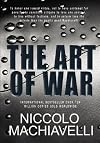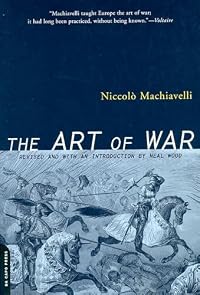
The Art of War
by Niccolò Machiavelli
On This Page
Description
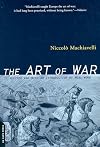
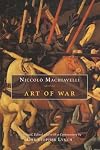
Niccolò Machiavelli's Art of War is one of the world's great classics of military and political theory. Praised by the finest military minds in history and said to have influenced no lesser lights than Frederick the Great and Napoleon, the Art of War is essential reading for anyone who wants to understand the history and theory of war in the West--and for readers of The Prince and Discourse on Livy who seek to explore more fully the connection between war and politics in Machiavelli's show more thought. Machiavelli scholar Christopher Lynch offers a sensitive and entirely new translation of the Art of War, faithful to the original but rendered in modern, idiomatic English. Lynch's fluid translation helps readers appreciate anew Machiavelli's brilliant treatments of the relationships between war and politics, civilians and the military, and technology and tactics. Clearly laying out the fundamentals of military organization and strategy, Machiavelli marshals a veritable armory of precepts, prescriptions, and examples about such topics as how to motivate your soldiers and demoralize the enemy's, avoid ambushes, and gain the tactical and strategic advantage in countless circumstances. To help readers better appreciate the Art of War, Lynch provides an insightful introduction that covers its historical and political context, sources, influence, and contemporary relevance. He also includes a substantial interpretive essay discussing the military, political, and philosophical aspects of the work, as well as maps, an index of names, and a glossary. show lessTags
Recommendations

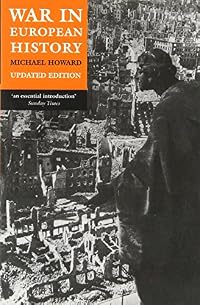
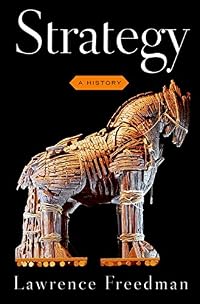
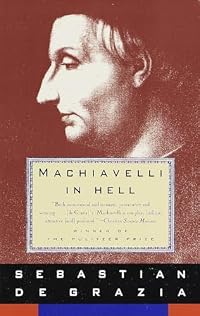
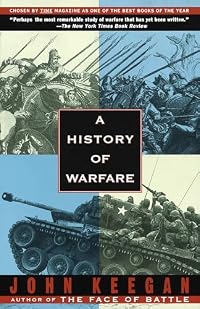


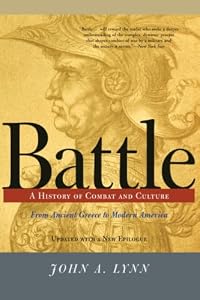
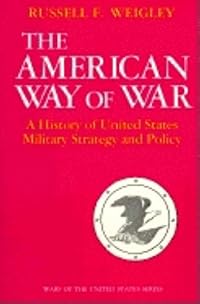
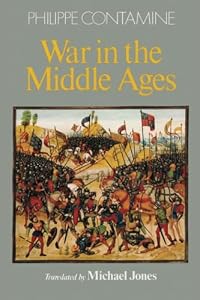

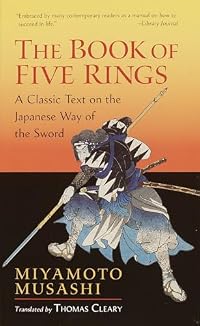
Member Recommendations
Member Reviews
Not what you would expect
This book has a giant shadow problem. Meaning it dwells in the shadow of Machiavellis other book The Prince. Whereas that book is a masterpiece that will be passed down for the rest of human existence this book is a fart. It's very boring. Its poorly edited with sentences and paragraphs that go on for pages. All to say something that makes no sense unless you have a battlefield map with figures to display what is being said. All the way to, I don't know who is talking in this part. The whole thing is a mess. There are a few wise bits of knowledge but for the majority of the book I dreaded reading more confusing junk that did nothing for me. The Sun Tzu book of the same title is vastly superior to this book. Just show more read that and The Prince. This one will stay on the shadow of those books because that's the way it should be. show less
This book has a giant shadow problem. Meaning it dwells in the shadow of Machiavellis other book The Prince. Whereas that book is a masterpiece that will be passed down for the rest of human existence this book is a fart. It's very boring. Its poorly edited with sentences and paragraphs that go on for pages. All to say something that makes no sense unless you have a battlefield map with figures to display what is being said. All the way to, I don't know who is talking in this part. The whole thing is a mess. There are a few wise bits of knowledge but for the majority of the book I dreaded reading more confusing junk that did nothing for me. The Sun Tzu book of the same title is vastly superior to this book. Just show more read that and The Prince. This one will stay on the shadow of those books because that's the way it should be. show less
The work is a completely new translation by Christopher Lynch. His goal was to produce as accurate and faithful translation as the two languages would allow. That job was handled particularly well. There are extensive notes on the translation process and word choice. If you are looking for a very faithful tranlation, this book is for you.
However, it's not for me. I am an avid military history reader and I was looking forward to this book. But, the dense run on sentences that characterize the Italian original makes for tough going.
Lynch begins the book with an extensive introduction that sets the work in context both in Italian politics and in Machiavelli's life. I thought that was quite good.
He (Lynch) ends the volume with an show more interpretive essay that I thought was a bit choppy and is more focused on Machiavelli (no surprise, that's his field). I was hoping for more on the art of war part. This is a facinating book in that it was written by a civilian with very little practical experience in the field. More of a compare/contrast look at how his ideas stacked up against the more conventional masters would have been nice. show less
However, it's not for me. I am an avid military history reader and I was looking forward to this book. But, the dense run on sentences that characterize the Italian original makes for tough going.
Lynch begins the book with an extensive introduction that sets the work in context both in Italian politics and in Machiavelli's life. I thought that was quite good.
He (Lynch) ends the volume with an show more interpretive essay that I thought was a bit choppy and is more focused on Machiavelli (no surprise, that's his field). I was hoping for more on the art of war part. This is a facinating book in that it was written by a civilian with very little practical experience in the field. More of a compare/contrast look at how his ideas stacked up against the more conventional masters would have been nice. show less
Ah, yes, I think of this book whenever someone says, "The end justifies the means." A great book on life, love, and war, but not a great philosophy to follow if you are looking for peace.
Somewhat Machiavellian...
Classics
L'Art de la guerre, publié en 1521, occupe une place singulière dans l’œuvre de Machiavel. Présenté sous la forme d'un dialogue, l'ouvrage surprend par son esprit peu machiavélique. Les considérations tactiques y côtoient les propos consacrés aux nécessités matérielles de la guerre (recrutement, armement...), orchestrant avec subtilité une réflexion sur le pouvoir. Quelles limites la politique impose-t-elle à l'art de la guerre ? Comment définir l'autorité ? Ce sont là quelques-unes des questions soulevées par Machiavel qui puise ici ses modèles chez les Anciens. En grand stratège, il omet parfois de répondre. Mais la guerre est une affaire si sérieuse qu'il faut peut-être savoir la manier avec ironie.
Dec 15, 2010French
Ratings
Members
- Recently Added By
Lists

Filosofía - Clásicos
217 works; 1 member
Author Information

441+ Works 42,824 Members
Niccolo Machiavelli was born on May 3, 1469 in Florence, Italy. He was a political philosopher, statesman, and court advisor. Starting out as a clerk, he quickly rose in the ranks because he understood balance of power issues involved in many of his diplomatic missions. His political pursuits quickly ended after he was imprisoned by the Medici show more family. He is best known for The Prince, his guide to power attainment and cutthroat leadership. He also wrote poetry and plays, including a comedy named Mandragola. He died on June 21, 1527 at the age of 58. (Bowker Author Biography) show less
All Editions
Series
Belongs to Publisher Series
Work Relationships
Is contained in
Is abridged in
Common Knowledge
- Canonical title
- The Art of War
- Original title
- Dell'arte della guerra
- Original publication date
- 1520
Classifications
Statistics
- Members
- 933
- Popularity
- 28,369
- Reviews
- 6
- Rating
- (3.61)
- Languages
- 14 — Chinese, English, Finnish, French, Hungarian, Indonesian, Italian, Norwegian (Bokmål), Polish, Portuguese (Portugal), Romanian, Russian, Spanish, Turkish
- Media
- Paper, Audiobook, Ebook
- ISBNs
- 79
- ASINs
- 15