On This Page
Description
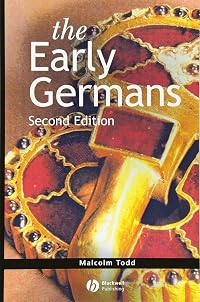
For many centuries Germanic peoples occupied much of northern and central Europe. From the fourth century onward migrant groups extended their power and influence over much of western Europe and beyond to North Africa. In so doing, they established enduring states in France, Spain, Italy and Britain. This illustrated book makes use of archaeological and literary sources to outline the ethnogenesis and history of the early Germanic peoples. It provides an overview of current knowledge of show more these peoples, their social structure, settlements, trade, customs, religion, craftsmanship and relations with the Roman Empire. In this second edition, the author incorporates important new archaeological evidence and reports on advances in historical interpretation. In particular, he offers new insights into developments in central and eastern Europe and the implications for our understanding of migration and settlement patterns, ethnicity and identity. Ten new plates have been added featuring significant new sites discovered in recent years. show lessTags
Recommendations




























Member Reviews
odd's book has become the standard introduction to the history and archaeology of the early Germanic peoples in English. In a remarkably clear and concise work, Todd manages a comprehensive overview of much of the main evidence regarding the Germanic tribes which goes a long way to correcting the popular conception that they were the filthy grunting savages seen in the opening sequence of the movie 'Gladiator'.
In the first part of the book he covers most of the important aspects of the culture of these tribes, covering the physical landscape of forest and marshland in which they lived, their general social structure, trade and diplomacy with Rome, burial customs, art, technology and (of course) warfare. He draws on both literary and show more archaeological sources of information and uses both judiciously to present a concise picture of these complex and warlike peoples.
Part Two gives brief but useful summaries of the history of the major tribes who took part in the 'Age of Migrations' from the Third to the Seventh Centuries AD. He presents information on the Goths, Seubi, Vandals, Franks, Alemanni, Burgundians, Gepids, Lombards, Thuringians, Bavarians and the Scandinavian tribes, with mentions of many other minor peoples. Each of these is little more than a useful sketch ranging from four to forty pages each (consider that Herwig Wolfram's 'History of the Goths' checks in at over 600 densely packed pages), but each of these is enough to introduce the essential information about each these peoples and direct the interested reader to more extensive information. It also shows that these tribes differed from each other culturally and, to an extent, linguistically and that what is true about the Germanics in the First Century may not be so in the Sixth.
The book is well illustrated with maps, diagrammes, photos of artefacts (both Germanic and Roman) and line drawings and its bibliography, while not comprehensive, is an excellent jumping off point for the reader who wishes to know more.
While the Celts have become a topic of keen interest in recent years, with a plethora of books on them ranging from fine academic works through coffee table books to arrant New Age nonsense, the ancient Germanics are, in a way, the neglected peoples of the ancient world. Given that England was established by Germanic tribes and that they were in many ways the successors of the Roman world, it is a little surprising that these vibrant, warlike and artistic 'barbarians' are not far better known and understood in the English-speaking world.
An excellent book for both the undergraduate student and the general reader. Along with his 'The Northern Barbarians' I can recommend this work very highly. show less
In the first part of the book he covers most of the important aspects of the culture of these tribes, covering the physical landscape of forest and marshland in which they lived, their general social structure, trade and diplomacy with Rome, burial customs, art, technology and (of course) warfare. He draws on both literary and show more archaeological sources of information and uses both judiciously to present a concise picture of these complex and warlike peoples.
Part Two gives brief but useful summaries of the history of the major tribes who took part in the 'Age of Migrations' from the Third to the Seventh Centuries AD. He presents information on the Goths, Seubi, Vandals, Franks, Alemanni, Burgundians, Gepids, Lombards, Thuringians, Bavarians and the Scandinavian tribes, with mentions of many other minor peoples. Each of these is little more than a useful sketch ranging from four to forty pages each (consider that Herwig Wolfram's 'History of the Goths' checks in at over 600 densely packed pages), but each of these is enough to introduce the essential information about each these peoples and direct the interested reader to more extensive information. It also shows that these tribes differed from each other culturally and, to an extent, linguistically and that what is true about the Germanics in the First Century may not be so in the Sixth.
The book is well illustrated with maps, diagrammes, photos of artefacts (both Germanic and Roman) and line drawings and its bibliography, while not comprehensive, is an excellent jumping off point for the reader who wishes to know more.
While the Celts have become a topic of keen interest in recent years, with a plethora of books on them ranging from fine academic works through coffee table books to arrant New Age nonsense, the ancient Germanics are, in a way, the neglected peoples of the ancient world. Given that England was established by Germanic tribes and that they were in many ways the successors of the Roman world, it is a little surprising that these vibrant, warlike and artistic 'barbarians' are not far better known and understood in the English-speaking world.
An excellent book for both the undergraduate student and the general reader. Along with his 'The Northern Barbarians' I can recommend this work very highly. show less
Ratings
Members
- Recently Added By
Author Information

17+ Works 434 Members
All Editions
Series

Common Knowledge
- Canonical title
- The Early Germans
- Original publication date
- 1992
- Important places
- Germania; Germany
- Epigraph
- [None]
- Dedication
- To E. A. Thompson
- First words
- The emergence and early history of the Germanic peoples have never been a central concern of British historians.
Foreword.
The peoples known to the Classical Mediterranean world as the Germani were relative latecomers to history.
Introduction : Rediscovery.
The heartland of the immense area of norethern Europe occupied by the early Germanic people was the great expanse of lowland which extends from the Netherlands to western Russia.
1. Land and people. - Last words
- (Click to show. Warning: May contain spoilers.)The end of that long process is not yet in sight, but we may fairly claim to hold a vastly better vantage point than that of any previous generation.
- Original language
- English
Classifications
- Genres
- History, Nonfiction, Anthropology, General Nonfiction
- DDC/MDS
- 936.3 — History & geography History of ancient world (to ca. 499) Europe north and west of Italian Peninsula to ca. 499 Germanic regions to 481 and Pannonia
- LCC
- DD75 .T62 — History of Europe, Asia, Africa and Oceania Germany History of Germany Antiquities. Social life and customs. Ethnography
- BISAC
Statistics
- Members
- 145
- Popularity
- 227,087
- Reviews
- 1
- Rating
- (3.45)
- Languages
- Czech, English, Italian, Spanish
- Media
- Paper, Ebook
- ISBNs
- 8
- ASINs
- 1