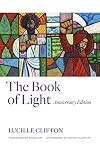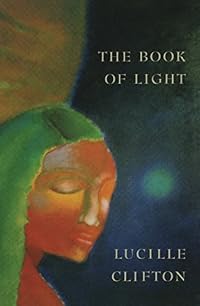
The Book of Light
by Lucille Clifton
On This Page
Description
"An anniversary edition of Lucille Clifton's Book of Light, a collection of poems"--Tags
Recommendations



Member Reviews
Divided into three parts, with the first part reflection being poems about childhood and family and survival, ending with that brilliant and famous poem:
won’t you celebrate with me
what i shaped into
a kind of life? i had no model.
born in babylon
both non-white and woman
what did i see to be except myself?
i made it up
here on this bridge between
starshine and clay.
my one hand holding tight
my other hand; come celebrate
with me that everyday
something has tried to kill me
and has failed.
The second part is entitled lightning bolt , was my favourite part, more outward-looking than the first part yet still self-questioning, self-assessing, with more uncertainty and gloomier than the first part of the collection. And excellent poems such as this show more one:
each morning i pull myself
out of despair
from nights of coals and a tongue
blistered with smiling
the step past the mother bed
is a high step
the walk through the widow’s door
is a long walk
and who are these voices calling
from every mirrored thing
say it coward say it
Then the last part is splendor , mythological and spiritual and very fascinating. I loved this book, a fantastic opening to this new year. show less
won’t you celebrate with me
what i shaped into
a kind of life? i had no model.
born in babylon
both non-white and woman
what did i see to be except myself?
i made it up
here on this bridge between
starshine and clay.
my one hand holding tight
my other hand; come celebrate
with me that everyday
something has tried to kill me
and has failed.
The second part is entitled lightning bolt , was my favourite part, more outward-looking than the first part yet still self-questioning, self-assessing, with more uncertainty and gloomier than the first part of the collection. And excellent poems such as this show more one:
each morning i pull myself
out of despair
from nights of coals and a tongue
blistered with smiling
the step past the mother bed
is a high step
the walk through the widow’s door
is a long walk
and who are these voices calling
from every mirrored thing
say it coward say it
Then the last part is splendor , mythological and spiritual and very fascinating. I loved this book, a fantastic opening to this new year. show less
I found Lucille Clifton’s The Book of Light interesting, moving, and thought-provoking. Her simple language and clear, clever metaphors delighted the mind and the tongue. Many of her poems touched me personally. Clifton won numerous prizes and two Pulitzer nominations. She clearly deserves all her accolades, in my opinion.
The first poem in the collection which really struck me was “june 20.” Clifton wrote in lines 3-4,
“i will be born in one week
to a frowned forehead of a woman
and a man whose fingers will itch
to enter me.” (Clifton 12)
In a horrific image, the poet, as a fetus, knows what will happen after she is born. The “temporary joy” (line 14) will end because of looming tragedy.
Clifton marked her life, as portrayed in show more her poems, by tragedy. In “sam,” she moans in lines 12-14,
“oh stars
and stripes forever,
what did you do to my father?” (Clifton 14)
The next poem in lines 7-8, Clifton laments his passing into “the company / of husbands fathers sons (Clifton 15). So her father represents a double-edged tragedy for her – his abuse and his death.
Some of the sweet metaphors she uses include one in “thel.” When referring to her friend, the eponymous “thel,” she describes her as a “sweet attic of a woman” (16). This image conjures up a cozy place filled with memories. She packed so much into that one word, “attic.” Another example occurs in “further note to clark.” She refers to this man (Clark Kent, aka Superman) as a “tourist” – from another planet, but also she hints at a man who comes for a visit to her home, but never stays for long.
Interestingly enough, Clifton makes her title part of the first line numerous times, including “thel” (16) “she lived” (20) “if I should” (41).
Two poems that touched me personally were “move” (35-36) and “samson predicts from gaza the philadelphia fire” (37). I lived in Philadelphia when Wilson Goode, the first black mayor of the “City of Brotherly Love” bombed the house Clifton describes. I can still see the helicopter flying over the house, the satchel containing the explosive dropping, the strap waving like some crazed battle flag, as it hit a shed on the roof and exploded in flames. Only one woman survived the fire, and Clifton addresses the second of these poems to her.
In the first of these poems, “move,” I especially appreciate the repetition of the word move as a link between stanzas. “Move” was the name of the back to nature African cult which became the victims of a horrible police action. Each stanza ends with “away” then the link “move.” The final two lines she reverses this order with “move / away” (36). The terror and the horror these men, women, and children must have experienced clearly comes through in Clifton’s simple language.
I could easily list another dozen poems of this thoroughly enjoyable collection. Clifton has all the things I admire in poetry: simple language, clear and concise metaphors, and grains of humor sprinkled through the tragedies she has seen in her life.
--Chiron, 8/27/09 show less
The first poem in the collection which really struck me was “june 20.” Clifton wrote in lines 3-4,
“i will be born in one week
to a frowned forehead of a woman
and a man whose fingers will itch
to enter me.” (Clifton 12)
In a horrific image, the poet, as a fetus, knows what will happen after she is born. The “temporary joy” (line 14) will end because of looming tragedy.
Clifton marked her life, as portrayed in show more her poems, by tragedy. In “sam,” she moans in lines 12-14,
“oh stars
and stripes forever,
what did you do to my father?” (Clifton 14)
The next poem in lines 7-8, Clifton laments his passing into “the company / of husbands fathers sons (Clifton 15). So her father represents a double-edged tragedy for her – his abuse and his death.
Some of the sweet metaphors she uses include one in “thel.” When referring to her friend, the eponymous “thel,” she describes her as a “sweet attic of a woman” (16). This image conjures up a cozy place filled with memories. She packed so much into that one word, “attic.” Another example occurs in “further note to clark.” She refers to this man (Clark Kent, aka Superman) as a “tourist” – from another planet, but also she hints at a man who comes for a visit to her home, but never stays for long.
Interestingly enough, Clifton makes her title part of the first line numerous times, including “thel” (16) “she lived” (20) “if I should” (41).
Two poems that touched me personally were “move” (35-36) and “samson predicts from gaza the philadelphia fire” (37). I lived in Philadelphia when Wilson Goode, the first black mayor of the “City of Brotherly Love” bombed the house Clifton describes. I can still see the helicopter flying over the house, the satchel containing the explosive dropping, the strap waving like some crazed battle flag, as it hit a shed on the roof and exploded in flames. Only one woman survived the fire, and Clifton addresses the second of these poems to her.
In the first of these poems, “move,” I especially appreciate the repetition of the word move as a link between stanzas. “Move” was the name of the back to nature African cult which became the victims of a horrible police action. Each stanza ends with “away” then the link “move.” The final two lines she reverses this order with “move / away” (36). The terror and the horror these men, women, and children must have experienced clearly comes through in Clifton’s simple language.
I could easily list another dozen poems of this thoroughly enjoyable collection. Clifton has all the things I admire in poetry: simple language, clear and concise metaphors, and grains of humor sprinkled through the tragedies she has seen in her life.
--Chiron, 8/27/09 show less
Ratings
Members
- Recently Added By
Lists

Books by Black Women
108 works; 2 members
Author Information

49+ Works 3,334 Members
Lucille Clifton was born in Depew, New York on June 27, 1936. She was the first person in her family to graduate from high school. She attended Howard University, where she majored in drama, for two years before deciding that she would rather write poetry. Her first poetry collection Good Times was published in 1969. During her lifetime, she wrote show more 11 books of poetry and 20 children's books. She won numerous awards including the Coretta Scott King Award for Everett Anderson's Good-bye in 1984, the National Book Award for Blessing the Boats: New and Selected Poems, 1988-2000 in 2001, and the Ruth Lilly Poetry Prize award in 2007. She was the Poet Laureate of Maryland from 1979 to 1985. She died after a long battle with cancer and other illnesses on February 13, 2010 at the age of 73. (Bowker Author Biography) show less
Common Knowledge
- Original publication date
- 1993
Classifications
Statistics
- Members
- 212
- Popularity
- 152,090
- Reviews
- 2
- Rating
- (4.26)
- Languages
- English
- Media
- Paper, Ebook
- ISBNs
- 5