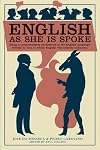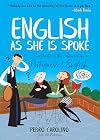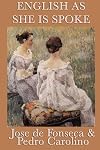
English As She Is Spoke
by Jose da Fonseca (Contributor), Pedro Carolino
On This Page
Description
In 1855, when Jose da Fonseca and Pedro Carolino wrote an English phrasebook for Portuguese students, they faced just one problem: they didn't know any English. Even worse, they didn't own an English-to-Portuguese dictionary. What they did have, though, was a Portuguese-to-French dictionary, and a French-to-English dictionary. The linguistic train wreck that ensued is a classic of unintentional humor, now revived in the first newly selected edition in a century. Armed with Fonseca and show more Carolino's guide, a Portuguese traveler can insult a barber ("What news tell me? All hairs dresser are newsmonger"), complain about the orchestra ("It is a noise which to cleve the head"), go hunting ("let aim it! let make fire him"), and consult a handy selection of truly mystifying "Idiotisms and Proverbs." show lessTags
Recommendations












Member Recommendations

Member Reviews
This is a horribly hilarious Portuguese-English dictionary written by two 19th century Portuguese scholars who couldn't speak English. They used a Portuguese-French dictionary and a French-English dictionary to write their book, with predictable results. Mark Twain had this comment about the book:
"Nobody can add to the absurdity of this book, nobody can imitate it successfully, nobody can hope to produce its fellow; it is perfect."
A couple of typical phrases, from the section on fishing:
"Silence! there is a superb perch! Give me quick the rod, Ah! there is, it is a lamprey."
"That pond it seems me many multiplied of fishes. Let us amuse rather to the fishing."
"Try it! I desire that you may be more happy and more skilful who acertain show more fisher, what have fished all day without to can take nothing."
English As She Is Spoke is a great read for a rainy day, and an ideal gift to lift someone's spirits. show less
"Nobody can add to the absurdity of this book, nobody can imitate it successfully, nobody can hope to produce its fellow; it is perfect."
A couple of typical phrases, from the section on fishing:
"Silence! there is a superb perch! Give me quick the rod, Ah! there is, it is a lamprey."
"That pond it seems me many multiplied of fishes. Let us amuse rather to the fishing."
"Try it! I desire that you may be more happy and more skilful who acertain show more fisher, what have fished all day without to can take nothing."
English As She Is Spoke is a great read for a rainy day, and an ideal gift to lift someone's spirits. show less
This book was first published more than 150 years ago, as a serious attempt to provide English/Portuguese words and phrases for the adventurous Portuguese tourist. Unfortunately, the author did not speak any English, and relied on TWO dictionaries to get to French and then to English. The result is hilariously inaccurate, often inappropriate, and totally believable.
It is very reminiscent of the Monty Python sketch The Hungarian Phrasebook, in which bizarre and often lascivious translations of simple day-to-day phrases cause the publisher to appear in a British court. After several of the more inappropriate phrases are read into the record, he pleads incompetence. My money's on this book as the inspiration.
That this was ever accepted by show more a publisher speaks reams about the book business. That it survives today is a tribute to a sense of humor and a sense of the absurd. This book will never be obsolete or out of date. It's a minor treasure. show less
It is very reminiscent of the Monty Python sketch The Hungarian Phrasebook, in which bizarre and often lascivious translations of simple day-to-day phrases cause the publisher to appear in a British court. After several of the more inappropriate phrases are read into the record, he pleads incompetence. My money's on this book as the inspiration.
That this was ever accepted by show more a publisher speaks reams about the book business. That it survives today is a tribute to a sense of humor and a sense of the absurd. This book will never be obsolete or out of date. It's a minor treasure. show less
If your favorite Monty Python sketch is "Dirty Hungarian Phrasebook" ("My hovercraft is full of eels"), you'll enjoy this English phrase book, written by a non-English-speaking fellow who used a Portuguese-French phrasebook and French-English dictionary to render what appear to be well-formed Portuguese sentences into inexplicable sentiments such as "He burns one's self the brains." Some of the errors make sense--they are literal translations of reflexive constructions, or homophones. Others defy easy explanation. While it may be true that "It must never to laugh of the unhappies," you may find this a difficult dictum to which to adhere in the face of these translations. I especially enjoy the section presenting anecdotes which are all show more but incomprehensible in the telling. Laughing of the unhappies, however, may bring about the uneasy realization that your attempts to speak another language probably sound exactly like this phrasebook.
You can learn to say "My hovercraft is full of eels" in many tongues at http://www.omniglot.com/language/phrases/hovercraft.htm show less
You can learn to say "My hovercraft is full of eels" in many tongues at http://www.omniglot.com/language/phrases/hovercraft.htm show less
This is an odd little book. It is purported to be a Portuguese to English phrasebook written by "men to which English was entirely unknown" in the 19th century. Apparently this was accomplished with the aid of a Portuguese/French dictionary and a French/English dictionary. Between the tragic grammar, bizarre word choice and inexplicable statements demanded by 19th century living you end up with nuggets like this:
"These apricots and these peaches make me and to come water in mouth."
"The pantaloons is to narrow."
"Is it complete this parlour furniture in damask crimson?"
"Don't you fear the privateers?"
"I shall you neat also your mouth, and you could care entertain it clean, for to preserve the mamel of the teeth; i could give you a opiate show more for to strengthen the gums."
I'm about 85% percent sure this book is what it claims to be. But I can't completely believe it because it was published by McSweeney's. show less
"These apricots and these peaches make me and to come water in mouth."
"The pantaloons is to narrow."
"Is it complete this parlour furniture in damask crimson?"
"Don't you fear the privateers?"
"I shall you neat also your mouth, and you could care entertain it clean, for to preserve the mamel of the teeth; i could give you a opiate show more for to strengthen the gums."
I'm about 85% percent sure this book is what it claims to be. But I can't completely believe it because it was published by McSweeney's. show less
What happens when you use a Portuguese-French phrasebook and a French/English dictionary (and zero knowledge of English) to make a Portuguese-English phrasebook? This happens. It's hard to pick a favorite "common" English phrase, but I am especially amused by "You hear the bird's gurgling?" For extra giggles, read aloud. In short, this book really craunched the marmoset.
How could I have never come across this unique book before now? I won't kid you. It won't have you rolling on the floor in laughter, but you will definitely crack of few smiles as you read it. It is sort of like the Ed Wood of language books. The author is really earnest, but he just doesn't know what he is doing!
After reading this, you will surely want to craunch the marmoset and burn the politeness.
After reading this, you will surely want to craunch the marmoset and burn the politeness.
It's probably impossible to improve on Mark Twain's review of this timeless tome, and I won't even try. Suffice it to say that time has borne out Twain's prediction that as long as English is spoken, this volume will be circulated, printed, and read to gales of laughter and astonishment. Contains the most evocative phrase ever written in English; "To Craunch a Marmoset."
Members
- Recently Added By
Author Information
2 Works 532 Members
Some Editions
Series
Belongs to Publisher Series
Common Knowledge
- Canonical title
- English As She Is Spoke
- Original title
- O novo guia da conversação em portuguez e inglez, ou Escolha de dialogos familiares sôbre varios assumptos
- Original publication date
- 1855
- First words
- Hómem.
- Last words
- (Click to show. Warning: May contain spoilers.)To craunch th marmoset.
- Original language
- Portuguese
- Disambiguation notice
- José da Fonseca was the author of a Portuguese-French phrasebook. His name was falsely appended to this book by Pedro Carolino, who appears not to have known any English himself and to have worked from da Fonseca's work and ... (show all)a French-English dictionary
Classifications
Statistics
- Members
- 520
- Popularity
- 57,426
- Reviews
- 14
- Rating
- (3.99)
- Languages
- English, Portuguese
- Media
- Paper, Ebook
- ISBNs
- 25
- UPCs
- 2
- ASINs
- 9