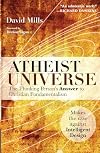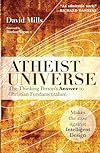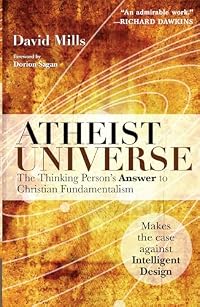
Atheist Universe: Why God Didn't Have a Thing to Do with It
by David Mills
On This Page
Description
IS THERE REALLY A GOD? OR DOES GOD EXIST ONLY IN OUR HEADS? IS THE BIBLE TRULY GOD'S WORD? OR IS IT A JUMBLE OF FANCIFUL MYTHS? Atheist Universe details why God is unnecessary to explain the universe's diversity, organization and beauty. Using simple, straightforward logic, this book rebuts every argument that claims to "prove" God's existence. A comprehensive primer for countering today's religious dogma, Atheist Universe addresses all the historical and scientific questions, including: show more *What is atheism, and why is it so misunderstood? *If God is a myth, then how did the universe appear? *Without God, is there an objective "right" and "wrong"? *What is the meaning of life without God? *Is there evidence of Jesus' miracles and resurrection? *Can atheists explain "near death" experiences and medical miracles? *Can science and the Bible realistically be reconciled? *What is the behind-the-scenes relationship between politics and religion? show lessTags
Recommendations








Member Reviews
I thought Mills' first edition was extremely well thought out except for the arguments on intelligent design. This edition reframed them and as a whole, is a good text to give fence-sitters. It won't change anyone's mind who isn't asking questions, but those that are, it is an excellent book.
This is a well-written, concise, interesting overview of the argument against Christian fundamentalism … particularly Creationism.
How did the universe come into being? We don’t know. But new discoveries in quantum theory, as well as research done by Stephen Hawking and his colleagues, have demonstrated that matter can and does arise quite spontaneously from the vacuum fluctuation energy of “empty” space.
Intelligent Design? Mills states that “ID’s greatest triumph … has been in convincing the general public that there is a controversy raging among scientists over Intelligent Design. There is no scientific controversy whatever.”
So how did life begin? Well, we know God isn’t necessary. There is no need for spontaneous show more creation of complex cells; the first cells contained no nucleus at all, consisting mainly of an exterior membrane. Biological membranes form easily and spontaneously from a mixture of water and simple lipids. From there, the evidence for evolution is overwhelming, and Mills carefully refutes argument after argument posed by creationists.
Life after death? Forget having science on your side, here. For example, if the law of the conservation of mass/energy necessitates consciousness after death (because mass/energy can be neither destroyed nor created) then the same law requires consciousness before conception.
There just isn’t any real debate among scientists in these matters. A study in 1998 revealed that, of the membership of the National Academy of Sciences, only 7 percent believed in a personal God, and even fewer in Creation Science or Intelligent Design. The point I took away from the book is this: Religious beliefs must remain beliefs; no more or less. The Bible’s creationist claims are not and cannot be supported by science. show less
How did the universe come into being? We don’t know. But new discoveries in quantum theory, as well as research done by Stephen Hawking and his colleagues, have demonstrated that matter can and does arise quite spontaneously from the vacuum fluctuation energy of “empty” space.
Intelligent Design? Mills states that “ID’s greatest triumph … has been in convincing the general public that there is a controversy raging among scientists over Intelligent Design. There is no scientific controversy whatever.”
So how did life begin? Well, we know God isn’t necessary. There is no need for spontaneous show more creation of complex cells; the first cells contained no nucleus at all, consisting mainly of an exterior membrane. Biological membranes form easily and spontaneously from a mixture of water and simple lipids. From there, the evidence for evolution is overwhelming, and Mills carefully refutes argument after argument posed by creationists.
Life after death? Forget having science on your side, here. For example, if the law of the conservation of mass/energy necessitates consciousness after death (because mass/energy can be neither destroyed nor created) then the same law requires consciousness before conception.
There just isn’t any real debate among scientists in these matters. A study in 1998 revealed that, of the membership of the National Academy of Sciences, only 7 percent believed in a personal God, and even fewer in Creation Science or Intelligent Design. The point I took away from the book is this: Religious beliefs must remain beliefs; no more or less. The Bible’s creationist claims are not and cannot be supported by science. show less
This book starts off well enough. Dorian Sagan's introduction is excellent. It doesn't take too much reading of the rest of the book, however, before a bad feeling starts to set in. I'm a committed atheist, and the author is right 99% of the time, but he is preaching, if I'm allowed to use that word, to the converted. His tone and attitude are so annoying that this book is useless for trying to convert an open-minded Christian reader. It reaches an absolute nadir when he devotes a chapter to defending pornography on the Internet! What does this have to do with the subject? It's like he just has to put every opinion he has ever held into the book. Give us a break!
What we need is a reasoned argument that starts from a few basic premises show more and builds to a conclusion. If you want to start to sow the seeds of doubt in a Christian, have them read Thomas Paine's the Age of Reason or some of Bart Ehrman's books.
Books like this will give atheism a bad name! :-) show less
What we need is a reasoned argument that starts from a few basic premises show more and builds to a conclusion. If you want to start to sow the seeds of doubt in a Christian, have them read Thomas Paine's the Age of Reason or some of Bart Ehrman's books.
Books like this will give atheism a bad name! :-) show less
For the most part, this is a very interesting and quite detailed exploration of the inadequacies and illogical notions that so-called fundamentalist Christians have about life, the universe and our place in it all. It's probably not for every reader, of course, especially if one holds hard & fast traditional beliefs of God and the nature of the universe. Discounting the mysterious & very personal aspect of "faith", the book looks at various fundamentalist Christian beliefs from a purely logical and fact-based stance, and I think generally succeeds in climbing over or maneuvering around the inflexible walls of entrenched convictions (of God's existence & overwhelming control) that the topic usually brings up. Yet after reading the whole show more book, I still walked away wondering, "OK, if the fundamentalists have it all wrong [which I believe:], then what?"As interesting as it was, though, much of the book did feel a bit repetitious, with discussion of creationism and Intelligent Design treading on in multiple chapters more than I think was needed to make the point. Overall, the book seems to stumble in its apparent underlying attempt to sway the reader toward no belief and no Religious dogma, if that's even the target audience; in many ways it felt that other atheists & non-believers were the intended audience here, not Religious true believers interested in thoroughly learning about a new belief system & worldview.Even though I personally still can't totally buy into the strict atheist principle -- itself a dogma -- that no natural force (call it God, the Force, whatever) exists tying us and everything else together in a multifaceted flow of life (instead seeing love itself as the most inclusive, omnipresent and omnipotent force of all), the book's detailed exploration and curious questioning did help me feel more secure about some of my beliefs.Though tedious at times, in the end I did find it a pretty good, persuasive read. I also agree with another reviewer that the beginning of the book is probably the best, most interesting part, where the author is interviewed by Christian apologists and reasonably & deftly defends his views & beliefs.A cool point... The many quotes popping up throughout by various scientists, explorers, US government leaders & founders, artists, writers, and others was rather interesting.Originally written on Dec 31, 2009 at 09:10AM show less
(posted on my blog: davenichols.net)
David Mills offers a fairly straight-forward atheistic argument against religiousity, pseudoscience, and judgmental moralism. A decent collection of atheist arguments, Atheist Universe presents a largely vanilla narrative to all but the most novice readers.
Mills presents his arguments in a bit of an odd fashion, jumping from subject to subject with little bridgework. While his arguments are sound, the writing is not terribly engaging or interesting. To anyone not experienced in reading the common atheist arguments, Universe may offer a nice introduction to many of the common thoughts. However, to anyone who has read most any popular work on the subject, there is little new here. Again, a decent show more introduction and survey of modern atheist arguments, but don't expect anything groundbreaking. Three and one-half stars. show less
David Mills offers a fairly straight-forward atheistic argument against religiousity, pseudoscience, and judgmental moralism. A decent collection of atheist arguments, Atheist Universe presents a largely vanilla narrative to all but the most novice readers.
Mills presents his arguments in a bit of an odd fashion, jumping from subject to subject with little bridgework. While his arguments are sound, the writing is not terribly engaging or interesting. To anyone not experienced in reading the common atheist arguments, Universe may offer a nice introduction to many of the common thoughts. However, to anyone who has read most any popular work on the subject, there is little new here. Again, a decent show more introduction and survey of modern atheist arguments, but don't expect anything groundbreaking. Three and one-half stars. show less
I think that atheism is misunderstood by a vast majority of people. That people who are atheists have no morals, are negetive people, believe in Satan.... I could go on. As if only people that believe in a god (or, well, THE GOD) are capable of moral decisions and worthy to be around children and puppies. And the satan thing.... don't get me started.
Anyway, this book articulately answers these and many many more questions concerning atheism is a clear concise way. For those curious or looking to expand their knowledge base I suggest this novel. It's not huge (250 some pages) and I found it pretty easy to follow.
The author uses some pretty straight forward logic in presenting his case explaining why 'God' is unnecessary. I think that show more even those that have a religious faith should read this and others in this vein. Not to necessarily turn them from their path, but to help them understand where others views are coming from. show less
Anyway, this book articulately answers these and many many more questions concerning atheism is a clear concise way. For those curious or looking to expand their knowledge base I suggest this novel. It's not huge (250 some pages) and I found it pretty easy to follow.
The author uses some pretty straight forward logic in presenting his case explaining why 'God' is unnecessary. I think that show more even those that have a religious faith should read this and others in this vein. Not to necessarily turn them from their path, but to help them understand where others views are coming from. show less
This review is of the 2006 edition.
Atheist Universe: The Thinking Person’s Answer to Christian Fundamentalism by David Mills is exactly what it says it is. Mills is a Bible-quoting atheist who rebuts the most common arguments used by Christian fundamentalists for the required existence of God. Many readers will be surprised to find out that Mills is a former “Jesus-freak” (his term, not mine) who used to try to convert his high school classmates to Christianity before he became an atheist.
Atheist Universe covers the following topics:
* Is the origin of the universe natural or supernatural?
* Does the universe show evidence of design?
* Is the miracle of planetary clockwork proof of God?
* Is the miracle of life on Earth proof of show more God?
* Can Genesis be reconciled with modern science?
* Do miracles happen?
* Is there a Hell?
* Was America founded on Christian principles?
* Can intelligent design reconcile the Bible with science?
These are all questions that make for heated debate and Mill’s book is firmly on the side of atheism. Mills deconstructs the religious arguments with science and rhetorical analysis.
I found the book interesting, since I am occasionally on the receiving end of efforts to convert me to Christianity. It helped me put my finger on the rhetorical fallacies used in some religious arguments that had previously escaped me. It also made me aware of some of the distortions of both science and scripture that are carried out in an effort to reconcile the two.
Unlike having a discussion with someone on this topic (which often ends badly unless you are talking to someone who shares your views), reading a book on the topic lets you take the information in as large or small of a dose as you want, gives you time to think about the information presented, and doesn’t harangue you when you want to do something else.
I would unhesitatingly recommend this book to atheists and agnostics who are interested in being able to better articulate the counter-arguments to religion. While it might be useful to some people of faith who need or want to know the arguments against religion and God (either to understand atheists better or to learn an opponent’s views and thinking), it is one of those books that you have to come to of your own volition.
See more of my reviews at Booklorn.com. The latest reviews from over 50 book bloggers can also be found at Here Be (Book) Reviews. show less
Atheist Universe: The Thinking Person’s Answer to Christian Fundamentalism by David Mills is exactly what it says it is. Mills is a Bible-quoting atheist who rebuts the most common arguments used by Christian fundamentalists for the required existence of God. Many readers will be surprised to find out that Mills is a former “Jesus-freak” (his term, not mine) who used to try to convert his high school classmates to Christianity before he became an atheist.
Atheist Universe covers the following topics:
* Is the origin of the universe natural or supernatural?
* Does the universe show evidence of design?
* Is the miracle of planetary clockwork proof of God?
* Is the miracle of life on Earth proof of show more God?
* Can Genesis be reconciled with modern science?
* Do miracles happen?
* Is there a Hell?
* Was America founded on Christian principles?
* Can intelligent design reconcile the Bible with science?
These are all questions that make for heated debate and Mill’s book is firmly on the side of atheism. Mills deconstructs the religious arguments with science and rhetorical analysis.
I found the book interesting, since I am occasionally on the receiving end of efforts to convert me to Christianity. It helped me put my finger on the rhetorical fallacies used in some religious arguments that had previously escaped me. It also made me aware of some of the distortions of both science and scripture that are carried out in an effort to reconcile the two.
Unlike having a discussion with someone on this topic (which often ends badly unless you are talking to someone who shares your views), reading a book on the topic lets you take the information in as large or small of a dose as you want, gives you time to think about the information presented, and doesn’t harangue you when you want to do something else.
I would unhesitatingly recommend this book to atheists and agnostics who are interested in being able to better articulate the counter-arguments to religion. While it might be useful to some people of faith who need or want to know the arguments against religion and God (either to understand atheists better or to learn an opponent’s views and thinking), it is one of those books that you have to come to of your own volition.
See more of my reviews at Booklorn.com. The latest reviews from over 50 book bloggers can also be found at Here Be (Book) Reviews. show less
Members
- Recently Added By
Lists

Atheism, humanism, freethought, &c. — Best nonfiction books in favour of
167 works; 14 members
Author Information
2 Works 611 Members
Common Knowledge
- Canonical title
- Atheist Universe: Why God Didn't Have a Thing to Do with It
- Original publication date
- 2003
- First words
- Winston Churchill once observed that "Everyone is in favor of free speech. Hardly a day passes without its virtues being extolled. But some people's idea of free speech is that they are free to say what they like, but if an... (show all)yone else says anything back, that is an outrage."
- Blurbers
- Ellis, Albert; Montagu, M.F. Ashley
Classifications
- Genres
- Religion & Spirituality, Nonfiction, General Nonfiction, Philosophy, Politics and Government
- DDC/MDS
- 322 — Social sciences Political science Relation of the state to organized groups and their members
- LCC
- BL2747.3 .M525 — Philosophy, Psychology and Religion Religions. Mythology. Rationalism Religions. Mythology. Rationalism Rationalism
- BISAC
Statistics
- Members
- 611
- Popularity
- 47,508
- Reviews
- 11
- Rating
- (3.86)
- Languages
- English, French
- Media
- Paper, Audiobook, Ebook
- ISBNs
- 6
- ASINs
- 2