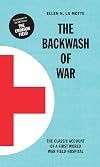
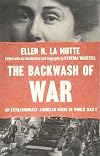
The Backwash of War: The Classic Account of a First World War Field-Hospital Nurse
by Ellen N. La Motte
On This Page
Description
Not only did La Motte boldly breach decorum in writing The Backwash of War, but she forcefully challenged societal norms in other equally remarkable ways, as a debutante turned Johns Hopkins-trained nurse, pathbreaking public health advocate and administrator, suffragette, journalist, writer, lesbian, and self-proclaimed anarchist.Tags
Recommendations




























Member Reviews
This short nonfiction book packs a powerful punch. Vignettes written by an American nurse about field hospitals during WWI, it is dark and graphic and disturbing. It is all too real.
There are heroes in the book, and there are also just plain people, people who ended up as fodder for war and those who ended up treating them. While emergency treatment for soldiers has changed drastically since the period of this book, and methods of fighting war have changed, the effect on bodies and souls is still devastating.
This is not a book full of hope and feel-good stories of redemption. It is a books of despair and hopelessness, and the timeless, relentless brutality and reality of war.
There are heroes in the book, and there are also just plain people, people who ended up as fodder for war and those who ended up treating them. While emergency treatment for soldiers has changed drastically since the period of this book, and methods of fighting war have changed, the effect on bodies and souls is still devastating.
This is not a book full of hope and feel-good stories of redemption. It is a books of despair and hopelessness, and the timeless, relentless brutality and reality of war.
THE BACKWASH OF WAR (original subtitle, THE HUMAN WRECKAGE OF THE BATTLEFIELD AS WITNESSED BY AN AMERICAN HOSPITAL NURSE), Ellen La Motte's little book of stories from the Belgian front of WWI was successful enough to go through multiple printings in the U.S. in 1916-17, although it was banned in France and England, where its dark tone was considered detrimental to morale and to the war effort itself. And, once the U.S. entered the war, the book was suppressed there too.
I had never heard of BACKWASH until very recently, when I ran across a mention of this new edition in a WWI Centennial Newsletter. As a "war lit" buff (in fact I'd just finished reading another obscure WWI memoir by an English private, A.M. Burrage's WAR IS WAR, about show more his time in the trenches of Belgium), I was immediately intrigued and decided to read it. And I was not disappointed. Cynthia Wachtell, an American Studies prof at Yeshiva University, has rescued the book from decades of obscurity, adding an erudite and scholarly Introduction and a perhaps first-ever biography of La Motte, to a well-annotated text of the original volume. She also added three other published wartime essays by LaMotte, along with an extensive list of other LaMotte writings, followed by her own extensive research notes and a useful index. In other words, the Wachtell edition - a fascinating mix of history, literature and women's studies - is a very important piece of scholarship, deserving of a wide audience.
Ellen La Motte's life was one of great accomplishment. Trained at Johns Hopkins as a nurse, she became a recognized expert on tuberculosis, publishing numerous articles about the disease and its treatment, and also held important administrative positions with the Health Department of Baltimore. Though not wealthy herself, she enjoyed the patronage of a very wealthy cousin, which gave her the opportunity to volunteer as a nurse overseas during the Great War. La Motte was already over forty when she traveled to France to try to "do her bit" for the war. Her experiences in a large Paris military hospital and then in a French field hospital near the Belgian front formed the basis for her BACKWASH stories, all of them dark and filled with starkly grim descriptions of the wounded and dying men she treated there.
While the stories are compelling enough in themselves - and I can see why they enjoyed such success in those early years of the war - what I found even more interesting here in the Wachtell edition was La Motte's own life story, brought out so well in the added biography and historical timeline. After she got to France, La Motte met Emily Crane Chadbourne, a wealthy divorcee from Chicago, heiress of the Crane Company (known primarily today for its bathroom fixtures). They began a relationship which would endure until La Motte's death in 1961. In Paris they would become close friends with another unorthodox couple, Gertrude Stein and Alice B. Toklas - a friendship which endured for nearly forty years. One is compelled to wonder if Ernest Hemingway, a frequent guest at Stein's salon in the postwar years, read BACKWASH (maybe even got a copy from Stein?), and developed his own terse, declarative style of writing in imitation of La Motte. Because the stylistic similarities are striking. But, having read another fascinating book, STEIN AND HEMINGWAY: THE STORY OF A TURBULENT FRIENDSHIP, by Lyle Larsen, I know that Ernie & Gert's friendship had its ups and downs, and that the macho Hemingway would have been loathe to admit being influenced by any woman, whether it be Stein or La Motte.
I was intrigued to learn that, despite her many accomplishments in the field of health and medicine, La Motte's real ambition was to be a writer, a dream she could follow freely, having become independently wealthy, first through her cousin, and then through her life-partner, Chadbourne. Following the success of BACKWASH, she became interested in the scourge of opium addiction, and traveled to China and other parts of the Far East to research it, later publishing numerous articles and several books on the opium trade. I wonder if any of those pieces would be relevant again today in light of the current opioid addiction crisis here in America.
When one thinks of literary classics of WWI, Hemingway's A FAREWELL TO ARMS, Remarque's ALL QUIET ON THE WESTERN FRONT, and perhaps e.e. cummings' THE ENORMOUS ROOM usually come to mind. To those I've previously added another favorite of my own, Frederic Manning's HER PRIVATES WE. And now there's this one, THE BACKWASH OF WAR: AN EXTRAORDINARY AMERICAN NURSE IN WORLD WAR I, which came before any of those others. There are several editions of La Motte's book available now, since it is in the public domain, but I will strongly recommend this one from Johns Hopkins University Press, with all of its important and illuminating addendums from editor Cynthia Wachtell. History, Literature and Women's Studies professors and teachers should take note, because this is a very important contribution to all of those fields. My congratulations to Dr Wachtell. My highest recommendation.
- Tim Bazzett, author of the Cold War memoir, SOLDIER BOY: AT PLAY IN THE ASA show less
I had never heard of BACKWASH until very recently, when I ran across a mention of this new edition in a WWI Centennial Newsletter. As a "war lit" buff (in fact I'd just finished reading another obscure WWI memoir by an English private, A.M. Burrage's WAR IS WAR, about show more his time in the trenches of Belgium), I was immediately intrigued and decided to read it. And I was not disappointed. Cynthia Wachtell, an American Studies prof at Yeshiva University, has rescued the book from decades of obscurity, adding an erudite and scholarly Introduction and a perhaps first-ever biography of La Motte, to a well-annotated text of the original volume. She also added three other published wartime essays by LaMotte, along with an extensive list of other LaMotte writings, followed by her own extensive research notes and a useful index. In other words, the Wachtell edition - a fascinating mix of history, literature and women's studies - is a very important piece of scholarship, deserving of a wide audience.
Ellen La Motte's life was one of great accomplishment. Trained at Johns Hopkins as a nurse, she became a recognized expert on tuberculosis, publishing numerous articles about the disease and its treatment, and also held important administrative positions with the Health Department of Baltimore. Though not wealthy herself, she enjoyed the patronage of a very wealthy cousin, which gave her the opportunity to volunteer as a nurse overseas during the Great War. La Motte was already over forty when she traveled to France to try to "do her bit" for the war. Her experiences in a large Paris military hospital and then in a French field hospital near the Belgian front formed the basis for her BACKWASH stories, all of them dark and filled with starkly grim descriptions of the wounded and dying men she treated there.
While the stories are compelling enough in themselves - and I can see why they enjoyed such success in those early years of the war - what I found even more interesting here in the Wachtell edition was La Motte's own life story, brought out so well in the added biography and historical timeline. After she got to France, La Motte met Emily Crane Chadbourne, a wealthy divorcee from Chicago, heiress of the Crane Company (known primarily today for its bathroom fixtures). They began a relationship which would endure until La Motte's death in 1961. In Paris they would become close friends with another unorthodox couple, Gertrude Stein and Alice B. Toklas - a friendship which endured for nearly forty years. One is compelled to wonder if Ernest Hemingway, a frequent guest at Stein's salon in the postwar years, read BACKWASH (maybe even got a copy from Stein?), and developed his own terse, declarative style of writing in imitation of La Motte. Because the stylistic similarities are striking. But, having read another fascinating book, STEIN AND HEMINGWAY: THE STORY OF A TURBULENT FRIENDSHIP, by Lyle Larsen, I know that Ernie & Gert's friendship had its ups and downs, and that the macho Hemingway would have been loathe to admit being influenced by any woman, whether it be Stein or La Motte.
I was intrigued to learn that, despite her many accomplishments in the field of health and medicine, La Motte's real ambition was to be a writer, a dream she could follow freely, having become independently wealthy, first through her cousin, and then through her life-partner, Chadbourne. Following the success of BACKWASH, she became interested in the scourge of opium addiction, and traveled to China and other parts of the Far East to research it, later publishing numerous articles and several books on the opium trade. I wonder if any of those pieces would be relevant again today in light of the current opioid addiction crisis here in America.
When one thinks of literary classics of WWI, Hemingway's A FAREWELL TO ARMS, Remarque's ALL QUIET ON THE WESTERN FRONT, and perhaps e.e. cummings' THE ENORMOUS ROOM usually come to mind. To those I've previously added another favorite of my own, Frederic Manning's HER PRIVATES WE. And now there's this one, THE BACKWASH OF WAR: AN EXTRAORDINARY AMERICAN NURSE IN WORLD WAR I, which came before any of those others. There are several editions of La Motte's book available now, since it is in the public domain, but I will strongly recommend this one from Johns Hopkins University Press, with all of its important and illuminating addendums from editor Cynthia Wachtell. History, Literature and Women's Studies professors and teachers should take note, because this is a very important contribution to all of those fields. My congratulations to Dr Wachtell. My highest recommendation.
- Tim Bazzett, author of the Cold War memoir, SOLDIER BOY: AT PLAY IN THE ASA show less
Probably taking the occasion of the hundredth anniversary of the outbreak of the First World War, this small but dense collection of stories written by a great character like Ellen La Motte is republished. Nurse and journalist, La Motte served as a nurse in field hospitals, and witnessed the utter absurdity of war and the moral depravity caused by the war itself of all the people involved, whether they were soldiers, officers, doctors or civilians. His stories are so raw and merciless as they were at the time banned because detrimental to the morale of the belligerents. From a purely literary point of view, sometimes the writing is a bit repetitive, but the images evoked are so strong and disturbing to make not very evident this issue show more of style.
Thank Pavillon Books and Netgalley for giving me this book in exchange for an honest review.
Probabilmente cogliendo l'occasione del centesimo anniversario dello scoppio della prima guerra mondiale, viene ripubblicata questa piccola ma densa raccolta di racconti scritti da un personaggio eccezionale come Ellen La Motte. Infermiera e giornalista, la La Motte servì come infermiera negli ospedali da campo, e testimoniò la totale assurdità della guerra e la depravazione morale causata dalla guerra stessa su tutte le persone coinvolte, che fossero soldati, ufficiali, medici o civili. I suoi racconti sono così crudi e impietosi da essere stati a suo tempo banditi perché dannosi per il morale dei belligeranti. Dal punto di vista puramente letterario, a volte la scrittura è un po' ripetitiva, ma le immagini evocate sono talmente forti e inquietanti da rendere scarsamente evidente questo problema di stile.
Ringrazio Pavillon Books e Netgalley per avermi concesso questo libro in cambio di una recensione onesta. show less
Thank Pavillon Books and Netgalley for giving me this book in exchange for an honest review.
Probabilmente cogliendo l'occasione del centesimo anniversario dello scoppio della prima guerra mondiale, viene ripubblicata questa piccola ma densa raccolta di racconti scritti da un personaggio eccezionale come Ellen La Motte. Infermiera e giornalista, la La Motte servì come infermiera negli ospedali da campo, e testimoniò la totale assurdità della guerra e la depravazione morale causata dalla guerra stessa su tutte le persone coinvolte, che fossero soldati, ufficiali, medici o civili. I suoi racconti sono così crudi e impietosi da essere stati a suo tempo banditi perché dannosi per il morale dei belligeranti. Dal punto di vista puramente letterario, a volte la scrittura è un po' ripetitiva, ma le immagini evocate sono talmente forti e inquietanti da rendere scarsamente evidente questo problema di stile.
Ringrazio Pavillon Books e Netgalley per avermi concesso questo libro in cambio di una recensione onesta. show less
I was provided a gratis ebook copy of this book through NetGalley.
This 200-page book packs a powerful punch. It's said that any book that's truly about war is anti-war, and that's the case here. La Motte never judges the politics behind the Great War (the greatest open criticism she offers is in one section where she scoffs at the men who show off pictures of their wives and sniffle at how they miss her, then use convenient Belgian prostitutes), but she paints a visceral image of the consequences. The forward of the book says that the original publication sold well in America in 1916, but after the country entered the war, the government quietly banned its publication. That doesn't come as a huge surprise to me. The book is extremely show more graphic even by modern standards.
These are the two opening sentences in the first story:
When he could stand it no longer, he fired a revolver up through the roof of his mouth, but he made a mess of it. The ball tore out his left eye, and then lodged somewhere under his skull, so they bundled him into an ambulance and carried him, cursing and screaming, to the nearest field hospital.
In particular, La Motte isn't shy about describing the conflicting stenches in the ward. I had to Google the term "anal fistula"--good times, there. As a writer who loves researching medical subjects, this book is gold. I will likely buy a print copy so I can easily bookmark sections. I can compare it to A Surgeon in Khaki by Arthur Anderson Martin, a WWI memoir of a doctor who died in duty soon after his book's publication; Martin is far more gentlemanly in his ward descriptions, instead going into detail about the different damage offered by varying types of bullets, and a constant frustration at Britain's lack of preparedness for the war. La Motte as a female and American nurse is much deeper into the psychology of the ward--she offered true vignettes, rather than stories. Both are excellent books, and the writers bring very different viewpoints to the same horrible place.
There are many books and reprints on World War I being released right now at this centennial of the war's begin. These chronicles are invaluable. They offer an important look at the past, but also show how little has changed. show less
This 200-page book packs a powerful punch. It's said that any book that's truly about war is anti-war, and that's the case here. La Motte never judges the politics behind the Great War (the greatest open criticism she offers is in one section where she scoffs at the men who show off pictures of their wives and sniffle at how they miss her, then use convenient Belgian prostitutes), but she paints a visceral image of the consequences. The forward of the book says that the original publication sold well in America in 1916, but after the country entered the war, the government quietly banned its publication. That doesn't come as a huge surprise to me. The book is extremely show more graphic even by modern standards.
These are the two opening sentences in the first story:
When he could stand it no longer, he fired a revolver up through the roof of his mouth, but he made a mess of it. The ball tore out his left eye, and then lodged somewhere under his skull, so they bundled him into an ambulance and carried him, cursing and screaming, to the nearest field hospital.
In particular, La Motte isn't shy about describing the conflicting stenches in the ward. I had to Google the term "anal fistula"--good times, there. As a writer who loves researching medical subjects, this book is gold. I will likely buy a print copy so I can easily bookmark sections. I can compare it to A Surgeon in Khaki by Arthur Anderson Martin, a WWI memoir of a doctor who died in duty soon after his book's publication; Martin is far more gentlemanly in his ward descriptions, instead going into detail about the different damage offered by varying types of bullets, and a constant frustration at Britain's lack of preparedness for the war. La Motte as a female and American nurse is much deeper into the psychology of the ward--she offered true vignettes, rather than stories. Both are excellent books, and the writers bring very different viewpoints to the same horrible place.
There are many books and reprints on World War I being released right now at this centennial of the war's begin. These chronicles are invaluable. They offer an important look at the past, but also show how little has changed. show less
I stumbled across The Backwash of War while looking for accounts and diaries from medical personnel.
Already then I had been aware of something curious in some of the (nurses') diaries I had been reading. You get to think, and it's maintained then as now, that all these nurses, whether professionals or VADs, were "angels in white", relieving the pain, sadnesses and stress of the freshly wounded soldiers, or holding their hands as they died. That sort of thing, the propaganda.
However, while there were a very few accounts which clearly showed very compassionate nurses, the vast majority were anything but. Some of these diaries came over as downright cold, distracted even, as if the patients were a nuisance, some disturbence to whatever show more else for they actually had undertaken this work.
It was quite awful considering all those broken men, shuttled through the medical system like so much barely alive meat and treated without much compassion at all. I was puzzled. I mean, why would anyone risk their life and well-being, ostensibly to help, only to treat the wounded patients worse than one would treat cattle on the way to the slaughterbank?
So, I came upon La Motte's small booklet, started reading and my jaw dropped so far under the table, I had to go hunt for it. This book is dripping with the most vicious kind of sarcasm and cynicism you can imagine. It is red-hot aflame, aggressive, so brutal that you back off a bit for fear it bites you, and badly at that!
Ellen La Motte is clearly very very angry about a lot of what happened during her time at the front. She tells it in short vignettes, the length of a letter, and she doesn't spare anyone. Not the cold fellow nurses, either too religious to dress a naked man, or too intent on meeting an officer for marriage, or simply out at the front to be away from a stifling home. Not the many callous surgeons, often experimenting on the fresh meat cycled through their OP theatres and wards, or testing how much the human body could deal with before dying. The army, which on one hand forces nurses and doctors to put together the deserters, so they can be shot, or pinning medals on the chests of those about to die. The soldiers and the veterans themselves, and those gullible people at home. She gave them all her anger and rage.
Acid will drip hotly from your brains after reading, but I finally grasped why so many accounts of medical people read so very curiously. It took another book, [b:Not So Quiet...: Stepdaughters of War|1303921|Not So Quiet... Stepdaughters of War|Helen Zenna Smith|http://photo.goodreads.com/books/1326531143s/1303921.jpg|1293151], also written by a woman, an ambulance driver, to set matters really into perspective for me. Because--I have to confess--I initially thought La Motte had to be way over the top.
Smith settles the score with her book, however. La Motte quite clearly was even comparatively mild in her accusations and descriptions. She also was absolutely truthful, as Smith's book bears out by referring to many exact same things, just from another perspective.
These two women have helped me to a deeper insight into what really was taking place at the front and directly behind it during the Great War than practically everyone else put together, maybe with the exception of several of the war artists.
It is by the way absolutely not astonishing that both books, La Motte's and later Smith's were forbidden rsp. taken out of print. They both do what George Scott Atkinson demands in his [b:A Soldier's Diary|14739332|A Soldier's Diary|George Scott Atkinson|http://photo.goodreads.com/books/1338294231s/14739332.jpg|20385047]: that the truth be told to the public without belittling it. show less
Already then I had been aware of something curious in some of the (nurses') diaries I had been reading. You get to think, and it's maintained then as now, that all these nurses, whether professionals or VADs, were "angels in white", relieving the pain, sadnesses and stress of the freshly wounded soldiers, or holding their hands as they died. That sort of thing, the propaganda.
However, while there were a very few accounts which clearly showed very compassionate nurses, the vast majority were anything but. Some of these diaries came over as downright cold, distracted even, as if the patients were a nuisance, some disturbence to whatever show more else for they actually had undertaken this work.
It was quite awful considering all those broken men, shuttled through the medical system like so much barely alive meat and treated without much compassion at all. I was puzzled. I mean, why would anyone risk their life and well-being, ostensibly to help, only to treat the wounded patients worse than one would treat cattle on the way to the slaughterbank?
So, I came upon La Motte's small booklet, started reading and my jaw dropped so far under the table, I had to go hunt for it. This book is dripping with the most vicious kind of sarcasm and cynicism you can imagine. It is red-hot aflame, aggressive, so brutal that you back off a bit for fear it bites you, and badly at that!
Ellen La Motte is clearly very very angry about a lot of what happened during her time at the front. She tells it in short vignettes, the length of a letter, and she doesn't spare anyone. Not the cold fellow nurses, either too religious to dress a naked man, or too intent on meeting an officer for marriage, or simply out at the front to be away from a stifling home. Not the many callous surgeons, often experimenting on the fresh meat cycled through their OP theatres and wards, or testing how much the human body could deal with before dying. The army, which on one hand forces nurses and doctors to put together the deserters, so they can be shot, or pinning medals on the chests of those about to die. The soldiers and the veterans themselves, and those gullible people at home. She gave them all her anger and rage.
Acid will drip hotly from your brains after reading, but I finally grasped why so many accounts of medical people read so very curiously. It took another book, [b:Not So Quiet...: Stepdaughters of War|1303921|Not So Quiet... Stepdaughters of War|Helen Zenna Smith|http://photo.goodreads.com/books/1326531143s/1303921.jpg|1293151], also written by a woman, an ambulance driver, to set matters really into perspective for me. Because--I have to confess--I initially thought La Motte had to be way over the top.
Smith settles the score with her book, however. La Motte quite clearly was even comparatively mild in her accusations and descriptions. She also was absolutely truthful, as Smith's book bears out by referring to many exact same things, just from another perspective.
These two women have helped me to a deeper insight into what really was taking place at the front and directly behind it during the Great War than practically everyone else put together, maybe with the exception of several of the war artists.
It is by the way absolutely not astonishing that both books, La Motte's and later Smith's were forbidden rsp. taken out of print. They both do what George Scott Atkinson demands in his [b:A Soldier's Diary|14739332|A Soldier's Diary|George Scott Atkinson|http://photo.goodreads.com/books/1338294231s/14739332.jpg|20385047]: that the truth be told to the public without belittling it. show less
WHAT an amazing book. Honestly, I don't believe I've ever read a historical source like it. THE BACKWASH OF WAR is not done as a documentary. And it certainly isn't first person nor the type of history you would get with Xenophone or Gregory of Tours. Instead, this is a book of vignettes. And the author, Ellen Newbold La Motte, gives you stories that are drawn on her experience as an American nurse volunteering in Flanders during WWI.
Her writing is astonishingly good. It's philosophical, poetic, poignant, and very successful in relating the horrors of war. In fact, if I had had her experiences, I'm quite sure I would have had to write them down, or else go mad.
Take the suicide.
When he could stand it no longer, he fired a revolver up show more through the roof of his mouth, but he made a mess of it. This ball tore out his left eye, and then lodged somewhere under his skull, so they bundled him into an ambulance and carried him, cursing and screaming, to the nearest field hospital.
..Since he had failed-in the job, his life must be saved, he must be nursed back to health, until he was well enough to be stood up against a wall and shot.
Nurse Ellen writes of the irony of the time and expense of saving this man. How the surgeon took so much time to partially repair him, and spent so much in materials to save his life, items that might have been used for men who wished to live. All that ether and gauze. All spent so that the poor fellow, with his eye left dangling, could be shot by his countrymen. Because well, discipline is important.
About the Croix de Guerre she writes,
He had performed no special act of bravery, but all mutilés are given the Croix de Guerre, for they will recover and go back to Paris, and in walking about the streets of Paris, with one leg gone, or an arm gone, it is good for the morale of the country that they should have a Croix de Guerre pinned on their breasts.
This is a blunt author. A blunt book. A book I reacted to strongly. If you are like me you'll find her insight into how 'the system' worked very interesting. Just as some of her asides are. She comments at one point, for example, about the patients in her ward discussing how when they over took a German gunnery site, they found the Germans chained to their weapons.
Read this book --which was banned in the United States after we entered the war. You will not find stories that are purposefully uplifting. But I think you'll marvel at the women and men who worked in that horrific environment. Who volunteered for it.
And all that night he died, and all the next day he died, and all the night following he died, for he was a very strong man and his vitality was wonderful.
... His was a filthy death. He died after three days' cursing and raving. Before he died, that end of the ward smelled foully, and his foul words, shouted at the top of his delirious voice, echoed foully. Everyone was glad when it was over. show less
Her writing is astonishingly good. It's philosophical, poetic, poignant, and very successful in relating the horrors of war. In fact, if I had had her experiences, I'm quite sure I would have had to write them down, or else go mad.
Take the suicide.
When he could stand it no longer, he fired a revolver up show more through the roof of his mouth, but he made a mess of it. This ball tore out his left eye, and then lodged somewhere under his skull, so they bundled him into an ambulance and carried him, cursing and screaming, to the nearest field hospital.
..Since he had failed-in the job, his life must be saved, he must be nursed back to health, until he was well enough to be stood up against a wall and shot.
Nurse Ellen writes of the irony of the time and expense of saving this man. How the surgeon took so much time to partially repair him, and spent so much in materials to save his life, items that might have been used for men who wished to live. All that ether and gauze. All spent so that the poor fellow, with his eye left dangling, could be shot by his countrymen. Because well, discipline is important.
About the Croix de Guerre she writes,
He had performed no special act of bravery, but all mutilés are given the Croix de Guerre, for they will recover and go back to Paris, and in walking about the streets of Paris, with one leg gone, or an arm gone, it is good for the morale of the country that they should have a Croix de Guerre pinned on their breasts.
This is a blunt author. A blunt book. A book I reacted to strongly. If you are like me you'll find her insight into how 'the system' worked very interesting. Just as some of her asides are. She comments at one point, for example, about the patients in her ward discussing how when they over took a German gunnery site, they found the Germans chained to their weapons.
Read this book --which was banned in the United States after we entered the war. You will not find stories that are purposefully uplifting. But I think you'll marvel at the women and men who worked in that horrific environment. Who volunteered for it.
And all that night he died, and all the next day he died, and all the night following he died, for he was a very strong man and his vitality was wonderful.
... His was a filthy death. He died after three days' cursing and raving. Before he died, that end of the ward smelled foully, and his foul words, shouted at the top of his delirious voice, echoed foully. Everyone was glad when it was over. show less
Oh boy, this is an in your face why are we bothering to save these soldiers anyway kind of story. Not a concise narrative, this is more a series of vignettes told through a cold and dispassionate nurse. To give you an idea, it starts with a deserter who shoots himself in the head but doesn't die so the nurses must heal him so he can be executed by firing squad. It also tells in gruesome detail, how freedom isn't just won on the suffering and blood of soldiers but so too are medical advances. The stories are moving but I was thankful that it was short.
Members
- Recently Added By
Author Information
7+ Works 136 Members
Some Editions
Common Knowledge
- Canonical title
- The Backwash of War: The Classic Account of a First World War Field-Hospital Nurse
- Original title
- The Backwash of War: The Human Wreckage of the Battlefield as Witnessed by an American Hospital Nurse
- Original publication date
- 1916; 2014-08-05 [reprint]
- Important events
- World War I
- Related movies
- The Crimson Field (2014 | IMDb)
- Dedication
- To
MARY BORDEN-TURNER
"The Little Boss"
TO WHOM I OWE MY EXPERIENCE IN
THE ZONE OF THE ARMIES - First words
- This war has been described as “Months of boredom, punctuated by moments of intense fright.”
- Last words
- (Click to show. Warning: May contain spoilers.)His annoyance became such, his impatience at the delay became such that he slid down from the shabby cushions, and without paying his fare, disappeared in the direction of the Ministère de la Guerre.
Classifications
Statistics
- Members
- 108
- Popularity
- 297,104
- Reviews
- 13
- Rating
- (4.17)
- Languages
- Dutch, English
- Media
- Paper, Audiobook, Ebook
- ISBNs
- 14
- ASINs
- 6