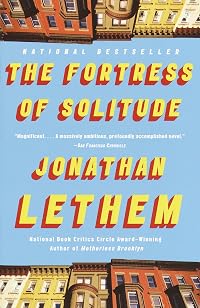
The Fortress of Solitude
by Jonathan Lethem
On This Page
Description
A New York Times Book Review EDITORS' CHOICE. From the National Book Critics Circle Award-winning author of Motherless Brooklyn, comes the vividly told story of Dylan Ebdus growing up white and motherless in downtown Brooklyn in the 1970s. In a neighborhood where the entertainments include muggings along with games of stoopball, Dylan has one friend, a black teenager, also motherless, named Mingus Rude. Through the knitting and unraveling of the boys' friendship, Lethem creates an show more overwhelmingly rich and emotionally gripping canvas of race and class, superheros, gentrification, funk, hip-hop, graffiti tagging, loyalty, and memory. "A tour de force.... Belongs to a venerable New York literary tradition that stretches back through Go Tell It on the Mountain, A Walker in the City, and Call it Sleep." --The New York Times Magazine "One of the richest, messiest, most ambitious, most interesting novels of the year.... Lethem grabs and captures 1970s New York City, and he brings it to a story worth telling." --Time show lessTags
Recommendations





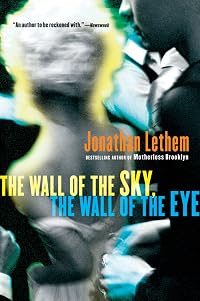


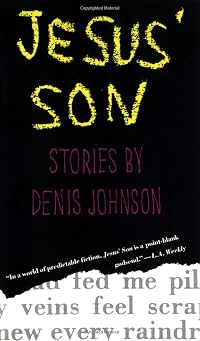
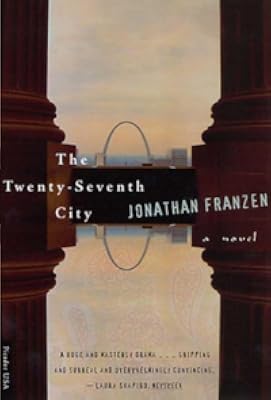
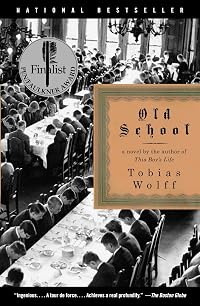
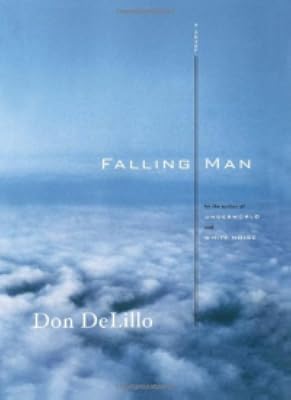
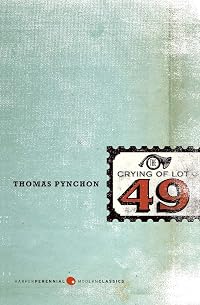
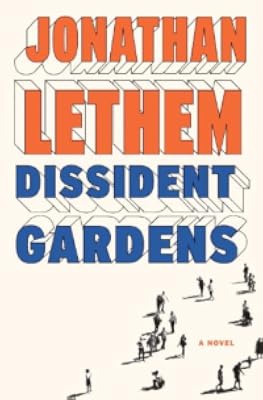

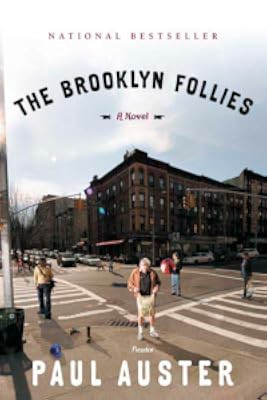
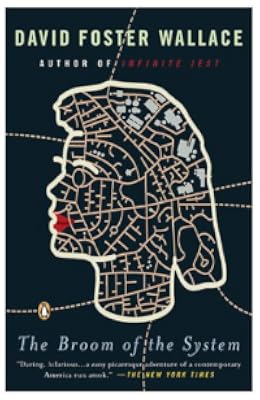
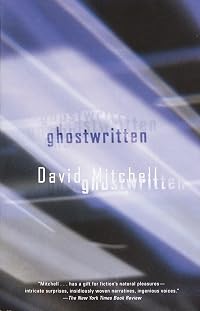

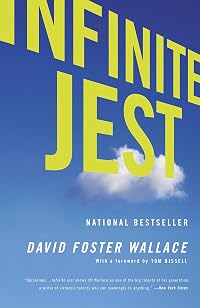
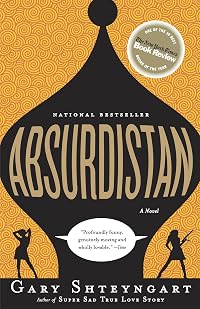
Member Recommendations

Member Reviews
Lethem's novel is set in Boerum Hill in Brooklyn in the 1970's, 80's, & 90's and tells of the friendship of two boys: Dylan Ebdus one of the few white children in the neighborhood and his black friend and idol Mingus Rude. Both boys live with fathers who are artists and emotionally distant from their sons and their mothers are completely absent from their lives. So Dylan and Mingus have to make it on their own. Lethem excels in the parts of the novel when his characters are younger and capturing the street scene of 1970's Brooklyn - the games, the language, and the uneasy state of race relations. There's also a magical element to the novel when Dylan finds a ring that allows him and Mingus to fly and they use it to try to fight crime. show more Along the way the novel takes on many topics and tangents such as music of the 70's & 80's (from R&B to punk), the tagging culture, drug abuse, the lucky breaks Dylan gets from white privilege, and gentrification. Dylan ruminates about feeling invisible in the mostly black neighborhood and the duality of his life in black Brooklyn and at his white high school and college. I have no way of knowing for sure if Lethem was alluding to Ralph Ellison's Invisible Man and W.E.B. DuBois' The Souls of Black Folk for these concepts of invisibility and duality, but either way it's a bold move to apply these traits to the white character.
While overall this is a great novel and one I wanted to keep listening too, there are a few flaws. For one thing I found it hard to believe that two teenage boys would make as little use of a magic ring as they did, although I appreciate Lethem's efforts to show that having magic powers in the "real world" can be more complicated than in comic books. I also felt that the book may have been more successful if it ended earlier, at the end of Dylan and Mingus' childhood with the liner notes "Part II" as an epilogue. While "Part III" focusing on Dylan and Mingus as adults is interesting and has some really strong pieces, I felt that Dylan the narrator and Lethem the author were trying way too hard to find an explanation for Dylan's childhood and some closure too the detriment of the novel overall.
show less
While overall this is a great novel and one I wanted to keep listening too, there are a few flaws. For one thing I found it hard to believe that two teenage boys would make as little use of a magic ring as they did, although I appreciate Lethem's efforts to show that having magic powers in the "real world" can be more complicated than in comic books. I also felt that the book may have been more successful if it ended earlier, at the end of Dylan and Mingus' childhood with the liner notes "Part II" as an epilogue. While "Part III" focusing on Dylan and Mingus as adults is interesting and has some really strong pieces, I felt that Dylan the narrator and Lethem the author were trying way too hard to find an explanation for Dylan's childhood and some closure too the detriment of the novel overall.
show less
I'm a fan, plain and simple. Lethem is a master storyteller in all ways fathomable. As a former jazz player I sensed a 'rhythm' with his phrasing even if not intended. The story of close friends growing up in a 'hard' neighborhood, the trials and tribulations ans difficulties, ups downs and curve balls. Mingus, Dylan's best friend in spite of his gangster ways has the staying power best friends have. Shielding D from problems, advising him with others, their bond is unbreakable. Lethem's descriptive use of words, colloquialism and depth of character is sensational. He keeps the reader engaged even when the surprise fast forward occurs relieving tension by taking us back and then forward again. An outstanding read for those that show more appreciate talent, humanity, compassion and sorrow built around the lasting sort of friendships that make life worth living. Highly recommended and in ways, Pulitzer worthy. show less
Dylan Ebdus’ life is something of a failed social experiment. When his artist father and hippie mother move the family into a not-yet-integrated section of 1970s Brooklyn, Dylan becomes one of the only white kids in his neighborhood. He grows up frightened and largely alone, particularly after his mother abandons the family. With his one friend, a black kid named Mingus Rude who is also from a broken home, Dylan tries to survive the muggings, insults, and injustices that he is subjected to on a daily basis. In The Fortress of Solitude, we follow Dylan on his journey over a thirty-year period, through the public schools he manages to escape to the elite colleges he cannot quite navigate to his marginally successful career as a music show more journalist. Along the way, we learn a lot about why Dylan’s and Mingus’ lives turn out the way they do, even if they themselves never fully grasp the reasons.
The author splits the novel into two parts (with a brief transitional interlude), essentially separating Dylan’s boyhood from his adulthood. The first of these sections is by far the most compelling of the two, in just about every way: mood and location setting, character development, cultural references. The second half of The Fortress of Solitude, which is told from Dylan’s first-person perspective, drags considerably by comparison. In fact, the magical realism elements that Lethem inserts into an otherwise grittily realistic story become a very clumsy and unbelievable device at the end. Beyond that, there is a surprising lack of resolution at the close of the novel, almost as if he just decided to stop writing in the middle of an anecdote.
I found this to be such a very sad book, with little in the way of humor or optimism to relieve the unrelenting grimness of how Dylan’s story unfolds. Although well written and imaginatively conceived—the author is quite good at providing detailed observations of both people and place—this was not an especially enjoyable reading experience. It was hard to get past the fact that virtually none of the characters finds any real happiness in their lives amidst all of the violence, drugs, racial intolerance, and personal indifference. Dylan certainly is imprisoned in a fortress of solitude, but it is a prison that is ultimately of his own design. show less
The author splits the novel into two parts (with a brief transitional interlude), essentially separating Dylan’s boyhood from his adulthood. The first of these sections is by far the most compelling of the two, in just about every way: mood and location setting, character development, cultural references. The second half of The Fortress of Solitude, which is told from Dylan’s first-person perspective, drags considerably by comparison. In fact, the magical realism elements that Lethem inserts into an otherwise grittily realistic story become a very clumsy and unbelievable device at the end. Beyond that, there is a surprising lack of resolution at the close of the novel, almost as if he just decided to stop writing in the middle of an anecdote.
I found this to be such a very sad book, with little in the way of humor or optimism to relieve the unrelenting grimness of how Dylan’s story unfolds. Although well written and imaginatively conceived—the author is quite good at providing detailed observations of both people and place—this was not an especially enjoyable reading experience. It was hard to get past the fact that virtually none of the characters finds any real happiness in their lives amidst all of the violence, drugs, racial intolerance, and personal indifference. Dylan certainly is imprisoned in a fortress of solitude, but it is a prison that is ultimately of his own design. show less
This ambitious and expansive work is organized as a semi-autobiographical epic about memory, race, and class. The unlikely friendship between two boys, Dylan Ebdus, who is white and Jewish, and Mingus Rude, who is Black, is the main focus of the book. They are neighbors growing up in a gentrifying area of Brooklyn in the 1970s.
The intricate and changing friendship between Dylan and Mingus serves as the main plot point. Their bond successfully negotiates the racial tensions of their neighborhood and the larger social landscape of the late 20th century, and Lethem is commended for his nuanced and genuine depiction of their relationship. The self-assured and culturally aware Mingus provides Dylan, a "funky white boy" who feels alienated, show more with a sense of belonging.
There are two major sections to the novel. The first, which centers on the boys' early and teenage years, is superb because it tells a story in great detail and with a lot of emotion. Nonetheless, the book's second half, which centers on Dylan as an adult and his attempts to understand his past, shows a decline. This section is frequently characterized as feeling hurried, less coherent, and lacking the earlier section's momentum.
It is a "big, personal, sometimes breathtaking" book that deftly and nuancedly addresses difficult and significant subjects. The novel's strengths are its sensitive examination of friendship and race, its skillful evocation of a time and place, and its potent use of language. show less
The intricate and changing friendship between Dylan and Mingus serves as the main plot point. Their bond successfully negotiates the racial tensions of their neighborhood and the larger social landscape of the late 20th century, and Lethem is commended for his nuanced and genuine depiction of their relationship. The self-assured and culturally aware Mingus provides Dylan, a "funky white boy" who feels alienated, show more with a sense of belonging.
There are two major sections to the novel. The first, which centers on the boys' early and teenage years, is superb because it tells a story in great detail and with a lot of emotion. Nonetheless, the book's second half, which centers on Dylan as an adult and his attempts to understand his past, shows a decline. This section is frequently characterized as feeling hurried, less coherent, and lacking the earlier section's momentum.
It is a "big, personal, sometimes breathtaking" book that deftly and nuancedly addresses difficult and significant subjects. The novel's strengths are its sensitive examination of friendship and race, its skillful evocation of a time and place, and its potent use of language. show less
Another motherless Letham. Another Brooklyn ramble, fully populated and lost.
Another beautiful effluence of words that flood a neighborhood and float you along. Dylan White and Mingus Not-So-White come of age amid the writer's verbiage and his knowledge black funky music. Any plot summary sounds like a growing-up-urban cliché, but Letham writes the two boys alive and hurt and sometimes beautiful(the last not too often).
The book' second half shifts into a shape-changer fiction that has a power ring, strange lands (Berkeley and LA), and super powers, too. Lord of the Projects. Lord of the Prison. Flying for Beginners.
Another beautiful effluence of words that flood a neighborhood and float you along. Dylan White and Mingus Not-So-White come of age amid the writer's verbiage and his knowledge black funky music. Any plot summary sounds like a growing-up-urban cliché, but Letham writes the two boys alive and hurt and sometimes beautiful(the last not too often).
The book' second half shifts into a shape-changer fiction that has a power ring, strange lands (Berkeley and LA), and super powers, too. Lord of the Projects. Lord of the Prison. Flying for Beginners.
Lethem has created a mythology around people in Brooklyn that resembles a pantheon of the 1970s. Dylan Ebdus is a white kid in an all-black throng of peers that do stuff most kids do, but also flies (some magical realism thrown in there). Growing up as a white minority has never been any less traumatic. This book is a celebration of the best and the worst of ghetto living, college elitism and a raw Berkeley, California. It is also an exploration of the angst of dealing with a struggling artist and single-parent father who is gifted but also somewhat oblivious. The fiction serves as a model for how reality can challenge but also sustain us.
Race And Friendship In America
This the story of Dylan Ebdus, a white kid growing up in then-mostly African-American and Hispanic Brooklyn, and Mingus Rude, a mixed-race (white mom, black dad) kid who is his neighbor and best friend. The author uses their friendship to explore race relations (and a number of other topics) in this genre-blending magic-realist literary superhero novel, and while his intent is serious, I found this to be an engrossing, entertaining, and frequently funny read. If you grew in the 1970s, you will almost certainly be entranced by Lethem's near-photographic recollection of the popular culture of that era, as I was. If not, your mileage may vary, but if my brief review has piqued your interest, then I would say show more that THE FORTRESS OF SOLITUDE is at least worth a look. show less
This the story of Dylan Ebdus, a white kid growing up in then-mostly African-American and Hispanic Brooklyn, and Mingus Rude, a mixed-race (white mom, black dad) kid who is his neighbor and best friend. The author uses their friendship to explore race relations (and a number of other topics) in this genre-blending magic-realist literary superhero novel, and while his intent is serious, I found this to be an engrossing, entertaining, and frequently funny read. If you grew in the 1970s, you will almost certainly be entranced by Lethem's near-photographic recollection of the popular culture of that era, as I was. If not, your mileage may vary, but if my brief review has piqued your interest, then I would say show more that THE FORTRESS OF SOLITUDE is at least worth a look. show less
Members
- Recently Added By
Lists

Top Five Books of 2014
1,064 works; 398 members

1970s Narratives
40 works; 6 members

International IMPAC Dublin Literary Award
179 works; 6 members

Books Read By artturnerjr - 2014
34 works; 1 member

The Hermenautic Bookshelf
111 works; 6 members

Penguin Random House
458 works; 4 members

living room bookshelf
150 works; 1 member

Gen X Library
245 works; 4 members

Retrospective of 20th- and 21st-century literature
154 works; 1 member

The Complete Rory Gilmore Reading List
506 works; 5 members

.
184 works; 1 member

Books Featured on Gilmore Girls
307 works; 21 members

Unread books
1,063 works; 87 members
Author Information

100+ Works 24,653 Members
Jonathan Lethem was born in Brooklyn, New York on February 19, 1964. His first novel, Gun, with Occasional Music was published in 1994. His other works include As She Climbed across the Table (1997), Amnesia Moon (1995), The Fortress of Solitude (2003), You Don't Love Me Yet (2007), Chronic City (2009), and Dissident Gardens (2013). He won the show more National Book Critics Circle Award for Motherless Brooklyn (1999). He also writes short stories, comics and essays. His work has appeared in The New Yorker, Harper's, Rolling Stone, Esquire, The New York Times, The Paris Review, McSweeney's and other periodicals and anthologies. (Bowker Author Biography) show less
Some Editions
Awards and Honors
Awards
Distinctions
Series
Belongs to Publisher Series
Work Relationships
Is contained in
Common Knowledge
- Canonical title*
- La fortaleza de la soledad
- Original publication date
- 2003-09-16
- People/Characters
- Dylan Ebdus; Mingus Rude; Arthur Lomb; Abraham Ebdus; Rachel Ebdus
- Important places
- Brooklyn, New York, New York, USA; Berkeley, California, USA
- Important events
- Son of Sam Killings (1976-1977)
- Related movies
- The Fortress of Solitude (in development | IMDb)
- Dedication
- For Mara Faye
- First words
- Like a match struck in a darkened room: Two white girls in flannel nightgowns and red vinyl roller skates with white laces, tracing tentative circles on a cracked blue slate sidewalk at seven o'clock on an evening in July.
- Last words
- (Click to show. Warning: May contain spoilers.)Side by side, not truly quiet but quiescent, two gnarls of human scribble, human cipher, human dream.
- Blurbers
- Hornby, Nick; Russo, Richard; Chabon, Michael; Fox, Paula; Strout, Elizabeth
- Canonical DDC/MDS
- 813
*Some information comes from Common Knowledge in other languages. Click "Edit" for more information.
Classifications
Statistics
- Members
- 4,245
- Popularity
- 3,570
- Reviews
- 70
- Rating
- (3.85)
- Languages
- 12 — Danish, Dutch, English, Finnish, French, German, Italian, Polish, Portuguese, Serbian, Spanish, Turkish
- Media
- Paper, Audiobook, Ebook
- ISBNs
- 37
- ASINs
- 9