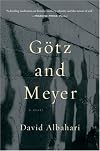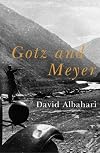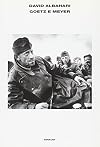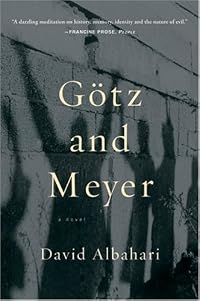
Götz and Meyer
by David Albahari
On This Page
Description
During the summer of 1942, the Nazis exterminated most of Serbia's Jews. Years later, in trying to find out what happened to his relatives, the narrator pieces together the horrific truth of this systematic extermination - an act carried out primarily by two soldiers named Gotz and Meyer.Tags
Recommendations
















Member Recommendations
Night by Elie Wiesel
by SqueakyChu
Member Reviews
We'll be sorry, I told my students, if we ever stop telling stories because if we do, there will be nothing to help us sustain pressure of reality, to ease the burden of life on our shoulders. Almost at the same moment, as if on command, all of them stopped writing and looked up at me. But, they asked, isn't life a story? No, I answered, and touched my earlobe, life is the absence of story.
Gotz and Meyer begins as a detective story and concludes as sort of a field trip. How else can one describe the mechanics of a process by which women and children were exterminated? How do we portray the stewards of this process? Is it wrong to muse on their hobbies. . .their laughter and their homesickness? Albahari doesn't use paragraph breaks, much show more less chapters. He wants the dear readers to push through to the terminus. The conclusion isn't happy. How could it be? The novel takes place largely in Belgrade, yet the landmarks are in the skull of its bewildered protagonist. Žižek implores us not to think of the Holocaust in tragic terms; such is a disservice to the memory of the lost. Tragedy was not at play as its victims were not extended choices. Gotz and Meyer is a damning novel, though no one is to blame. show less
Gotz and Meyer begins as a detective story and concludes as sort of a field trip. How else can one describe the mechanics of a process by which women and children were exterminated? How do we portray the stewards of this process? Is it wrong to muse on their hobbies. . .their laughter and their homesickness? Albahari doesn't use paragraph breaks, much show more less chapters. He wants the dear readers to push through to the terminus. The conclusion isn't happy. How could it be? The novel takes place largely in Belgrade, yet the landmarks are in the skull of its bewildered protagonist. Žižek implores us not to think of the Holocaust in tragic terms; such is a disservice to the memory of the lost. Tragedy was not at play as its victims were not extended choices. Gotz and Meyer is a damning novel, though no one is to blame. show less
Winner of the ALTA National Translation Award in 2006, and brought to my attention by Stu at Winston's Dad, Götz and Meyer by Serbian author David Albahari (1948-2023) is a stunningly imaginative portrayal of intergenerational trauma.
All the narrator knows is the names of the truck drivers who drove his parents to their fate, but almost the entire book consists of his imagined interactions with these men. His preoccupation is whether and how much they knew about what they were doing and whether they felt remorse. At first, he pulls back into reality and reminds himself that he knows nothing about Götz and Meyer, any more than he knows anything about the people missing from his family tree:
But as time goes by, under the torment of this obsession to know the unknowable, the narrative becomes a darker force in his life.
We read about the daily habits of these truck drivers as if the narrator were present with them while they dressed and shaved and had their breakfasts.
And there is nothing easier than a reader finding these imagined observations entirely convincing... until we read that the narrator tells the woman at the Jewish Historical Museum that Götz and Meyer were only human after all and then it becomes difficult for us to imagine that anyone human could do the evil these men did.
To read the rest of my review please visit https://anzlitlovers.com/2024/08/01/gotz-and-meyer-2012-by-david-albahari-transl... show less
All the narrator knows is the names of the truck drivers who drove his parents to their fate, but almost the entire book consists of his imagined interactions with these men. His preoccupation is whether and how much they knew about what they were doing and whether they felt remorse. At first, he pulls back into reality and reminds himself that he knows nothing about Götz and Meyer, any more than he knows anything about the people missing from his family tree:
Meyer even confessed to me that he felt hisshow more
heart beat faster and that later, when he recalled those days, he would shiver. Look at this: I am beginning to imagine myself talking with people whose faces I don’t even know. I knew precious little, indeed, about the faces of most of my kin, but in their case I can at least look at my own face in the mirror and seek their features there, whereas with Götz and Meyer I had no such help. Anyone could have been Götz. Anyone could have been Meyer, and yet Götz and Meyer were only Götz and Meyer, and no-one else could be who they were. It is hardly surprising, therefore, that I constantly had this feeling that I was slipping, even when I was walking on solid ground. (p. 45).
But as time goes by, under the torment of this obsession to know the unknowable, the narrative becomes a darker force in his life.
Nothing easier than to stray into the wasteland of someone else's consciousness. (p.45)
We read about the daily habits of these truck drivers as if the narrator were present with them while they dressed and shaved and had their breakfasts.
In the morning, while I dressed, I’d be Götz and Meyer. I did not allow myself to be distracted by details, for instance: wondering whether German soldiers wore short-sleeved undershirts, or dog tags with their personal details round their necks. I always wore singlets, cut high under the armpits, important because I sweat so much, and nothing was going to make me stop wearing them. This was about something else. I would look at myself, let’s say, in the mirror and say: Now Meyer is combing his hair, and then Götz would ask Meyer what he’d be having for breakfast. Once I got up in a foul mood, as Götz, and when asked that same question, told Meyer angrily: bananas. Lord, how Meyer laughed. His razor bounced around in his hand! Later, when he rinsed off the foam, he noticed a little nick on his left cheek, but that only reminded him of Götz’s reply, and then he burst into guffaws again. Götz didn’t say anything, because by then he was already in the kitchen, where he watched as I made coffee. Quite the bright one, that Götz, never to put the cart before the horse. As they drove towards Belgrade, he never carped to Meyer, possibly Götz, about speeding. It is important to tend to State property entrusted to your care, but even more important to tend to good relations with your work colleagues, since your success in completing any assignment depends far more on that than on anything else. (pp. 46-47)
And there is nothing easier than a reader finding these imagined observations entirely convincing... until we read that the narrator tells the woman at the Jewish Historical Museum that Götz and Meyer were only human after all and then it becomes difficult for us to imagine that anyone human could do the evil these men did.
To read the rest of my review please visit https://anzlitlovers.com/2024/08/01/gotz-and-meyer-2012-by-david-albahari-transl... show less
David Albahari’s book, Götz and Meyer, which at first glance seemed like a book I wouldn’t even want to tackle, turned out to be one of the most fascinating, poetic reads of the year. Without paragraph or chapter divisions, the story tells of an aging literature teacher in Serbia remembering the methodical elimination of Jews from the city of Belgrade, Yugoslavia, by the Nazis in 1942. Götz and Meyer (or were they Meyer and Götz?) were the Nazi officers charged with transporting Jews from that city via truck to an undisclosed, but promising, destination. Their many truckloads of human cargo never reached their destination alive due to a clever Nazi plan to quickly and quietly eliminate Jews en mass.
During the story, the unnamed show more narrator becomes more and more depressed by contemplating and researching the missing leaves of his family tree. He thinks about the two Nazi officers who had no particular characteristics to distinguish one from the other and wonders how they could have so casually carried out their evil work. As a teacher, he is also charged with helping his present-day students understand this dark period of Serbian history.
This is fiction. It reads very quickly and easily despite its unusual written form. As a background for this story, David Albahari based what he wrote on historical facts gleaned from “archival material, encyclopedia entries, newspaper articles, books, and studies”. This book, with its vivid details, came so alive for me that I paused while reading it to dig through my family archives to see how the deaths of my own maternal grandparents, living in Yugoslavia in 1942, fit into the picture the author was presenting in this novel.
For those who are not put off by the despair of reading Holocaust literature, this is a must read. It humanizes one very geographically small area of death and destruction by the Nazis during World War II. I read these books in small doses. I do, however, have the need to continually explore fiction such as this mesmerizing novel from time to time as it puts human faces on a situation that can only be described as inhuman. show less
During the story, the unnamed show more narrator becomes more and more depressed by contemplating and researching the missing leaves of his family tree. He thinks about the two Nazi officers who had no particular characteristics to distinguish one from the other and wonders how they could have so casually carried out their evil work. As a teacher, he is also charged with helping his present-day students understand this dark period of Serbian history.
This is fiction. It reads very quickly and easily despite its unusual written form. As a background for this story, David Albahari based what he wrote on historical facts gleaned from “archival material, encyclopedia entries, newspaper articles, books, and studies”. This book, with its vivid details, came so alive for me that I paused while reading it to dig through my family archives to see how the deaths of my own maternal grandparents, living in Yugoslavia in 1942, fit into the picture the author was presenting in this novel.
For those who are not put off by the despair of reading Holocaust literature, this is a must read. It humanizes one very geographically small area of death and destruction by the Nazis during World War II. I read these books in small doses. I do, however, have the need to continually explore fiction such as this mesmerizing novel from time to time as it puts human faces on a situation that can only be described as inhuman. show less
I know that there is a concern that as time passes, people will forget the horrors of the Holocaust. Just read this novel. It is horribly dark, deeply frightening, deeply moving, and is an incredible work of literature. A teacher, suffering from results of his research on family history during WWII in Serbia, crawls inside the psyches of two young German soldiers whose job is to kill truckloads of Jews. The result is powerful and almost overwhelming emotionally, for the teacher and the reader. Never forget!
During the Summer of 1942, the majority of Jews living in Serbia were executed in large trucks especially adapted to fill with carbon monoxide by order of the Nazi's. The narrator of this story is a descendent of that generation and most of his family were killed during that year, taken from a concentration camp in Belgrade in large trucks in the hope they were moving to a better place. All the narrator knows at the beginning of his journey is the names of the two German soldiers who drove the trucks, Gotz and Meyer.
This novel has a very strong narrative voice which alongside the absence of Chapters and paragraphs makes the book very difficult to put down; doing so feels like an interruption to the narrator who smoothly takes us from show more the past to the present, from inside the truck to his classroom, from the minds of Gotz and Meyer to his own.
Like all important novels dealing with the atrocities of War, Albahari meditates on the importance of not forgetting, the power of putting yourself in someone elses shoes, the weight of memories and the importance of language.
An excellent book everybody should read. show less
This novel has a very strong narrative voice which alongside the absence of Chapters and paragraphs makes the book very difficult to put down; doing so feels like an interruption to the narrator who smoothly takes us from show more the past to the present, from inside the truck to his classroom, from the minds of Gotz and Meyer to his own.
Like all important novels dealing with the atrocities of War, Albahari meditates on the importance of not forgetting, the power of putting yourself in someone elses shoes, the weight of memories and the importance of language.
An excellent book everybody should read. show less
168 pages, no paragraphs. The narrator is a teacher who is documenting & trying to comprehend his family's fate at a camp outside of Belgrade. The title characters are the SS men who drove a truck from the camp to a burial ground, over & over, with about 100 people in the back on each trip who were killed by CO2 along the way. The narrator imagines who the SS men were & what they were. At the end he tries to tell his students so they will remember.
Tra la primavera del 1941 e quella del 1942, a Goetz e Meyer,
due sottoufficiali delle SS, fu affidato un incarico tutto speciale nella Jugoslavia occupata dalla Wehrmacht: con un autocarro dovevano percorrere una volta al giorno il tragitto di quindici chilometri che separava Belgrado da Jajinci. In entrambe le località c’era un campo di internamento per ebrei, zingari e altre «popolazioni inferiori». Goetz e Meyer caricavano un centinaio di persone, le chiudevano dentro e partivano. Strada facendo collegavano il tubo di scappamento a un foro posto sotto il cassone: con un minimo dispendio di energia e un massimo di economicità, grazie a questo sistema 5000 ebrei serbi morirono asfissiati dal monossido di carbonio.
Con questo show more romanzo di forte impatto emotivo e di evidente matrice autobiografica — anche 35 familiari dell’autore scomparvero nel nulla — David Albahari cerca di ricostruire un passato indicibile, di far fronte alla necessità di dare una figura, un corpo, agli esecutori del Male. show less
due sottoufficiali delle SS, fu affidato un incarico tutto speciale nella Jugoslavia occupata dalla Wehrmacht: con un autocarro dovevano percorrere una volta al giorno il tragitto di quindici chilometri che separava Belgrado da Jajinci. In entrambe le località c’era un campo di internamento per ebrei, zingari e altre «popolazioni inferiori». Goetz e Meyer caricavano un centinaio di persone, le chiudevano dentro e partivano. Strada facendo collegavano il tubo di scappamento a un foro posto sotto il cassone: con un minimo dispendio di energia e un massimo di economicità, grazie a questo sistema 5000 ebrei serbi morirono asfissiati dal monossido di carbonio.
Con questo show more romanzo di forte impatto emotivo e di evidente matrice autobiografica — anche 35 familiari dell’autore scomparvero nel nulla — David Albahari cerca di ricostruire un passato indicibile, di far fronte alla necessità di dare una figura, un corpo, agli esecutori del Male. show less
May 7, 2012 (Edited)Italian
Members
- Recently Added By
Lists

THE WAR ROOM
813 works; 24 members
Author Information

44+ Works 586 Members
Some Editions
Awards and Honors
Awards
Distinctions
Series
Belongs to Publisher Series
Arcipelago [Einaudi] (94)
Common Knowledge
- Canonical title
- Götz and Meyer
- Original title
- Gec i Majer; Гец и Мајер
- Original publication date
- 1998
- People/Characters
- Wilhelm Gotz; Erwin Meyer; Andorfer; Edgar Enge; Adam; Narrator
- Important places
- Jajinci, Belgrade, Serbia
- Important events
- Holocaust
- First words
- Gotz and Meyer. Having never seen them, I can only imagine them.
- Quotations
- But, in times of war, it is best, if you are not a direct participant, to know as little as possible, because this is at least a tiny victory over a reality that is the same for everyone, regardless of political conviction.
She compared history to a big crossword puzzle. For every little square you fill, there are three more empty, she said, and even if you manage to fill them, new ones open up immediately, even emptier. Knowledge can never ca... (show all)tch up with the power of ignorance. - Last words
- (Click to show. Warning: May contain spoilers.)I feel slowed by resistance, the shudder of penetration, then lurch, full force, into the wall.
- Original language*
- Serbo-Croatian
*Some information comes from Common Knowledge in other languages. Click "Edit" for more information.
Classifications
- Genres
- Fiction and Literature, General Fiction, Historical Fiction
- DDC/MDS
- 891.8 — Literature & rhetoric Asian Literature East Indo-European and Celtic literatures West and South Slavic languages (Bulgarian, Slovene, Polish, Czech, Slovak, Serbo-Croatian, and Macedonian)
- LCC
- PG1419.1 .L335 .G413 — Language and Literature Slavic languages and literatures. Baltic languages. Albanian language Slavic. Baltic. Albanian Serbo-Croatian
- BISAC
Statistics
- Members
- 214
- Popularity
- 152,100
- Reviews
- 7
- Rating
- (3.90)
- Languages
- 8 — Danish, Dutch, English, French, German, Italian, Croatian, Spanish
- Media
- Paper, Ebook
- ISBNs
- 17
- ASINs
- 1