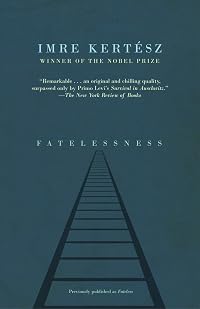
On This Page
Description
Relates the daily life of prisoners at a Nazi concentration camp as seen through the eyes of Georg Koves, a fourteen-year-old boy who is deported from his home in Budapest to Auschwitz with his father, in a new translation of the acclaimed novel by the Nobel laureate.Tags
Recommendations











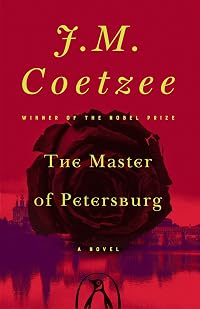


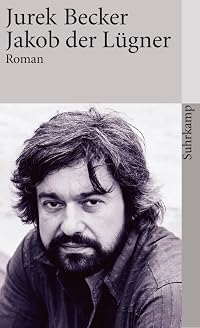
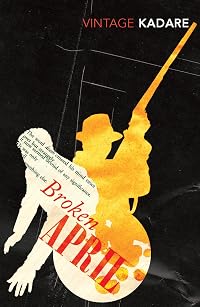

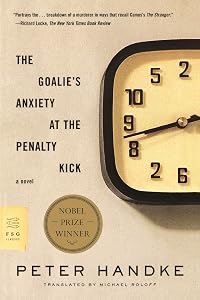
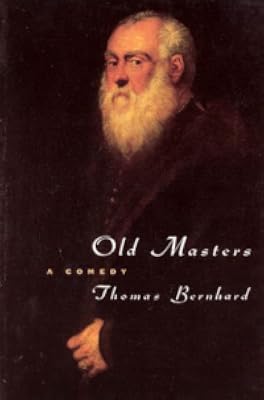

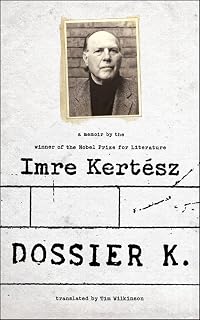





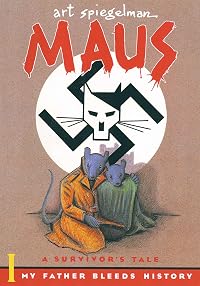











Member Recommendations
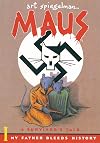
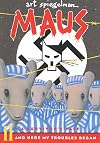
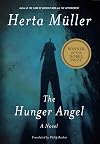
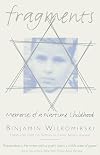
SqueakyChu Both are a child's eye view of the Holocaust
SqueakyChu Holocaust fiction that works as a story.

Night by Elie Wiesel
by SqueakyChu, chrisharpe

Member Reviews
Review of Fatelessness
The Crux of it: I am Here
1942 - a French orderly gives out sugar cubes to French children every day in the Buchenwald concentration camp hospital. The main character György a Hungarian teenager, notices that the French speakers get two, while he only ever gets one. To György this behavior illustrates the advantage of learning a second.language.
This is typical György who is sent first to Auschwitz and then to Buchenwald where he endures the horrors of the camps as we know them. He analyses events by rationalizing them in a matter of fact way, sans morality or resentment, his only emotion coming midway in the book when he starts to experience “irritability” and even then, never moral outrage.
The story is show more autobiographical and was written years after Kertész‘s imprisonment, when he was on the cusp of forgetting. Hence the many details of inmates’ facial structures and camp hierarchy uniforms. He’s putting it alll out there, in plain and simple terms; making it hard for the modern reader to understand the eerie detachment.
The story is told in chronological order, with the young boy unaware of what lies ahead as he passes from one horror to the next. Each event is told using backshadowing, with György taking and justifying each horror step by step without the knowledge of the modern reader. This of course is how the inmates experienced the ordeal, and reading it in this way has the efffect of making the experience more real. We are centered in György‘s life. But we can never fully accept the detachment shown in the justifications, the peak and most horrific being when Köves seems to “understand” the crematoria of Auschwitz,
I became used to György’s way of using reason to justify what happens to him without ethical considerations. But the question remains why? Is it that it’s a story told by a teenager? Or that the writer lacks Faith and is, being a non-practicing Jew, an outcast amongst outcasts? Or is it for effect? Or has the concept of morality been beaten out of him?
I prefer to think it’s an older person’s way of trying to remember what has of necessity been repressed. The writer is trying to remember, step by step, the events of his imprisonment, along with how he managed to cope with those events,as a young male thrust into the horror of the Holocaust without any adult experience or faith to guide him. Thus as with the sugar cube episode recounted in a matter-of-fact way, without rancor or moral overtone, I started to see into Kertész’s memory. show less
The Crux of it: I am Here
1942 - a French orderly gives out sugar cubes to French children every day in the Buchenwald concentration camp hospital. The main character György a Hungarian teenager, notices that the French speakers get two, while he only ever gets one. To György this behavior illustrates the advantage of learning a second.language.
This is typical György who is sent first to Auschwitz and then to Buchenwald where he endures the horrors of the camps as we know them. He analyses events by rationalizing them in a matter of fact way, sans morality or resentment, his only emotion coming midway in the book when he starts to experience “irritability” and even then, never moral outrage.
The story is show more autobiographical and was written years after Kertész‘s imprisonment, when he was on the cusp of forgetting. Hence the many details of inmates’ facial structures and camp hierarchy uniforms. He’s putting it alll out there, in plain and simple terms; making it hard for the modern reader to understand the eerie detachment.
The story is told in chronological order, with the young boy unaware of what lies ahead as he passes from one horror to the next. Each event is told using backshadowing, with György taking and justifying each horror step by step without the knowledge of the modern reader. This of course is how the inmates experienced the ordeal, and reading it in this way has the efffect of making the experience more real. We are centered in György‘s life. But we can never fully accept the detachment shown in the justifications, the peak and most horrific being when Köves seems to “understand” the crematoria of Auschwitz,
I became used to György’s way of using reason to justify what happens to him without ethical considerations. But the question remains why? Is it that it’s a story told by a teenager? Or that the writer lacks Faith and is, being a non-practicing Jew, an outcast amongst outcasts? Or is it for effect? Or has the concept of morality been beaten out of him?
I prefer to think it’s an older person’s way of trying to remember what has of necessity been repressed. The writer is trying to remember, step by step, the events of his imprisonment, along with how he managed to cope with those events,as a young male thrust into the horror of the Holocaust without any adult experience or faith to guide him. Thus as with the sugar cube episode recounted in a matter-of-fact way, without rancor or moral overtone, I started to see into Kertész’s memory. show less
46. Fatelessness by Imre Kertész
translation: from Hungarian by Tim Wilkinson, 2004
OPD: 1975
format: 262-page Kindle ebook (side note: I started with a paperback I bought in SF in Nov 2022, but it turned out to be a bad copy.)
acquired: November 2022, then again August 15 read: Aug 13-22 time reading: 8:39, 2.0 mpp
rating: 5
genre/style: modern classics? theme: TBR
locations: Hungary & several concentration camps
about the author: Jewish Hungarian author and journalist from Budapest, a Holocaust survivor, and the 2002 Nobel Prize winner. (1929-2016)
I find Holocaust books tough to respond to, and tough to review, and this classic is no different. It's very powerful. It's semi-autobiographical in that it's the story of a 14-year-old Hungarian show more boy, Jewish only by lineage, who experiences and survives concentration camps, something the author experienced, and also it's all told in first person.
What sets this apart is the perspective. We never meet György Köves's parents, or anyone he's deeply connected to. He is emotionally distant. Unexperienced, but passionlessly curious, with an open logical mind. So, when finds himself and Auschwitz, he's not emotionally horrified so much as practical and scared in that way. He observes logically, within his understanding, even justifying various actions of guards in terms of what makes sense to him. There are bodies going up in smoke within his line of sight, bodies of people he just got off the train with, who have already been gassed, and he's focused on how people with valuables respond to requests by guards to give these up voluntarily, or by the way a newly shaven rabbi washes himself in showers (showerers that look the same as the gas chambers).
When he eventually returns home, and is questioned by what turns out to be a news or magazine writer, he answers questions saying, "naturally" this or that traumatic event. He is angry, but he is shaped by this experience, and embraces that impact on him, which is strange, especially in light of how grown up and mature he sounds at the end of the book.
What was weird for me, as a reader, is that I was never horrified while my mind was within the tone of the text. I was invested in György, like in the way I might be invested in a pretty good unprofessional challenger in America Ninja Warrior. I wanted him to succeed, to overcome. This kept me reading, and drew me back between chances to read. I was engaged. But I would need to pull myself out of the book, look around, so to speak, to grasp the context. That was very strange to me.
This is an important work. In my mind, it's up there with [Night], [If This is a Man], and [Maus], as a pillar towards understanding the Holocaust in a literary or artistic context. So highly recommended to those with this kind of interest. Personally I was drawn to this from other ClubRead comments and review (like from Labfs39, years ago), and also because part of being Jewish is to be drawn to this cultural heritage.
2023
https://www.librarything.com/topic/351556#8216664 show less
translation: from Hungarian by Tim Wilkinson, 2004
OPD: 1975
format: 262-page Kindle ebook (side note: I started with a paperback I bought in SF in Nov 2022, but it turned out to be a bad copy.)
acquired: November 2022, then again August 15 read: Aug 13-22 time reading: 8:39, 2.0 mpp
rating: 5
genre/style: modern classics? theme: TBR
locations: Hungary & several concentration camps
about the author: Jewish Hungarian author and journalist from Budapest, a Holocaust survivor, and the 2002 Nobel Prize winner. (1929-2016)
I find Holocaust books tough to respond to, and tough to review, and this classic is no different. It's very powerful. It's semi-autobiographical in that it's the story of a 14-year-old Hungarian show more boy, Jewish only by lineage, who experiences and survives concentration camps, something the author experienced, and also it's all told in first person.
What sets this apart is the perspective. We never meet György Köves's parents, or anyone he's deeply connected to. He is emotionally distant. Unexperienced, but passionlessly curious, with an open logical mind. So, when finds himself and Auschwitz, he's not emotionally horrified so much as practical and scared in that way. He observes logically, within his understanding, even justifying various actions of guards in terms of what makes sense to him. There are bodies going up in smoke within his line of sight, bodies of people he just got off the train with, who have already been gassed, and he's focused on how people with valuables respond to requests by guards to give these up voluntarily, or by the way a newly shaven rabbi washes himself in showers (showerers that look the same as the gas chambers).
"At the very beginning, I still considered myself to be what I might call a sort of guest in captivity--very pardonably and, when it comes down to it, in full accordance with the propensity to delusion that we all share and which is thus, I suppose, ultimately part of human nature"
When he eventually returns home, and is questioned by what turns out to be a news or magazine writer, he answers questions saying, "naturally" this or that traumatic event. He is angry, but he is shaped by this experience, and embraces that impact on him, which is strange, especially in light of how grown up and mature he sounds at the end of the book.
What was weird for me, as a reader, is that I was never horrified while my mind was within the tone of the text. I was invested in György, like in the way I might be invested in a pretty good unprofessional challenger in America Ninja Warrior. I wanted him to succeed, to overcome. This kept me reading, and drew me back between chances to read. I was engaged. But I would need to pull myself out of the book, look around, so to speak, to grasp the context. That was very strange to me.
This is an important work. In my mind, it's up there with [Night], [If This is a Man], and [Maus], as a pillar towards understanding the Holocaust in a literary or artistic context. So highly recommended to those with this kind of interest. Personally I was drawn to this from other ClubRead comments and review (like from Labfs39, years ago), and also because part of being Jewish is to be drawn to this cultural heritage.
2023
https://www.librarything.com/topic/351556#8216664 show less
Fatelessness tells the story of a young Jewish boy, living trough the Holocaust. The style of this book is strange, very distant and almost unemotional. But I think that style made this book all the more powerful. We see atrocities and hardship through the boy's eyes, and because he feels so detached, it hit me harder. Fatelessness is not an easy book to read, but it shouldn't be.
'Even there, next to the chimneys, in the intervals between the torments, there was something that resembled happiness'
By sally tarbox on 25 Mar. 2013
Format: Paperback
An account of the author's teenage year spent in a concentration camp: yet written in a passive, unemotional way, reminiscent of Camus' "L'Etranger".
From the first chapter, when the family are still together in Budapest, preparing for the father's departure for a labour camp next day, we witness young Gyuri's detachment - or perhaps innocence, not realising what a labour camp actually means.
"After that he sent me off to bed. By then I was dead tired anyway. All the same, I thought, at least we were able to send him off to the labour camp, poor man, with memories of a nice show more day."
Shortly afterwards Gyuri too is sent off to a camp. Yet here too he has benign recollections: the youths being hauled off the bus - laughing and enjoying the sunny morning. The subsequent lies of the Germans that prompt the boys to accept the 'adventure' of going to work abroad...and the beginnings of his new life in a camp.
Gyuri doesn't dwell on the atrocities; so much so that it comes as even more horrific when he first mentions what this new life has done to him and his comrades - the fact they can hardly recognise one another in this regime of filth and hunger.
Yet as Gyuri observes, "one's imagination remains unfettered even in captivity. I contrived ,for instance, that while my hands were busy with a spade or mattock...I myself was simply absent."
When he is finally freed, Gyuri argues that "if there is such a thing as fate, then freedom is not possible...if there is such a thing as freedom, then there is no fate...we ourselves are fate."
Very moving and readable account, very different to other works on this subject. show less
By sally tarbox on 25 Mar. 2013
Format: Paperback
An account of the author's teenage year spent in a concentration camp: yet written in a passive, unemotional way, reminiscent of Camus' "L'Etranger".
From the first chapter, when the family are still together in Budapest, preparing for the father's departure for a labour camp next day, we witness young Gyuri's detachment - or perhaps innocence, not realising what a labour camp actually means.
"After that he sent me off to bed. By then I was dead tired anyway. All the same, I thought, at least we were able to send him off to the labour camp, poor man, with memories of a nice show more day."
Shortly afterwards Gyuri too is sent off to a camp. Yet here too he has benign recollections: the youths being hauled off the bus - laughing and enjoying the sunny morning. The subsequent lies of the Germans that prompt the boys to accept the 'adventure' of going to work abroad...and the beginnings of his new life in a camp.
Gyuri doesn't dwell on the atrocities; so much so that it comes as even more horrific when he first mentions what this new life has done to him and his comrades - the fact they can hardly recognise one another in this regime of filth and hunger.
Yet as Gyuri observes, "one's imagination remains unfettered even in captivity. I contrived ,for instance, that while my hands were busy with a spade or mattock...I myself was simply absent."
When he is finally freed, Gyuri argues that "if there is such a thing as fate, then freedom is not possible...if there is such a thing as freedom, then there is no fate...we ourselves are fate."
Very moving and readable account, very different to other works on this subject. show less
This has been a hard book to digest and even harder to review. It is about the Holocaust, which is a delicate topic to discuss in itself, and problematic because it provides an intellectually alternative view of how to perceive the horrors and the ultimate meaning of fate and freedom. I have read many books about the Holocaust, and I have come to expect not only a certain plot line (denial, ghetto, camps, horrors, survival or not, with occasional attempts at escape or resistance), but also a certain communal mindset about the entire event: inhumane to the point of vowing "Never again" (rather futile words given the continued perpetuation of genocides). We have a collective understanding of what the Holocaust was and even a general sense show more of how survivor's felt: horror, grief, suppression of emotional response in some cases, and then moving on, many not wanting to speak of their experiences. When a book comes along that challenges this set of collective beliefs, it is very hard not to simply deny or negate what the author says. I found this to be the case for me when I read [Scheisshaus luck] and [I'm No Hero], both memoirs of young men who found the war and their internment to be no reason to stop chasing women, taking advantage of opportunities for self-benefit, or struggling with the adolescent angst of moving from child to man. At first I was horrified: poking fun, bawdy, irreverent - the Holocaust?
In a different way, [Fatelessness] provoked a similar response in me. Georg Koves is a fictional character that observes and accepts without question or malice what happens to him. Constantly throughout the book, Georg uses phrases like "naturally", "purely in my eyes, of course", "it goes without saying", "in my case at least", "for me at any rate", and others that convey the sense that what he experiences in the Holocaust and the camps is natural, although the author acknowledges that this may not be the same view others take.
At the very beginning, I still considered myself to be what I might call a sort of guest in captivity—very pardonably and , when it comes down to it, in full accordance with the propensity to delusion that we all share and which is thus, I suppose, ultimately part of human nature.
In addition, Georg, sees the beauty of nature and the joy possible in the camps. Even when he is so ill and emaciated that he doesn't expect to live, he thinks
Thus, when I, along with all the others on whom it was clear not too much further hope can have been pinned of being set to work again here, in Zeitz (a subcamp), was returned to sender as it were—back to Buchenwald—I naturally shared the others' joy with every faculty that was left me, since I was promptly reminded of the good times there, most especially the morning soups.
Joy at returning to Buchenwald, where good times were had? This is only one of several instances where some readers might be incredulous and even angry at the perceived belittlement of the true horrors of the place.
One could assume that the character Georg is delusional or that he was emotionally stunted from the beginning. His lack of emotional response as his family prepares first to send his father off to forced labor, and then himself to Auschwitz, seems inappropriate even to a fourteen year old child. And indeed there are passages at the end of the book when he truly does not seem to understand human emotion. Or is it that he understands it too well?
In the end, I found that people on all sides were looking at me, heads shaking, and with a most singular emotion on their faces, which was a little embarrassing because, as best I could tell, they were feeling sorry for me. I felt a strong urge to tell them there was no need for that after all, at least not right at that moment, but I ended up saying nothing, something held me back, somehow I couldn't find it in my heart to do so, because I noticed that the emotion gratified them, gave them some sort of pleasure, the way I saw it. Indeed—and I could have been mistaken of course, though I don't think so—but later on (for there were one or two other occasions on which Ii was similarly questioned and interrogated) I gained the impression that they expressly sought out, almost hunted for, an opportunity, a means or pretext for this emotion for some reason, out of some need, as a testimony to something as it were, to their method of dealing with things perhaps, or possibly, who knows, to their still being capable of it at all...
"The emotion (of pity) gratified them." Although Georg is referring to fellow prisoners, can the idea of seeking an opportunity to feel pity for the innocent victims of the Holocaust refer to us as well? Personally, I believe there are many reasons why people read Holocaust memoirs, visit memorials, and educate themselves about the history of the Holocaust. But could there also exist this desire to feel pity, to seek opportunities to be horrified and sorry for others? It's a loaded question. When people speak to or read the words of survivors, what do they want to hear?
For even there, next to the chimneys, in the intervals between the torments, there was something that resembled happiness. Everyone asks only about the hardships and the "atrocities", whereas for me perhaps it is that experience which will remain most memorable. Yes, the next time I am asked, I ought to speak about that, the happiness of the concentration camps.
If indeed I am asked. And provided I myself don't forget. show less
In a different way, [Fatelessness] provoked a similar response in me. Georg Koves is a fictional character that observes and accepts without question or malice what happens to him. Constantly throughout the book, Georg uses phrases like "naturally", "purely in my eyes, of course", "it goes without saying", "in my case at least", "for me at any rate", and others that convey the sense that what he experiences in the Holocaust and the camps is natural, although the author acknowledges that this may not be the same view others take.
At the very beginning, I still considered myself to be what I might call a sort of guest in captivity—very pardonably and , when it comes down to it, in full accordance with the propensity to delusion that we all share and which is thus, I suppose, ultimately part of human nature.
In addition, Georg, sees the beauty of nature and the joy possible in the camps. Even when he is so ill and emaciated that he doesn't expect to live, he thinks
Thus, when I, along with all the others on whom it was clear not too much further hope can have been pinned of being set to work again here, in Zeitz (a subcamp), was returned to sender as it were—back to Buchenwald—I naturally shared the others' joy with every faculty that was left me, since I was promptly reminded of the good times there, most especially the morning soups.
Joy at returning to Buchenwald, where good times were had? This is only one of several instances where some readers might be incredulous and even angry at the perceived belittlement of the true horrors of the place.
One could assume that the character Georg is delusional or that he was emotionally stunted from the beginning. His lack of emotional response as his family prepares first to send his father off to forced labor, and then himself to Auschwitz, seems inappropriate even to a fourteen year old child. And indeed there are passages at the end of the book when he truly does not seem to understand human emotion. Or is it that he understands it too well?
In the end, I found that people on all sides were looking at me, heads shaking, and with a most singular emotion on their faces, which was a little embarrassing because, as best I could tell, they were feeling sorry for me. I felt a strong urge to tell them there was no need for that after all, at least not right at that moment, but I ended up saying nothing, something held me back, somehow I couldn't find it in my heart to do so, because I noticed that the emotion gratified them, gave them some sort of pleasure, the way I saw it. Indeed—and I could have been mistaken of course, though I don't think so—but later on (for there were one or two other occasions on which Ii was similarly questioned and interrogated) I gained the impression that they expressly sought out, almost hunted for, an opportunity, a means or pretext for this emotion for some reason, out of some need, as a testimony to something as it were, to their method of dealing with things perhaps, or possibly, who knows, to their still being capable of it at all...
"The emotion (of pity) gratified them." Although Georg is referring to fellow prisoners, can the idea of seeking an opportunity to feel pity for the innocent victims of the Holocaust refer to us as well? Personally, I believe there are many reasons why people read Holocaust memoirs, visit memorials, and educate themselves about the history of the Holocaust. But could there also exist this desire to feel pity, to seek opportunities to be horrified and sorry for others? It's a loaded question. When people speak to or read the words of survivors, what do they want to hear?
For even there, next to the chimneys, in the intervals between the torments, there was something that resembled happiness. Everyone asks only about the hardships and the "atrocities", whereas for me perhaps it is that experience which will remain most memorable. Yes, the next time I am asked, I ought to speak about that, the happiness of the concentration camps.
If indeed I am asked. And provided I myself don't forget. show less
”I also glimpsed, directly in front and to the left, some building, a godforsaken railway halt or possibly the signal box for some larger terminal. It was miniscule, gray, and, as yet, completely deserted, its small windows closed and with one of those ridiculously steep-pitched roofs that I had already see in this region yesterday…..They asked if I could see a place-name on it. In the strengthening light, on the narrower gable end of the building, facing the direction in which we were traveling, on the surface below the roof, I could in fact make out two words: ‘Auschwitz-Birkenau’ was what I read, written in spiky, curlicued Gothic lettering, joined by one of those wavy double hyphens of theirs.” (Page 76)
Gyuri, a fourteen show more year old Hungarian Jew, was plucked from a bus transporting him to his assigned work camp and forced into a cattle car with others who were also on the bus. They had no idea where they were going. Even when they got to the dreaded destination, they were unaware of the meaning of the later feared concentration camp.
This book is semi-autobiographical and its author later went on to win the Nobel prize in Literature. Gyuri narrates the story almost as if he is an unconcerned bystander, making dry observations of the everyday activities in the camp. He is scorned by most of the others as an outsider because he is Hungarian and can’t speak Yiddish and he soon learns how valuable fluency in another language would have been to him. Nothing he sees is presented as wicked or shocking. It’s just the way it is and he just seems to accept very stoically, that this is the life he is living. He can’t do anything about it so he quickly develops an attitude of blind acceptance.
When he finally returns home after the liberation of the camps he has a hard time explaining to others that he actually was happy at times while being held in the concentration camp. Very few people can understand this.
The book is beautifully written and very moving. It presented a side to being held captive that I never would’ve considered possible. Highly recommended. show less
Gyuri, a fourteen show more year old Hungarian Jew, was plucked from a bus transporting him to his assigned work camp and forced into a cattle car with others who were also on the bus. They had no idea where they were going. Even when they got to the dreaded destination, they were unaware of the meaning of the later feared concentration camp.
This book is semi-autobiographical and its author later went on to win the Nobel prize in Literature. Gyuri narrates the story almost as if he is an unconcerned bystander, making dry observations of the everyday activities in the camp. He is scorned by most of the others as an outsider because he is Hungarian and can’t speak Yiddish and he soon learns how valuable fluency in another language would have been to him. Nothing he sees is presented as wicked or shocking. It’s just the way it is and he just seems to accept very stoically, that this is the life he is living. He can’t do anything about it so he quickly develops an attitude of blind acceptance.
When he finally returns home after the liberation of the camps he has a hard time explaining to others that he actually was happy at times while being held in the concentration camp. Very few people can understand this.
The book is beautifully written and very moving. It presented a side to being held captive that I never would’ve considered possible. Highly recommended. show less
Fateless is no ordinary book on the Holocaust. It traces the experiences of a 15-year-old boy in Auschwitz and the various ways through which he managed to retain some semblance of serenity (even borderline apathy) in the face of the horrors he witnessed. Kertesz, himself an Auschwitz survivor, chose to depict the atrocities the boy suffers in the book with a purposedful lack of emotion. He also does not engage in active description of what Auschwitz was physically like, since words cannot really describe it. Instead, the horror of it all rests in the extreme melancholy and detachment of the main character, which obviously account for the way he found to cope with his surroundings.
Members
- Recently Added By
Published Reviews
ThingScore 100
added by nagel175
Lists

1001 Books You Must Read Before You Die
1,448 works; 1,132 members

Nobel Price Winners
222 works; 20 members

Canon de la narrativa universal del siglo XX
254 works; 6 members

1970s
657 works; 23 members

1,001 BYMRBYD Concensus
723 works; 27 members

Favorite World Literature in English Translation
22 works; 5 members

Book Riot's 100 must-read works of Jewish Fiction
100 works; 8 members

Literature in Translation
113 works; 5 members


Holocaust
100 works; 13 members
Canon de la narrativa universal del s. XX (cicutadry)
499 works; 3 members

History: Holocaust
106 works; 1 member
Author Information

190+ Works 6,020 Members
Imre Kertész was born in Budapest, Hungary on November 9, 1929. He was only 14 years old when he was deported with 7,000 other Hungarian Jews to the Auschwitz concentration camp in Poland in 1944. He survived that camp and later was transferred to the Buchenwald camp from where he was liberated in 1945. After returning to his native Budapest, he show more worked as a journalist and translator. He translated the works of Friedrich Nietzsche, Sigmund Freud, Ludwig Wittgenstein and Elias Canetti into Hungarian. He wrote several novels that drew largely from his experience as a teenage prisoner in Nazi concentration camps. His novels included Fateless, Fiasco, Kaddish for a Child Not Born, Someone Else, The K File, Europe's Depressing Heritage, and Liquidation. He also wrote the screenplay for the film version of Fateless in 2005. While his work was ignored by both the communist authorities and the public in Hungary where awareness of the Holocaust remained negligible, his work was recognized in other parts of the world. He received awards including the Brandenburg Literature Prize in 1995, The Book Prize for European Understanding, the Darmstadt Academy Prize in 1997, the World Literature Prize in 2000, and the Nobel Prize for Literature for fiction in 2002. He died after a long illness on March 31, 2016 at the age of 86. (Bowker Author Biography) show less
Some Editions
Awards and Honors
Series

Belongs to Publisher Series
Work Relationships
Common Knowledge
- Canonical title
- Fatelessness
- Original title
- Sorstalanság; Sorstalansag
- Alternate titles
- Fateless; Το μυθιστόρημα ενός ανθρώπου δίχως πεπρωμένο: Μυθιστόρημα; Être sans Destin; Roman eines Schicksallosen
- Original publication date
- 1975 (original Hungarian) (original Hungarian); 1975
- People/Characters
- György Köves
- Important places
- Budapest, Hungary; Auschwitz concentration camp, Oświęcim, Lesser Poland, Poland; Buchenwald concentration camp, Weimar, Thuringia, Germany; Zeitz, Saxony-Anhalt, Germany; Germany; Hungary (show all 7); Poland
- Important events
- Holocaust; World War II; War crimes in Europe.
- Related movies
- Sorstalanság (2005 | IMDb)
- First words
- I didn’t go to school today.
- Quotations
- Yes, the next time I am asked, I ought to speak about that, the happiness of the concentration camps.
- Last words
- (Click to show. Warning: May contain spoilers.)If indeed I am asked. And provided I myself don't forget.
- Original language
- Hungarian
Classifications
- Genres
- General Fiction, Fiction and Literature, Historical Fiction
- DDC/MDS
- 894.511334 — Literature & rhetoric Asian Literature Literatures of Altaic, Uralic, Hyperborean, Dravidian languages; literatures of miscellaneous languages of south Asia Finno-Ugric languages Ugric languages Hungarian Hungarian fiction 1900–2000 Late 20th century 1945–2000
- LCC
- PH3281 .K3815 .S6713 — Language and Literature Uralic languages. Basque language Uralic. Basque Hungarian
- BISAC
Statistics
- Members
- 2,573
- Popularity
- 7,364
- Reviews
- 73
- Rating
- (4.08)
- Languages
- 25 — Armenian, Catalan, Chinese, Czech, Danish, Dutch, English, Esperanto, Estonian, Finnish, French, German, Greek, Hebrew, Hungarian, Indonesian, Italian, Norwegian (Bokmål), Polish, Portuguese, Russian, Slovak, Spanish, Swedish, Turkish
- Media
- Paper, Audiobook, Ebook
- ISBNs
- 106
- ASINs
- 19