On This Page
Description
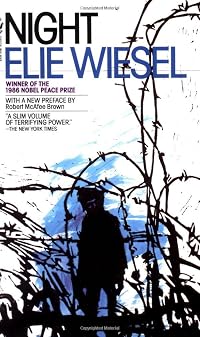
Night offers a personal and unforgettable account of the appalling horrors of Hitler's reign of terror. Through the eyes of 14-year-old Eliezer, we behold the tragic fate of the Jews from the little town of Sighet. Even as they are stuffed into cattle cars bound for Auschwitz, the townspeople refuse to believe rumors of anti-Semitic atrocities. Not until they are marched toward the blazing crematory at the camp's "reception center" does the terrible truth sink in.Tags
Recommendations

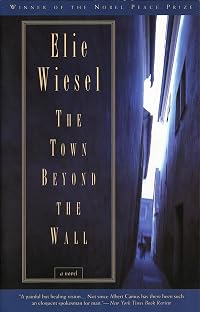

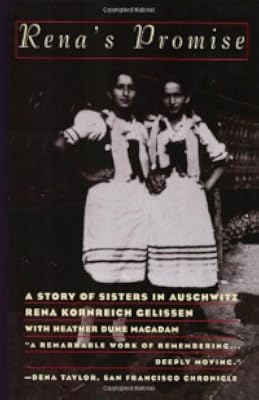
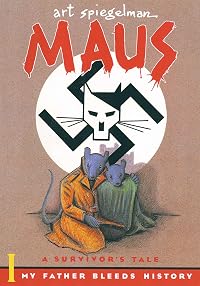


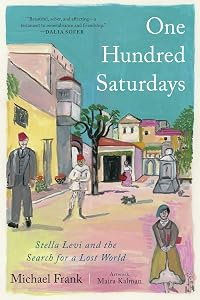

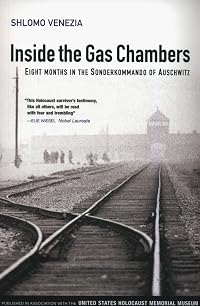





Member Recommendations

avalon_today Both based on true-life young adults; faced with great WWII horrors.
81
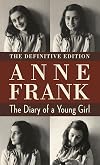
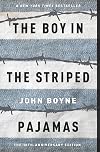

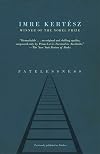
cbl_tn Both books deal with a crisis of faith resulting from God's silence in the face of extreme suffering.
jordantaylor Both books are tragically moving stories of the Jewish Holocaust.

Member Reviews
I think what stood out the most to me while reading this was the raw honesty of Wiesel's experience. We don't just see the external brutality of concentration camps; we also get to see how it impacts who the victims became as people, how their inner dialogue changed. This is not a romanticized perspective on the Holocaust. This is from the view of someone who lived it.
“We were masters of nature, masters of the world. We had forgotten everything--death, fatigue, our natural needs. Stronger than cold or hunger, stronger than the shots and the desire to die, condemned and wandering, mere numbers, we were the only men on earth.”
Night is a short book written about the author’s time in the concentration camps as a young teenager. The first chapters show his family in its entirety – mother, father, sisters, himself, and a small reveal about the townsfolk, particularly his mentor who returns home with a vicious warning of their impending fate. It’s surprising to me how he is ignored and how the town refuses to think that it could possibly ‘happen to them.’ I suppose this is common human show more illogical when faced with devastating news – much like a medical diagnosis even if we’ve been leading unhealthy lifestyles. The tragic, inevitable strikes where Elie and his family go to Auschwitz, and he is then separated forever from his mother and sisters.
Being short, naturally the pacing is quick, but this is not meant to be an action-packed novel in any form. It’s instead a clinical retelling of unimaginable horrors and tragedies. The dry tone is a little offsetting, but I think this is the only way the author could tell it and open up about the painful memory. Sometimes becoming clinical is the only way to survive.
What happened to these poor people in Auschwitz and camps near Berlin is horrifying, but I think the most frightening fact this story conveys is how little emotion was left to the individuals placed in the haunting situation. With its bleak detachment, the story shows how they were turned into little more than animals, soulless and without emotion, even when their friends die in front of their eyes, where they begin killing their own fathers and sons for mere food. And wow, were these people starved.
The worst scene, I think, was the end travel. The snow was frightening enough, but the starvation is something hard to imagine. The haunting scene of the son killing his father for the small piece of bread, then being killed himself as he tries to bite into it, is more than unsettling. It all starts with a game where the guards throw bread into the confinement area just to see what would happen and who would kill who for a such a small portion of nourishment.
At a mere 115 pages, the imagery and inner turmoil is potent. There’s nothing enjoyable in reading non-fiction such as this, but it’s important never to forget. Some people comment on the writing style as being dry and with little emotion, as if that were a negative thing (and in fiction it would be), but here it’s done the only way it can be for this particular author and is in no way written poorly.
“For in the end, it is all about memory, its sources and its magnitude, and, of course, its consequences.” show less
Night is a short book written about the author’s time in the concentration camps as a young teenager. The first chapters show his family in its entirety – mother, father, sisters, himself, and a small reveal about the townsfolk, particularly his mentor who returns home with a vicious warning of their impending fate. It’s surprising to me how he is ignored and how the town refuses to think that it could possibly ‘happen to them.’ I suppose this is common human show more illogical when faced with devastating news – much like a medical diagnosis even if we’ve been leading unhealthy lifestyles. The tragic, inevitable strikes where Elie and his family go to Auschwitz, and he is then separated forever from his mother and sisters.
Being short, naturally the pacing is quick, but this is not meant to be an action-packed novel in any form. It’s instead a clinical retelling of unimaginable horrors and tragedies. The dry tone is a little offsetting, but I think this is the only way the author could tell it and open up about the painful memory. Sometimes becoming clinical is the only way to survive.
What happened to these poor people in Auschwitz and camps near Berlin is horrifying, but I think the most frightening fact this story conveys is how little emotion was left to the individuals placed in the haunting situation. With its bleak detachment, the story shows how they were turned into little more than animals, soulless and without emotion, even when their friends die in front of their eyes, where they begin killing their own fathers and sons for mere food. And wow, were these people starved.
The worst scene, I think, was the end travel. The snow was frightening enough, but the starvation is something hard to imagine. The haunting scene of the son killing his father for the small piece of bread, then being killed himself as he tries to bite into it, is more than unsettling. It all starts with a game where the guards throw bread into the confinement area just to see what would happen and who would kill who for a such a small portion of nourishment.
At a mere 115 pages, the imagery and inner turmoil is potent. There’s nothing enjoyable in reading non-fiction such as this, but it’s important never to forget. Some people comment on the writing style as being dry and with little emotion, as if that were a negative thing (and in fiction it would be), but here it’s done the only way it can be for this particular author and is in no way written poorly.
“For in the end, it is all about memory, its sources and its magnitude, and, of course, its consequences.” show less
This book somehow eluded me during my obsessive, gotta-read-everything-about-the-Holocaust phase in middle school. I'm glad I've finally had a chance to read it. It is simple yet truly poetic, profound, and unswervingly honest--it challenges the reader in ways most books do not. Wiesel faced extremes of the human body and spirit and had the bravery to share it with the world. We all should read this book.
I've read before of Holocaust atrocities, some fiction and some non-fiction. I've read too of other atrocities over time, people against other people, people against their own people, down through history. Part of what such reading imparts is that it's never done,* the nature of hatred and trauma means we're easily numbed, we easily grow accustomed, if it happens long enough, if the threat is acute enough. (Survivors remind us, it happens even before they survived: victims numbed to the corpse propped up against them in the cattle car; KZ inmates inured to their bunkmates murdered overnight.)
All of that results from the human capacity for surviving, but that's short term survival. Long term survival (the prerequisite for civilization, show more for life beyond mere existence) requires we unlearn our coping mechanisms --once it's safe to do so. No matter how unpleasant, inconvenient, uncomfortable it is. Such a resolution by a trauma survivor marks the start of a healing journey. There must be something analogous for a community, and logically then, for individuals in a community.
R's school assignment suggested to me it was time to look again.
... if we forget, we are guilty, we are accomplices. We could not prevent their deaths the first time, but if we forget them, they will be killed a second time.
-- Elie Wiesel (1986 Nobel Peace Prize acceptance speech)
Wiesel's memoir provides a primer on the sort of policies and behavior used to implement the Nazi "Final Solution", in towns before and after ghettoization, in transport to and between KZ, and in the KZ itself. Wiesel suggests an important consideration is how surviving all this affects a person's understanding of self; and that person's behavior toward others; and psychoemotional & physical reactions to enduring privation, threat, abuse; and that person's faith in people and in a higher being. The pressure from the experience never stops, and the resulting accommodation to such pressure constantly changes over the years and through different events, whether before or after survival.
//
This edition appended other speeches by Wiesel (including the Nobel Peace Prize speech), and speeches by others on the importance of Night and its continued relevance to readers.
* Perhaps atrocity is never past; certainly the necessity for reading about atrocity is never past. show less
All of that results from the human capacity for surviving, but that's short term survival. Long term survival (the prerequisite for civilization, show more for life beyond mere existence) requires we unlearn our coping mechanisms --once it's safe to do so. No matter how unpleasant, inconvenient, uncomfortable it is. Such a resolution by a trauma survivor marks the start of a healing journey. There must be something analogous for a community, and logically then, for individuals in a community.
R's school assignment suggested to me it was time to look again.
... if we forget, we are guilty, we are accomplices. We could not prevent their deaths the first time, but if we forget them, they will be killed a second time.
-- Elie Wiesel (1986 Nobel Peace Prize acceptance speech)
Wiesel's memoir provides a primer on the sort of policies and behavior used to implement the Nazi "Final Solution", in towns before and after ghettoization, in transport to and between KZ, and in the KZ itself. Wiesel suggests an important consideration is how surviving all this affects a person's understanding of self; and that person's behavior toward others; and psychoemotional & physical reactions to enduring privation, threat, abuse; and that person's faith in people and in a higher being. The pressure from the experience never stops, and the resulting accommodation to such pressure constantly changes over the years and through different events, whether before or after survival.
//
This edition appended other speeches by Wiesel (including the Nobel Peace Prize speech), and speeches by others on the importance of Night and its continued relevance to readers.
* Perhaps atrocity is never past; certainly the necessity for reading about atrocity is never past. show less
Elie Wiesel's recent death moved me to read this, finally. It's been on my shelf for a long long time. I can add very little to what's already been said about this remarkable memoir. That anyone could live through the horrors of Auschwitz and Buchenwald, survive and continue to live with the losses and memories of that time, and then write so beautifully about it is just staggering. At the age of 15, Eliezer Wiesel and his family were "evacuated" from their home village of Sighet in Transylvania into a long unimaginable nightmare. Having escaped the attention of the Nazis until the spring of 1944, the villagers were convinced that the war would be over soon, that the Russians were coming and would defeat Hitler's forces in a few weeks, show more that they would not be subjected to the fate of the foreign Jews who had been expelled the year before. In fact, when Moishe the Beadle miraculously escaped and returned to warn them, most refused to listen or believe the stories of what had happened to those deportees at the hands of the Gestapo. No, such things were not possible in the middle of the twentieth century! But the reality of ghettos, cattle cars, forced marches, near starvation, "selection" and crematoria awaited them.
"Never shall I forget that night, the first night in camp, that turned my life into one long night seven times sealed.
Never shall I forget that smoke.
Never shall I forget the small faces of the children whose bodies I saw transformed into smoke under a silent sky.
Never shall I forget those flames that consumed my faith forever.
Never shall I forget the nocturnal silence that deprived me for all eternity of the desire to live.
Never shall I forget those moments that murdered my God and my soul and turned my dreams to ashes.
Never shall I forget those things, even were I condemned to live as long as God Himself.
Never." show less
"Never shall I forget that night, the first night in camp, that turned my life into one long night seven times sealed.
Never shall I forget that smoke.
Never shall I forget the small faces of the children whose bodies I saw transformed into smoke under a silent sky.
Never shall I forget those flames that consumed my faith forever.
Never shall I forget the nocturnal silence that deprived me for all eternity of the desire to live.
Never shall I forget those moments that murdered my God and my soul and turned my dreams to ashes.
Never shall I forget those things, even were I condemned to live as long as God Himself.
Never." show less
This book was the first Holocaust memoir that I read in full, but for all that it’s a slim volume it has always stayed with me as a powerful experience, remembrance, and testimony. Coming back to it years later, this time without the lens of academia insisting on a thought-provoking analysis to get a good grade, I’m still left wanting to write. What I want to write, I’m not sure, though, as the book opens up so many emotions that I’m left with a feeling of emptiness and regret. Not regret for having read the book, of course, but regret that humanity sat idle and did nothing while those around them suffered; regret that those in power turned away refugees who would have elsewise been saved; regret that even with its shining show more moments humanity has at its core a darkness that must be acknowledged. Even with the hindsight of 75 years it often seems that we have yet to learn from the mistakes of the past, as we continue to allow those who warp power for their own gain to lead and to allow cruelty to overrule compassion. And yet, we have persevered throughout, so while the book may not leave readers with a happy feeling in their gut (or much more than a cliffhanger, not knowing what truly happens to the narrator until the subsequent books) we know that there are still next steps to be taken by those who are able and can make them. show less
Every page of this book is a punch in the face. What happened to him was the worst and he didn't try to hide it or sweeten it. He allowed us to see what happens inside the mind of someone in such extreme situation, the noble and the shameful. I keep with me his frustration, his pain, his doubts, his disappointment.
Members
- Recently Added By
Published Reviews
ThingScore 100
[Wiesel's] slim volume of terrifying power is the documentary of a boy - himself- who survived the "Night" that destroyed his parents and baby sister, but lost his God.
added by Shortride
Lists

Best Autobiographies and Memoirs
370 works; 66 members

Best Biographies, Autobiographies and Memoirs
465 works; 160 members

Top-Rated Books on LibraryThing
272 works; 117 members
Books About World War II
102 works; 29 members
100 Biographies and Memoirs to Read in a (Single) Lifetime
98 works; 12 members

Holocaust
100 works; 13 members
Best War Stories
87 works; 16 members

Jewish Books
367 works; 24 members
Newsweek's Top 100 Books: The Meta-List
100 works; 18 members

Memoirs Heal the Soul
22 works; 1 member

New York Public Library's Books of the Century
120 works; 20 members

Top Five Books of 2018
802 works; 265 members

Books about World War II
241 works; 22 members

BEST BOOKS TO UNDERSTAND XX CENTURY'S HISTORY
63 works; 3 members

New York Public Library's Books of the Century - All
170 works; 14 members

Top Five Books of 2016
795 works; 229 members

All Things Germany
321 works; 4 members

My 100 Favorite Books of All Time
57 works; 2 members

Holocaust Narratives
159 works; 3 members

EU Fiction: 1950-2022
223 works; 70 members

Books With Time Words in the Title
160 works; 4 members

Rory Gilmore Book Club
193 works; 5 members

Books Read in 2021
5,361 works; 114 members

AP Lit
363 works; 6 members

Nifty Fifties
129 works; 14 members
1950s
340 works; 22 members

Books by Jewish Authors
68 works; 5 members

Books Read in 2002
197 works; 8 members
THE WAR ROOM
813 works; 24 members

Mustich's 1000 Books to Read Before You Die: A Life Changing List
1,001 works; 19 members

Books That Changed Our Perspective
423 works; 168 members
NPR Books You Love: Books That Shaped You in High School
26 works; 1 member
School Made Us Read It
380 works; 196 members

Books recommended in the history category on FiveBooks.com
329 works; 4 members

The Complete Rory Gilmore Reading List
506 works; 5 members

Books Read in 2012
59 works; 1 member

Non-Fiction
68 works; 1 member

Favorite Books in Translation
320 works; 133 members

N.T. McQueen's Inspiration List
23 works; 1 member

Recommended Reading : 600 Classics Reviewed, Editors of Salem Press, 2015
634 works; 6 members

Books That Made Us Cry
278 works; 145 members

Books recommended by Calgary Public Library staff
1,588 works; 4 members

The Burned Letter Book List
56 works; 1 member

Books Read in 2023
5,638 works; 147 members

Beautiful Feet Books
304 works; 7 members

Mensa for Kids Excellence in Reading Award Program (Grades 9-12)
116 works; 3 members

To Read
617 works; 7 members
End of Your Life Book Club
134 works; 4 members

Most Disturbing Books
124 works; 27 members

Unread books
1,063 works; 87 members

Oprah's Book Club (original and 2.0)
91 works; 21 members

Fiction Set Primarily in a Prison
52 works; 24 members

Books tagged favorites
390 works; 30 members

20th Century Literature
1,161 works; 54 members

Best books I read in 2013
152 works; 3 members

Carole's List
445 works; 13 members
Books translated from Romance Languages into English
102 works; 7 members

Books Featured on Gilmore Girls
307 works; 21 members

Books You Read During High School (For School)
301 works; 53 members

War Literature
101 works; 19 members
Tablet Magazine's List of 101 Great Jewish Books
103 works; 9 members

My Library
9 works; 1 member
Best Survival Stories
97 works; 15 members
KayStJ's to-read list
1,616 works; 11 members
Mensa for Kids Excellence in Reading Award Program (Grades 9-12)
116 works; 5 members

Books Read in 2016
4,666 works; 199 members

Books Read in 2018
4,360 works; 110 members
Europe
205 works; 6 members
Top 100 to Read before you Die
109 works; 7 members
Books Read in 2007
326 works; 8 members

Classics you know you should have read but probably haven't
421 works; 409 members
Non-Fiction Worth Reading
1,016 works; 255 members

Translingualism
191 works; 4 members

Read
293 works; 4 members
Recommend the 20 best books you've read in the last five years
2,168 works; 601 members
Amanda's Guaranteed Books
110 works; 5 members
Writers at Risk
106 works; 17 members
LibraryThingers' 1001 Books You Must Read Before You Die
442 works; 29 members
Books Read in 2015
3,299 works; 129 members

Blue Pyramid 1,276 Best Books of All Time
1,248 works; 32 members

Books Read in 2026
1,971 works; 66 members
Author Information

132+ Works 50,181 Members
Eliezer "Elie" Wiesel was born in Sighet, Romania on September 30, 1928. In 1944, he and his family were deported along with other Jews to the Nazi death camp Auschwitz. His mother and his younger sister died there. He loaded stones onto railway cars in a labor camp called Buna before being sent to Buchenwald, where his father died. He was show more liberated by the United States Third Army on April 11, 1945. After the war ended, he learned that his two older sisters had also survived. He was placed on a train of 400 orphans that was headed to France, where he was assigned to a home in Normandy under the care of a Jewish organization. He was educated at the Sorbonne and supported himself as a tutor, a Hebrew teacher and a translator. He started writing for the French newspaper L'Arche. In 1948, L'Arche sent him to Israel to report on that newly founded state. He also became the Paris correspondent for the daily Yediot Ahronot. In this capacity, he interviewed the novelist Francois Mauriac, who urged him to write about his war experiences. The result was La Nuit (Night). After the publication of Night, Wiesel became a writer, literary critic, and journalist. His other books include Dawn, The Accident, The Gates of the Forest, The Jews of Silence: A Personal Report on Soviet Jewry, and Twilight. He received a numerous awards and honors for his literary work including the William and Janice Epstein Fiction Award in 1965, the Jewish Heritage Award in 1966, the Prix Medicis in 1969, and the Prix Livre-International in 1980. He received the Nobel Peace Prize in 1986 for his work in combating human cruelty and in advocating justice. He had a leading role in the creation of the United States Holocaust Memorial Museum in Washington, D. C. He died on July 2, 2016 at the age of 87. (Bowker Author Biography) show less
Some Editions
Awards and Honors
Distinctions
Notable Lists
Series

Belongs to Publisher Series
Salamanderpockets (105)
Work Relationships
Is contained in
Is expanded in
Has as a reference guide/companion
Has as a study
Has as a commentary on the text
Common Knowledge
- Canonical title
- Night
- Original title
- La Nuit
- Alternate titles
- Noite
- Original publication date
- 1956
- People/Characters
- Eliezer; Moshe the Beadle; Chlomo; Rabbi Eliahou; Meir Katz
- Important places
- Auschwitz concentration camp, Oświęcim, Lesser Poland, Poland; Buchenwald concentration camp, Weimar, Thuringia, Germany; Buna; Auschwitz II-Birkenau concentration and extermination camp, Oświęcim, Lesser Poland, Poland; Romania; Sighetu Marmației, Maramureș, Romania (as Sighet)
- Important events
- Holocaust; World War II; liberation of Buchenwald
- Dedication
- In memory of my parents and of my little sister, Tzipora
E.W.
This new translation
in memory of
my grandparents, Abba, Sarah, and Hachman,
who also vanished into that night
M.W. - First words
- They called him Moshe the Beadle, as though he had never had a surname in his life.
- Quotations
- At about six o'clock in the evening, the first American tank stood at the gates of Buchenwald. Our first act as free men was to throw ourselves onto the provisions. We thought only of that. Not of revenge, not of our families... (show all). Nothing but bread. And even when we were no longer hungry, there was still no one who thought of revenge.
- Last words
- (Click to show. Warning: May contain spoilers.)The look in his eyes, as they stared into mine, has never left me.
- Blurbers
- Kazin, Alfred; Leviant, Curt; Kahn, Lothar; Alvarez, A.; Samuels, Gertrude
- Original language
- Yiddish
- Canonical DDC/MDS
- 940.5318092
- Canonical LCC
- DS135.R73
Classifications
- Genres
- Biography & Memoir, Nonfiction
- DDC/MDS
- 940.5318092 — History & geography History of Europe History of Europe 1918- World War II, 1939-1945 Social, political, economic history; Holocaust Holocaust Standard subdivisions History, geographic treatment, biography Biography
- LCC
- DS135 .R73 — History of Europe, Asia, Africa and Oceania Asia History of Asia Israel (Palestine). The Jews Jews outside of Palestine
- BISAC
Statistics
- Members
- 12,949
- Popularity
- 620
- Reviews
- 240
- Rating
- (4.29)
- Languages
- 24 — Albanian, Catalan, Chinese, Czech, Danish, Dutch, English, Finnish, French, German, Greek, Hungarian, Indonesian, Italian, Latvian, Norwegian (Bokmål), Norwegian, Polish, Serbian, Spanish, Swedish, Turkish, Yiddish, Portuguese (Portugal)
- Media
- Paper, Audiobook, Ebook
- ISBNs
- 124
- UPCs
- 1
- ASINs
- 77