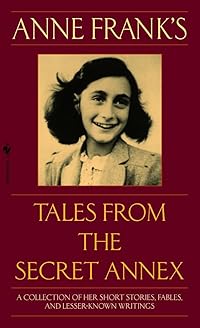
Anne Frank's Tales from the Secret Annex
by Anne Frank
On This Page
Description
The candid, poignant, unforgettable writing of the young girl whose own life story has become an everlasting source of courage and inspiration.Hiding from the Nazis in the “Secret Annex” of an old office building in Amsterdam, a thirteen-year-old girl named Anne Frank became a writer. The now famous diary of her private life and thoughts reveals only part of Anne’s story, however. This book rounds out the portrait of this remarkable and talented young author.
Newly translated, show more complete, and restored to the original order in which Anne herself wrote them in her notebook, Tales from the Secret Annex is a collection of Anne Frank’s lesser-known writings: short stories, fables, personal reminiscences, and an unfinished novel, Cady’s Life. show less
Tags
Recommendations

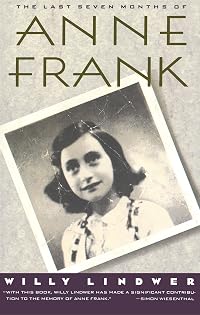
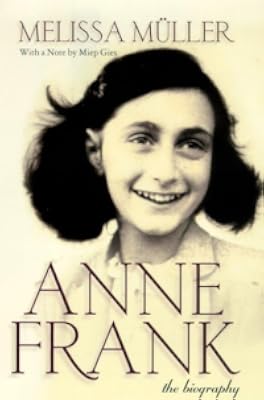
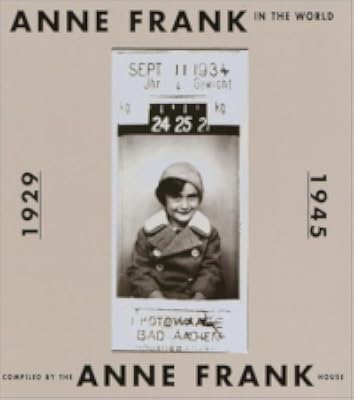
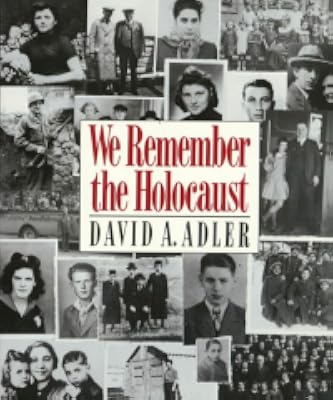






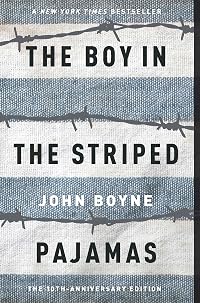
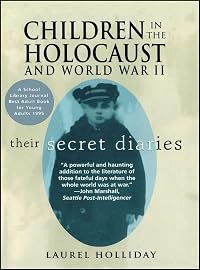
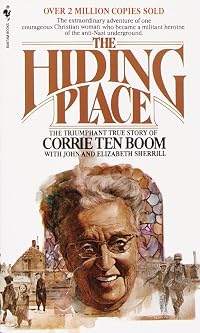



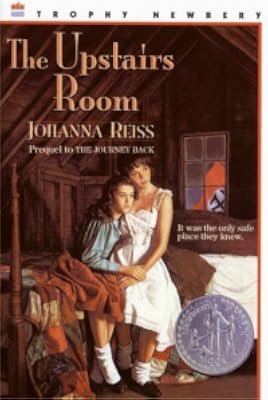

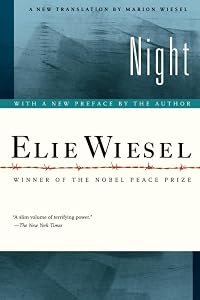
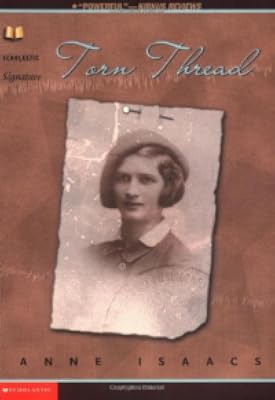

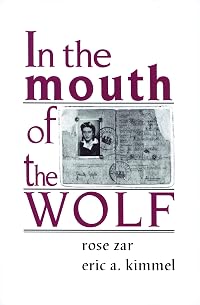


Member Recommendations
Night by Elie Wiesel
avalon_today Both based on true-life young adults; faced with great WWII horrors.

Member Reviews
"The worst of it is that most people go alone through this world." (pg. 93)
One of the most striking things when reading Anne Frank's diary is the moment you realise she might well become a great writer. The reader usually has this realisation around the same time Anne does: the diary entries begin to show more focus, more complexity, and some of them even read like Anne sat down that day, in the Secret Annexe, and tackled her diary entry as though it was a short story to be written. And then, of course, it's all taken away in an instant, in a series of bangs and yells and the sound of army boots; a brutal sequence which we are mercifully spared in the book itself – unlike Anne – but which is unreachably difficult to reconcile with show more the sheer goodness, precocious maturity and outright talent demonstrated in the preceding pages. Before reading the diary, you imagine its heart-breaking power to be solely in its circumstances: 'a young girl, taken by the Nazis, and here's her diary'. But what becomes clear as you read it is that a potentially great writer was also lost, who, had she lived, might well have produced a work we would all look on and marvel at.
Tales from the House Behind is exhibit A – the only exhibit – for this theory. It collects a series of writings that Anne wrote in the Secret Annexe alongside her diary (the 'House Behind' being a mooted title for the diary she hoped to publish after the war (pg. 10)) – fables, short stories, and the opening chapters of a novel she titled Cady's Life. I'm not going to sit here and claim it's great literature, but it is impressive that a girl in her early teens could show such evident maturity, empathy and skills of observation, as well as that mind's-eye that a writer must have in order to translate those qualities into fictional narratives and moral and emotional landscapes. This is very much, as G. B. Stern writes in his Introduction, a "writer in embryo" (pg. 9).
It's exciting, too, to contemplate what she might have achieved; even in 1949, when Tales from the House Behind was first published (two years after the diary), Anne would still be only 20 years old. The lost – or cruelly stolen – potential is staggering, and leaves the reader bereft. It's hard not to interpret her lines in light of her tragic end: the opening story ends with "To be interrupted just as you are thinking of a glorious future!" (pg. 20), whilst the final part of the book sees the protagonist Cady, in Cady's Life, coming to terms with the fact that her Jewish friend Mary has been taken by a "troop of brutal armed men", and Cady imagines her "locked up in a cell, wearing rags, and with a wizened and emaciated face" (pg. 122). It is clear that Anne knew what was coming for her: she lived with that fear every day, and it makes her even braver, if that were possible, that she looked it squarely in the face, as every real writer would hope to do, and turned it into art. Fledgling art, but art nonetheless. She recognised the power of her gift – "I have often wondered why people trust one another so little, why they are so sparing with 'real' words? With a few sentences great difficulties and misunderstandings can often be solved" (pg. 116) – and whilst such a gift could not save her at the end, there being no fate or cosmic justice available to mark her as one to be protected, it did ensure that she did more of worth in her short span of years than all the legions of jackbooted anti-Semite thugs combined. "How lovely to think that no one need wait a moment, we can start now, start slowly changing the world!", she writes in one entry (pg. 101). Such were Anne's qualities that she managed to change the world even when no longer in it. She did it in idle moments, with an innocent joy, while waiting for an opportunity just to begin her life – a freedom that was denied her by people much lesser than herself. show less
One of the most striking things when reading Anne Frank's diary is the moment you realise she might well become a great writer. The reader usually has this realisation around the same time Anne does: the diary entries begin to show more focus, more complexity, and some of them even read like Anne sat down that day, in the Secret Annexe, and tackled her diary entry as though it was a short story to be written. And then, of course, it's all taken away in an instant, in a series of bangs and yells and the sound of army boots; a brutal sequence which we are mercifully spared in the book itself – unlike Anne – but which is unreachably difficult to reconcile with show more the sheer goodness, precocious maturity and outright talent demonstrated in the preceding pages. Before reading the diary, you imagine its heart-breaking power to be solely in its circumstances: 'a young girl, taken by the Nazis, and here's her diary'. But what becomes clear as you read it is that a potentially great writer was also lost, who, had she lived, might well have produced a work we would all look on and marvel at.
Tales from the House Behind is exhibit A – the only exhibit – for this theory. It collects a series of writings that Anne wrote in the Secret Annexe alongside her diary (the 'House Behind' being a mooted title for the diary she hoped to publish after the war (pg. 10)) – fables, short stories, and the opening chapters of a novel she titled Cady's Life. I'm not going to sit here and claim it's great literature, but it is impressive that a girl in her early teens could show such evident maturity, empathy and skills of observation, as well as that mind's-eye that a writer must have in order to translate those qualities into fictional narratives and moral and emotional landscapes. This is very much, as G. B. Stern writes in his Introduction, a "writer in embryo" (pg. 9).
It's exciting, too, to contemplate what she might have achieved; even in 1949, when Tales from the House Behind was first published (two years after the diary), Anne would still be only 20 years old. The lost – or cruelly stolen – potential is staggering, and leaves the reader bereft. It's hard not to interpret her lines in light of her tragic end: the opening story ends with "To be interrupted just as you are thinking of a glorious future!" (pg. 20), whilst the final part of the book sees the protagonist Cady, in Cady's Life, coming to terms with the fact that her Jewish friend Mary has been taken by a "troop of brutal armed men", and Cady imagines her "locked up in a cell, wearing rags, and with a wizened and emaciated face" (pg. 122). It is clear that Anne knew what was coming for her: she lived with that fear every day, and it makes her even braver, if that were possible, that she looked it squarely in the face, as every real writer would hope to do, and turned it into art. Fledgling art, but art nonetheless. She recognised the power of her gift – "I have often wondered why people trust one another so little, why they are so sparing with 'real' words? With a few sentences great difficulties and misunderstandings can often be solved" (pg. 116) – and whilst such a gift could not save her at the end, there being no fate or cosmic justice available to mark her as one to be protected, it did ensure that she did more of worth in her short span of years than all the legions of jackbooted anti-Semite thugs combined. "How lovely to think that no one need wait a moment, we can start now, start slowly changing the world!", she writes in one entry (pg. 101). Such were Anne's qualities that she managed to change the world even when no longer in it. She did it in idle moments, with an innocent joy, while waiting for an opportunity just to begin her life – a freedom that was denied her by people much lesser than herself. show less
I still find it remarkable how skilled a writer Anne Frank was at such a young age, especially considering she was her only critic, editor and motivator. Though cramped in a tight space for two years without the opportunity for outside experience and learning, it did not appear to have stifled her growth in the slightest. One wonders what she would have become had she lived.
On August 7th 1943, Anne Frank recorded in her diary that she was writing "a story, something made up from beginning to end" and that "the products of my pen are piling up." This volume contains what she must have been referring to, and possibly all of the fiction she wrote afterwards up to the time of her capture. The largest piece is the twenty pages of "Cady's Life," presented here as an 'unfinished novel' (its intended denouement is described by Anne in her diary entry of May 11th 1944.)
I find it strange that there's no introduction to this 150 page volume, to offer the story behind the stories. The only meta information is on the back cover. I'm imagining these materials having been found mixed on the floor among the diary's loose show more pages and saved by Miep Gies. No analysis is made of what talent they represented that might have come to fruition had she lived, nothing about her influences. Maybe a future edition can supply these.
The first ninety pages are fiction pieces, where Anne's spirit shines through as clearly as in her diary. I can't imagine anyone reading for the sake of the fiction in itself; Anne guessed that "it'll wind up in the wastepaper basket or the stove." It's the lost potential that lends them their bittersweet quality, which requires having read her diary. My favourite entry is "The Wise Old Dwarf" where, rather than Dora showing up Peldron according to the way these morality stories often go, Dora fares no better and both must learn the same lesson. This speaks to the struggle Anne experienced when her optimism clashed with the pessimism of her fellow annex occupants, and what conclusion she drew.
The last sixty pages are an eclectic mix of other materials, where the lack of any introduction is even more sorely apparent. A couple of pieces, bafflingly, are clearly fiction and ought to have been placed in the first half of the volume. Several other pieces read like diary entries that didn't make the cut, comprising reminiscences of her school days that perhaps her diary's editors thought would interrupt the diary's narrative flow. I especially liked "The Geometry Lesson", which revisits the hilarious essays she had to write for chatting too much and includes an excerpt of 'Quack, Quack said Mrs. Quakenbush'; clearly it was a fond memory for her. Other diary entries focus on battling a flea outbreak in the annex and peeling potatoes. One entry I recognized as having been restored to the Definitive Edition (Sunday Feb 20th 1944), but presented here by a different translator.
This is a worthwhile companion volume if you've recently read the diary (or are doing so), affording a glimpse at the other side of Anne's young writing talent and another perspective on what might have been. It only requires a bit of patience for interpreting what's being presented. show less
I find it strange that there's no introduction to this 150 page volume, to offer the story behind the stories. The only meta information is on the back cover. I'm imagining these materials having been found mixed on the floor among the diary's loose show more pages and saved by Miep Gies. No analysis is made of what talent they represented that might have come to fruition had she lived, nothing about her influences. Maybe a future edition can supply these.
The first ninety pages are fiction pieces, where Anne's spirit shines through as clearly as in her diary. I can't imagine anyone reading for the sake of the fiction in itself; Anne guessed that "it'll wind up in the wastepaper basket or the stove." It's the lost potential that lends them their bittersweet quality, which requires having read her diary. My favourite entry is "The Wise Old Dwarf" where, rather than Dora showing up Peldron according to the way these morality stories often go, Dora fares no better and both must learn the same lesson. This speaks to the struggle Anne experienced when her optimism clashed with the pessimism of her fellow annex occupants, and what conclusion she drew.
The last sixty pages are an eclectic mix of other materials, where the lack of any introduction is even more sorely apparent. A couple of pieces, bafflingly, are clearly fiction and ought to have been placed in the first half of the volume. Several other pieces read like diary entries that didn't make the cut, comprising reminiscences of her school days that perhaps her diary's editors thought would interrupt the diary's narrative flow. I especially liked "The Geometry Lesson", which revisits the hilarious essays she had to write for chatting too much and includes an excerpt of 'Quack, Quack said Mrs. Quakenbush'; clearly it was a fond memory for her. Other diary entries focus on battling a flea outbreak in the annex and peeling potatoes. One entry I recognized as having been restored to the Definitive Edition (Sunday Feb 20th 1944), but presented here by a different translator.
This is a worthwhile companion volume if you've recently read the diary (or are doing so), affording a glimpse at the other side of Anne's young writing talent and another perspective on what might have been. It only requires a bit of patience for interpreting what's being presented. show less
Anne Frank has been my hero since I first read her book in the 5th grade...this book only helps me further my love of her. Anne would have been an exceptional writer and I found great joy in her varied writings. Some of the writings within the book are from her diary but others are from Anne's vivid imagination. Her fables are pure joy and explain her love of nature and positive thinking. The world would have been a very different place if Anne Frank had lived and followed through on her path as a writer.
A collection of made up stories and reminiscences (and some that are a mixture of both). These show (assuming the faithfulness of the translation) that Anne had a great writing talent for one so young, and writing moreover under such conditions of almost unbearable stress and tension, cooped up with family and others, surrounded by a world persecuting her and her kind for their very existence. A moving collection.
It was enjoyable. I'm not going to pretend that Anne Frank was a miraculous girl wonder - the writing is about what you'd expect from a fairly intelligent 13 yr old. Nothing too terribly deep. What I found amazing was that, despite what was going on around her, the stories show this stubborn idealism. The fact that she managed to hang onto that is the most impressive thing here. That's my two cents, at least. She's also mature enough to realize that not everything ends happily, and there are a few stories which reflect this. Not sure how to rate it though. Taken in context, pretty high. Taken for plain old writing value...not as much so.
This book has a few entries from Anne's diaries but, for the most part, it contains stories made-up stories written by Anne Frank while in hiding. As a young girl, Anne is wise beyond her years, as shown in these stories. The moral of each story is poignant. It is plain to see she would have grown into a conscientious adult and a great writer.
Members
- Recently Added By
Author Information

128+ Works 44,743 Members
Anne Frank, June 1929 - March 1945 Anneliesse Marie Frank was born on June 12, 1929 in Frankfurt-am-Main, Germany. She was the second daughter of Otto and Edith Frank. Anne's father was a factory worker, who moved his family to Amsterdam in 1933 to escape the Nazi's. There he opened up a branch of his uncle's company and Anne and her sister Margot show more resumed a normal life, attending a Montessori School in Amsterdam. The Germans attacked the Netherlands in 1940 and took control, issuing anti-Jewish decrees, and forcing the Frank sisters into a Jewish Lyceum instead of their old school. Their father Otto decided to find a place for the family to hide should the time come that the Nazi's came to take them to a concentration camp. He chose the annex above his offices and found some trustworthy friends among his fellow workers to supply the family with food and news. On July 5, 1942, Margot received a "call up" to serve in the Nazi "work camp." The next day, the family escaped to the annex, welcoming another family, the van Pels, which consisted of Hermann and Auguste van Pels and their son Peter. Fritz Pfeffer also came to stay with them, causing the count to come to eight people hiding in the annex. Anne, Margot and Peter continued their studies under the tutelage of Otto, and all of the captives found ways to entertain themselves for the long years they remained hidden. On August 4, 1944, four Dutch Nazis came to arrest the eight, having discovered their hiding place through an informant. Anne's diary was left behind and found later by one of the family's friends. The eight were taken to prison in Amsterdam and then deported to Westerbork before being shipped to Auschwitz. At Auschwitz, the men were separated from the women and Hermann van Pels was immediately gassed. Fritz Pfeffer died at Neuenganme in 1944. Anne, Margot and Mrs. van Pels were taken to Bergen-Belson, leaving behind Anne's mother, Edith, who died at Auschwitz of starvation and exhaustion in 1945. At Bergen-Belson, Anne and Margot contracted typhus and died of the disease in March of 1945. Anne was 15 and Margot was 17. The exact date and the place they were buried is unknown. Otto Frank was the only one of the original group of eight who were hidden in the annex to survive. He was left for dead at Auschwitz when the Russian Army came to liberate the camp. It is due to him that Anne's diary was published and became the success it is. (Bowker Author Biography) show less
All Editions
Series
Belongs to Publisher Series
Bantam Pathfinder Edition (FP156)
Work Relationships
Reference guide/companion to
Common Knowledge
- Original title
- Tales from the house behind : fables, personal reminiscences, and short stories
- Alternate titles
- Tales from the Secret Annex
- Original publication date
- 1949; 1962 [English Translation]
- Important places
- Amsterdam, North Holland, Netherlands; The Netherlands; North Holland, Netherlands
- First words
- Kitty is the girl next door.
- Last words
- (Click to show. Warning: May contain spoilers.)The saying, "You must ask in order to know," is true in so far as it leads to thinking about things, and by thinking nobody can ever get worse but will only get better.
Classifications
- Genre
- Biography & Memoir
- DDC/MDS
- 839.3186209 — Literature & rhetoric German & related literatures Other Germanic literatures Netherlandish literatures Dutch Miscellaneous Dutch writings 20th Century
- LCC
- PT5881.16 .R26 .V413 — Language and Literature German, Dutch and Scandinavian literatures Dutch literature Individual authors or works 1961-2000
- BISAC
Statistics
- Members
- 1,713
- Popularity
- 12,996
- Reviews
- 20
- Rating
- (4.01)
- Languages
- 11 — Danish, Dutch, English, Finnish, French, German, Italian, Norwegian (Bokmål), Portuguese, Spanish, Swedish
- Media
- Paper, Audiobook, Ebook
- ISBNs
- 42
- ASINs
- 22