The Diary of a Young Girl
by Anne Frank
On This Page
Description
A thirteen-year-old Dutch-Jewish girl records her impressions of the two years she and seven others spent hiding from the Nazis before they were discovered and taken to concentration camps.Tags
Recommendations

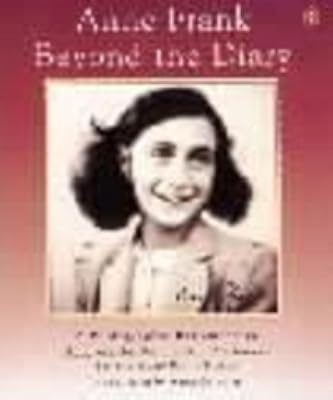


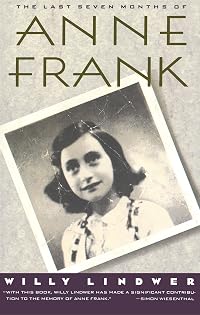
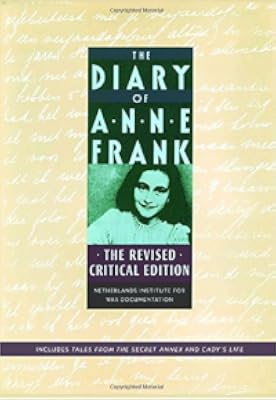

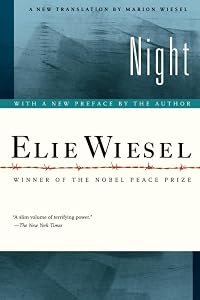

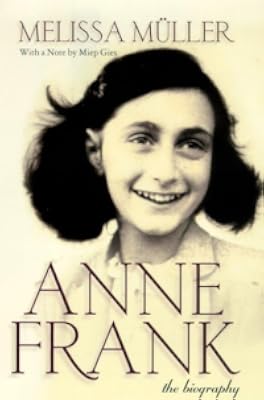

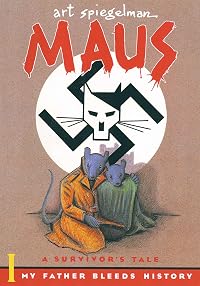
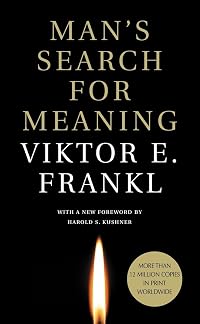

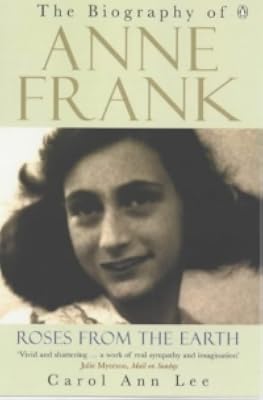
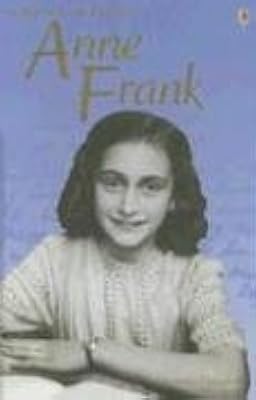

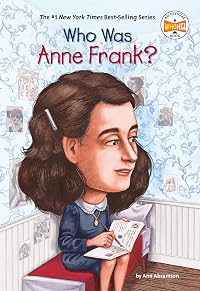
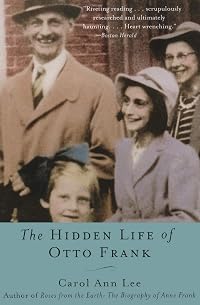
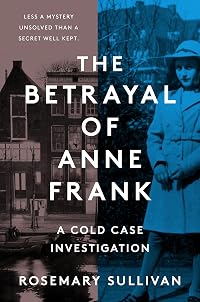
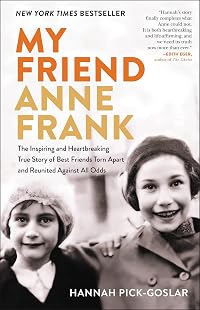

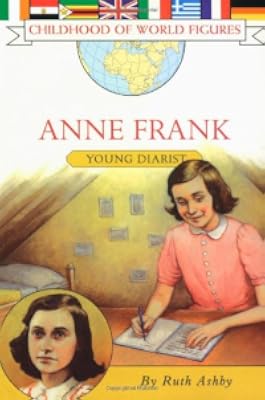

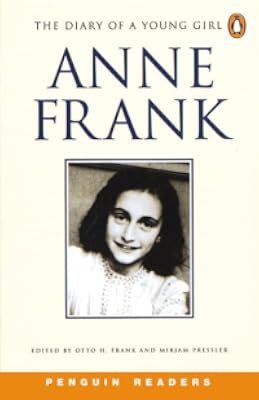


Member Recommendations
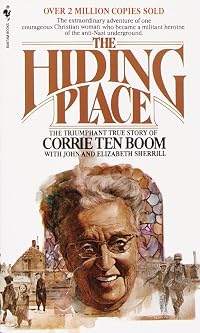
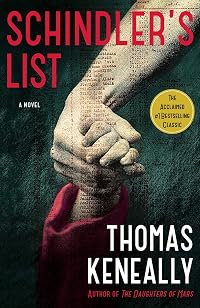
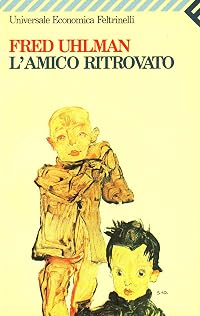
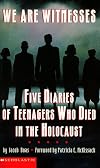
kidzlitsmc this story of a German hiding a Jew and not a Jew being hidden helps you to understand that it wasn't just hard for Jews.
PghDragonMan Both side of hiding during the Holocaust
141
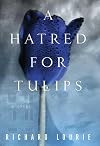
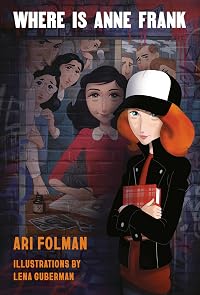
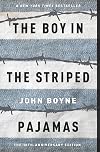
khuggard a fictional story about a young boy who reveals the hiding place of Anne Frank and her family.
50


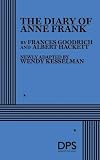

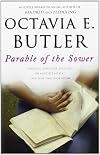
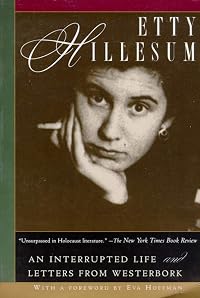
amberwitch Both told as diaries written by young women growing up 'under siege'.
20
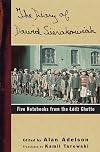
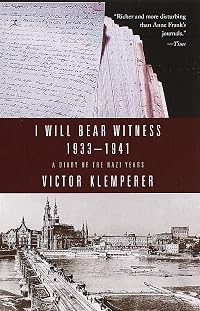
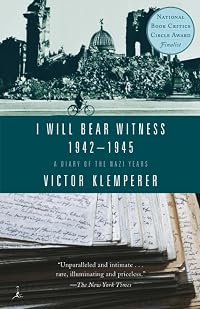
bluepiano Another diary kept by a Jewish teenager under Nazi occupation. Sierakowiak is remarkably intelligent and level-headed and he is starving.
20
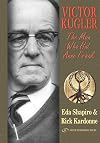
maryanntherese A biography of the man who orchestrated the Secret Annex.
20
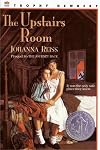
gangleri The right to live, the right to freedom are the most basic rights. « Nebel im August » (a book written in German) is about the live of Ernst Lossa whom was not granted this right either. The book is written in a very lyrical style, it illustrates that we have more in common then we are aware and reminds us what is really important.
guurtjesboekenkast Zowel Hélène Berr als Anne Frank zijn Joods en hebben een dagboek tijdens de oorlog geschreven. In 1945 zijn zij allebei aan tyfus overleden in het Duitse concentratiekamp Bergen-Belsen.


Cecrow Fiction written by Anne Frank while in hiding.
juniperSun Both deal with young Jewish teen girls in WWII, similar feelings.
JuliaMaria Zwei junge Frauen, die versuchen dem Grauen schreibend bzw. malend zu entkommen.
mep7 In this book, the people who tried to rescue children like Anne Frank tell their stories, in their own words. Klempner explains in the book that he actually interviewed Miep Gies, but in this book he focuses on 10 unsung heroes whose stories are just as unforgettable.
11
by anonymous user

Member Reviews
One of the most important documents produced by humankind, the diary of Anne Frank needs no introduction. It is an imperishable and world-famous story, and would be a remarkable one even if Anne hadn't written about it so impressively. But through Anne's gift, we receive a vivid and gripping chronicle of life in 'the Secret Annexe'; the teenager is an excellent writer, clear and focused and perceptive of character and setting. Already wise beyond her years and compelled, by the war and by the persecution of Jews, to grow up even faster, she births a stunning account that any writer in the world would be envious of. She charts with candour and humour her own progression over the two years in hiding: her changing relationships, her show more understanding of things and her developing philosophy of life.
This chart of a maturing young woman would be of literary merit even without the war, and it is heart-warming later in the book to read of her revisions of her previous behaviour, her growing eloquence and inner-peace and her blossoming writing skills. Which makes it all the more cruel that her progress was snatched away. The thought of this incredible young human being on a cattle-truck to Auschwitz, frightened, brutalized, emaciated and separated from family, is abhorrent, and makes you want to scream at the complacent evil that humankind repeatedly defecates onto this planet and which extinguishes the lights given so purely and honestly by the likes of Anne Frank. Though she retains her individuality – something she was fierce about when living amongst the occupants in the Secret Annexe – Anne has become the human face of the Holocaust. She was a person just like us, from a family just like ours, and anyone who reads her diary will find something with which they can identify and lock onto. It is a document that by its sheer benevolence and grace – towards the end she writes that "in spite of everything I still believe that people are really good at heart" (pg. 218) – shames the sheer evil idiocy of reducing individuals to labels and generalizations. How could anyone think this intelligent, inquisitive, unassuming and even-handed girl was a degenerate sub-human, and deserved to die horribly for it?
Beyond her standing as an icon and emblem of goodness against the black malevolence of the Holocaust, Anne's personal, individual, tragedy is that she never got the chance to express herself with more studied composure, to go out into the world (both literally and figuratively) and sample what it had to offer. The last line of her last entry in the diary – a few days before she was denied forever the opportunity to write another – speaks of "trying to find a way of becoming what I would so like to be, and what I could be, if… there weren't any other people living in the world" (pg. 222). If it wasn't for those vicious anti-Semites living in the world, it is clear she would have become a writer. As the diary progresses, it is thrilling to witness Anne's growing realization that she has a gift for this sort of thing. She shares her dreams of becoming a journalist and a writer, even of getting her diary published in a modified form. Some of her complete entries – in particular, the one of 23rd February 1944 – read, to me, like excellent short stories. She is clearly thinking about posterity and is composing her thoughts and her voice in readiness for when she will be free. The Allies have started to liberate the continent; she has "the feeling that friends are approaching" (pg. 204). After two years of privation and hiding in fear, she is close to freedom. Yet she is on the last train to Auschwitz. She dies in Belsen just weeks before British liberators arrive with looks of uncomprehending horror on their faces. I have spoken about her diary and the enduring simple beauty of her prose, but her capture and death are also instructive. The line between hope and destruction, between darkness and the light, is a fraction of a hair's-breadth, which makes it all the more important to cherish fragments of humanity like this one.
"I don't think then of all the misery, but of the beauty that still remains... Think of all the beauty that's still left in and around you and be happy!" (pg. 146) show less
This chart of a maturing young woman would be of literary merit even without the war, and it is heart-warming later in the book to read of her revisions of her previous behaviour, her growing eloquence and inner-peace and her blossoming writing skills. Which makes it all the more cruel that her progress was snatched away. The thought of this incredible young human being on a cattle-truck to Auschwitz, frightened, brutalized, emaciated and separated from family, is abhorrent, and makes you want to scream at the complacent evil that humankind repeatedly defecates onto this planet and which extinguishes the lights given so purely and honestly by the likes of Anne Frank. Though she retains her individuality – something she was fierce about when living amongst the occupants in the Secret Annexe – Anne has become the human face of the Holocaust. She was a person just like us, from a family just like ours, and anyone who reads her diary will find something with which they can identify and lock onto. It is a document that by its sheer benevolence and grace – towards the end she writes that "in spite of everything I still believe that people are really good at heart" (pg. 218) – shames the sheer evil idiocy of reducing individuals to labels and generalizations. How could anyone think this intelligent, inquisitive, unassuming and even-handed girl was a degenerate sub-human, and deserved to die horribly for it?
Beyond her standing as an icon and emblem of goodness against the black malevolence of the Holocaust, Anne's personal, individual, tragedy is that she never got the chance to express herself with more studied composure, to go out into the world (both literally and figuratively) and sample what it had to offer. The last line of her last entry in the diary – a few days before she was denied forever the opportunity to write another – speaks of "trying to find a way of becoming what I would so like to be, and what I could be, if… there weren't any other people living in the world" (pg. 222). If it wasn't for those vicious anti-Semites living in the world, it is clear she would have become a writer. As the diary progresses, it is thrilling to witness Anne's growing realization that she has a gift for this sort of thing. She shares her dreams of becoming a journalist and a writer, even of getting her diary published in a modified form. Some of her complete entries – in particular, the one of 23rd February 1944 – read, to me, like excellent short stories. She is clearly thinking about posterity and is composing her thoughts and her voice in readiness for when she will be free. The Allies have started to liberate the continent; she has "the feeling that friends are approaching" (pg. 204). After two years of privation and hiding in fear, she is close to freedom. Yet she is on the last train to Auschwitz. She dies in Belsen just weeks before British liberators arrive with looks of uncomprehending horror on their faces. I have spoken about her diary and the enduring simple beauty of her prose, but her capture and death are also instructive. The line between hope and destruction, between darkness and the light, is a fraction of a hair's-breadth, which makes it all the more important to cherish fragments of humanity like this one.
"I don't think then of all the misery, but of the beauty that still remains... Think of all the beauty that's still left in and around you and be happy!" (pg. 146) show less
"I want to go on living even after my death."
I got the chance to visit Amsterdam in 2024 and see the Secret Annexe. It was an amazing and heart-rending experience, as was reading Anne's diary again some 40 years after I first slogged through it in middle school (I think). It boggles the mind how something like this should be subject to book bans just because it talks about Anne Frank having her period and confessing to her feelings of attraction to both boys and girls. It boggles the mind how anyone in the world can go on espousing the views of the N*zis even after the world fought and won and war against those views.
I got the chance to visit Amsterdam in 2024 and see the Secret Annexe. It was an amazing and heart-rending experience, as was reading Anne's diary again some 40 years after I first slogged through it in middle school (I think). It boggles the mind how something like this should be subject to book bans just because it talks about Anne Frank having her period and confessing to her feelings of attraction to both boys and girls. It boggles the mind how anyone in the world can go on espousing the views of the N*zis even after the world fought and won and war against those views.
This was a hard book to read. It started out light and easy, as you'd expect from a 13-year-old's diary. As the situation gets harder, so do the topics in the diary, though it's not until the end when it gets really hard to read. This is history; the ending is not a surprise. What did surprise me was how much I dreaded reading the final 50 or so pages of the book, because the war starts going well and hopes in the Secret Annex start rising... and yet I know how the story ends for them.
I do not know why I didn't read this in school. In some ways, I wish I had because it is an important book and I would have liked to have read it when I was closer to Anne's age. On the other hand, I'm glad I didn't read it until I was an adult and could show more better connect with the entire situation, and not just Anne's. This is an important book, and one everyone needs to read. It's heartbreaking and uplifting all at once, and it's themes are as relevant now as they were when it was written. show less
I do not know why I didn't read this in school. In some ways, I wish I had because it is an important book and I would have liked to have read it when I was closer to Anne's age. On the other hand, I'm glad I didn't read it until I was an adult and could show more better connect with the entire situation, and not just Anne's. This is an important book, and one everyone needs to read. It's heartbreaking and uplifting all at once, and it's themes are as relevant now as they were when it was written. show less
This was one of those classics that I had always read pieces of and never the full thing. Having found the book on my mother's book shelf, I decided to read it fully and it was definitely worth it. A heartbreaking window in the mind of a vivacious adolescent girl in the mix of one of the worst acts of human cruelty and indecensry in history.
Often Anne laments on how crazy the world around her is, and how nice things would be if they were normal and everyone got along. A childish hope, perhaps, but one that deserves to be remembered and acted upon. This child did not deserve her fate, and her eloquence and maturity in the pages of her journal reflect what an incredible force for the good of humanity she may have become. But perhaps not, show more perhaps if she had survived she would just be remembered as one of the lucky ones who made it out, and her personal thoughts would have remained her own.
Due to her tragic death, we are given the honour of reading the pages of her diary and remembering that what happened to her and her family, her people, was a complete and utter waste of generous lives. show less
Often Anne laments on how crazy the world around her is, and how nice things would be if they were normal and everyone got along. A childish hope, perhaps, but one that deserves to be remembered and acted upon. This child did not deserve her fate, and her eloquence and maturity in the pages of her journal reflect what an incredible force for the good of humanity she may have become. But perhaps not, show more perhaps if she had survived she would just be remembered as one of the lucky ones who made it out, and her personal thoughts would have remained her own.
Due to her tragic death, we are given the honour of reading the pages of her diary and remembering that what happened to her and her family, her people, was a complete and utter waste of generous lives. show less
In a perfect world, no one should have to tell anyone what this book is about. The atrocities committed by the Nazis, including but not limited to the deaths of over 6,000,000 Jews, should be common knowledge to everyone alive today. But we don't live in anything close to a perfect world, certainly not now.
For those who don't know, Anne Frank, her mother, father, and older sister, another mother, father, and son, and a single man, all Jews, went into hiding in a small concealed space in Amsterdam in July 1942. They did so to hopefully avoid the fate of other Jews at the hands of the Nazis then occupying Holland. Anne was 12 years old. She kept an almost daily diary of their life in hiding until it abruptly ended in late summer 1944 when show more all eight were betrayed to the Nazis. All were arrested and sent to various concentration camps. Less than 6 months later Anne, her mother, and sister were dead. The only survivor of the Frank family was the father, Otto.
This book is Anne's diary and if you read it you will vividly picture what her life and that of those with her was like in their hiding space. Two full years without once being outside or without seven others around them at all times. You will have to do as I did and continually remind yourself, this was written by a 12 to 14 year old girl whose writing skill was well beyond that of most people, regardless of age. I can't imagine anyone telling this story as well as did Anne.
A recent poll found that two-thirds of American millennials do not know what Auschwitz is. One in five has never heard of the Holocaust. (http://tinyurl.com/y73agnr5) If you are one of them you need to know. If the world forgets, a time similar or worse may well happen again. It happened to Anne, it could happen to you. show less
For those who don't know, Anne Frank, her mother, father, and older sister, another mother, father, and son, and a single man, all Jews, went into hiding in a small concealed space in Amsterdam in July 1942. They did so to hopefully avoid the fate of other Jews at the hands of the Nazis then occupying Holland. Anne was 12 years old. She kept an almost daily diary of their life in hiding until it abruptly ended in late summer 1944 when show more all eight were betrayed to the Nazis. All were arrested and sent to various concentration camps. Less than 6 months later Anne, her mother, and sister were dead. The only survivor of the Frank family was the father, Otto.
This book is Anne's diary and if you read it you will vividly picture what her life and that of those with her was like in their hiding space. Two full years without once being outside or without seven others around them at all times. You will have to do as I did and continually remind yourself, this was written by a 12 to 14 year old girl whose writing skill was well beyond that of most people, regardless of age. I can't imagine anyone telling this story as well as did Anne.
A recent poll found that two-thirds of American millennials do not know what Auschwitz is. One in five has never heard of the Holocaust. (http://tinyurl.com/y73agnr5) If you are one of them you need to know. If the world forgets, a time similar or worse may well happen again. It happened to Anne, it could happen to you. show less
Beyond drama, romance, science fiction, poetry, short story, novel, etc., a certain book category exists that weighs accusingly upon the conscience of every reader. It encompasses those books whose titles we have heard spoken throughout our entire literate lives, whose authors' names are as familiar to us as our own, whose importance is bruited throughout the knowledgeable world, yet whose pages we have never turned. These are the books that one must read before departing this incarnation if one is to have any hope of entering Valhalla, Nirvana, Moksha, or perchance even Sto-vo-kor. Anne Frank: The Diary of a Young Girl was such a book on my list of literary voids.
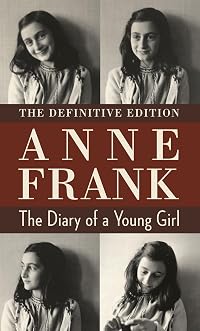
The edition that I have now finished (The Definitive Edition, Vintage show more Books, March 1996, ISBN 978-0-385-48033-8) has not only filled that void but has also proved to be quite educational as well as affecting. The Foreward, Introduction, Afterward, and Editorial History sections as well as a section entitled “The Inhabitants of the Secret Annex and Their Real Names” were enlightening and fascinating. The book ends with a brief explanation of the Anne Frank Fonds organization in Basel, Switzerland, a foundation of which I was previously unaware and under the auspices of which the book is published.
My sole misgiving about The Diary of a Young Girl is that I can read it only in translation, my literacy in German being more or less nonexistent. The misgiving is the same that I have with any book that has been translated by anyone other than its author. Language is deeply and inextricably intertwined with the culture and modes of expression of its native country. It has nuances and connotations unique to its native speakers. Reading generates mental images and impressions in the audience that are generated by the cultural background of that audience, images and impressions that are likely different from those of the speaker or writer who is a native of another land. The English words in the diary were obviously never written by Anne Marie Frank, and how accurately the feelings behind her German words have been rendered into English I cannot know. The writing is quite professional, adroit, and readable, but I wish I could have read the diary in Anne Frank's own words.
One practice of the translator that does bother me is that she seems to have taken great pains to use what she feels to be equivalent English expressions to footnote occasional German phrases that have been left in their original language even when the English words are at substantial variance with their German counterparts. For example, the footnote to “Du bist doch eine echte Rabenmutter” reads “Oh, you are cruel.” This is a somewhat free translation, echte meaning “real” and Rabenmutter meaning literally “ravens' mother.” Yes, to call someone a real ravens' mother in German is to call her a “really bad mother,” but I wish the footnote had been more literal in its translation, followed perhaps by an explanatory note as to the English equivalent. Another example is footnoting “Um Gottes Willen” as “Oh, for heaven's sake.” That rendering sounds just a bit too mild to me.
Despite this little bit of nitpicking, I found that reading The Diary of a Young Girl to be an entirely worthwhile expenditure of time and effort. The reader comes to know vicariously much of what Anne experienced in reality as well as coming to know Anne herself, and I found her to be a fascinating person. As I have noted, other parts of the book give the reader a good understanding of the historical context—both pre- and post-diary—surrounding the events chronicled by Anne. We can be grateful that two of the helpers who aided the eight Jews hiding in the Achterhuis (translated as “secret annex”), Miep Gies and Bep Voskuijl, rescued the diary and returned it to Otto Frank after the war and that he ensured its preservation and publication. In so doing, they fulfilled Anne Frank's desires as expressed in her diary to “go on living even after my death” (page 251) and “to make my voice heard . . . [and] to go out into the world and work for mankind” (page 263). The book, even in translation, is worth every minute spent in its reading. show less
The edition that I have now finished (The Definitive Edition, Vintage show more Books, March 1996, ISBN 978-0-385-48033-8) has not only filled that void but has also proved to be quite educational as well as affecting. The Foreward, Introduction, Afterward, and Editorial History sections as well as a section entitled “The Inhabitants of the Secret Annex and Their Real Names” were enlightening and fascinating. The book ends with a brief explanation of the Anne Frank Fonds organization in Basel, Switzerland, a foundation of which I was previously unaware and under the auspices of which the book is published.
My sole misgiving about The Diary of a Young Girl is that I can read it only in translation, my literacy in German being more or less nonexistent. The misgiving is the same that I have with any book that has been translated by anyone other than its author. Language is deeply and inextricably intertwined with the culture and modes of expression of its native country. It has nuances and connotations unique to its native speakers. Reading generates mental images and impressions in the audience that are generated by the cultural background of that audience, images and impressions that are likely different from those of the speaker or writer who is a native of another land. The English words in the diary were obviously never written by Anne Marie Frank, and how accurately the feelings behind her German words have been rendered into English I cannot know. The writing is quite professional, adroit, and readable, but I wish I could have read the diary in Anne Frank's own words.
One practice of the translator that does bother me is that she seems to have taken great pains to use what she feels to be equivalent English expressions to footnote occasional German phrases that have been left in their original language even when the English words are at substantial variance with their German counterparts. For example, the footnote to “Du bist doch eine echte Rabenmutter” reads “Oh, you are cruel.” This is a somewhat free translation, echte meaning “real” and Rabenmutter meaning literally “ravens' mother.” Yes, to call someone a real ravens' mother in German is to call her a “really bad mother,” but I wish the footnote had been more literal in its translation, followed perhaps by an explanatory note as to the English equivalent. Another example is footnoting “Um Gottes Willen” as “Oh, for heaven's sake.” That rendering sounds just a bit too mild to me.
Despite this little bit of nitpicking, I found that reading The Diary of a Young Girl to be an entirely worthwhile expenditure of time and effort. The reader comes to know vicariously much of what Anne experienced in reality as well as coming to know Anne herself, and I found her to be a fascinating person. As I have noted, other parts of the book give the reader a good understanding of the historical context—both pre- and post-diary—surrounding the events chronicled by Anne. We can be grateful that two of the helpers who aided the eight Jews hiding in the Achterhuis (translated as “secret annex”), Miep Gies and Bep Voskuijl, rescued the diary and returned it to Otto Frank after the war and that he ensured its preservation and publication. In so doing, they fulfilled Anne Frank's desires as expressed in her diary to “go on living even after my death” (page 251) and “to make my voice heard . . . [and] to go out into the world and work for mankind” (page 263). The book, even in translation, is worth every minute spent in its reading. show less
At first, it feels like any other book where we get a protagonist's firsthand accounts of life, except it's not really 'a book' or 'a story'. It's hard to remember that while reading... if you were judging it as a story, there are parts that are 'slow', without 'character development', the 'pacing' is all over the place... but it's important to remember, again, this isn't a book.
It's someone's actual diary. It's the medium this person used to document herself, confide her own thoughts to herself. It's an incredibly deep and intimate look at a person's inner life and thoughts, many of which are that of an ordinary 14-year old (who loves writing), being in extraordinary circumstances.
I had to look up historical events to know as well... show more when does the Netherlands get liberated? How far is Germany when she's writing this? The Allies? You know where, when, and how it ends, which is what makes it tragic, but the flashes into her life are anything but. She was optimistic, funny, and, I guess as they'd say back then, "a stand-up gal". What a way to be remembered. show less
It's someone's actual diary. It's the medium this person used to document herself, confide her own thoughts to herself. It's an incredibly deep and intimate look at a person's inner life and thoughts, many of which are that of an ordinary 14-year old (who loves writing), being in extraordinary circumstances.
I had to look up historical events to know as well... show more when does the Netherlands get liberated? How far is Germany when she's writing this? The Allies? You know where, when, and how it ends, which is what makes it tragic, but the flashes into her life are anything but. She was optimistic, funny, and, I guess as they'd say back then, "a stand-up gal". What a way to be remembered. show less
Members
- Recently Added By
Published Reviews
ThingScore 100
It is a truly remarkable book. Its revelation of the emotional turmoil and intellectual growth of an adolescent girl during extraordinarily difficult circumstances is psychologically fascinating. Its portrayal of ordinary people under frightful nervous strain and perpetual forced intimacy is wise and perceptive. Anne was precociously mature in her understanding of both herself and of others.
added by Shortride
Anne Frank's diary is too tenderly intimate a book to be frozen with the label "classic," and yet no lesser designation serves... But her book is not a classic to be left on the library shelf. It is a warm and stirring confession, to be read over and over for insight and enjoyment.
added by Shortride
Lists

501 Must-Read Books
529 works; 72 members

BitLife
212 works; 4 members
Banned or Challenged Books
400 works; 41 members

Female Author
1,234 works; 67 members

The Five Books That Represent Us
391 works; 148 members

.
396 works; 1 member

Read For Your Life
157 works; 1 member

NPR Books You Love: Books That Shaped You in High School
26 works; 1 member

Childhood Favorites
427 works; 24 members

Books Falsely Claimed as Banned (Recently)
1 work; 1 member

School Made Us Read It
380 works; 196 members

.
194 works; 2 members

top 100
39 works; 1 member
Widely acclaimed, one book per year
105 works; 3 members

The Story of the World: Activity Book Four: The Modern Age
333 works; 2 members

Just Kids by Patti Smith
43 works; 1 member

Books That Changed Our Perspective
423 works; 168 members

Classics you know you should have read but probably haven't
421 works; 406 members

Books About Girls
219 works; 17 members

Favorite Books in Translation
320 works; 133 members

Queen Camilla's Reading Room
65 works; 6 members

READ in 2024
262 works; 1 member

Recommended Reading : 600 Classics Reviewed, Editors of Salem Press, 2015
634 works; 6 members
Gilmore Girls Complete Reading List
30 works; 1 member
Talk Discussions
Past Discussions
Diary of a Young Girl in Combiners! (March 2013)
Author Information

128+ Works 44,743 Members
Anne Frank, June 1929 - March 1945 Anneliesse Marie Frank was born on June 12, 1929 in Frankfurt-am-Main, Germany. She was the second daughter of Otto and Edith Frank. Anne's father was a factory worker, who moved his family to Amsterdam in 1933 to escape the Nazi's. There he opened up a branch of his uncle's company and Anne and her sister Margot show more resumed a normal life, attending a Montessori School in Amsterdam. The Germans attacked the Netherlands in 1940 and took control, issuing anti-Jewish decrees, and forcing the Frank sisters into a Jewish Lyceum instead of their old school. Their father Otto decided to find a place for the family to hide should the time come that the Nazi's came to take them to a concentration camp. He chose the annex above his offices and found some trustworthy friends among his fellow workers to supply the family with food and news. On July 5, 1942, Margot received a "call up" to serve in the Nazi "work camp." The next day, the family escaped to the annex, welcoming another family, the van Pels, which consisted of Hermann and Auguste van Pels and their son Peter. Fritz Pfeffer also came to stay with them, causing the count to come to eight people hiding in the annex. Anne, Margot and Peter continued their studies under the tutelage of Otto, and all of the captives found ways to entertain themselves for the long years they remained hidden. On August 4, 1944, four Dutch Nazis came to arrest the eight, having discovered their hiding place through an informant. Anne's diary was left behind and found later by one of the family's friends. The eight were taken to prison in Amsterdam and then deported to Westerbork before being shipped to Auschwitz. At Auschwitz, the men were separated from the women and Hermann van Pels was immediately gassed. Fritz Pfeffer died at Neuenganme in 1944. Anne, Margot and Mrs. van Pels were taken to Bergen-Belson, leaving behind Anne's mother, Edith, who died at Auschwitz of starvation and exhaustion in 1945. At Bergen-Belson, Anne and Margot contracted typhus and died of the disease in March of 1945. Anne was 15 and Margot was 17. The exact date and the place they were buried is unknown. Otto Frank was the only one of the original group of eight who were hidden in the annex to survive. He was left for dead at Auschwitz when the Russian Army came to liberate the camp. It is due to him that Anne's diary was published and became the success it is. (Bowker Author Biography) show less
All Editions
Some Editions
Awards and Honors
Awards
Distinctions
Notable Lists
Series
Belongs to Publisher Series
El Ave Fénix (8)
Ave Fénix (166)
Geef een boek cadeau! (2022)
Fischer Taschenbuch (77)
Reader's Enrichment Series (RE 100)
ATB (112)
Work Relationships
Is contained in
Has the adaptation
Is an abridged version of
Is abridged in
Inspired
Has as a reference guide/companion
Has as a study
Has as a commentary on the text
Has as a student's study guide
Common Knowledge
- Canonical title
- The Diary of a Young Girl
- Original title
- Het Achterhuis : dagboekbrieven 12 juni 1942-1 augustus 1944
- Alternate titles*
- Diario
- Original publication date
- 1947
- People/Characters
- Anne Frank; Otto Frank; Dawid Rubinowicz; Miep Gies; Hermann Van Daan; Edith Frank (show all 14); Margot Frank; Viktor Kugler; Albert Dussel; Peter Van Daan; Elisabeth "Bep" Voskuijl; Johannes Kleiman; Jan; Petronella Van Daan
- Important places
- Amsterdam, North Holland, Netherlands
- Important events
- World War II (1939 | 1945); Holocaust (1939 | 1945); World War II, German Occupation of the Netherlands
- Related movies
- The Diary of Anne Frank (1959 | IMDb); The Attic: The Hiding of Anne Frank (1988 | IMDb); The Diary of Anne Frank Part II (1998 | IMDb); Anne Frank Remembered (1995 | IMDb); Anne Frank: The Whole Story (2001 | IMDb); The Diary of Anne Frank (1980 | IMDb) (show all 12); Forget Me Not: The Anne Frank Story (1996 | IMDb); The Diary of Anne Frank (1967 | IMDb); The Diary of Anne Frank (1987 | IMDb); The Diary of Anne Frank of the Dead (2008 | IMDb); Remembering Anne Frank (1998 | IMDb); The Diary of Anne Frank (2009 | IMDb)
- Epigraph
- I hope I shall be able to confide in you completely, as I have never been able to do in anyone before, and I hope that you will be a great support and comfort to me.
- First words
- Anne Frank kept a diary from June 12, 1942, to August 1, 1944. (Foreword)
[ Comment Added by Anne on September 28, 1942:]
So far you truly have been a great source of comfort to me, and so has Kitty, whom I now write to regularly.
Of all the many remarkable things about Anne Frank, I believe the most important is the fact of her survival - a survival contained between the covers of a small red-checkered cloth-covered diary book. (Preface)
This is a remarkable book. (Introduction)
Sunday, 14 June, 1942
On Friday, June 12th, I woke up at six o'clock and no wonder, it was my birthday.
Anne's diary ends here. (Epilogue) (show all 7)
Anne Frank's diary is a work utterly complete in itself, and its eloquence requires no further comment. (Afterword) - Quotations
- I still believe, in spite of everything, that people are truly good at heart.
- Last words
- (Click to show. Warning: May contain spoilers.)I can't keep that up: if I'm watched to that extent, I start by getting snappy, then unhappy, and finally I twist my heart round again, so that the bad is on the outside and the good is on the inside and keep on trying to find a way of becoming what i would so like to be, and what I could be, if...there weren't any other people living in the world. Yours, Anne
(Click to show. Warning: May contain spoilers.)[Definitive Edition] Until his death on August 19, 1980, Otto Frank continued to live in Birsfelden, outside Basell, where he devoted himself to sharing the message of his daughter's diary with people all over the world.
(Click to show. Warning: May contain spoilers.)Through the survival of this book, the thoughts, the hopes and the beliefs of Anne Frank will endure forever. (Preface)
(Click to show. Warning: May contain spoilers.)Reading it is a rich and rewarding experience. (Introduction)
(Click to show. Warning: May contain spoilers.)In March 1945, two months before the liberation of Holland, Anne died in the concentration camp at Bergen-Belsen.(Epilogue)
(Click to show. Warning: May contain spoilers.)"Her voice was preserved," Ernst Schnabel wrote, "out of the millions that were silenced, this voice no louder than a child's whisper....It has outlasted the shouts of the murderers and has soared above the voices of time." (Afterword) - Original language
- Dutch
- Canonical DDC/MDS
- 940.5318092
- Disambiguation notice
- There are several distinct versions of Anne Frank's Diary. Please be careful when combining and separating.
The Definitive Editions and the Revised Critical Editions should not be combined with each other or wit... (show all)h this group of editions.
This edition of Anne's diary is not a definitive version. Please combine only with older editions.
*Some information comes from Common Knowledge in other languages. Click "Edit" for more information.
Classifications
- Genres
- Biography & Memoir, Nonfiction
- DDC/MDS
- 940.5318092 — History & geography History of Europe History of Europe 1918- World War II, 1939-1945 Social, political, economic history; Holocaust Holocaust Standard subdivisions History, geographic treatment, biography Biography
- LCC
- D810 .J4 .F715 — History of Europe, Asia, Africa and Oceania History (General) World War II (1939-1945)
- BISAC
Statistics
- Members
- 18,546
- Popularity
- 329
- Reviews
- 307
- Rating
- (4.11)
- Languages
- 47 — Afrikaans, Albanian, Basque, Bengali, Bosnian, Catalan, Chinese, Czech, Danish, Dutch, English, Esperanto, Estonian, Finnish, French, German, Greek, Hebrew, Hindi, Hungarian, Indonesian, Italian, Japanese, Khmer, Korean, Lithuanian, Maori, Marathi, Norwegian (Bokmål), Norwegian, Farsi/Persian, Polish, Romanian, Russian, Serbian, Croatian, Slovak, Slovenian, Spanish, Swedish, Tamil, Thai, Turkish, Welsh, Yiddish, Portuguese (Portugal), Portuguese (Brazil)
- Media
- Paper, Audiobook, Ebook
- ISBNs
- 554
- UPCs
- 4
- ASINs
- 250