

Eleanor Roosevelt (1884–1962)
Author of The Autobiography of Eleanor Roosevelt
About the Author
Eleanor Roosevelt, October 11, 1884 - November 7, 1962 Eleanor Roosevelt was born in New York City on October 11, 1884, to Anna Hall and Elliott Roosevelt. Her mother died in 1892, and she and her brother went to live with Grandmother Hall. Her father died only two years later. She attended a show more distinguished school in England when she became of age, at 15. She met and married her distant cousin Franklin, in 1905. In Albany, Franklin served in the state Senate from 1910 to 1913, and Eleanor started her career as political helpmate. She gained a knowledge of Washington and its ways while he served as Assistant Secretary of the Navy. When he was stricken with polio in 1921, she tended him and became active in the women's division of the State Democratic Committee to keep his interest in politics alive. He successfully campaigned for governor in 1928 and eventually won the Presidency with Eleanor by his side. She was the longest-serving First Lady of the United States, holding the post from March 1933 to April 1945 during her husband President Franklin D. Roosevelt's four terms in office. When Eleanor came to the White House in 1933, she understood social conditions better than any of her predecessors and she transformed the role of First Lady. She never shirked official entertaining. She broke precedence to hold press conferences, traveled to all parts of the country and give lectures and radio broadcasts, and also wrote a daily syndicated newspaper column, "My Day." After the President's death in 1945 she returned to a cottage at his Hyde Park estate. Within a year, however, she became the American spokeswoman in the United Nations. She continued her career until her strength began to wane in 1962. She died in New York City that November, and was buried at Hyde Park beside her husband. (Bowker Author Biography) show less
Image credit: Courtesy of the NYPL Digital Gallery (image use requires permission from the New York Public Library)
Series
Works by Eleanor Roosevelt
My Day: The Best of Eleanor Roosevelt's Acclaimed Newspaper Columns, 1936-1962 (2001) 196 copies, 3 reviews
Empty Without You: The Intimate Letters of Eleanor Roosevelt and Lorena Hickok (1998) 153 copies, 1 review
Tomorrow Is Now: It Is Today That We Must Create the World of the Future (1966) 87 copies, 2 reviews
Eleanor Roosevelt's My Day: Her Acclaimed Columns 1945-1952 (Volume II, The Post-War Years) (1990) 19 copies
Eleanor Roosevelt's My Day: Her Acclaimed Columns 1953-1962 (Volume III, First Lady of the World) (1991) 15 copies
The Roosevelt Letters: Being the Personal Correspondence of Franklin Delano Roosevelt. Early Years, 1887-1904. Volume 1. (1947) 3 copies
UN: today and tomorrow 3 copies
Your Human Rights (The Universal Declaration of Human Rights Proclaimed By the United Nations December 10, 1948) (1950) 1 copy
세상을 끌어안아라 1 copy
Jardim dos sonhos 1 copy
Stateswoman to the World 1 copy
It Seems to Me 1 copy
Lær av livet 1 copy
Alleen verder 1 copy
Bookplate: Eleanor Roosevelt 1 copy
Peace on Earth 1 copy
The Autobiography of E. R. 1 copy
Veien fra det Hvite hus 1 copy
Minner og mennesker 1 copy
Associated Works
The Diary of a Young Girl: The Definitive Edition (1947) — Introduction, some editions — 9,243 copies, 127 reviews
A Patriot's Handbook: Songs, Poems, Stories, and Speeches Celebrating the Land We Love (2003) — some editions — 567 copies, 5 reviews
Wise Women: Over Two Thousand Years of Spiritual Writing by Women (1996) — Contributor — 230 copies, 1 review
My Darling Clementine: The Story of Lady Churchill (1963) — Introduction; Introduction — 103 copies, 2 reviews
Women's Magazines, 1940-1960: Gender Roles and the Popular Press (1998) — Contributor — 95 copies, 1 review
Confinement and Ethnicity: An Overview of World War II Japanese American Relocation Sites (2002) — Contributor — 35 copies
A Fair World for All: The Meaning of the Declaration of Human Rights (1952) — Introduction — 11 copies
World's Favorite Recipes: Over 100 Tested Dishes from the United Nations (1951) — Introduction — 9 copies
Tagged
Common Knowledge
- Canonical name
- Roosevelt, Eleanor
- Legal name
- Roosevelt, Anna Eleanor
- Other names
- ROOSEVELT, Anna Eleanor
ROOSEVELT, Eleanor - Birthdate
- 1884-10-11
- Date of death
- 1962-11-07
- Gender
- female
- Education
- Allenswood Academy
- Occupations
- First Lady (USA|1933-1945)
diplomat
civil rights activist - Organizations
- United Features Syndicate
United Nations
Daughters of the American Revolution - Awards and honors
- Henrietta Szold Award (1949)
- Agent
- Bertha Klausner
- Relationships
- Roosevelt, Franklin D. (husband)
Roosevelt, Theodore (uncle)
Roosevelt, Elliot (son)
Roosevelt, James (son)
Roosevelt, Curtis (grandson)
Black, Ruby Aurora (biographer) - Nationality
- USA
- Birthplace
- New York, New York, USA
- Places of residence
- New York, New York, USA
Washington, D.C., USA
Hyde Park, New York, USA
Campobello Island, New Brunswick, Canada - Place of death
- New York, New York, USA
- Burial location
- Hyde Park, New York, USA
- Associated Place (for map)
- New York, USA
Members
Reviews

Originally published in 1940, as a short story in Liberty Magazine, and then in this picture-book format that same year, Eleanor Roosevelt's holiday tale - reprinted in 1986 as Christmas, 1940 - has as much to tell us about the time in which it was written, as about the holiday of Christmas, and is a fascinating period piece. It is also somewhat difficult to track down, in this format - the 1940s picture-book, with illustrations by Fritz Kredel - and I had to travel to the only library in my show more county system that holds a copy, this past weekend, and read it in their special collections room. What fun!
The story of Marta, a young Dutch girl whose father had recently been killed in the fighting, it opens on a cold and snowy night - St. Nicholas Eve, 1940 - flashing back to the previous St. Nicholas' Eve, when Marta's father was still alive, and home on leave, and contrasting it to the current time of mourning and want. Marta, who feels that God is far away - perhaps too far to care about the troubles of a little girl - has no difficulty believing in the Christ Child, to whom she confides her hopes and dreams. Although none of the abundant feast of the previous year is left to her and her mother, there is one last holiday candle remaining, and Marta decides to use it to light the way for the Christ Child, on his journey through the dark night. It is while she is gazing at this candle, from outside her humble home - gauging how far the light pierces the gloom - that she encounters a tall man in a dark cloak, who, inquiring as to what she is doing, sets out to convince her that there is no such thing as the Christ Child, that it is silly to think a child could lead the world, or that strength could be gained through love and sacrifice, rather than through power and fear. But the stranger - 'the power' - has not counted on the strength of faith, and of hope, and though he leaves unaware of it, a great miracle has occurred before his very eyes...
Written at a time of great uncertainty and fear, when the forces of evil were unleashed in the world, Eleanor Roosevelt's Christmas story is clearly meant as a message of hope, and - although the United States had not yet entered WWII - of solidarity with the occupied peoples of Europe. No countries are mentioned in the text, and the stranger is never explicitly identified as a Nazi (a word Roosevelt never uses), but no reader of that time could have failed to understand what he represented, or the contrast being drawn between the love to be found in the Christmas story, and the forces of hatred which drove Nazi ideology. As Roosevelt writes in her brief preface, "The times are so serious that even children should be made to understand that there are vital differences in people's beliefs which lead to differences in behavior."
This explicitly didactic purpose is probably one of the reasons that Christmas: A Story has not, despite its reprint in the 1980s, become a holiday classic. Its aim, in contrasting the power of love and hatred - as exemplified by Christianity and Nazism, respectively - and encouraging readers to believe that the times of darkness in which they were then living would pass, if they had faith, and defended their beliefs, is admirable, given the events of the day, but it also means that much of the meaning of the story is tied to a specific historical moment. I suppose one could argue that there will always be times of darkness, and that the story therefore has wider relevance, and that is certainly true, up until a point. But in the end, this little book had more interest for me as an example of a story written for children during the height of WWII, than as an exploration of Christmas itself.
And little it was! I was surprised, when the librarian took it out of its locked glass case, to discover how tiny it was - smaller than my pen! - as I'd been expecting more of a standard picture-book. I was charmed by the six engraving-style illustrations, done by Fritz Kredel, whose work I recognized from one of the editions of the Brothers Grimm we had in the house, growing up. All in all, I'm glad to have read Roosevelt's Christmas tale, although my main interest was historical, rather than festive. Recommended primarily to those interested in the children's literature of the period. show less
The story of Marta, a young Dutch girl whose father had recently been killed in the fighting, it opens on a cold and snowy night - St. Nicholas Eve, 1940 - flashing back to the previous St. Nicholas' Eve, when Marta's father was still alive, and home on leave, and contrasting it to the current time of mourning and want. Marta, who feels that God is far away - perhaps too far to care about the troubles of a little girl - has no difficulty believing in the Christ Child, to whom she confides her hopes and dreams. Although none of the abundant feast of the previous year is left to her and her mother, there is one last holiday candle remaining, and Marta decides to use it to light the way for the Christ Child, on his journey through the dark night. It is while she is gazing at this candle, from outside her humble home - gauging how far the light pierces the gloom - that she encounters a tall man in a dark cloak, who, inquiring as to what she is doing, sets out to convince her that there is no such thing as the Christ Child, that it is silly to think a child could lead the world, or that strength could be gained through love and sacrifice, rather than through power and fear. But the stranger - 'the power' - has not counted on the strength of faith, and of hope, and though he leaves unaware of it, a great miracle has occurred before his very eyes...
Written at a time of great uncertainty and fear, when the forces of evil were unleashed in the world, Eleanor Roosevelt's Christmas story is clearly meant as a message of hope, and - although the United States had not yet entered WWII - of solidarity with the occupied peoples of Europe. No countries are mentioned in the text, and the stranger is never explicitly identified as a Nazi (a word Roosevelt never uses), but no reader of that time could have failed to understand what he represented, or the contrast being drawn between the love to be found in the Christmas story, and the forces of hatred which drove Nazi ideology. As Roosevelt writes in her brief preface, "The times are so serious that even children should be made to understand that there are vital differences in people's beliefs which lead to differences in behavior."
This explicitly didactic purpose is probably one of the reasons that Christmas: A Story has not, despite its reprint in the 1980s, become a holiday classic. Its aim, in contrasting the power of love and hatred - as exemplified by Christianity and Nazism, respectively - and encouraging readers to believe that the times of darkness in which they were then living would pass, if they had faith, and defended their beliefs, is admirable, given the events of the day, but it also means that much of the meaning of the story is tied to a specific historical moment. I suppose one could argue that there will always be times of darkness, and that the story therefore has wider relevance, and that is certainly true, up until a point. But in the end, this little book had more interest for me as an example of a story written for children during the height of WWII, than as an exploration of Christmas itself.
And little it was! I was surprised, when the librarian took it out of its locked glass case, to discover how tiny it was - smaller than my pen! - as I'd been expecting more of a standard picture-book. I was charmed by the six engraving-style illustrations, done by Fritz Kredel, whose work I recognized from one of the editions of the Brothers Grimm we had in the house, growing up. All in all, I'm glad to have read Roosevelt's Christmas tale, although my main interest was historical, rather than festive. Recommended primarily to those interested in the children's literature of the period. show less
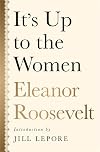
One would not think that a book of advice written in 1933 would have relevance today. You think wrong. Eleanor Roosevelt’s first book, published for the millions of women struggling to keep home and family together during the ravages of the Great Depression, is full of advice that remains true today. Granted, some of the advice she provides is unique to the time period in which she was writing, and the references to Departments of Home Economics and the various menus they recommend have a show more charming quaintness to them. However, the main piece of advice that runs through each section of the novel is that women have more power and influence than we realize.
While her words are folksy and plain, there is no doubt to Mrs. Roosevelt’s sincerity as she proffers advice on everything from meal planning to working outside the home. She means well, even as she offers advice from a position of profound wealth and privilege to women who have nothing. She interjects anecdotes about women she has met in her travels whose situations directly pertain to the topic at hand, and this lessens the feel of a Have condescending to a Have-not. For all of her efforts however, it is difficult to ignore the fact that Mrs. Roosevelt never felt the burdens of the Great Depression in the same way as the rest of the country. It does not diminish the advice she gives, but it does make the advice a little more difficult to swallow, or so I imagined while reading.
If one just focuses on the advice about women and their changing places in society, what she has to say is inspiring. Her vision of a world where women are viewed as equal to men in every avenue of life is encouraging and so far ahead of her time that some of what she had to say had to have shocked her audience. The shock today is that eighty years later her vision is still not a reality. While women may indeed be highly influential, Mrs. Roosevelt sadly underestimated the barriers men would create to prevent equality among the sexes. However, her enthusiasm and strong belief that women can achieve equality is something we can and should all take to heart. show less
While her words are folksy and plain, there is no doubt to Mrs. Roosevelt’s sincerity as she proffers advice on everything from meal planning to working outside the home. She means well, even as she offers advice from a position of profound wealth and privilege to women who have nothing. She interjects anecdotes about women she has met in her travels whose situations directly pertain to the topic at hand, and this lessens the feel of a Have condescending to a Have-not. For all of her efforts however, it is difficult to ignore the fact that Mrs. Roosevelt never felt the burdens of the Great Depression in the same way as the rest of the country. It does not diminish the advice she gives, but it does make the advice a little more difficult to swallow, or so I imagined while reading.
If one just focuses on the advice about women and their changing places in society, what she has to say is inspiring. Her vision of a world where women are viewed as equal to men in every avenue of life is encouraging and so far ahead of her time that some of what she had to say had to have shocked her audience. The shock today is that eighty years later her vision is still not a reality. While women may indeed be highly influential, Mrs. Roosevelt sadly underestimated the barriers men would create to prevent equality among the sexes. However, her enthusiasm and strong belief that women can achieve equality is something we can and should all take to heart. show less

Life for Dummies this book ain't. Television programming and bookstore self-help aisles are filled to overflowing with Dr. Phil and Dr. Larura and Oprah and on and on and on. Entertainment, disguised as advice or direction, is a multi-million dollar industry. In such an immediate gratification, consumer driven world, Eleanor Roosevelt may seem dated and square. But she's just what the doctor ordered.
Purposed as a way to answer thousands of letters written to her with pleas for advice or show more wisdom, Roosevelt has composed a primer on living which would do us all good to read and keep close to our hearts. Her book is not filled with checklists or cutesy, life-affirming cliches but is bursting with soulful, and often, convicting perspectives on life and living. Though the subjects might seem to run to the mundane, like "The Uses of Time" or "Learning to Learn", Roosevelt scratches deeper, suggesting a way of life, a goal for character, rather than mere courses of action calculated to deal with a specific symptom of larger ills.
What Roosevelt proposes with each chapter is a different facet of the same life, a life of responsibility, conviction, honor, and perserverance. The chapters, building on one another, are constantly focused on how an individual must be prepared to engage in constant and honest self-examination, to take responsibility for their own lives and choices, and to view each choice in the context of how it affects other people and the country as a whole. A good deal of what Roosevelt proposes suggests a course of education for our country's children which is more home and family focused than traditional public education. She asserts that a good deal of a child's preparation for life should entail developing self confidence, establishing the ability to think and reason, and learning proper social interaction, rather than attempts at filling a child's head with endless facts and figures or vocations. Though her advice is sometimes aimed at parents, the values are the building blocks for the way of life she advocates and are, therefore, useful to anyone of any age.
Roosevelt's simple writing style allows her thoughts to pierce without obstacle. She uses the difficulties of her early years and later public life to demonstrate the process of life, and in so doing, avoids any possibility of pride or self agrandizement. What shines through is Roosevelt's earnest and humble character, a character that is easy to know yet difficult to emulate.
Read this book and then read it again. I took page after page of notes in my journal, reaching for the pencil as my heart was constantly quickened by Roosevelt's insight.
5 bones!!!!! Another one which will make my list of favorites for the year. show less
Purposed as a way to answer thousands of letters written to her with pleas for advice or show more wisdom, Roosevelt has composed a primer on living which would do us all good to read and keep close to our hearts. Her book is not filled with checklists or cutesy, life-affirming cliches but is bursting with soulful, and often, convicting perspectives on life and living. Though the subjects might seem to run to the mundane, like "The Uses of Time" or "Learning to Learn", Roosevelt scratches deeper, suggesting a way of life, a goal for character, rather than mere courses of action calculated to deal with a specific symptom of larger ills.
What Roosevelt proposes with each chapter is a different facet of the same life, a life of responsibility, conviction, honor, and perserverance. The chapters, building on one another, are constantly focused on how an individual must be prepared to engage in constant and honest self-examination, to take responsibility for their own lives and choices, and to view each choice in the context of how it affects other people and the country as a whole. A good deal of what Roosevelt proposes suggests a course of education for our country's children which is more home and family focused than traditional public education. She asserts that a good deal of a child's preparation for life should entail developing self confidence, establishing the ability to think and reason, and learning proper social interaction, rather than attempts at filling a child's head with endless facts and figures or vocations. Though her advice is sometimes aimed at parents, the values are the building blocks for the way of life she advocates and are, therefore, useful to anyone of any age.
Roosevelt's simple writing style allows her thoughts to pierce without obstacle. She uses the difficulties of her early years and later public life to demonstrate the process of life, and in so doing, avoids any possibility of pride or self agrandizement. What shines through is Roosevelt's earnest and humble character, a character that is easy to know yet difficult to emulate.
Read this book and then read it again. I took page after page of notes in my journal, reaching for the pencil as my heart was constantly quickened by Roosevelt's insight.
5 bones!!!!! Another one which will make my list of favorites for the year. show less
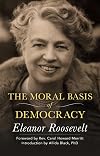
I think this book should be the official 2017 citizens handbook. As wave after wave of political strife and horror pummels us it can feel like we're drowning. That's how I feel. This book is like a lung full of oxygen. I think we all could use that right now. On a side note, I'm not religious and I balk pretty hard when religion and politics become entangled. Having said that, Ms. Roosevelt spoke of her religious beliefs and how they can should effect politics in an enlightening, even show more inspiring way. What? me, a died in the wool atheist, found her talk Christ and politics inspiring? That alone should make you curious enough to read this book. show less
Lists
Awards


You May Also Like


Associated Authors
Statistics
- Works
- 58
- Also by
- 21
- Members
- 2,692
- Popularity
- #9,542
- Rating
- 4.1
- Reviews
- 37
- ISBNs
- 98
- Languages
- 3
- Favorited
- 2


