
On This Page
Description
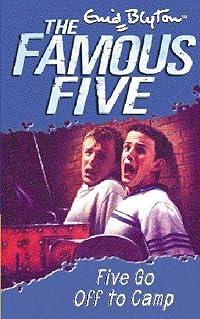
Spook trains in the dead of night. And they seem to vanish into thin air - but where do they go? The Famous Five are on to it. But the discovery of an unusual underground tunnel system and a secret train-service has them puzzled. If they follow the tracks, will they solve the mystery?Tags
Recommendations



















Member Reviews
En este libro sólo me caen bien Jorge, el profesor que va con ellos y el chaval al que se encuentran.
¿Por qué es Julián tan gilipollas? ¿Por qué tratan de niñata a Jorge cuando se enfada por algo que le han hecho ellos? ¿Por qué se tiene que disculpar Jorge por enfadarse en vez de Julián y Dick por dejarla de lado? ¿Por qué Ana es tan tonta? URG.
Que sí, que son cosas de la época, pero yo tengo un límite. En el libro anterior sólo fue un comentario puntual, pero en este es continuado, de principio a fin. Horrible.
¿Por qué es Julián tan gilipollas? ¿Por qué tratan de niñata a Jorge cuando se enfada por algo que le han hecho ellos? ¿Por qué se tiene que disculpar Jorge por enfadarse en vez de Julián y Dick por dejarla de lado? ¿Por qué Ana es tan tonta? URG.
Que sí, que son cosas de la época, pero yo tengo un límite. En el libro anterior sólo fue un comentario puntual, pero en este es continuado, de principio a fin. Horrible.
Blurb (I'll use the brief summary by Poppy Hutchinson in http://www.enidblytonsociety.co.uk/, since the book blurb seems rather uninformative): When the Famous Five go camping, in the company of Julian and Dick's eccentric school-teacher: Mr Luffy, surely they can't fall into adventure, in the quiet and lonely moorland that surrounds them? But, of course, somehow, they manage too, and find themselves on the trail of Spook Trains that appear, out of nowhere, in the dead of the night! Accompanied by their new friend, from a local farm: Jock, they venture out into the night, to investigate the extraordinary appearance of these peculiar trains, only to expose themselves to some of the most dangerous criminals they have faced, yet...
Random show more thoughts:
The book starts with the children planning their camping holiday during the summer. The beginning reminds me somewhat of Five Go Off in a Caravan, only a bit worse, because in Caravan that start seemed filled with more wonder and opportunity. In that book the children are lying on the grass, daydreaming about the fun they are going to have, while here they are in a room with a map, making plans in a more matter-of-fact way. Well, I guess it's normal; they are more experienced now, after all. Also, this time they are going to have an adult chaperone, Mr. Luffy, which is sure to cramp their style. At least that's what I thought, before meeting Mr. Luffy.
OK, so as the story got moving I thought this might be like Caravan, only not as good, but happily I found out that this book has pleasures of its own. One of them is Mr. Luffy. What a great character! He's one of those absent-minded professors EB likes creating, but how unlike Uncle Quentin he is. Good-natured, kind, with a sense of humor and none of Quentin's fierceness, he is surprisingly good with children. He gives the Five all the freedom they want, but not just because he is so absent-minded and obsessed with hunting for interesting insects, but also because he has an unusual ability to understand when to give them space. Oh, and he also can wiggle one of his ears! In the beginning he is thinking that he'll teach the children all about insects, but luckily for them he never seems to act on that. As a guardian he is not ideal from an adult point of view, though. He is forgetful, after all, and irresponsible in some ways, like the way he drove too fast, forgetting all the time that they were towing a trailer.
A couple of unimportant camping nitpicks: In the moors they use streams as a source of drinking water, without bothering to boil it or anything. However, considering that there are sheep and other animals around, that seems strange to me. Also, Blyton makes it sound as if sleeping on the ground in sleeping bags is more comfortable than it really is.
Mr. Luffy lets them camp away from him, so as not to spoil the children's fun. At some point one of the boys joke that they don't need to fear that Mr. Luffy will come running to check whether they have brushed their teeth of are wearing a warm jersey. Maybe he should have checked the teeth-brushing, though, as shown when the children go to sleep and eat chocolate in their sleeping bags.
I had to laugh at Anne's reaction to the "volcano", although I had to admit I was mystified until Mr. Luffy explained about the trains and underground tunnels. Quite cool of Mr. Luffy to keep the secret about Anne's scared reaction but occasionally teasing her gently about it.
One problem reading (or listening) these books as an adult is how obvious the bad guys are. Normally we know as soon as we meet them. Here we are immediately suspicious when we are told how surprisingly wealthy the farm was, and when we meet the nasty Mr. Andrews we know he is up to something. His stepson Jock and Mrs. Andrews are nice, though. I felt kind of sorry for them when we first met them, thinking that their lifestyle was going to be spoiled once the Five uncovered whatever criminal activities Mr. Andrews was involved it, which would get rid of the source of the money he poured on the farm. On the other hand, once I saw more of him, I knew they would be better off without him anyway.
Jock is a standard friend/ally of the children. Nice and eager enough, but not such as memorable a character as Mr. Luffy.
There was a very funny scene when Dick is in his sleeping bag and Mr. Luffy arrives and Dick, thinking it's Timmy, starts telling him to go away and not jump on him and put his paws on him when he is trying to sleep. Reading it nowadays in this less innocent time, it can even have a double meaning that Blyton clearly had not meant. I wonder if it's edited out in the "modern" revised edition.
The setting is really atmospheric. I found myself enjoying the pre-adventure part a lot. The adventure part is also quite good, but there were a few things that spoiled part of my enjoyment:
First, we have Jock and the Five's meanness to Cecil Dearlove. It's just an incident, and yes, I understand that Cecil is unlikable: a tattle-teller, cowardly, just-not-fun-at-all boy. But what did he do exactly to deserve being bullied just for being unlikable? This would have not bothered me much as a boy, I admit, because children often have less empathy in these situations. Let's not exaggerate, nothing really bad was done to Cecil, but they were rather mean to him. Not something to be proud about regarding the Five, who are so likable in many other ways. I have listened to the first seven books in the series now, and this is the second time I have had reservations about something the children do. The first time was in Five Run Away Together, when they were mean to (S)Tinker the Sticks' dog. They were also mean to Edgar Stick, but I don't count that against them, since Edgar clearly started it and was a nasty piece of work. Anyway, the children are not perfect, and that's OK with me, but what seems a bit off-putting is that Blyton seems to think that behavior is fine, or at least that's my perception of how she treats the incident.
OK, so that's one thing. As I said, that would not have bothered me as a boy, and as Enid Blyton herself said, she is not concerned about the opinion of critics over 12 years old. There's a large tradition in children's literature of minor lack of empathy against unpleasant children, after all. However, what would have bothered me as a boy is how the others treat George at some points here. Anne doesn't want to go look for the "spook trains" in the tunnels, so George is kept away from the adventure because someone needs to stay with Anne. WTF? Anne is a bit out of character there because, although she is scared, she does want to be included in the adventures, even if she likes them better when they are over. But even accepting she wants to sit this one out, is it really unacceptable to leave her alone for a while at camp, even if it's during the night? Can't another solution be found, possibly involving Mr. Luffy, who is quite understanding of the children's escapades? The boys were kind of nasty about this: they not only try to leave George out of the night expeditions, they also "punish" her for getting in one of her moods about it. After George asked whether they'll let her come next time Julian says "Certainly not. This is my adventure and Dick's—and perhaps Jock's. Not yours or Anne's." Way to be a jerk there, Julian. In his defense, George had been kind of nasty too, calling Anne coward.
Again, what bothers me is not that the children have a row. That happens sometimes in childhood friendships. What bothers me is how the author seems to assume that George is automatically in the wrong here. Dick and Anne side with Julian without question, and George herself assumes it's her fault for being silly and moody and eventually apologizes. But really, she's not being silly. Are they or are they not friends? Do friends act like that, knowing very well how much George is going to hate it? I'm trying to be fair here and avoid judging this our current values, when this was written and is set in the 40s. I accept society gave boys and girls different roles then, and that the values of the time held that girls needed to be looked after. Anne likes being looked after and I'm perfectly OK with that. But not George. Just treat him like a boy already, idiots. Or if you sometimes can't, if your social conditioning pushes you to protect the girls in certain situations, at least don't be jerks about it. The row here goes beyond other let's-protect-George-because-she's-a-girl incidents in the series, and I would like to see it addressed instead of instantly forgotten. I know that's not going to happen, though. It's a pity, because I find this stuff regarding the dynamics of the characters' relationships very interesting (that's one of the reasons I loved Go Adventuring Again even though it was adventure-light), and dealing with that a bit more would have made the books better.
Oh, well... at least George got to shine, looking for the trains on her own and later rescuing the boys, who had been taken prisoner. Even Anne showed that when it was necessary she could master her fears and show courage.
One more problem with the story: like in Smuggler's Top, the bad guys' plan here made little sense. Why on Earth did they need such a complex operation involving trains and abandoned train tracks and tunnels? This is something that I find easy to forgive because I'm trying to enjoy these as a child, while savoring the details and the atmosphere as an adult, and this would have bothered me little as a boy. I would just have accepted it as the nefarious plot of the bad guys, and just enjoyed the spooky atmosphere and thrilling danger, without needing a clear reason for the bad guys to act that way.
OK, so I guess that's it. I have spent a lot of time talking about the problems with the story, but actually I found it quite enjoyable to read. There was just a slightly bittersweet taste left for me, mainly for the treatment of George. The other flaws I care less about. show less
Random show more thoughts:
The book starts with the children planning their camping holiday during the summer. The beginning reminds me somewhat of Five Go Off in a Caravan, only a bit worse, because in Caravan that start seemed filled with more wonder and opportunity. In that book the children are lying on the grass, daydreaming about the fun they are going to have, while here they are in a room with a map, making plans in a more matter-of-fact way. Well, I guess it's normal; they are more experienced now, after all. Also, this time they are going to have an adult chaperone, Mr. Luffy, which is sure to cramp their style. At least that's what I thought, before meeting Mr. Luffy.
OK, so as the story got moving I thought this might be like Caravan, only not as good, but happily I found out that this book has pleasures of its own. One of them is Mr. Luffy. What a great character! He's one of those absent-minded professors EB likes creating, but how unlike Uncle Quentin he is. Good-natured, kind, with a sense of humor and none of Quentin's fierceness, he is surprisingly good with children. He gives the Five all the freedom they want, but not just because he is so absent-minded and obsessed with hunting for interesting insects, but also because he has an unusual ability to understand when to give them space. Oh, and he also can wiggle one of his ears! In the beginning he is thinking that he'll teach the children all about insects, but luckily for them he never seems to act on that. As a guardian he is not ideal from an adult point of view, though. He is forgetful, after all, and irresponsible in some ways, like the way he drove too fast, forgetting all the time that they were towing a trailer.
A couple of unimportant camping nitpicks: In the moors they use streams as a source of drinking water, without bothering to boil it or anything. However, considering that there are sheep and other animals around, that seems strange to me. Also, Blyton makes it sound as if sleeping on the ground in sleeping bags is more comfortable than it really is.
Mr. Luffy lets them camp away from him, so as not to spoil the children's fun. At some point one of the boys joke that they don't need to fear that Mr. Luffy will come running to check whether they have brushed their teeth of are wearing a warm jersey. Maybe he should have checked the teeth-brushing, though, as shown when the children go to sleep and eat chocolate in their sleeping bags.
I had to laugh at Anne's reaction to the "volcano", although I had to admit I was mystified until Mr. Luffy explained about the trains and underground tunnels. Quite cool of Mr. Luffy to keep the secret about Anne's scared reaction but occasionally teasing her gently about it.
One problem reading (or listening) these books as an adult is how obvious the bad guys are. Normally we know as soon as we meet them. Here we are immediately suspicious when we are told how surprisingly wealthy the farm was, and when we meet the nasty Mr. Andrews we know he is up to something. His stepson Jock and Mrs. Andrews are nice, though. I felt kind of sorry for them when we first met them, thinking that their lifestyle was going to be spoiled once the Five uncovered whatever criminal activities Mr. Andrews was involved it, which would get rid of the source of the money he poured on the farm. On the other hand, once I saw more of him, I knew they would be better off without him anyway.
Jock is a standard friend/ally of the children. Nice and eager enough, but not such as memorable a character as Mr. Luffy.
There was a very funny scene when Dick is in his sleeping bag and Mr. Luffy arrives and Dick, thinking it's Timmy, starts telling him to go away and not jump on him and put his paws on him when he is trying to sleep. Reading it nowadays in this less innocent time, it can even have a double meaning that Blyton clearly had not meant. I wonder if it's edited out in the "modern" revised edition.
The setting is really atmospheric. I found myself enjoying the pre-adventure part a lot. The adventure part is also quite good, but there were a few things that spoiled part of my enjoyment:
First, we have Jock and the Five's meanness to Cecil Dearlove. It's just an incident, and yes, I understand that Cecil is unlikable: a tattle-teller, cowardly, just-not-fun-at-all boy. But what did he do exactly to deserve being bullied just for being unlikable? This would have not bothered me much as a boy, I admit, because children often have less empathy in these situations. Let's not exaggerate, nothing really bad was done to Cecil, but they were rather mean to him. Not something to be proud about regarding the Five, who are so likable in many other ways. I have listened to the first seven books in the series now, and this is the second time I have had reservations about something the children do. The first time was in Five Run Away Together, when they were mean to (S)Tinker the Sticks' dog. They were also mean to Edgar Stick, but I don't count that against them, since Edgar clearly started it and was a nasty piece of work. Anyway, the children are not perfect, and that's OK with me, but what seems a bit off-putting is that Blyton seems to think that behavior is fine, or at least that's my perception of how she treats the incident.
OK, so that's one thing. As I said, that would not have bothered me as a boy, and as Enid Blyton herself said, she is not concerned about the opinion of critics over 12 years old. There's a large tradition in children's literature of minor lack of empathy against unpleasant children, after all. However, what would have bothered me as a boy is how the others treat George at some points here. Anne doesn't want to go look for the "spook trains" in the tunnels, so George is kept away from the adventure because someone needs to stay with Anne. WTF? Anne is a bit out of character there because, although she is scared, she does want to be included in the adventures, even if she likes them better when they are over. But even accepting she wants to sit this one out, is it really unacceptable to leave her alone for a while at camp, even if it's during the night? Can't another solution be found, possibly involving Mr. Luffy, who is quite understanding of the children's escapades? The boys were kind of nasty about this: they not only try to leave George out of the night expeditions, they also "punish" her for getting in one of her moods about it. After George asked whether they'll let her come next time Julian says "Certainly not. This is my adventure and Dick's—and perhaps Jock's. Not yours or Anne's." Way to be a jerk there, Julian. In his defense, George had been kind of nasty too, calling Anne coward.
Again, what bothers me is not that the children have a row. That happens sometimes in childhood friendships. What bothers me is how the author seems to assume that George is automatically in the wrong here. Dick and Anne side with Julian without question, and George herself assumes it's her fault for being silly and moody and eventually apologizes. But really, she's not being silly. Are they or are they not friends? Do friends act like that, knowing very well how much George is going to hate it? I'm trying to be fair here and avoid judging this our current values, when this was written and is set in the 40s. I accept society gave boys and girls different roles then, and that the values of the time held that girls needed to be looked after. Anne likes being looked after and I'm perfectly OK with that. But not George. Just treat him like a boy already, idiots. Or if you sometimes can't, if your social conditioning pushes you to protect the girls in certain situations, at least don't be jerks about it. The row here goes beyond other let's-protect-George-because-she's-a-girl incidents in the series, and I would like to see it addressed instead of instantly forgotten. I know that's not going to happen, though. It's a pity, because I find this stuff regarding the dynamics of the characters' relationships very interesting (that's one of the reasons I loved Go Adventuring Again even though it was adventure-light), and dealing with that a bit more would have made the books better.
Oh, well... at least George got to shine, looking for the trains on her own and later rescuing the boys, who had been taken prisoner. Even Anne showed that when it was necessary she could master her fears and show courage.
One more problem with the story: like in Smuggler's Top, the bad guys' plan here made little sense. Why on Earth did they need such a complex operation involving trains and abandoned train tracks and tunnels? This is something that I find easy to forgive because I'm trying to enjoy these as a child, while savoring the details and the atmosphere as an adult, and this would have bothered me little as a boy. I would just have accepted it as the nefarious plot of the bad guys, and just enjoyed the spooky atmosphere and thrilling danger, without needing a clear reason for the bad guys to act that way.
OK, so I guess that's it. I have spent a lot of time talking about the problems with the story, but actually I found it quite enjoyable to read. There was just a slightly bittersweet taste left for me, mainly for the treatment of George. The other flaws I care less about. show less
Opening Sentence: "... 'Two jolly fine tents, four groundsheets, four sleeping-bags - I say, what about Timmy? Isn't he going to have a sleeping-bag, too?' Said Dick, with a grin...."
So starts another great Famous Five adventure - the seventh in the series. The series is part of my permanent collection and were the first mysteries I ever read. Despite the best efforts of the dreaded politically correct brigade - I love the innocence of the Famous Five books. This book, like the rest in the series, are books that I read over and over again - and would be part of a desert Island library if I was ever trapped on one.
Julian, Dick, George and Anne, along with Timmy the dog, head off to a camping expedition on the moors under the protection show more of a forgetful but kindly teacher. Unfortunately kids wouldn't be allowed to do this nowadays - my friends and I use to take sheets off into the woods and sleep out overnight. These were the days when boys were expected to protect girls - and do manly things like chase spooky trains in the middle of the night while little Anne prepares the meals and tidies up. Now Anne would be dragged off down the dark spooky tunnel as she is deemed capably equal of being chased and imprisoned by a bad band of thieves.
Ham and tomato sandwiches, bacon and fresh eggs - bottles of pop cooled in a nearby stream - and a mystery to solve. This book has adventure, squabbles and deep friendship. Don't judge the books by today's attitudes - just get swept away in a ripping adventure. show less
So starts another great Famous Five adventure - the seventh in the series. The series is part of my permanent collection and were the first mysteries I ever read. Despite the best efforts of the dreaded politically correct brigade - I love the innocence of the Famous Five books. This book, like the rest in the series, are books that I read over and over again - and would be part of a desert Island library if I was ever trapped on one.
Julian, Dick, George and Anne, along with Timmy the dog, head off to a camping expedition on the moors under the protection show more of a forgetful but kindly teacher. Unfortunately kids wouldn't be allowed to do this nowadays - my friends and I use to take sheets off into the woods and sleep out overnight. These were the days when boys were expected to protect girls - and do manly things like chase spooky trains in the middle of the night while little Anne prepares the meals and tidies up. Now Anne would be dragged off down the dark spooky tunnel as she is deemed capably equal of being chased and imprisoned by a bad band of thieves.
Ham and tomato sandwiches, bacon and fresh eggs - bottles of pop cooled in a nearby stream - and a mystery to solve. This book has adventure, squabbles and deep friendship. Don't judge the books by today's attitudes - just get swept away in a ripping adventure. show less
I read this to my son at bed time, and it had the virtue of being pleasant and attention-catching without being too exciting until the climax of the story.
There were only two difficult bits of content for my kid. First, was some bullying and racism (when a boy plays "Red Indians" to deliberately scare another kid) but that were pretty easy to have a conversation about. The second was the appearance of criminals smuggling black market goods, which was more complicated to explain.
There were only two difficult bits of content for my kid. First, was some bullying and racism (when a boy plays "Red Indians" to deliberately scare another kid) but that were pretty easy to have a conversation about. The second was the appearance of criminals smuggling black market goods, which was more complicated to explain.
ok umm i remember this one, a bit.
George said she wanted to go with Julian and Dick, but they said 'no' because 'u r a girl, george. And girls are meant to be protected.'
I cried when i read this...
i am not thinking what i might have done if i read it now.
george then tied strings to her leg so that if they made out of the tent, she would know but they made their way past the obstacle.
is my memory crct? or is it a memory for some other book??
George said she wanted to go with Julian and Dick, but they said 'no' because 'u r a girl, george. And girls are meant to be protected.'
I cried when i read this...
i am not thinking what i might have done if i read it now.
george then tied strings to her leg so that if they made out of the tent, she would know but they made their way past the obstacle.
is my memory crct? or is it a memory for some other book??
So many sandwiches!
And my edition sadly used the n word :(
And my edition sadly used the n word :(
Li a colecção toda d' Os Cinco em 1976-78. Li e tornei a ler. Aqui conto que me deram o primeiro em 76, no Natal... — Hum! Talvez fosse cedo de mais. A memória falha. Pode bem ter sido no Natal de 77. —
Mas não. Foi em 76.
Li-os todos com deleite nesses anos e reli-os repetidamente até ao despertar de leituras menos juvenis. Na ânsia de os ler, dpois de ler «Os Cinco Salvaram o Tio», comecei por pedir a toda colecção emprestada enquanto ia comprando os livros para mim com algum dinheiro que juntava.
Vou-os somando esparsamente aqui às minhas leituras pelos anos de 76-78 para memória futura.
Hoje mudam-lhe os títulos e dão-lhe novas traduções em língua de pau à conta do que se cuida ser a modernidade. A petizada há-de show more ficar esperta, há!... show less
Mas não. Foi em 76.
Li-os todos com deleite nesses anos e reli-os repetidamente até ao despertar de leituras menos juvenis. Na ânsia de os ler, dpois de ler «Os Cinco Salvaram o Tio», comecei por pedir a toda colecção emprestada enquanto ia comprando os livros para mim com algum dinheiro que juntava.
Vou-os somando esparsamente aqui às minhas leituras pelos anos de 76-78 para memória futura.
Hoje mudam-lhe os títulos e dão-lhe novas traduções em língua de pau à conta do que se cuida ser a modernidade. A petizada há-de show more ficar esperta, há!... show less
Members
- Recently Added By
Lists

Read the book and saw the movie
1,170 works; 195 members

Books with racist aspects you wished you had been warned about
29 works; 10 members

Most unfortunate titles
44 works; 3 members

Camping -- children's/young adult fiction
92 works; 2 members

Books We Loved As Children
603 works; 252 members

Books With Complete Sentence Titles
374 works; 15 members
Author Information

2,528+ Works 111,211 Members
Enid Blyton, 1897 - November 28, 1968 Enid Blyton was born in London in 1897. She was educated in a private school and thought that she would become a musician until she realized that writing was her passion. She attended Ipswich High School where she trained to become a kindergarten teacher and eventually opened her own school for infants. show more Blyton's first poem was published in 1917, entitled "Have You-" which appeared in Nash's Magazine. In 1922, her first book of verses was published, entitled "Child Whispers." In 1926 she accepted a position editing the children's magazine "Sunny Stories" as well as writing the column "Teachers World." Blyton's first full length children's book was published din 1938 and was titled "The Secret Island." After working on the column for years, Blyton quit "Teachers World" in 1945 and also ended her stint as editor of "Sunny Stories" seven years later. In 1953 she started her own children's magazine called "The Edith Blyton Magazine" which featured stories about her characters and news on the clubs formed around them. Her most famous stories were those of the "Famous Five" The Magazine closed in 1959. In the 50's and 60's Blyton was criticized for the language in her book, for being to simple, but some 300 are still in print today. Blyton has published over 600 books in the course of her career. Enid Blyton died in her sleep on November 28, 1968. She was 71 years old. show less
Some Editions
Series

Belongs to Publisher Series
Pop-serien (507)
Work Relationships
Is contained in
Has the adaptation
Common Knowledge
- Canonical title
- Five Go Off to Camp
- Original title
- Five Go Off to Camp
- Original publication date
- 1948
- People/Characters
- Julian Kirrin; Dick Kirrin; Anne Kirrin; George Kirrin; Timmy
- Related movies
- Five Go Off to Camp: Episode One (1978 | IMDb); Five Go Off to Camp: Episode Two (1978 | IMDb); Five Go Off to Camp (1995 | IMDb)
- First words
- "Two jolly fine tents, four groundsheets, four sleeping-bags - I say, what about Timmy? Isn't he going to have a sleeping-bag too?" said Dick with a grin.
- Last words
- (Click to show. Warning: May contain spoilers.)"It was simply - smashing!"
Classifications
- Genres
- Children's Books, Fiction and Literature
- DDC/MDS
- 823.912 — Literature & rhetoric English & Old English literatures English fiction 1900- 1901-1999 1901-1945
- LCC
- PZ7 .B629 .F — Language and Literature Fiction and juvenile belles lettres Fiction and juvenile belles lettres Juvenile belles lettres
- BISAC
Statistics
- Members
- 1,307
- Popularity
- 18,404
- Reviews
- 16
- Rating
- (3.70)
- Languages
- 14 — Czech, Danish, Dutch, English, Finnish, French, German, Greek, Italian, Norwegian (Bokmål), Serbian, Spanish, Swedish, Portuguese (Portugal)
- Media
- Paper, Audiobook, Ebook
- ISBNs
- 77
- ASINs
- 34