Gate of Ivrel
by C. J. Cherryh
The Morgaine Saga (01), Alliance-Union Universe (35 (Morgaine Saga 01))
On This Page
Description
Scattered about the galaxy were the time-space Gates of a vanished but not forgotten alien race. In their time, long before the rise of the native civilizations, they had terrorized a hundred worlds not from villainy but from folly, from tampering with the strands that held a universe together. Now the task was to uproot these Gates, destroy their potency for mischief, take horror out of the hands of the few who hungered for power by misuse of the Gates. This is the story of one such Gate show more and one such world. show lessTags
Recommendations


















Member Reviews
These really did tend to come with some fantastically embarrasing covers, until I finally got my hands on the gorgeous omnibus edition with the John Higgins art. However, years later, this is me listening to the audiobook, as is my wont these days, giving me poor eyes a break, and what wonderful works of science fantasy they are - worlds long fallen into feudalism once linked across time and space by alien gates until an emipre-shattering catastrophe. Now Morgaine is the last survivor of a team sent out to travel through the gates, destroying them as they go, dooming themselves to never return and to a task of unknowable duration. Her motives and her aims are utterly unknowable to outcast Vanye, bound to her by oath, she is a creature show more out of legend come back to life dragging him into danger and across boundaries of family and loyalty she doesn't have the luxury to care about. A fantasy adventure with a science fiction foundation that's as tortured and twisted as any Norse myth. show less
Gates of Ivrel makes clear at the start that this is a fantasy world by way of post-post-apocalypse scifi. Long ago, a race called the qhal built a galactic empire by utilizing "gates", technology which permitted instantaneous travel over distance and time. As is often the case, the qhal messed around with time too much and accidentally obliterated themselves in the process.
However, the gates still remain. It's never outright stated, but it seems enough time has passed that each world has developed its own post-qhal culture, with qhalian artifacts forgotten and shunned. You can see snippets of the qhal's influence in the language and history of the world (the specfic world in this book is called Andur-Kursh), but these descendants are show more strictly separate from them.
The danger of the gates - through malicious purpose, accident, or malfunction of the machinery itself - prompted the need for an organization (their origins never made clear) to send agents out to close the gates across the worlds.
The titular Morgaine is one such agent tasked with closing these gates. Who or what she is is not made clear in this book, and while her goal will ultimately help the world by closing the gates, that is of distant benefit to her. She is both an alien and legendary figure, treated more like a demon than a human. There's a mutual distance, distrust and fear between her and the inhabitants of the land.
Our protagonist, Vayne, is one such inhabitant. He is a royal bastard who is exiled at the start of the book and eventually becomes Morgaine's companion and servant via coincidence and fairly intricate contract law.
His story and character arc at first seem predictable: a skilled bastard who is ill-treated and eventually exiled when he becomes too much of an inconvenience, only to be swept up in a grand adventure where he's able to flourish and become the hero he was always meant to be.
But that is not Vayne. As the layers of the onion are peeled back, Vayne is revealed to be a sad and even pathetic character. He is a self-admitted coward, fearing death above all else, and apart from his code of honor he has little to call his own. He is loyal to Morgaine, for that is his greatest strength, but he is as often a burden and liability to her quest as an asset.
These wrinkles make Vayne into an extremely interesting character, particularly when contrasted against the stoic and driven Morgaine, who has weaknesses and a certain type of cowardice of her own. Exploring how their relationship evolves is one of the core threads throughout the book.
My greatest enjoyment came from the many character dynamics at play in Gates of Ivrel. Supporting characters might start as an ally only to turn foe and then back again depending on the situation. Andur-Kursh is politically complicated, and Morgaine herself is treated like a force of nature that can be coaxed in certain advantageous directions by opportunistic schemes.
Both Vayne and Morgaine are hanging by a thread for almost the entire book, just barely outrunning one plot only to stumble immediately into the next one. It makes for exciting writing, but at its worst it comes across like a Saturday morning cartoon where villains pop up with almost comical timing.
It's a quick read, but it would have been stronger for having a number of slower sections to give the plot a breather and to help convey the great distances being travelled. As it stands, the land of Andur-Kursh feels small, as characters are able to travel too quickly and set up confrontations and ambushes in ways that feel at odds with the geography she describes.
As far as genre goes, it's interesting to read a book in which the reader knows it's scifi but is treated in-world as a fantasy. You can intuit what the gates are and how the technology Morgaine wields works, but everything is strictly through the lens of Vayne who does not understand any of it. He'll describe events using his understanding and language, and all of a sudden it'll click what he's actually experiencing from "our" perspective. These are very satisfying moments in the book, so I won't spoil them here.
I know nothing of the Morgaine Cycle or Cherryh herself when I started this book, but I've quickly become a fan and I plan to read the next book (Well of Shiuan) in short order. show less
However, the gates still remain. It's never outright stated, but it seems enough time has passed that each world has developed its own post-qhal culture, with qhalian artifacts forgotten and shunned. You can see snippets of the qhal's influence in the language and history of the world (the specfic world in this book is called Andur-Kursh), but these descendants are show more strictly separate from them.
The danger of the gates - through malicious purpose, accident, or malfunction of the machinery itself - prompted the need for an organization (their origins never made clear) to send agents out to close the gates across the worlds.
The titular Morgaine is one such agent tasked with closing these gates. Who or what she is is not made clear in this book, and while her goal will ultimately help the world by closing the gates, that is of distant benefit to her. She is both an alien and legendary figure, treated more like a demon than a human. There's a mutual distance, distrust and fear between her and the inhabitants of the land.
Our protagonist, Vayne, is one such inhabitant. He is a royal bastard who is exiled at the start of the book and eventually becomes Morgaine's companion and servant via coincidence and fairly intricate contract law.
His story and character arc at first seem predictable: a skilled bastard who is ill-treated and eventually exiled when he becomes too much of an inconvenience, only to be swept up in a grand adventure where he's able to flourish and become the hero he was always meant to be.
But that is not Vayne. As the layers of the onion are peeled back, Vayne is revealed to be a sad and even pathetic character. He is a self-admitted coward, fearing death above all else, and apart from his code of honor he has little to call his own. He is loyal to Morgaine, for that is his greatest strength, but he is as often a burden and liability to her quest as an asset.
These wrinkles make Vayne into an extremely interesting character, particularly when contrasted against the stoic and driven Morgaine, who has weaknesses and a certain type of cowardice of her own. Exploring how their relationship evolves is one of the core threads throughout the book.
My greatest enjoyment came from the many character dynamics at play in Gates of Ivrel. Supporting characters might start as an ally only to turn foe and then back again depending on the situation. Andur-Kursh is politically complicated, and Morgaine herself is treated like a force of nature that can be coaxed in certain advantageous directions by opportunistic schemes.
Both Vayne and Morgaine are hanging by a thread for almost the entire book, just barely outrunning one plot only to stumble immediately into the next one. It makes for exciting writing, but at its worst it comes across like a Saturday morning cartoon where villains pop up with almost comical timing.
It's a quick read, but it would have been stronger for having a number of slower sections to give the plot a breather and to help convey the great distances being travelled. As it stands, the land of Andur-Kursh feels small, as characters are able to travel too quickly and set up confrontations and ambushes in ways that feel at odds with the geography she describes.
As far as genre goes, it's interesting to read a book in which the reader knows it's scifi but is treated in-world as a fantasy. You can intuit what the gates are and how the technology Morgaine wields works, but everything is strictly through the lens of Vayne who does not understand any of it. He'll describe events using his understanding and language, and all of a sudden it'll click what he's actually experiencing from "our" perspective. These are very satisfying moments in the book, so I won't spoil them here.
I know nothing of the Morgaine Cycle or Cherryh herself when I started this book, but I've quickly become a fan and I plan to read the next book (Well of Shiuan) in short order. show less
This is a quest fantasy with a thin SF undercoat, told from the viewpoint of the sidekick, so to speak. Snippets from various documents set up the SFnal base, namely, there are Gates connecting planets left over from a prior alien civilization, that allow travel between worlds and into future times, and something went wrong causing great devastation, so now the gates must be closed. The story though begins with Vanye, a bastard son of a clan ruler and a mother from another clan, who is cast out for murdering a brother. That it might be self-defense is irrelevant, even to Vanye. He meets Morgaine, a witch (according to well-known tales), who, 100 years earlier, led 10,000 clansmen to death in attempt to overthrow a magic-wielding ruler. show more He becomes oath-bound to her and the rest of the novel is the gradual revealing of her quest, amid repeated challenges from kinsmen to break his oath. As Andre Norton's preface points out, this is a more complex protagonist than commonly seen in fantasy quests. But it is a fairly simple and one-note premise that becomes wearing as the story goes on. Also disappointing (for Cherryh) is that this is a just the first in a (short) series of planet-hopping novels, like many DAW books of the time.
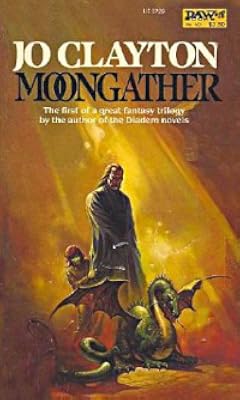
For many authors, this would be just fine. It's certainly far better than comparable books, such as Clayton's Diadem series. But if you come to this having read Cherryh's later work, it will be a weaker book, that demonstrate how quickly she matured. In this, it's like reading the first novels of Urula LeGuin.
Recommended with the above caveats. show less
For many authors, this would be just fine. It's certainly far better than comparable books, such as Clayton's Diadem series. But if you come to this having read Cherryh's later work, it will be a weaker book, that demonstrate how quickly she matured. In this, it's like reading the first novels of Urula LeGuin.
Recommended with the above caveats. show less
Sword & Sorceress Adventure– Morgaine rivals Elric with her dragon blade
This reviews Gate of Ivrel, which I read as part of the The Morgaine Saga which was DAW’s 2000 omnibus of C.J. Cherryh Sword & Sorcery trilogy (1. Gate of Ivrel 1976; 2. Well of Shiuan 1978; 3. Fires of Azeroth 1979). There is a fourth book Exile's Gate written in 1988. Actually, this is my first C.J. Cherryh novel and I was impressed (Gate of Ivrel was her first published work, and it is quite good).
Morgaine is reminiscent of Michael Moorcock’s Elric, since she is a doomed hero, traveling through interstellar space with a dragon-cursed sword that sucks souls (Morgaine’s blade Changeling is almost kin to Elric’s Stormbringer). There are Sci-Fiction show more elements to this that are kept obscure enough that it reads as pure fantasy (everything scientific appears as magic).
Morgaine’s charge is to destroy alien Gates, which allow for travel between time and universes; for those who want to stay put, the “witchfires” of the Gates fuel sorcery and extended lives. We quickly learn that she was imprisoned hundreds of years before the start of the story as she lost an epic battle with the evil magician Thiye. He apparently still lives (via said sorcery): "...Carcasses were found near [the Gate of Ivrel], things impossible, abortions of Thiye’s art, some almost formless and baneful to the touch, and others of forms so fantastical that none would imagine what aspect the living beast had had."
Strangely Thiye does not emerge for most of this novel. Instead there are compelling "new" threats from a host of others (some in relation to Vanye), and the book is full of magical clashes in which Changeling obliterates souls! It may be "her" saga, but book one introduces her through her male companion Vanye, an outcast bastard prince. The story arc for Book 1 belongs to him. Vanye becomes her servant after he releases her from a magical prison, and so the two enter an uneasy pairing. They make a good team, but trust comes slowly as Vanye enables Morgaine to confront those supporting the Gate:
"Morgaine was supremely beautiful …when he saw her in that hall, her pale head like a blaze of sun in that darkness, her slim form elegant in tgihio and bearing the dragon blade with the grace of one who could truly use it, an odd vision came to him: he saw like a fever-dream a nest of corruption with one gliding serpent among the scuttling lesser creatures—more evil than they, more deadly, and infinitely beautiful, reared up among hem and hypnotizing with basilisk eyes, death dreaming death and smiling.”
Great stuff. I expect the rest of the trilogy to flesh-out Morgaine’s character (otherwise it should be renamed Vanye’s saga). The ending was fine, but I was left questioning the direction a bit. I am anxious to read Book 2. show less
This reviews Gate of Ivrel, which I read as part of the The Morgaine Saga which was DAW’s 2000 omnibus of C.J. Cherryh Sword & Sorcery trilogy (1. Gate of Ivrel 1976; 2. Well of Shiuan 1978; 3. Fires of Azeroth 1979). There is a fourth book Exile's Gate written in 1988. Actually, this is my first C.J. Cherryh novel and I was impressed (Gate of Ivrel was her first published work, and it is quite good).
Morgaine is reminiscent of Michael Moorcock’s Elric, since she is a doomed hero, traveling through interstellar space with a dragon-cursed sword that sucks souls (Morgaine’s blade Changeling is almost kin to Elric’s Stormbringer). There are Sci-Fiction show more elements to this that are kept obscure enough that it reads as pure fantasy (everything scientific appears as magic).
Morgaine’s charge is to destroy alien Gates, which allow for travel between time and universes; for those who want to stay put, the “witchfires” of the Gates fuel sorcery and extended lives. We quickly learn that she was imprisoned hundreds of years before the start of the story as she lost an epic battle with the evil magician Thiye. He apparently still lives (via said sorcery): "...Carcasses were found near [the Gate of Ivrel], things impossible, abortions of Thiye’s art, some almost formless and baneful to the touch, and others of forms so fantastical that none would imagine what aspect the living beast had had."
Strangely Thiye does not emerge for most of this novel. Instead there are compelling "new" threats from a host of others (some in relation to Vanye), and the book is full of magical clashes in which Changeling obliterates souls! It may be "her" saga, but book one introduces her through her male companion Vanye, an outcast bastard prince. The story arc for Book 1 belongs to him. Vanye becomes her servant after he releases her from a magical prison, and so the two enter an uneasy pairing. They make a good team, but trust comes slowly as Vanye enables Morgaine to confront those supporting the Gate:
"Morgaine was supremely beautiful …when he saw her in that hall, her pale head like a blaze of sun in that darkness, her slim form elegant in tgihio and bearing the dragon blade with the grace of one who could truly use it, an odd vision came to him: he saw like a fever-dream a nest of corruption with one gliding serpent among the scuttling lesser creatures—more evil than they, more deadly, and infinitely beautiful, reared up among hem and hypnotizing with basilisk eyes, death dreaming death and smiling.”
Great stuff. I expect the rest of the trilogy to flesh-out Morgaine’s character (otherwise it should be renamed Vanye’s saga). The ending was fine, but I was left questioning the direction a bit. I am anxious to read Book 2. show less
Clarke's third law says "Any sufficiently advanced technology is indistinguishable from magic". I rarely read books that remind me of it but "Gate of Ivrel" did. The first book published by Cherryh (although the second sold one) starts a trilogy, unrelated to her long series. And it reads a lot more like a fantasy than a science fiction - and if the prologue was not there, I would have called it magic (and the book fantasy) and been done with it.
An old race had built the Gates - portals through space and time. They had kept pushing forward, knowing that this is safe. Until one day someone decided to go backwards and time wrapped. Badly. The race disappeared but the gates remained. And a team of scientists is sent through them with a show more single mission - go and close them after yourself until there are no more gates left. And this is just the backstory - because our story opens with the last remaining member of the expedition (or maybe a descendant of one) and her quest to save a world.
100 years ago, Morgaine stepped on the planet and convinced the locals to help her going against a ruler that uses the Gates for his own means - filling the world with beasts that do not belong and ruling the world in despair and misery. And then she disappeared, along with most of the warriors, leaving Thiye in power. That is a story that Vanye had heard since he was a baby - and when he gets kicked out from his family's halls after killing one of his brothers and maiming the other, the last thing he expects is to meet her. But that is exactly what happens - and due to the oaths bound society, he ends up attached to her. And they are off - to the Gate of Ivrel so Morgaine can close it - with her special weapons and even better sword; with her not carrying about anything but her goal. And while they travel (and travel), we see the world and the clans, the harm from the Gates and the stupidity of men. There is a lot of horses riding and people getting beaten and not too much action outside of it.
The story itself is the standard one for sword and sorcery books - there is a quest and things just happen on the way there. Except that now it is sword and science (at least from Morgaine's point of view; for Vanye is may as well be magic). It is the kind of book that is more involved with the path and the journey than the end. The end opens the door for the sequel - with the surviving characters moving to a new world and ready to start over.
It is a nice novel if you know what to expect - the world building is exquisite even if the language is a bit clumsy; the journey is worth reading. But if you expect action and fast moving plot, that novel won't suit you. show less
An old race had built the Gates - portals through space and time. They had kept pushing forward, knowing that this is safe. Until one day someone decided to go backwards and time wrapped. Badly. The race disappeared but the gates remained. And a team of scientists is sent through them with a show more single mission - go and close them after yourself until there are no more gates left. And this is just the backstory - because our story opens with the last remaining member of the expedition (or maybe a descendant of one) and her quest to save a world.
100 years ago, Morgaine stepped on the planet and convinced the locals to help her going against a ruler that uses the Gates for his own means - filling the world with beasts that do not belong and ruling the world in despair and misery. And then she disappeared, along with most of the warriors, leaving Thiye in power. That is a story that Vanye had heard since he was a baby - and when he gets kicked out from his family's halls after killing one of his brothers and maiming the other, the last thing he expects is to meet her. But that is exactly what happens - and due to the oaths bound society, he ends up attached to her. And they are off - to the Gate of Ivrel so Morgaine can close it - with her special weapons and even better sword; with her not carrying about anything but her goal. And while they travel (and travel), we see the world and the clans, the harm from the Gates and the stupidity of men. There is a lot of horses riding and people getting beaten and not too much action outside of it.
The story itself is the standard one for sword and sorcery books - there is a quest and things just happen on the way there. Except that now it is sword and science (at least from Morgaine's point of view; for Vanye is may as well be magic). It is the kind of book that is more involved with the path and the journey than the end. The end opens the door for the sequel - with the surviving characters moving to a new world and ready to start over.
It is a nice novel if you know what to expect - the world building is exquisite even if the language is a bit clumsy; the journey is worth reading. But if you expect action and fast moving plot, that novel won't suit you. show less
I re-read this recently and it's better than I remember it being. It's pretty character-focused, both on the character's introspections and their interactions with each other, but it also hums along at a very quick pace plot-wise because it doesn't waste a lot of time on description or narration of stuff that isn't relevant. Which is basically exactly how I like my light entertainment reading constructed. And Vanye is a fun perspective because he actually has a realistic level of fear of death instead of the "gee this is an interesting adventure" blitheness you normally get in genre protagonists.
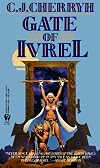
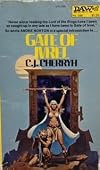
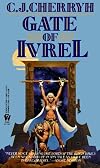
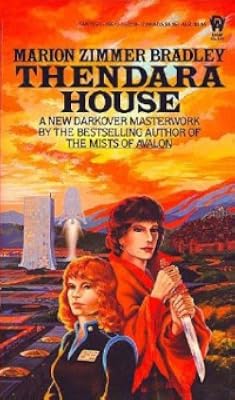
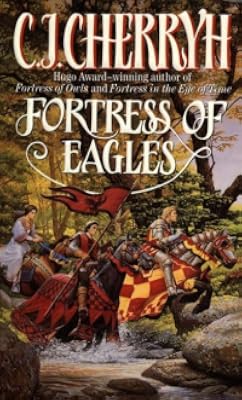
Whelan's cover art is fucking ridiculous and bad.
Whelan's cover art is fucking ridiculous and bad.
This is a classic fantasy sword-and-sorcery type novel, but the 'sorcery' is old science, not magic. This reads like a Conan or Moorcock novel with a woman warrior for the heroine. Good stuff. Don't judge the book by the bikini chick on the cover!
Members
- Recently Added By
Lists

Bibliography for Among Others
159 works; 15 members

Female Protagonist
1,056 works; 57 members

Best SciFi and Fantasy Classics
53 works; 6 members

Blue Pyramid 1,276 Best Books of All Time
1,248 works; 32 members

Books Read in 2016
4,666 works; 199 members
Author Information

A multiple award-winning author of more than thirty novels, C. J. Cherryh received her B.A. in Latin from the University of Oklahoma, and then went on to earn a M.A. in Classics from Johns Hopkins University. Cherryh's novels, including Tripoint, Cyteen, and The Pride of Chanur, are famous for their knife-edge suspense and complex, realistic show more characters. Cherryh won the John W. Campbell Award for Best New Writer in 1977. She was also awarded the Hugo Award for her short story Cassandra in 1979, and the novels Downbelow Station in 1982 and Cyteen in 1989. (Bowker Author Biography) show less
Some Editions
Series


Belongs to Publisher Series
DAW Book Collectors (188)
Work Relationships
Is contained in
Has the adaptation
Inspired
Common Knowledge
- Canonical title
- Gate of Ivrel
- Original title
- Gate of Ivrel
- Original publication date
- 1976-03 (First US Edition) (First US Edition); 1977-05 (First UK Edition) (First UK Edition)
- People/Characters
- Morgaine; Nhi Vanye; Chya Roh; Liell; Nhi Erij
- Important places
- Ivrel; Koris; Morija; Kath Svejur; Ra-morij; Ra-leth (show all 9); Baien-ei; Ra-baien; Andur Kursh
- First words
- The Gates were the ruin of the qhal.
- Last words
- (Click to show. Warning: May contain spoilers.)It was the second time he had ever seen her cry.
- Blurbers
- Norton, Andre
- Original language*
- Inglés
*Some information comes from Common Knowledge in other languages. Click "Edit" for more information.
Classifications
Statistics
- Members
- 842
- Popularity
- 32,387
- Reviews
- 20
- Rating
- (3.81)
- Languages
- 8 — Czech, Dutch, English, French, German, Hungarian, Portuguese, Spanish
- Media
- Paper, Audiobook, Ebook
- ISBNs
- 18
- ASINs
- 13