On This Page
Description
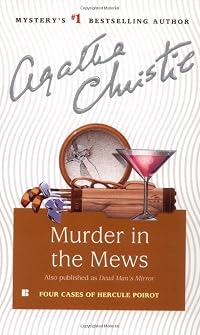
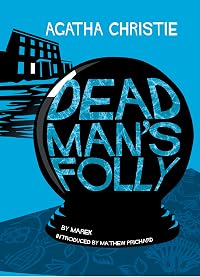
In the title work in this collection of novellas, Poirot and Inspector Japp collaborate on the investigation of a suspicious suicide. The supernatural is said to play in the disappearance of top secret military plans in The Incredible Theft—an incredible claim, indeed, as Poirot will prove. The bullet that kills Gervase Chevenix-Gore shatters a mirror in Dead Man's Mirror—just the clue Poirot needs to solve the crime. And, while basking on white Mediterranean sands, Poirot stares trouble show more in the face—the beautiful face of Valentine Chantry, now celebrating her fifth marriage—in Triangle at Rhodes.This title was previously published as Dead Man's Mirror.
. show less
Tags
Recommendations












Member Reviews
Murder in the Mews is the sixteenth book in the Hercule Poirot series - but is pretty misleading considering it's simply a short story collection. Having purchased the Complete Short Stories, I was annoyed to find this wasn't a full Hercule Poirot book like I thought and contained four stories I already had. If I had of known then what I know now and all that jazz.
For a short story collection I found this to be pretty strong, with three of the four stories being rated 4 stars. Murder in the Mews, The Incredible Theft and the Dead Man's Mirror all featuring clever plots with well planned solutions to the crimes. The fourth entry, Triangle at Rhodes, is what lets the collection down. It was bizarre and I didn't really like it much at all. show more Still three out of four is pretty good for a short story collection and still leaves the entire book with an average rating of 3.5 stars. Individual reviews and ratings below.
16.1 MURDER IN THE MEWS: Poirot and Japp team up once again, when their dinner out speculating on why no one commits more murders on Guy Fawkes day results in a dead body and a shot no one heard fired. I enjoyed this one. I like Japp and I love him and Poirot teaming up. Japp ribs him something fierce and it's hilarious.
“So that’s what you were getting at!” Japp sighed. “Always have to get at things in such a tortuous way.”
Christie, Agatha. Hercule Poirot: The Complete Short Stories (Hercule Poirot Mysteries) (p. 597). HarperCollins. Kindle Edition.
Poor Japp. I like Japp better than Hastings too. He's much smarter for one. Even when he's not entirely sure where Poirot is going with things, he is usually aware something is going on. 4 stars.
16.2 THE INCREDIBLE THEFT: Important plans are stolen when a prominent political figure throws a party. I liked this one. Once again I guessed parts and completely missed others but I enjoyed it all the same. 4 stars.
16.3 DEAD MAN'S MIRROR: Poirot is sent a letter by Sir Gervase Chevenix-Gore requesting his presence to investigate a matter of fraud, but when Poirot arrives, the man is found to have committed suicide. I really liked this one. Mr Satterthwaite (from the Harley Quin series) also makes a brief appearance, giving Poirot his impressions of Sir Gervase. And Major Riddle, the police detective assigned was fantastic. I mean he was no Poirot but I was amused by his conclusions;
“Well,” said Riddle, “everything seems quite clear and aboveboard. Door locked, window fastened, key of door in dead man’s pocket. Everything according to Cocker—but for one circumstance.” “And what is that, my friend?” inquired Poirot. “You!” said Riddle bluntly. “What are you doing down here?”
Christie, Agatha. Hercule Poirot: The Complete Short Stories (Hercule Poirot Mysteries) (p. 457). William Morrow Paperbacks. Kindle Edition.
The crime was very clever and I enjoyed the motives. 4 stars.
16.4 TRIANGLE AT RHODES: On holiday at Rhodes, Poirot comes across a love triangle that ends in murder. Well I only guessed half the crime. As in that Chantry killed his wife. Not that he had an accomplice. Honestly, I didn't really get this one. It was strange. 2 stars. show less
For a short story collection I found this to be pretty strong, with three of the four stories being rated 4 stars. Murder in the Mews, The Incredible Theft and the Dead Man's Mirror all featuring clever plots with well planned solutions to the crimes. The fourth entry, Triangle at Rhodes, is what lets the collection down. It was bizarre and I didn't really like it much at all. show more Still three out of four is pretty good for a short story collection and still leaves the entire book with an average rating of 3.5 stars. Individual reviews and ratings below.
16.1 MURDER IN THE MEWS: Poirot and Japp team up once again, when their dinner out speculating on why no one commits more murders on Guy Fawkes day results in a dead body and a shot no one heard fired. I enjoyed this one. I like Japp and I love him and Poirot teaming up. Japp ribs him something fierce and it's hilarious.
“So that’s what you were getting at!” Japp sighed. “Always have to get at things in such a tortuous way.”
Christie, Agatha. Hercule Poirot: The Complete Short Stories (Hercule Poirot Mysteries) (p. 597). HarperCollins. Kindle Edition.
Poor Japp. I like Japp better than Hastings too. He's much smarter for one. Even when he's not entirely sure where Poirot is going with things, he is usually aware something is going on. 4 stars.
16.2 THE INCREDIBLE THEFT: Important plans are stolen when a prominent political figure throws a party. I liked this one. Once again I guessed parts and completely missed others but I enjoyed it all the same. 4 stars.
16.3 DEAD MAN'S MIRROR: Poirot is sent a letter by Sir Gervase Chevenix-Gore requesting his presence to investigate a matter of fraud, but when Poirot arrives, the man is found to have committed suicide. I really liked this one. Mr Satterthwaite (from the Harley Quin series) also makes a brief appearance, giving Poirot his impressions of Sir Gervase. And Major Riddle, the police detective assigned was fantastic. I mean he was no Poirot but I was amused by his conclusions;
“Well,” said Riddle, “everything seems quite clear and aboveboard. Door locked, window fastened, key of door in dead man’s pocket. Everything according to Cocker—but for one circumstance.” “And what is that, my friend?” inquired Poirot. “You!” said Riddle bluntly. “What are you doing down here?”
Christie, Agatha. Hercule Poirot: The Complete Short Stories (Hercule Poirot Mysteries) (p. 457). William Morrow Paperbacks. Kindle Edition.
The crime was very clever and I enjoyed the motives. 4 stars.
16.4 TRIANGLE AT RHODES: On holiday at Rhodes, Poirot comes across a love triangle that ends in murder. Well I only guessed half the crime.
I did not love [b:Poirot Investigates|57806251|Poirot Investigates (Hercule Poirot, #3)|Agatha Christie|https://i.gr-assets.com/images/S/compressed.photo.goodreads.com/books/1618956213l/57806251._SY75_.jpg|1952109], which contains eleven Poirot short stories. This one, Murder in the Mews, contains only four, and I liked it much better. But let's not talk math.
So why three stars for both books? I ask myself. And then I think back to pre-internet life, when books had no numerical value. And then that turns into a whole internal debate - you don't have to rate books, you know -- but I like to -- but you're complaining about it -- no, I'm just questioning aspects of my own rating standards -- the bottom line being, good thing I can move on show more to the next book right away. show less
So why three stars for both books? I ask myself. And then I think back to pre-internet life, when books had no numerical value. And then that turns into a whole internal debate - you don't have to rate books, you know -- but I like to -- but you're complaining about it -- no, I'm just questioning aspects of my own rating standards -- the bottom line being, good thing I can move on show more to the next book right away. show less
This collects four long stories featuring Hercules Poirot. They are good, although Poirot works better in novel-length, where Agatha Christie had time to develop the stories and characters.
“Murder in the Mews”: This one was my favorite of the lot, a murder mystery with an interesting twist.
“The Incredible Theft”: Christie is the queen of detective fiction, but when she writes about spies or action thrillers she comes across as too naive. This story is a bit like that, and it's weird that the author tries to justify the perpetrators actions and present them in a favorable light. Also, doesn't this one remind me of a Sherlock Holmes story? This was my least favorite of these stories.
“Dead Man’s Mirror”: A standard Christie show more mystery, featuring murder in a country manor.
“The Triangle at Rhodes”: by far the shortest story in the collection, featuring a love triangle with a twist during one of those holidays that Poirot takes, mirroring the author's own trips. People often cite this as the weakest of the book, but I enjoyed the story's atmosphere. show less
“Murder in the Mews”: This one was my favorite of the lot, a murder mystery with an interesting twist.
“The Incredible Theft”: Christie is the queen of detective fiction, but when she writes about spies or action thrillers she comes across as too naive. This story is a bit like that, and it's weird that the author tries to justify the perpetrators actions and present them in a favorable light. Also, doesn't this one remind me of a Sherlock Holmes story? This was my least favorite of these stories.
“Dead Man’s Mirror”: A standard Christie show more mystery, featuring murder in a country manor.
“The Triangle at Rhodes”: by far the shortest story in the collection, featuring a love triangle with a twist during one of those holidays that Poirot takes, mirroring the author's own trips. People often cite this as the weakest of the book, but I enjoyed the story's atmosphere. show less
A nice little collection featuring four mysteries involving Hercule Poirot, with Agatha Christie displaying her skill with the short story. My favourite was the locked-room murder mystery 'Dead Man's Mirror', where Poirot dazzles the reader with his ability to deduct a sequence of events and pinpoint the perpetrator from the seemingly most random and unconnected statements and objects.
In particular, the stories are:
Murder in the Mews: The morning after bonfire night a woman is found dead in her apartment. At first things point to suicide, but on closer inspection doubts are beginning to emerge. Inspector Japp asks his old friend Hercule Poirot to become involved in the investigation.
The Incredible Theft: At a gathering at a country show more mansion, the plans for a top-secret bomber are stolen. One of the house guests suggests calling in Hercule Poirot to investigate the matter and restore the plans before they fall into the hands of a foreign power.
Dead Man's Mirror: A peer of the realm is found shot to death at his country mansion, having apparently committed suicide. Unbeknown to the hostess, secretary and guests, he had contacted Poirot and asked him to investigate in a delicate matter, but when Poirot arrives, the host is already dead. Poirot then assists Major Riddle in the investigation.
Triangle at Rhodes: While holidaying on Rhodes, Hercule Poirot tries to prevent a murder. show less
In particular, the stories are:
Murder in the Mews: The morning after bonfire night a woman is found dead in her apartment. At first things point to suicide, but on closer inspection doubts are beginning to emerge. Inspector Japp asks his old friend Hercule Poirot to become involved in the investigation.
The Incredible Theft: At a gathering at a country show more mansion, the plans for a top-secret bomber are stolen. One of the house guests suggests calling in Hercule Poirot to investigate the matter and restore the plans before they fall into the hands of a foreign power.
Dead Man's Mirror: A peer of the realm is found shot to death at his country mansion, having apparently committed suicide. Unbeknown to the hostess, secretary and guests, he had contacted Poirot and asked him to investigate in a delicate matter, but when Poirot arrives, the host is already dead. Poirot then assists Major Riddle in the investigation.
Triangle at Rhodes: While holidaying on Rhodes, Hercule Poirot tries to prevent a murder. show less
A collection that shows its age, culturally speaking.
Dead Man's Mirror
3 stars
"The flat was a modern one. The furnishings of the room were modern, too. The armchairs were squarely built, the upright chairs were angular. A modern writing-table was set squarely in front of the window and at it sat a small, elderly man. His head was practically the only thing in the room that was not square. It was egg-shaped."
Clearly written in the days when entrance and exit wounds were not a known Thing by all readers/viewers. Nonetheless, I liked the characterizations. The classic locked-room mystery that seems to be a suicide.
The Incredible Theft
2.5 stars
"As the butler handed round the souffle Lord Mayfield leaned confidentially towards his neighbor show more on the right, Lady Julia Carrington. Known as a perfect host, Lord Mayfield took trouble to live up to his reputation. Although unmarried, he was always charming to women."
I never really grooved much on Christie's attempts at spy stories. It's a strange bygone age, where people apparently take home Top Secret Plans and have Top Secret Meetings at their country estates. Still, Poirot, and it is intriguing as a period piece.
Murder in the Mews
3 stars
"'Penny for the guy, sir?' A small boy with a grimy face grinned ingratiatingly. 'Certainly not!' said Chief Inspector Japp. 'And, look here, my lad--' A short homily followed. The dismayed urchin beat a precipitate retreat, remarking briefly and succinctly to his youthful friends: 'Blimy if it ain't a cop all togged up!'"
Christie does a nice twist. Inspector Japp and Poirot investigate an apparent suicide, discovered by the woman's roommate. More dialogue, with more feel of polish.
Triangle at Rhodes
2 stars
-Don't read this if you are going to read Evil Under the Sun.
Hercule Poirot sat on the white sand and looked out across the sparkling blue water. He was carefully dressed in a dandified fashion in white flannels and a large panama hat protected his head. He belonged to the old-fashioned generation which believed in covering itself carefully from the sun. Miss Pamela Lyall, who sat beside him and talked ceaselessly, represented the modern school of thought in that she was wearing the barest minimum of clothing on her sun-browned person."
Christie must have been working out her plot for one of her better known, full-length mysteries. This is quite truncated at a mere 25 pages and loses much of the atmosphere that makes the book so powerful.
Two-and-a-half stars, rounding up, because, Christie. If I rate them lower, it's probably because I'm comparing them to my memories of her at her best.
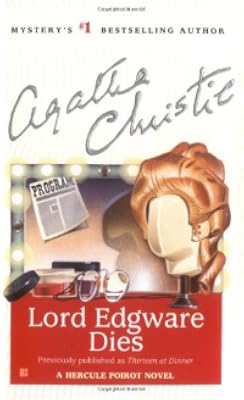
Edition note: this is the right ISBN number, wrong cover. It's a 1984 reprint by Berkeley Books and features a sihlouette of Poirot on the front. show less
Dead Man's Mirror
3 stars
"The flat was a modern one. The furnishings of the room were modern, too. The armchairs were squarely built, the upright chairs were angular. A modern writing-table was set squarely in front of the window and at it sat a small, elderly man. His head was practically the only thing in the room that was not square. It was egg-shaped."
Clearly written in the days when entrance and exit wounds were not a known Thing by all readers/viewers. Nonetheless, I liked the characterizations. The classic locked-room mystery that seems to be a suicide.
The Incredible Theft
2.5 stars
"As the butler handed round the souffle Lord Mayfield leaned confidentially towards his neighbor show more on the right, Lady Julia Carrington. Known as a perfect host, Lord Mayfield took trouble to live up to his reputation. Although unmarried, he was always charming to women."
I never really grooved much on Christie's attempts at spy stories. It's a strange bygone age, where people apparently take home Top Secret Plans and have Top Secret Meetings at their country estates. Still, Poirot, and it is intriguing as a period piece.
Murder in the Mews
3 stars
"'Penny for the guy, sir?' A small boy with a grimy face grinned ingratiatingly. 'Certainly not!' said Chief Inspector Japp. 'And, look here, my lad--' A short homily followed. The dismayed urchin beat a precipitate retreat, remarking briefly and succinctly to his youthful friends: 'Blimy if it ain't a cop all togged up!'"
Christie does a nice twist. Inspector Japp and Poirot investigate an apparent suicide, discovered by the woman's roommate. More dialogue, with more feel of polish.
Triangle at Rhodes
2 stars
-Don't read this if you are going to read Evil Under the Sun.
Hercule Poirot sat on the white sand and looked out across the sparkling blue water. He was carefully dressed in a dandified fashion in white flannels and a large panama hat protected his head. He belonged to the old-fashioned generation which believed in covering itself carefully from the sun. Miss Pamela Lyall, who sat beside him and talked ceaselessly, represented the modern school of thought in that she was wearing the barest minimum of clothing on her sun-browned person."
Christie must have been working out her plot for one of her better known, full-length mysteries. This is quite truncated at a mere 25 pages and loses much of the atmosphere that makes the book so powerful.
Two-and-a-half stars, rounding up, because, Christie. If I rate them lower, it's probably because I'm comparing them to my memories of her at her best.
Edition note: this is the right ISBN number, wrong cover. It's a 1984 reprint by Berkeley Books and features a sihlouette of Poirot on the front. show less
Four short stories rather than one novel. Three of them are about fifty pages each, the last just twenty pages long. All cleverly written, and they all feature Hercule Poirot.
The first one is the best, in my opinion, an ingenious plot with some good characterisation. The second one was a tad too political for my tastes, but still cleverly done. The third features some rather bizarre people, and although again it was well written and plotted, I found it a bit unrealistic.
As for the fourth, shorter one, it's a rather different story. It involves potential immorality rather than more obvious crime, at least until towards the end. I liked it the least of the four, possibly because it felt a bit rushed.
I didn't guess any of the outcomes, show more but overall I enjoyed the book. Recommended.
Longer review here: https://suesbookreviews.blogspot.com/2020/07/murder-in-mews-by-agatha-christie.h... show less
The first one is the best, in my opinion, an ingenious plot with some good characterisation. The second one was a tad too political for my tastes, but still cleverly done. The third features some rather bizarre people, and although again it was well written and plotted, I found it a bit unrealistic.
As for the fourth, shorter one, it's a rather different story. It involves potential immorality rather than more obvious crime, at least until towards the end. I liked it the least of the four, possibly because it felt a bit rushed.
I didn't guess any of the outcomes, show more but overall I enjoyed the book. Recommended.
Longer review here: https://suesbookreviews.blogspot.com/2020/07/murder-in-mews-by-agatha-christie.h... show less
A collection of four short stories featuring Hercule Poirot: two locked-room, apparent suicides, a WWII theft of government secrets, and a love triangle on a Greek vacation. All of them are decent, but a bit melodramatic. I prefer Dame Christie's novels where I can wrap my brain around all the characters and clues.
"Dead Man's Mirror": Poirot is summoned via letter by Sir Gervase Chevenix-Gore, but when he arrives at dinner time, the man is dead by apparent suicide in his locked office. The last of the Chevenix-Gores, he was a domineering snob, but he didn't seem to have a reason to kill himself. Is there a killer within his closest friends, family, or staff?
Solution: The murderer was the woman helping him write his family history. show more She's actually the mother of Sir Gervase's adopted daughter, who was actually his dead brother's illegitimate child. Got that? She did it to save her daughter from being forced to marry her cousin or be disinherited. (Cousin would have been required to change his last name, all so the C-G name wouldn't die out.)
"The Incredible Theft": Would you invite a known spy to your home to tempt her to steal secret military documents? That's what Lord Mayfield, Minister of Armaments, claims he's done and then, oopsy, the plans actually disappear and it doesn't look like she could be the thief. Mayfield's old friend, Sir George Carrington, head of the Air Force, calls in Poirot to investigate on the DL.
Solution: Lord Mayfield pocketed the docs himself (altered to be useless) and traded them with Mrs. Vanderlyn (the spy) for a letter that incriminated him for possibly being a former Nazi supporter. (I think that's what Christie is implying. It reminded me a little of [b:The Remains of the Day|28921|The Remains of the Day|Kazuo Ishiguro|https://i.gr-assets.com/images/S/compressed.photo.goodreads.com/books/1327128714l/28921._SY75_.jpg|3333111] in that respect.)
"Murder in the Mews": Another apparent suicide in a locked room. This time it's a young widow who lives near Poirot. Chief Inspector Japp pulls Poirot in to investigate some suspicious details. Recently engaged, she has no apparent reason to kill herself. And who was the older man who visited her the night of her death?
Solution: This time it actually was suicide, because she was being black-mailed for being an unwed mum. (The child died.) Her roommate found the body and then tried to make it look like she'd been murdered by her blackmailer.
"Triangle at Rhodes": On vacation, Poirot is witness to an apparent love triangle that ends in murder. At only 25 pages, this one is short and sweet.
Solution:While it looks like Douglas Gold accidentally poisoned his lover, the glamorous Valentine Chantry, in a botched attempt at poisoning her husband... Actually, Commander Chantry purposely poisoned his own wife to frame Douglas, so he could be with Marjorie Gold, who isn't as sweet and innocent as she seems. show less
"Dead Man's Mirror": Poirot is summoned via letter by Sir Gervase Chevenix-Gore, but when he arrives at dinner time, the man is dead by apparent suicide in his locked office. The last of the Chevenix-Gores, he was a domineering snob, but he didn't seem to have a reason to kill himself. Is there a killer within his closest friends, family, or staff?
Solution:
"The Incredible Theft": Would you invite a known spy to your home to tempt her to steal secret military documents? That's what Lord Mayfield, Minister of Armaments, claims he's done and then, oopsy, the plans actually disappear and it doesn't look like she could be the thief. Mayfield's old friend, Sir George Carrington, head of the Air Force, calls in Poirot to investigate on the DL.
Solution:
"Murder in the Mews": Another apparent suicide in a locked room. This time it's a young widow who lives near Poirot. Chief Inspector Japp pulls Poirot in to investigate some suspicious details. Recently engaged, she has no apparent reason to kill herself. And who was the older man who visited her the night of her death?
Solution:
"Triangle at Rhodes": On vacation, Poirot is witness to an apparent love triangle that ends in murder. At only 25 pages, this one is short and sweet.
Solution:
Members
- Recently Added By
Lists

British Mystery
469 works; 14 members

Crime and Mysteries to Read
746 works; 31 members

Agatha Christie story collections
19 works; 1 member

Agatha Christie Poirot
43 works; 2 members

Books About Murder
313 works; 7 members

Detective Stories
343 works; 5 members

Books Read in 2016
4,666 works; 199 members

Best books made into television
66 works; 4 members
Must Read Detective Stories (Nick Fuller)
278 works; 2 members

Agatha Christie Chronology
93 works; 1 member
Author Information

2,185+ Works 441,820 Members
One of the most successful and beloved writer of mystery stories, Agatha Mary Clarissa Christie was born in 1890 in Torquay, County Devon, England. She wrote her first novel, The Mysterious Affair at Styles, in 1920, launching a literary career that spanned decades. In her lifetime, she authored 79 crime novels and a short story collection, 19 show more plays, and six novels written under the name of Mary Westmacott. Her books have sold over a billion copies in the English language with another billion in 44 foreign languages. Some of her most famous titles include Murder on the Orient Express, Mystery of the Blue Train, And Then There Were None, 13 at Dinner and The Sittaford Mystery. Noted for clever and surprising twists of plot, many of Christie's mysteries feature two unconventional fictional detectives named Hercule Poirot and Miss Jane Marple. Poirot, in particular, plays the hero of many of her works, including the classic, The Murder of Roger Ackroyd (1926), and Curtain (1975), one of her last works in which the famed detective dies. Over the years, her travels took her to the Middle East where she met noted English archaeologist Sir Max Mallowan. They married in 1930. Christie accompanied Mallowan on annual expeditions to Iraq and Syria, which served as material for Murder in Mesopotamia (1930), Death on the Nile (1937), and Appointment with Death (1938). Christie's credits also include the plays, The Mousetrap and Witness for the Prosecution (1953; film 1957). Christie received the New York Drama Critics' Circle Award for 1954-1955 for Witness. She was also named Dame Commander of the Order of the British Empire in 1971. Christie died in 1976. (Bowker Author Biography) show less
Some Editions
Series

Belongs to Publisher Series
Selecciones de Biblioteca Oro (libro 130)
Scherz Krimi (590)
The Albatross Crime Club (No. 411)
SaPo (208)
Work Relationships
Is contained in
The Body in the Library | Three Act Tragedy | Murder in the Mews and Other Stories by Agatha Christie
Death on the Nile / Murder in the Mews / Appointment with Death / Hercule Poirot's Christmas / Dumb Witness by Agatha Christie
Contains
Is abridged in
Common Knowledge
- Canonical title
- Murder in the Mews and Other Stories; Murder in the Mews
- Original title
- Murder in the Mews
- Alternate titles
- Dead Man's Mirror
- Original publication date
- 1937-03-15
- People/Characters
- Hercule Poirot; Valentine Chantry; James Japp (Inspector); Gervase Chevenix-Gore; James Japp (Hoofdinspecteur); Ruth Chevenix-Gore (show all 11); Pamela Lyall; Lord Mayfield; Jane Plenderleith; Mr. Satterthwaite; Mrs. Vanderlyn
- Important places
- London, England, UK; Rhodes, Greece
- Related movies
- Poirot (1989 | IMDb)
- Dedication
- To My Old Friend
Sybil Heeley
With affection - First words
- Dead Man's Mirror: The flat was a modern one.
Murder in the Mews: "Penny for the guy, sir?"
Triangle at Rhodes: Hercule Poirot sat on the white sand and looked out across the sparkling blue water.
The Incredible Theft: As the butler handed round the souffle, Lord Mayfield leaned confidentially towards his neighbour on the right, Lady Julia Carrington. - Last words
- (Click to show. Warning: May contain spoilers.)Dead Man's Mirror: "I wonder why she did it..."
(Click to show. Warning: May contain spoilers.)Murder in the Mews: "Lead me to it," said Japp.
(Click to show. Warning: May contain spoilers.)Triangle at Rhodes: "She chose--to remain..."
(Click to show. Warning: May contain spoilers.)The Incredible Theft: "My Lord," said Poirot, "if you could not make the best of both worlds, you could not be a politician!" - Original language
- English
- Disambiguation notice
- aka Dead Man's Mirror. "The Incredible Theft" does not appear in earlier editions of the US version (Dead Man's Mirror). Please do not combine.
Unknown if this work contains The Incredible Theft.
Classifications
Statistics
- Members
- 2,885
- Popularity
- 6,272
- Reviews
- 52
- Rating
- (3.60)
- Languages
- 21 — Catalan, Chinese, Czech, Danish, Dutch, English, Estonian, Finnish, French, German, Hungarian, Indonesian, Italian, Norwegian (Bokmål), Norwegian, Polish, Portuguese, Romanian, Spanish, Swedish, Turkish
- Media
- Paper, Audiobook, Ebook
- ISBNs
- 125
- UPCs
- 2
- ASINs
- 58